

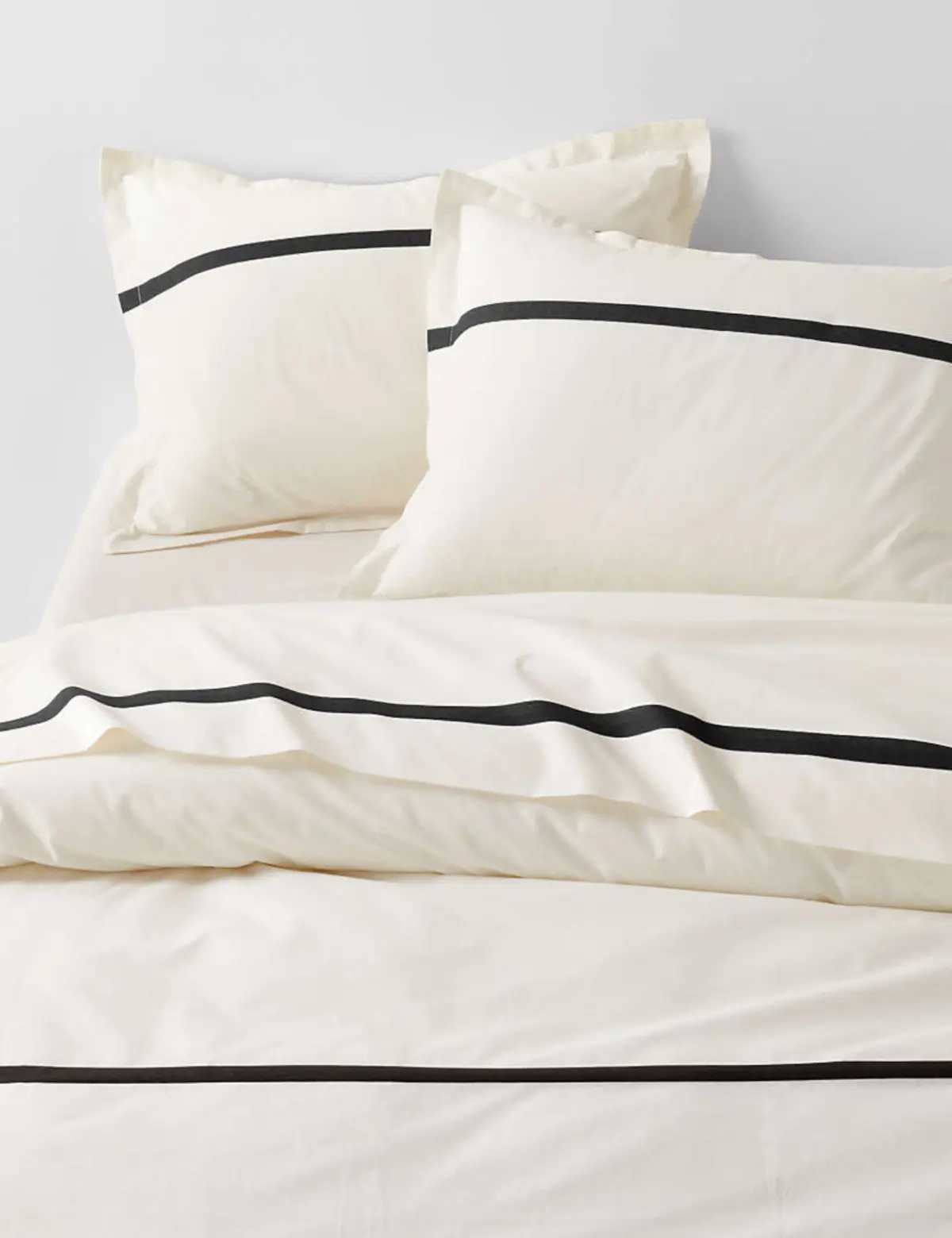
For more than a century, the gold standard of effortless bedroom elegance has remained stubbornly consistent. Picture a crisp, neutral base accented by a delicate, contrast-embroidered line running parallel to the edges. This is the classic "hotel border"—the signature aesthetic of elite heritage linen houses like Frette, Sferra, and Matouk. It is an aesthetic that whispers timeless luxury, evoking grand European hotels and five-star suites.
Yet, interior design is rarely static. A subtle yet striking shift is currently underway in the linen closet, challenging the supremacy of the double-framed border. Enter the "tuxedo stripe": a streamlined, modern take on traditional tailoring that swaps out the perimeter-framing lines for a single, bold satin stitch. Spearheaded by contemporary tastemakers like Crate & Barrel, this minimalist evolution is beginning to capture the attention of design enthusiasts and forecasters eyeing upcoming interior trends.
Main Facts: Deconstructing the Tuxedo Stripe Trend
The tuxedo stripe is a masterclass in understated design. Rather than utilizing a multi-lined embroidered border that wraps entirely around the perimeter of a duvet cover, flat sheet, or pillow sham, this new iteration boils the look down to a single, thick, satin-stitched stripe.
Currently making waves via Crate & Barrel’s latest collections, the trend spans a comprehensive range of home textiles. Shoppers can find the tuxedo stripe applied to organic cotton percale bed sheets, standard pillow shams, king-sized duvet covers, and even accent accessories like organic cotton bath mats. To elevate the bespoke feel further, brands are offering custom monogramming, allowing buyers to emboss their initials directly onto the shams and duvet covers.
While the traditional hotel border demands a coordinated, head-to-toe suite of matching linens to achieve its full visual impact, the tuxedo stripe offers unprecedented flexibility. It looks exceptionally striking as a complete, curated collection, but it possesses the casual versatility to be layered seamlessly with plain, solid-white sheets already residing in a homeowner’s linen closet.
Chronology: A Brief History of Luxury Linens
To understand why the tuxedo stripe represents such a departure, it helps to look at the lineage of luxury bedding.
- 1899: The history of high-end hotel bedding was forever altered when Frette designed and manufactured its iconic double-border linens specifically for Venice’s legendary Grand Hotel Royal Danieli.
- 20th Century: Following its debut in Venice, the hotel border became the uniform of elite hospitality, eventually adopted by world-renowned institutions such as The Ritz-Carlton and The Plaza. This cemented the framed-edge look in the public consciousness as the ultimate shorthand for cleanliness, luxury, and professional laundering.
- Present Day: For decades, variations of the multi-line hotel border reigned supreme across both hospitality and residential interior design. However, as modern aesthetics lean increasingly toward minimalism, Japandi, and quiet luxury, mainstream retailers have begun experimenting with scaled-back detailing. The introduction of the single-satin-stitch tuxedo stripe marks the first major design pivot in the category in recent memory, offering a modern alternative to the century-old standard.
Supporting Data and Market Insights: The Economics of Luxury Sleep
The emergence of the tuxedo stripe coincides with a broader, sustained boom in the home textiles and luxury bedding market. Industry reports indicate that consumers are increasingly viewing the bedroom not merely as a utilitarian space for sleep, but as a primary sanctuary for wellness and personal expression.
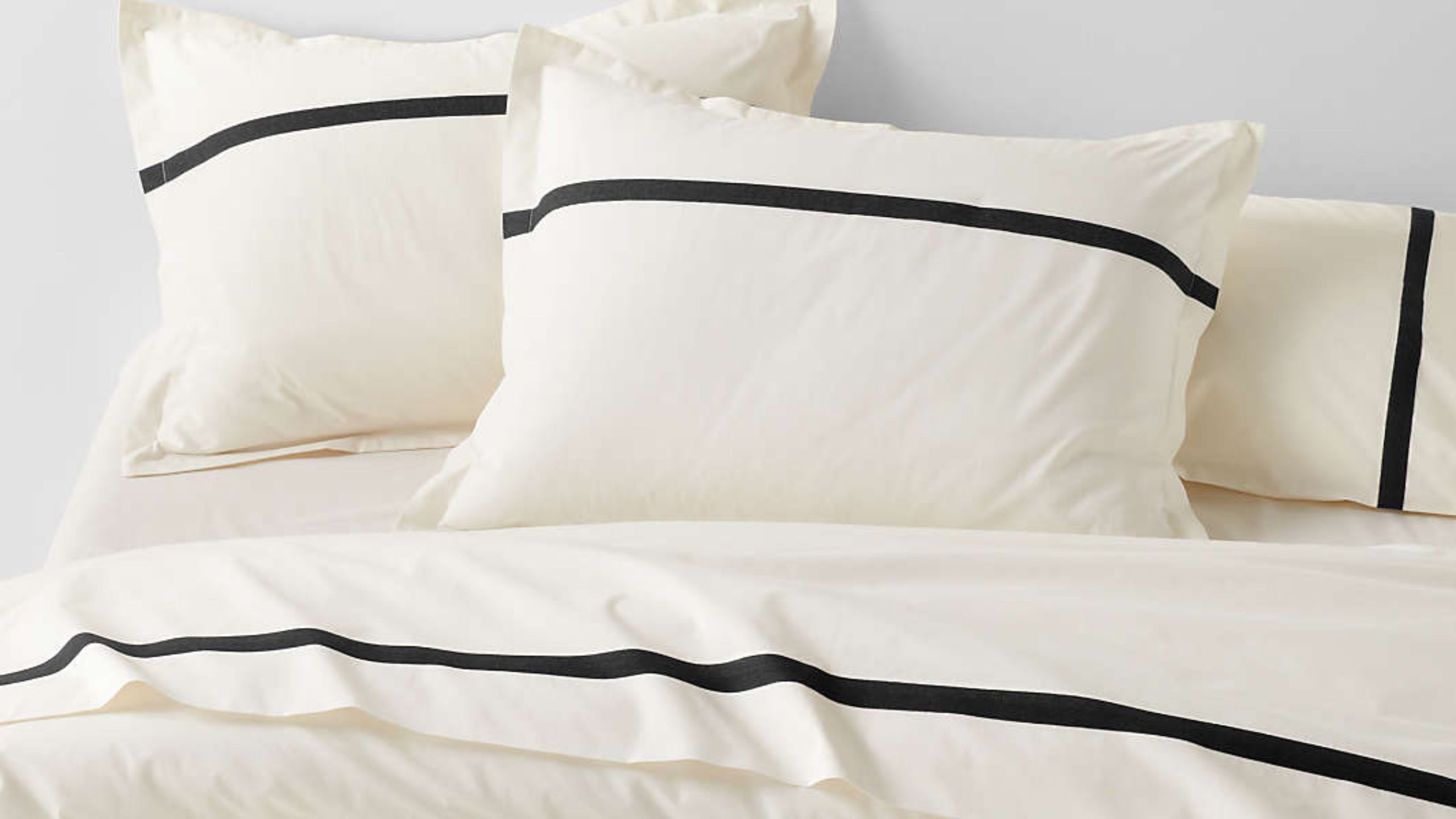
- Market Valuation: The global luxury bedding market continues to experience steady growth, driven by an increased consumer willingness to invest in high-thread-count organic cottons, sustainable textiles, and designer collaborations.
- The Rise of Percale: Sales data from major home retailers show a consistent preference for crisp percale and washed linen over heavy synthetics, making tailored cotton collections—like those featuring the tuxedo stripe—prime candidates for market adoption.
- Personalization Demand: Retailers report a surging interest in bespoke and customizable home goods. The option to add custom monogramming to tuxedo-striped shams taps directly into the "quiet luxury" movement, where subtle, personalized details supersede loud logos or overt branding.
Official Responses and Expert Perspectives
Interior designers and textile experts have taken note of the shift, weighing in on how minor detailing can dramatically alter the mood of a bedroom.
Industry veterans who have spent years evaluating high-end sheets note that while luxury bedding represents a significant financial investment, the physical and aesthetic payoff is tangible. "After years of reporting on bedding, I’ve slept on enough luxury sheets to furnish a boutique hotel," notes one design commentator. "I have some unfortunate news: they’re often worth it."
When comparing the classic hotel border to the new tuxedo stripe, design analysts often use sartorial metaphors to illustrate the difference. If the classic hotel border represents formal black-tie attire—strict, traditional, and unyielding in its rules—the tuxedo stripe functions more like a modern, impeccably tailored dinner jacket. It is sharp and sophisticated, yet inherently more approachable and easier to style.
Designers emphasize that the tuxedo stripe’s strength lies in its editing. By removing the excess lines of the traditional border, the eye is drawn to the purity of the fabric and the clean geometry of the single stitch.
Implications: Will the Hotel Border Be Dethroned?
Is the tuxedo stripe destined to completely eradicate the century-old hotel border from the design lexicon? Industry experts suggest that is unlikely. The cultural weight and historical prestige carried by brands like Frette and Matouk ensure that the double-line hotel border will remain a timeless staple of classic interior design.
However, the introduction of the tuxedo stripe signals a vital evolution in how consumers approach bedroom styling. It proves that traditional motifs can be successfully streamlined for modern, minimalist spaces. For homeowners who love the tailored aesthetic of a high-end hotel bed but find the traditional border too formal or restrictive, the tuxedo stripe offers a breath of fresh air.
As more home brands begin to adopt this single-line aesthetic, it may well solidify itself as a defining bedding trend of the decade. Whether styled as a complete, monogrammed collection or tossed casually over a set of vintage white sheets, the tuxedo stripe offers a compelling proposition: all the elegance of high society, stripped down to its most essential, modern form.
