

Main Facts: Bringing Care Where Infrastructure Fails
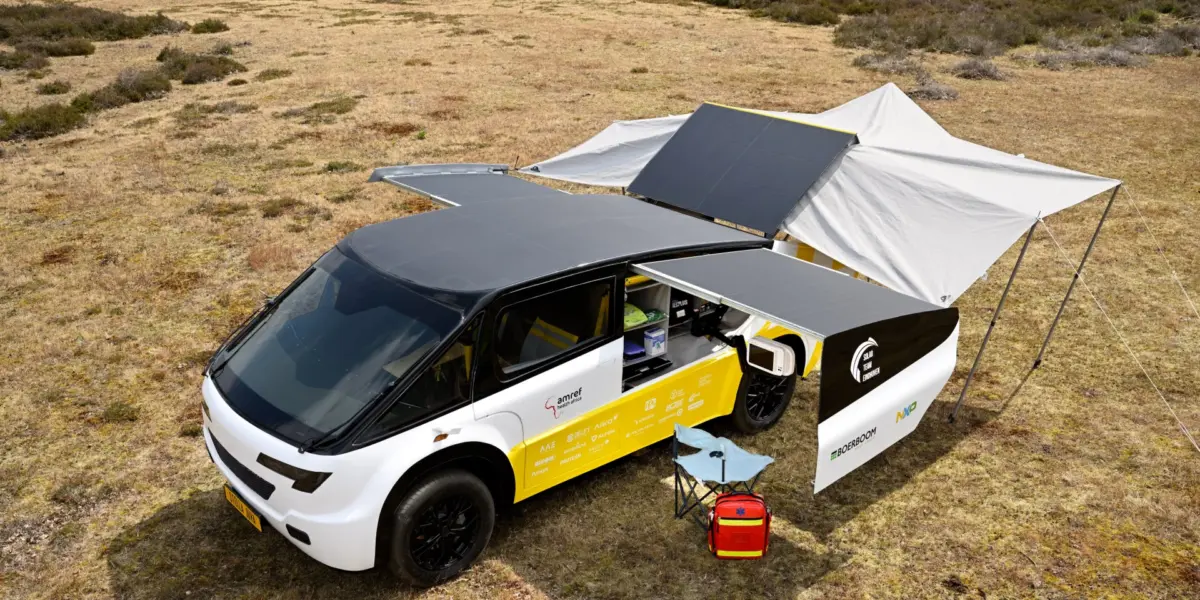
In an ambitious fusion of sustainable automotive engineering and global health advocacy, a team of 23 engineering students from the Netherlands has introduced what they claim is the world’s first solar-powered medical vehicle. Christened Stella Juva, the pioneering electric vehicle (EV) was developed by Solar Team Eindhoven, a renowned student group operating out of the Eindhoven University of Technology.
Unlike conventional emergency vehicles designed for high-speed blue-light transport to metropolitan hospitals, Stella Juva flips the traditional healthcare delivery model on its head. Instead of racing patients across impossible distances to reach a clinic, the vehicle brings the clinic directly to the patient.
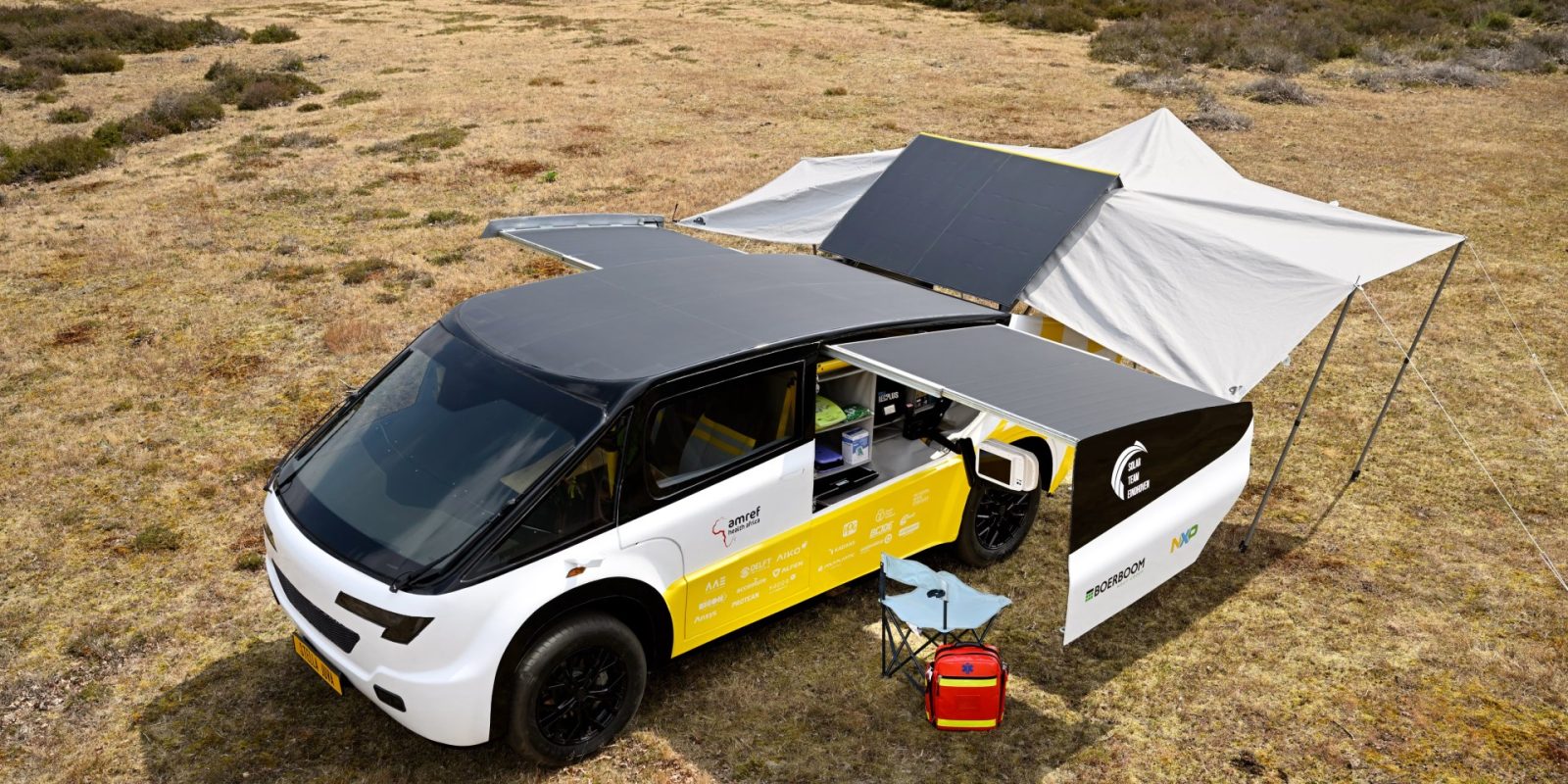
Tailored specifically for remote, underserved regions where reliable electricity, fossil fuels, and paved roads are scarce or nonexistent, Stella Juva functions as a self-sustaining mobile diagnostic center. Aboard the vehicle, frontline healthcare workers can perform critical medical procedures that are often inaccessible in isolated communities:
- Administering life-saving vaccines
- Conducting routine and targeted blood tests
- Screening vulnerable populations for infectious diseases such as tuberculosis and malaria
- Performing vital pregnancy ultrasounds to ensure maternal and fetal health
By providing these foundational services directly within remote villages, the vehicle aims to catch common, treatable conditions early—drastically reducing the mortality rates associated with delayed diagnoses and multi-hour journeys to the nearest established healthcare facility.
Chronology: From Concept to Off-Grid Reality
The realization of Stella Juva is the latest milestone in a long-standing tradition of boundary-pushing vehicle development by Solar Team Eindhoven.

The Heritage of Innovation
Solar Team Eindhoven has spent years earning a reputation for designing unconventional, highly efficient solar-powered electric vehicles.
- Stella Vita (2021): The team previously captured global attention with Stella Vita, an ambitious solar-powered camper designed to function as a self-sustaining "house on wheels."
- Stella Terra (2023): Demonstrating that solar EVs could conquer punishing terrain, the team engineered Stella Terra, an off-grid solar 4×4. The vehicle successfully completed a grueling 620-mile test drive across the diverse, punishing landscapes of Morocco, culminating in a successful traversal of the Sahara Desert.
Building on the durability lessons learned from Stella Terra, the team pivoted toward a humanitarian application. Conceptualized, designed, and constructed entirely by the 23-student roster, Stella Juva was crafted with direct advisory input from global health organizations, including Amref Health Africa in the Netherlands.
The Road Ahead: Kenya Trials
Following its grand unveiling in the Netherlands, Stella Juva is set to face its most rigorous trial yet. In August, the student team will ship the vehicle to Kenya. There, it will embark on a multi-hundred-kilometer driving expedition powered entirely by the sun.
Rather than remaining on pristine test tracks, the vehicle will be deployed to two remote field locations. In these real-world environments, local healthcare workers will execute simulated medical scenarios—such as tracking and treating patients with tuberculosis—to evaluate how well the mobile clinic, its integrated energy systems, and its sensitive medical hardware perform outside the controlled conditions of the Eindhoven university workshop.
Supporting Data: Engineering a Sun-Powered Mobile Clinic
Building a vehicle capable of navigating rough terrain while simultaneously powering heavy-duty medical refrigerators, diagnostic screens, and propulsion systems required cutting-edge material science and advanced energy management.
Power Generation and Range
Stella Juva’s primary energy source is an array of integrated rooftop solar panels. These panels are engineered to perform a dual function: they generate the electricity required to propel the electric vehicle while simultaneously charging the onboard auxiliary systems that run the medical equipment.
- The Range Estimate: Solar Team Eindhoven calculates that on a standard sunny day, Stella Juva can achieve an impressive theoretical range of up to 715 kilometers (444 miles).
- Infrastructure Independence: This expansive range means the vehicle can operate indefinitely in remote zones without ever needing to plug into a traditional charging grid—a crucial requirement for deployment in regions where grid power is non-existent or perpetually unstable. Note: While these figures are calculated based on optimal mathematical models, the vehicle’s true range under rugged, real-world operational conditions remains to be fully validated during its upcoming African trials.
Advanced Solar Technology
To maximize energy harvest within a limited surface area, the vehicle utilizes AIKO’s All Back Contact (ABC) solar cells.
- Design Efficiency: Traditional solar cells feature metal grid lines on their front surfaces, which block a fraction of incoming sunlight. AIKO’s ABC technology relocates all electrical contacts to the rear of the cell. This design maximizes light absorption and boosts overall energy conversion efficiency.
- Durability: The cells incorporate silver-free metallization, which significantly reduces the structural risk of microcracking caused by vehicle vibrations on unpaved roads. Furthermore, these cells are engineered to maintain high power output even under extreme ambient temperatures—an essential trait for vehicles deployed to sun-drenched, high-heat regions.
Battery Safety and Industrial Partnerships
Housing a high-capacity lithium-ion battery pack in a vehicle designed for rugged, potentially hazardous environments requires elite thermal management and fire protection.
- PPG CoraChar SE 4000: Stella Juva’s battery pack is shielded by PPG CoraChar SE 4000, an advanced intumescent epoxy coating. In the unlikely event that a battery cell experiences a fault leading to thermal runaway, this specialized coating is engineered to dramatically slow down the lateral spread of heat and fire, providing critical safety margins for healthcare workers and patients.
- Financial and Material Support: PPG also supported the initiative through a $46,250 (€40,000) direct development grant, underscoring the deep collaboration between student innovators and multinational chemical and material science leaders.
Official Responses: Perspectives from Health and Engineering
The unveiling of Stella Juva has drawn praise from both the sustainable technology sector and international public health organizations, emphasizing that the vehicle represents a convergence of two previously siloed industries.
Femke Maurits, partnerships manager for Amref Health Africa in the Netherlands—an organization that acted as a strategic advisor throughout the vehicle’s development—highlighted the profound equity gap that Stella Juva aims to close:

"Access to care shouldn’t depend on whether there’s access to electricity or fuel," Maurits stated during the vehicle’s debut.
Her sentiment encapsulates the core philosophy of the project. For decades, global health initiatives have struggled against the "last-mile" problem: even when funding, medicine, and personnel are available, the lack of basic infrastructure—such as reliable cold chains for vaccines or electricity to run diagnostic centrifuges—cripples medical outreach programs. By integrating renewable generation directly into the point-of-care delivery vehicle, Stella Juva offers a decentralized blueprint that bypasses traditional infrastructural bottlenecks.
Engineering leads from Solar Team Eindhoven have similarly emphasized that the project was never just an exercise in automotive design. Every interior layout decision, equipment rack, and power draw calculation was vetted by medical professionals to ensure that the vehicle functions as an intuitive, highly effective extension of a modern clinic, rather than a cramped, over-engineered novelty.
Implications: A New Paradigm for Global Humanitarian Logistics
The debut of Stella Juva signals a potential paradigm shift in how humanitarian aid and medical logistics are approached in the developing world. As climate change exacerbates weather unpredictability and fossil fuel supply chains remain volatile in isolated regions, the pivot toward hyper-localized, off-grid renewable infrastructure is accelerating.
Decentralizing Health Infrastructure
If Stella Juva proves successful during its trials in Kenya later this year, the implications extend far beyond a single university project:

- Scalable Blueprints: The open-source philosophies and engineering methodologies developed by Solar Team Eindhoven could be licensed or adapted by global health NGOs to manufacture localized fleets of solar-powered medical vehicles.
- Reduced Operational Overhead: Traditional mobile health clinics rely heavily on diesel generators to power medical hardware. These generators require a continuous, costly supply chain of imported diesel fuel and are notoriously prone to mechanical failure in dusty, remote environments. Transitioning to a solar-electric architecture eliminates fuel expenditures and drastically reduces maintenance overhead.
- Climate Resilience in Vulnerable Zones: Regions most in need of mobile healthcare are frequently the same regions most vulnerable to climate-induced disruptions. Solar-powered assets offer a resilient, self-healing energy loop that does not fail when regional fuel distribution networks collapse.
The Broader Mobility Landscape
The transition toward specialized, application-specific solar EVs—moving from experimental campers and desert-crossing 4x4s to life-saving medical units—proves that vehicle-integrated photovoltaics (VIPV) are maturing past consumer novelties. As efficiency metrics improve and material costs drop, the integration of solar skin onto utility vehicles, ambulances, and delivery vans may soon transition from student-led garage innovations to mainstream industrial standards.
For now, all eyes turn to the dirt roads of Kenya. The data gathered this August will determine whether Stella Juva remains a brilliant student prototype or evolves into the vanguard of a global revolution in accessible, off-grid healthcare.
