

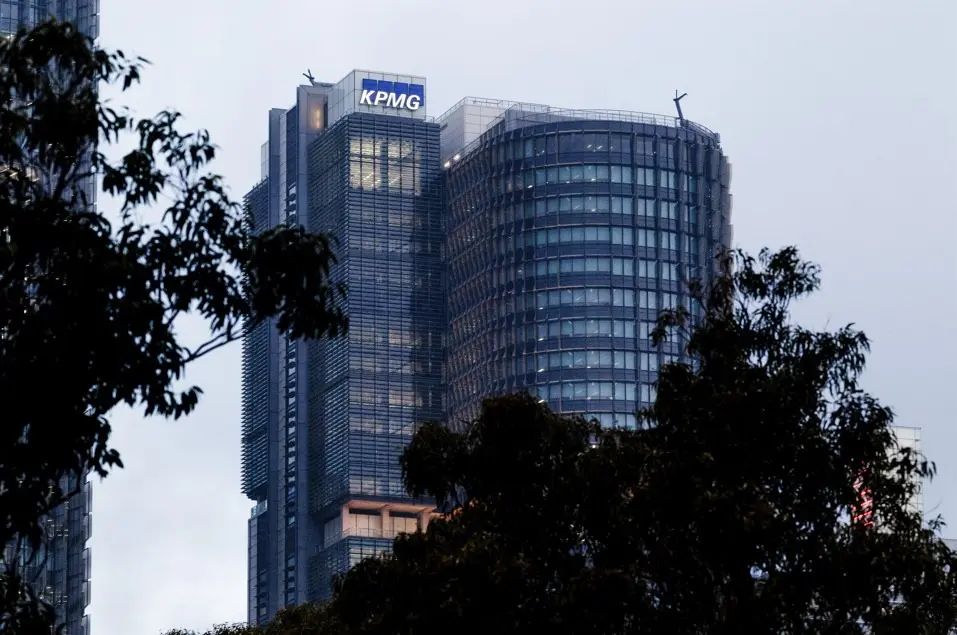
SYDNEY/MELBOURNE — In a monumental blow to the Australian corporate advisory sector, ANZ Group Holdings Ltd. has announced it will part ways with KPMG Australia, ending a continuous auditing partnership that has spanned more than half a century.
The Melbourne-based banking behemoth revealed on Friday that it will launch a competitive tender process to replace KPMG as its external auditor. The decision marks the end of an era that began in 1969, signaling a dramatic shift in how major financial institutions approach auditor tenure, risk management, and corporate governance in the wake of high-profile industry scandals.
For KPMG Australia, the loss of ANZ is not merely the end of a prestigious, long-standing relationship; it is the latest and arguably most severe casualty in an escalating crisis. The accounting giant has been locked in a desperate battle to salvage its reputation following explosive allegations that the firm improperly utilized confidential client information to secure lucrative government and corporate contracts.
As the fallout deepens, the pressure on KPMG’s leadership is reaching a boiling point, triggering a wave of client defections that threatens to redraw the competitive landscape of the "Big Four" accounting firms in Australia.
Main Facts: The End of an Era at ANZ
The termination of KPMG’s mandate with ANZ Group Holdings Ltd. was made public through an official statement released by the bank on Friday morning. ANZ confirmed that it "will commence a competitive tender process" to identify a new external auditor.
While auditor rotation has become an increasingly standard practice globally to ensure independence and objectivity, the length of KPMG’s tenure at ANZ made this departure particularly noteworthy. ANZ has utilized KPMG’s external audit services since 1969. In its statement, the bank acknowledged that "this length is no longer considered appropriate and has been under consideration by the Board for some time."
To ensure a smooth transition, ANZ has set a deliberate timeline. The bank intends to identify and appoint a replacement auditor by the end of April 2027, with the newly selected firm officially assuming audit duties starting in the 2029 financial year. Due to the excessive duration of its incumbent service, ANZ explicitly ruled out KPMG’s participation, stating: "Given the tenure of the incumbent provider, KPMG will not be eligible to participate in the tender process."
A spokesperson for KPMG Australia declined to comment on ANZ’s decision, maintaining silence as the firm faces an unprecedented exodus of blue-chip clients.
Chronology of a Crisis: How KPMG Lost Its Grip
The unraveling of KPMG Australia’s market standing did not happen overnight. It is the culmination of mounting regulatory scrutiny, damaging media revelations, and severe governance failures that have dominated financial news cycles throughout 2026.
The Spark: Data Misuse Allegations
The crisis traces back to damaging revelations that partners and staff within KPMG Australia allegedly misused confidential client data. The information—retrieved from sensitive engagements—was reportedly weaponized to gain an unfair advantage in competitive pitches for new business. The scandal widened significantly after it was confirmed that data belonging to telecommunications giant Optus had been improperly handled and exploited.
Parliamentary Inquiries and Political Heat
As details of the data breach trickled into the public domain, political pressure mounted. Throughout 2026, the allegations became the central focus of several high-profile parliamentary inquiries in Canberra. Lawmakers grilled accounting executives over ethical standards, conflicts of interest, and the aggressive commercial cultures driving the "Big Four" firms (Deloitte, EY, KPMG, and PwC). These inquiries exposed systemic vulnerabilities in how professional services firms manage firewall protocols between consulting and auditing arms.
The Domino Effect: Client Defections
KPMG’s losses have cascaded rapidly across corporate Australia, turning a localized compliance issue into a systemic commercial crisis:
- Macquarie Group Ltd. (August 2026): In a stunning reversal, Macquarie decided to rescind a prior decision to hire KPMG as its auditor, opting instead to distance itself from the controversy.
- Insurance Australia Group Ltd. (June 2026): IAG announced plans to tender for a new auditor. Notably, KPMG—which had provided auditing services to the firm continuously since its public listing in 2000—was pointedly excluded from the invitation list.
- Lendlease Corp.: Property and infrastructure giant Lendlease officially joined the exodus, dropping KPMG’s services in favor of an untainted competitor.
- ANZ Group Holdings Ltd. (June 2026): The crown jewel of KPMG’s current corporate audit book officially exits the fold, setting a definitive timeline for departure by 2029.
Supporting Data: The Expanding Scope of the Fallout
To fully comprehend the magnitude of ANZ’s decision, one must examine the sheer volume of capital and prestige tied up in these audits. ANZ is one of Australia’s "Big Four" banks, controlling hundreds of billions of dollars in assets, managing millions of customer accounts, and operating across international jurisdictions. Retaining ANZ as an audit client provides a firm not only with substantial fee revenue but also with unmatched market validation.
| Date / Milestone | Corporate Entity | Action Taken Regarding KPMG | Duration of Prior Relationship |
|---|---|---|---|
| June 2000 | Insurance Australia Group (IAG) | Initialized audit services | 26 years (Excluded from 2026 tender) |
| August 2026 | Macquarie Group Ltd. | Reversed hiring decision; dropped KPMG | N/A (Pre-engagement cancellation) |
| Mid-2026 | Lendlease Corp. | Severed ties; dropped firm services | Multiple years |
| June 2026 | ANZ Group Holdings Ltd. | Announced competitive tender; barred KPMG | 57 years (1969 – 2029 transition) |
The financial impact of losing these accounts extends far beyond immediate revenue contraction. Audit mandates often serve as a loss-leader or foundational anchor, allowing firms to cross-sell lucrative non-audit advisory, tax, and risk-consulting services. With major institutions slamming the door, KPMG’s cross-selling pipeline has been severely constricted.
Official Responses and Internal Remediation
Faced with an existential threat to its brand equity, KPMG Australia has scrambled to implement sweeping internal reforms. The firm has aggressively refreshed its executive leadership team, casting out figures associated with past governance structures and installing new management tasked with restoring institutional trust.
Furthermore, the firm has unveiled a comprehensive governance overhaul plan. This strategy aims to rebuild ethical firewalls, retrain personnel on the sanctity of confidential client information, and introduce independent oversight mechanisms to monitor business-winning pitches.
However, corporate Australia’s response suggests that internal remediation alone is no longer enough to assuage risk-averse boards. Risk committees at major financial institutions are under intense pressure from institutional shareholders, regulators like the Australian Securities and Investments Commission (ASIC), and the public to demonstrate zero tolerance for ethical lapses.
While KPMG leadership continues to plead its case for structural rehabilitation, the court of commercial opinion has rendered a swift verdict: the reputational discount attached to the KPMG brand currently outweighs the familiarity of decades-long partnerships.
Broader Implications for the "Big Four" and the Auditing Industry
The decision by ANZ—and its corporate peers—to purge KPMG from their audit rosters carries profound implications for the broader professional services sector in Australia and internationally.
1. The Death of the "Forever Auditor"
For decades, multi-decade auditor tenures were viewed as symbols of deep institutional trust and specialized institutional knowledge. Banks and large conglomerates prized the efficiency of working with an auditor that knew their balance sheets inside and out for 30, 40, or 50 years. ANZ’s explicit admission that a 57-year tenure is "no longer considered appropriate" signals a watershed moment. Mandatory or accelerated auditor rotation is rapidly evolving from a regulatory suggestion into an absolute corporate governance mandate. Boards can no longer justify cozy, multi-decade relationships without facing severe pushback from activist shareholders and governance watchdogs.
2. Contagion Across the "Big Four"
The scandals hitting KPMG do not occur in a vacuum. Following high-profile cultural and ethical scandals at other major firms—such as PwC Australia’s tax leaks scandal—the entire "Big Four" model is facing unprecedented legislative scrutiny. Corporations are acutely aware that any association with a compromised auditor exposes their own brand to reputational contagion. Consequently, risk committees are casting wider nets, looking toward mid-tier accounting firms (such as BDO, Grant Thornton, or RSM) or forcing more aggressive competition among the remaining giants.
3. The Future of Non-Audit Advisory Services
At the heart of the data misuse scandals lies the inherent conflict of interest within firms that act as both auditors and commercial consultants. When audit firms chase lucrative consulting and advisory mandates, the temptation to leverage proprietary data gained through audit access creates a dangerous ethical hazard. The events at KPMG will likely accelerate calls from regulators for structural unbundling—forcing professional services networks to permanently separate their auditing practices from their consulting arms.
Conclusion
ANZ’s decision to sever ties with KPMG Australia after 57 years is more than a routine corporate vendor change; it is a seismic tremor reshaping the Australian financial landscape. As KPMG fights to reform its governance and stanch the bleeding of its client roster, corporate Australia is fundamentally recalibrating its tolerance for risk. For banks, insurers, and property giants alike, the era of unquestioned auditor loyalty has officially ended, replaced by an unforgiving climate where transparency, independence, and ethical integrity reign supreme.
