

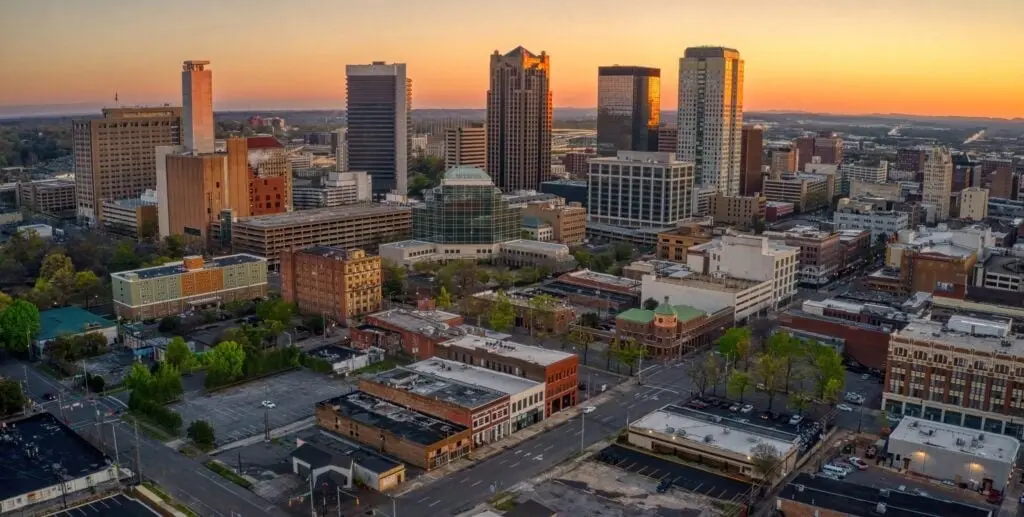
Main Facts: The Rise of Birmingham and the Cash-Flow Renaissance
Even in a stubborn, high-interest-rate macroeconomic climate, the fundamental arithmetic of real estate investing remains simple: when acquisition costs are low and rental demand is steady, returns follow. This foundational principle explains why Birmingham, Alabama, has officially captured the top spot on Realtor.com’s highly anticipated list of the top 50 U.S. cities for real estate investors.
With an inviting median purchase price of roughly $160,000 paired with a resilient median monthly rent of $1,300, Birmingham offers a rare value proposition in contemporary American real estate. According to nationwide housing data, Birmingham claimed the highest net share of investor homebuyers in the United States. Investors accounted for 21% of total home sales in the market, while concurrently making up 14.4% of home sellers. This generated a net investor purchase share of 6.6%, distancing the Magic City from traditional high-cost coastal metros and establishing it as the premier destination for yield-focused capital.
Chronology & Context: How Birmingham Became an Investor Darling
The trajectory of Birmingham’s real estate market over the past half-decade reflects a broader national shift in investor behavior.
- The Post-Pandemic Shift (2020–2022): As remote work sparked a migration toward the Sunbelt, secondary and tertiary markets across the South experienced sudden influxes of capital. While cities like Austin, Boise, and Phoenix saw explosive appreciation driven by speculation, Birmingham remained largely insulated from hyper-inflationary pricing spikes.
- The High-Interest Rate Era (2023–2024): As the Federal Reserve aggressively raised interest rates to combat inflation, borrowing costs soared. Across primary housing markets, soaring mortgage rates decimated profit margins for landlords, effectively freezing traditional cash-flow investing. Investors seeking yields were forced to look beyond expensive gateway cities.
- The Value Discovery (2025): Capital increasingly flowed toward durable, high-yield mid-sized markets. Affordable entry prices and steady industrial anchors helped Birmingham climb investor watchlists.
- The Current Landscape (2026): Realtor.com’s comprehensive market study officially crowned Birmingham the No. 1 city for investor homebuyers nationwide. Rather than relying on speculative appreciation, the market has settled firmly into a reliable cash-flow-driven ecosystem.
Supporting Data: The Anatomy of Cash-Flow Markets
To understand why capital is concentrating in Birmingham and similar secondary markets, one must look at broader economic indicators. Real estate economists point to a clear dividing line between speculative markets and cash-flow markets.
The Cash-Flow Metros vs. Appreciation Markets
According to Realtor.com senior economist Hannah Jones, the national investment landscape is currently split into two distinct categories:
"Seven of the metros—Memphis, Birmingham, Kansas City, St. Louis, Pittsburgh, Columbus, and Cleveland—are classic cash-flow markets where affordable entry prices, climbing rents, landlord-friendly tax environments, and durable renter demand attract investors. Miami and New York are outliers driven by big investors buying in because prices are expected to keep rising and it’s easy to sell later, rather than to earn steady rental income."
Key Financial Metrics for Birmingham
- Median Purchase Price: ~$160,000
- Median Monthly Rent: ~$1,300
- Total Investor Purchase Share: 21.0%
- Investor Seller Share: 14.4%
- Net Investor Share: +6.6%
Micro-Market Tiers in Birmingham
Institutional and private residential real estate firms, such as Spartan Invest, emphasize that neighborhood selection dictates profitability in the Birmingham metro area. Investors generally categorize opportunities into specific asset classes:
- B- to C+ Working-Class Areas: Representing the sweet spot for pure cash flow, these neighborhoods feature low acquisition costs and consistent renter pools tied to healthcare, logistics, and education.
- B+ Cash Flow/Growth Hybrid Markets: Properties in these areas typically command between $180,000 and $250,000. While cash flow is lower and appreciation is modest, these neighborhoods attract higher-quality tenants, minimizing turnover and reducing operational friction for long-term holders.
Official Responses and Expert Insights
Industry experts note that investing in Birmingham requires a fundamental shift in mindset away from coastal wealth-building strategies.
"In Birmingham, the money is in the rent check, not the resale," explains Cameron Walker of Clever Real Estate. "That’s the whole story of why investors hold."
Unlike primary markets where investors tolerate negative cash flow in anticipation of rapid home price appreciation, Birmingham operates on immediate yield. However, market observers advise caution. The fact that 14.4% of sellers in Birmingham are also investors indicates a churning market where some participants exit after capturing initial depreciation benefits or encountering operational hurdles.
Local economic anchors provide a strong safety net for these investments. The presence of the University of Alabama at Birmingham (UAB), a massive medical district, and a stable financial services sector ensure that renter demand remains largely insulated from broader macroeconomic downturns.
Broader Implications: Alternative Southern Markets to Consider
For investors who are hesitant to enter the crowded Birmingham bidding space, several alternative Southern and regional markets offer comparable macroeconomic fundamentals.
Huntsville, Alabama
Located in northern Alabama, Huntsville represents a stark contrast to Birmingham. While acquisition costs are higher—with Zillow reporting a median home value of $290,453—the city boasts a booming, high-income employment base anchored by aerospace, defense, engineering, and technology. Major expansions, such as defense manufacturer Redwire adding a 164,000-square-foot facility and 150 skilled jobs, cement Huntsville as a long-term capital preservation and appreciation play rather than a quick cash-flow generator.
Mobile, Alabama
Situated on the Gulf Coast, Mobile offers a unique industrial ecosystem driven by shipbuilding, manufacturing, and the Port of Alabama. Single-family homes trade at a median price of $199,226, with average rents hovering around $1,293. While these metrics initially suggest a neutral cash-flow environment, investors must factor in high storm-related insurance and maintenance costs native to coastal environments.
Montgomery, Alabama
As the state capital, Montgomery’s economy relies heavily on government, military installations, and education. With a median single-family home price of $152,082 and average rents reaching $1,347, Montgomery enters positive cash-flow territory. It requires a nuanced, neighborhood-specific strategy, but offers solid yields without the intense competition seen in Birmingham.
Memphis, Tennessee & Mississippi
Directly across state lines, Memphis ranks second only to Birmingham in net investor buying share, featuring a median listing price of $167,000. Landlords evaluating Memphis versus Birmingham must weigh localized property taxes, municipal insurance rates, crime statistics, and housing stock quality. Meanwhile, the broader Mississippi market features affordable median home prices around $196,333, though coastal insurance premiums remain a critical variable for investors.
Conclusion: Cutting Through the Hype
Birmingham’s emergence as America’s top real estate investment destination is well-founded. In an economic climate where traditional financial models frequently fail to pencil out, the city offers a reliable, cash-flowing alternative for disciplined investors.
Yet, headline-driven enthusiasm must be balanced with rigorous, boots-on-the-ground analysis. Spreadsheets compiled in distant corporate offices often overlook hyper-local challenges, including escalating utility costs, municipal property code enforcement, localized crime rates, and the administrative overhead of managing workforce housing.
Ultimately, Birmingham deserves its place at the forefront of the national real estate conversation. For investors willing to perform meticulous due diligence, understand neighborhood nuances, and prioritize steady rental yields over speculative appreciation, the Magic City remains open for business.
