

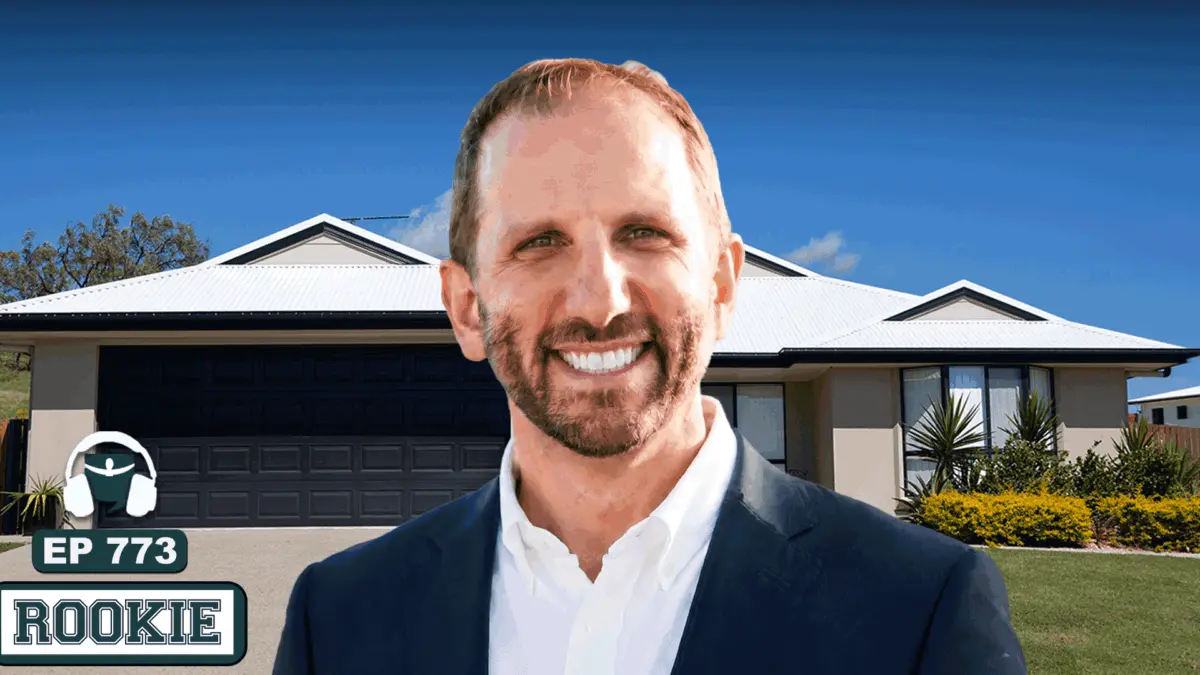
Entering the real estate market in ultra-expensive regions like Los Angeles often feels like an impossible dream for rookie investors. High property values, fierce competition, and strict municipal regulations create seemingly insurmountable hurdles. However, strategic planning, creative financing, and a willingness to embrace unconventional deals can transform a high-barrier market into a profound wealth-building engine.
This is precisely the path forged by Rick Albert. Starting as a financially strapped college senior, Albert leveraged a neglected, heavily smoked-in Los Angeles condo to build a foundation that eventually expanded into a 17-door portfolio spanning three states.
Main Facts: The Blueprint of High-Cost Market Investing
The journey of Rick Albert showcases how tactical execution can overcome the financial gravity of high-cost-of-living (HCL) markets. Rather than fleeing to more affordable rural areas right out of the gate, Albert leaned into the local market dynamics.
Key Transactional Highlights
- The First Acquisition: A 938-square-foot condo in Los Angeles purchased for $225,000 with a 10% down payment.
- Overcoming Obstacles: The property was heavily damaged by 30 years of cigarette smoke, deterring standard buyers but offering a deep value-add discount.
- The Financing Hack: Albert utilized a lender credit by slightly increasing his interest rate, using the lender-paid funds to cover his closing costs.
- Scaling Up: The initial condo generated $80,000 in equity via a Home Equity Line of Credit (HELOC), which funded a second house-hack featuring a ground-up Accessory Dwelling Unit (ADU) conversion using an FHA 203(k) loan.
- The Portfolio Today: Through disciplined house hacking, strategic value-add renovations, and geographic expansion into landlord-friendly states like Alabama and Tennessee, Albert and his business partners accumulated a 17-unit portfolio.
Chronology: From Broke College Senior to Multi-State Investor
Phase 1: The Foundation (2009–2015)
In December 2009, Albert was a broke college senior uncertain of his career trajectory. A visit with a successful Southern California real estate investor shifted his perspective. Mentorship came with strict conditions: read foundational real estate literature (such as The Millionaire Real Estate Investor and The Richest Man in Babylon), secure an internship in property management, and obtain a real estate license.
After graduation, Albert relocated to Southern California. He worked on foreclosures, bidding at courthouse steps using cashier’s checks—an experience that sharpened his negotiation and competitive instincts.
By 2015, Albert decided to execute his first "house hack." Recognizing that traditional multi-family properties in LA were out of financial reach, he targeted a condo complex with lower entry barriers.
Phase 2: Tackling the "Smoker’s Special"
Albert discovered a 938-square-foot condo listed on the MLS for nearly $250,000. The property had been occupied by a heavy smoker for over three decades, creating an overwhelming odor that turned away virtually all retail buyers.
Viewing the odor as a solvable problem rather than a deal-breaker, Albert purchased the unit for $225,000 with a 10% down payment ($22,500). To cover closing costs without depleting his meager cash reserves, he negotiated a lender credit in exchange for a slightly higher interest rate.
Rehabilitation cost approximately $18,000. The remediation process involved:
- Scrubbing all walls with Tri-Sodium Phosphate (TSP) to strip nicotine residue.
- Applying multiple coats of KILZ primer designed specifically to lock in smoke odors.
- Installing new flooring, updating the electrical sub-panel, and re-glazing the bathtub and countertops.
To offset his mortgage, Albert rented out a bedroom to a lifelong friend for $800 a month—significantly below the friend’s previous $1,300 rent. To prevent domestic friction, Albert included utilities and twice-monthly professional house cleaning in the rent.
Phase 3: The Second House Hack and the FHA 203(k) Gamble
As his relationship progressed toward marriage, Albert needed a larger footprint. In 2018, he extracted roughly $80,000 from his first condo using a HELOC.
Rather than buying another turnkey property, Albert set his sights on a single-family home with a detached garage, intending to build a legal Accessory Dwelling Unit (ADU)—a burgeoning trend in California real estate at the time.
Competing against 17 other offers, Albert deployed an aggressive escalation clause without a cap, ultimately getting into escrow at $567,000. Subsequent property inspections revealed unpermitted additions and structural issues, which Albert strategically leveraged via formal repair request letters. He successfully negotiated the purchase price down to $525,000.
To fund the extensive renovations and garage conversion, Albert utilized an FHA 203(k) renovation loan, which allowed him to finance both the purchase price and the construction costs with a 3.5% down payment on the base price.
Phase 4: Navigating Construction Headwinds
The 203(k) renovation process proved exceptionally challenging. Bureaucratic delays, city inspector shortages, and strict lender draw schedules extended a projected four-month project into a full year.
Because construction reimbursements from the nationwide lender took up to six weeks to clear, Albert was forced to float thousands of dollars out of pocket, temporarily borrowing from his wedding fund to pay his contractor.
Despite the operational friction, the finished project featured a fully updated main house and a detached, highly private casita-style ADU equipped with its own yard space, private entrance, and separate electric metering.
Phase 5: Exiting California and Expanding Out-of-State
By 2022, strict eviction moratoriums in Los Angeles prompted Albert and his wife to re-evaluate their local holdings. They sold the original condo for $453,000—more than double its purchase price—walking away with substantial capital.
Seeking higher cash flow and landlord-friendly regulations, Albert partnered with his brother-in-law to purchase a fourplex in Nashville, Tennessee. Simultaneously, he ventured solo into Alabama, securing a distressed triplex listed at $180,000 for just $90,000 because it lacked functional water heaters. Utilizing the BRRRR (Buy, Rehabilitate, Rent, Refinance, Repeat) strategy, Albert invested $55,000 in renovations and successfully refinanced to pull out $120,000 in capital.
Supporting Data: Financial Breakdown of High-Cost House Hacking
To understand how Albert’s strategy generated long-term wealth, consider the foundational mathematics of his investments:
- Condo Acquisition: $225,000 purchase price.
- Initial Out-of-Pocket Capital: ~$25,000 (10% down payment plus closing costs offset by lender credits).
- Renovation Investment: $18,000 initial interior overhaul; $13,000 HVAC replacement years later.
- Rental Income Generated: $800/month from a single roommate, covering a substantial portion of the $1,600 monthly PITI (Principal, Interest, Taxes, Insurance) payment.
- Equity Growth & Sale: Sold during peak appreciation for $453,000, yielding over $200,000 in gross profit before capital gains considerations.
- Appreciation Dynamics: As Albert notes, a standard 3% appreciation rate yields vastly different dollar amounts depending on the market baseline. A 3% increase on a $1,000,000 property yields $30,000 in equity growth, accelerating net worth accumulation compared to lower-cost markets.
Official Responses & Industry Insights
Industry veterans and podcast co-hosts Ashley Kehr and Tony J. Robinson frequently emphasize the psychological barriers that stop rookie investors from taking action. Albert’s case study dismantles several common real estate myths:
- The "Red Flag" Fallacy: Many investors instantly reject properties with severe cosmetic or environmental issues, such as heavy smoke damage, mold, or unpermitted spaces. Albert’s success proves that specialized remediation (like TSP and KILZ primer) can eliminate smoke damage cost-effectively.
- The 203(k) Loan Misconception: While renovation loans carry a reputation for bureaucratic delays and strict HUD consultant oversight, they remain one of the few vehicles allowing low-capital buyers to force equity into primary residences.
- Lender-Paid Closing Costs: By trading interest rate concessions for upfront lender credits, buyers can dramatically lower their cash-to-close requirements—a vital tactic in high-cost markets where cash reserves are easily depleted.
Implications for Future Real Estate Investors
Albert’s trajectory offers actionable takeaways for prospective real estate investors operating in expensive metropolitan areas:
- Proximity to Wealth: High-cost-of-living markets often feature robust job growth, steady population inflows, and higher ceiling prices, making appreciation a powerful secondary wealth driver alongside cash flow.
- Embrace the Value-Add Discount: Properties that sit on the market due to fixable physical flaws (odor, deferred maintenance, unpermitted work) offer the best margins for buyers willing to put in sweat equity.
- Master Creative Financing: Leveraging FHA 203(k) loans, HELOCs, and lender-paid credits enables investors with limited initial capital to acquire and scale assets that would otherwise remain out of reach.
- The Power of House Hacking: Minimizing personal living expenses through strategic room rentals or ADU conversions preserves capital, allowing investors to bankroll subsequent acquisitions without relying on outside equity partners.
By viewing market obstacles as competitive advantages rather than roadblocks, rookie investors can successfully break into high-barrier markets and build resilient, multi-market portfolios.
