

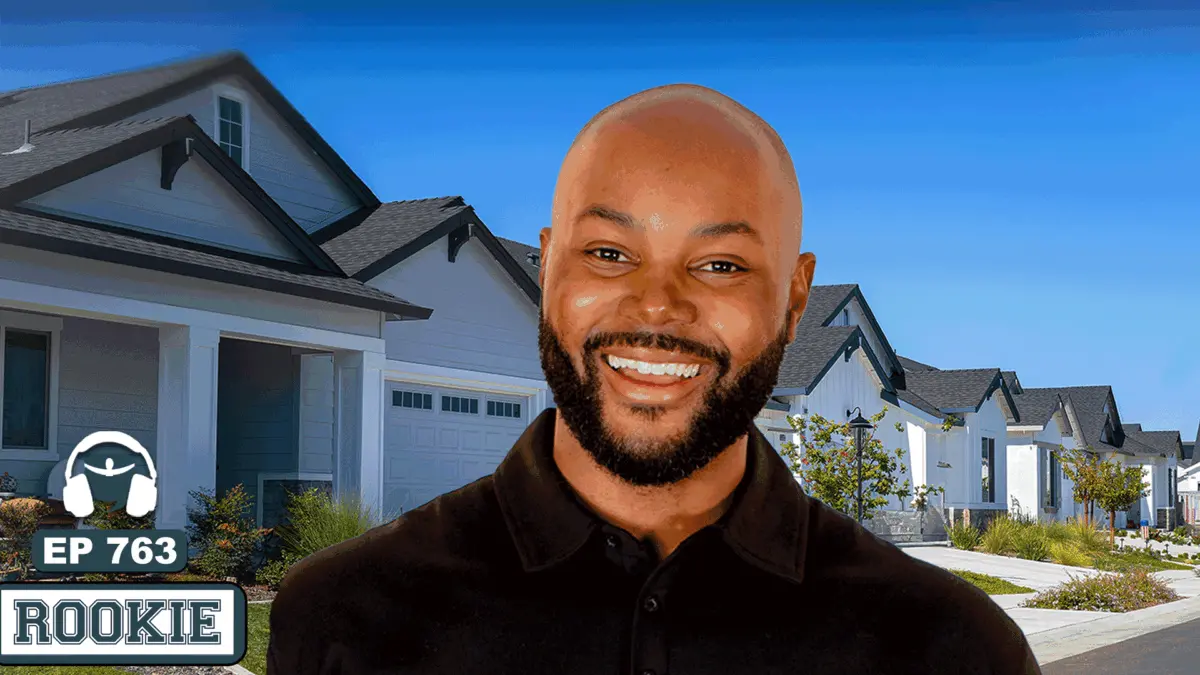
For aspiring real estate investors, the journey to purchasing a first property rarely begins with a flurry of competitive offers and open houses. More often than not, it starts with hesitation. Questions linger in the minds of prospective buyers: Am I ready? Where do I find the capital? How can I manage a property from afar, or in an expensive market?
Addressing these exact hurdles, real estate experts Ashley Kehr and Tony Robinson recently hosted an installment of the Real Estate Rookie Podcast, tackling three distinct scenarios facing today’s market newcomers. Drawing from inquiries posted on the BiggerPockets Starting Out forum, Kehr and Robinson dissected the primary roadblocks halting first-time investors—ranging from college students planning their post-graduation finances to active-duty military personnel stationed overseas, and aspiring investors trapped in high-cost-of-living coastal markets.
Main Facts: The Core Challenges Facing Today’s Rookies
The modern real estate landscape offers unprecedented access to information, yet analysis paralysis remains the single greatest threat to prospective investors. The podcast highlighted three core archetypes of hesitation:
- The Pre-Planning Collegiate: A college senior looking to leverage a future finance career, strong credit, and savings into immediate post-graduation real estate ventures.
- The Remote Military Operator: An active-duty service member stationed overseas for several years, questioning whether long-distance investing is viable or if they should wait until they return stateside.
- The High-Cost Market Resident: An investor possessing limited initial capital ($30,000) while residing in one of the most expensive real estate markets in the country (California).
According to Kehr and Robinson, successfully navigating these challenges does not require an immediate massive fortune. Instead, it relies on foundational education, creative financing strategies, robust digital systems, and a strict adherence to cold, hard data rather than emotional appeal.
Chronology of the Discussion: Deconstructing Three Unique Scenarios
Scenario 1: The College Senior Planning Ahead
The episode’s first inquiry came from Landon, a college senior graduating in May 2027 with a projected $70,000 salary in the finance industry, zero student loan debt, and a credit score exceeding 720. Landon sought a concrete framework regarding financing, savings, education, and common pitfalls to avoid during his final year.
- Education First: Robinson commended Landon for thinking about real estate in his 20s. He emphasized that education should be the primary focus during the final year of college. Rather than relying on speculative advice, rookies should utilize community forums like BiggerPockets, listen to specialized podcasts, and read strategy-specific literature (e.g., The Book on House Hacking, The Book on Rental Property Investing, or the BRRRR strategy guide).
- Financing and Down Payments: Kehr addressed the capital requirements, noting that down payments fluctuate based on loan products. An FHA loan typically requires 3.5% to 5.5% down, while conventional loans range from 5% to 20% down. Beyond the down payment, buyers must account for closing costs (appraisals, lender fees) and maintain three to six months of cash reserves—even for a primary residence—to hedge against unexpected life events or home repairs.
- The House Hacking Strategy: Kehr strongly advocated for house hacking over standard first-time homebuyer programs, which often lock owners into a five-year residency requirement. By house hacking—either by renting out individual rooms in a single-family home or purchasing a small multi-family property (duplex, triplex, or quadplex)—rookies can significantly subsidize their living expenses.
Scenario 2: Active-Duty Military Investing from Overseas
The second question originated from Tavin Walker, an active-duty service member stationed overseas for the next three to four years. Tavin questioned whether it is realistic to begin investing in US real estate while living abroad or if he should wait until his return.
- Leveraging Primary Loans Remotely: The hosts discussed the feasibility of utilizing primary residence loan products to purchase US properties while deployed. Because service members are required to serve abroad, acquiring a home via low-down-payment primary financing in the US—while bypassing the need to physically live with roommates immediately—presents a unique structural advantage, provided it satisfies legal and lender stipulations.
- Overcoming Distance Misconceptions: Robinson challenged the notion that distance inherently increases management difficulty. Whether a property is located in Buffalo, New York, while the owner lives in California, or across the Pacific in Japan, the owner cannot physically visit the property immediately. Therefore, successful remote investing relies entirely on pre-established operational systems rather than geographic proximity.
Scenario 3: Building a Portfolio with $30,000 in a High-Cost Market
The final inquiry featured Alex Sorer, a California resident with $30,000 in savings who felt priced out of his local market but eager to build a rental portfolio.
- Recycling Capital Through Local House Hacking: Robinson suggested that $30,000 is entirely sufficient to secure a 5% down payment on a larger single-family home or multi-family property using house-hacking methods within a higher-cost region. By renting out spare rooms to offset the mortgage, investors can accumulate capital over 18-month intervals, subsequently purchasing a second property and converting their former personal space into a full-time rental.
- Alternative Strategies and Private Lending: Kehr pointed out that $30,000 can serve as a powerful tool in more affordable Midwest or Rust Belt markets by acting as private capital for someone else’s rehabilitation project. Alternatively, exploring specialized niches like mid-term rentals, sober living facilities, or room rentals can yield higher returns in expensive metropolitan areas compared to traditional long-term single-family rentals.
Supporting Data & Financial Frameworks
To execute any of these strategies successfully, the podcast experts emphasized adherence to clear financial metrics:
- Credit Scores: Maintaining a score above 720, as demonstrated by Landon, unlocks favorable conventional and FHA interest rates.
- Reserves: A strict threshold of three to six months of operating capital (mortgage, taxes, insurance, and maintenance) is non-negotiable for mitigating capital expenditure (CapEx) surprises.
- Loan Structuring: Kehr advised buyers against dictating loan types to loan officers prematurely. Instead, investors should present the property and their intended use, allowing the lender to match the scenario with appropriate financial products.
- Deal Analysis: Robinson stressed that aesthetics can easily trick rookie investors into purchasing bad deals. True profitability relies on meticulous evaluation of projected revenue, operational expenses, and net operating income tailored to the specific investment strategy (short-term, mid-term, long-term, flipping, or BRRRR).
Technological Integration for Remote Management
For both military personnel stationed abroad and out-of-state investors, modern software stack integration makes hands-off management feasible. The podcast highlighted several essential tools:
- Long-Term Rental Management: Platforms like TurboTenant handle tenant screening, rent collection, maintenance requests, digital communication, and lease e-signing. Financial tracking is efficiently managed through services like Baseline.
- Short-Term Rental Automation: For Airbnb or vacation rental strategies, software ecosystems like Hospitable (incorporating automated AI messaging for guest communication), PriceLabs (dynamic pricing algorithms), and Hostfully (digital guidebooks) allow operators to manage properties seamlessly from across the globe without sacrificing guest satisfaction or review ratings.
Implications for the Broader Real Estate Market
The insights shared by Kehr and Robinson carry profound implications for the broader housing market, particularly for demographic segments traditionally excluded from property ownership:
- Democratization of Real Estate: By emphasizing house hacking and remote management, the barrier to entry is lowered for younger generations (such as college graduates and military personnel) who might otherwise be priced out by traditional 20% down payment requirements.
- Shift Toward Efficiency and Automation: The reliance on AI-driven property management software highlights how technology is transforming real estate from a localized, high-touch business into a scalable, borderless enterprise.
- Strategic Adaptation in Expensive Regions: High-cost-of-living states like California are seeing a paradigm shift where traditional long-term investing is being replaced by creative models like room-by-room rentals, mid-term corporate housing, and private money lending partnerships.
Ultimately, the consensus from the Real Estate Rookie Podcast is clear: waiting for the "perfect" moment or absolute financial comfort is often the biggest obstacle to success. By combining education, disciplined budgeting, and modern operational technology, rookie investors can transition from hesitant observers to active portfolio builders regardless of their age, location, or local market conditions.
