

By Industry News Desk
Published in Partnership with HousingWire Insights
Main Facts
When disaster strikes a community, the immediate aftermath is defined by devastation: structural ruins, displaced families, and an overwhelming wall of bureaucracy. For decades, the standard response from policymakers and financial institutions has relied on top-down solutions—millions in approved funding, complex legislative bills, and voluminous agency guidance. Yet, despite these well-intentioned efforts, a fundamental disconnect remains.
As Paul Gigliotti, CEO of the California Mortgage Bankers Association (California MBA), succinctly points out: “A family cannot rebuild a home with a press release.”
At the core of the current crisis in disaster recovery is a systemic fragmentation. While lenders, servicers, insurers, builders, and local governments may each execute their individual responsibilities efficiently, they operate in silos. This leaves the disaster-affected homeowner to act as an involuntary project manager. Survivors are forced to navigate a labyrinth of insurance claims, existing mortgages, forbearance agreements, loss-draft requirements, construction financing, local municipal permits, and public assistance programs—all while grappling with personal trauma.
To combat this, the California MBA has spearheaded a collaborative approach to modern advocacy, moving beyond traditional lobbying in Sacramento to build tangible infrastructure. Key developments include:
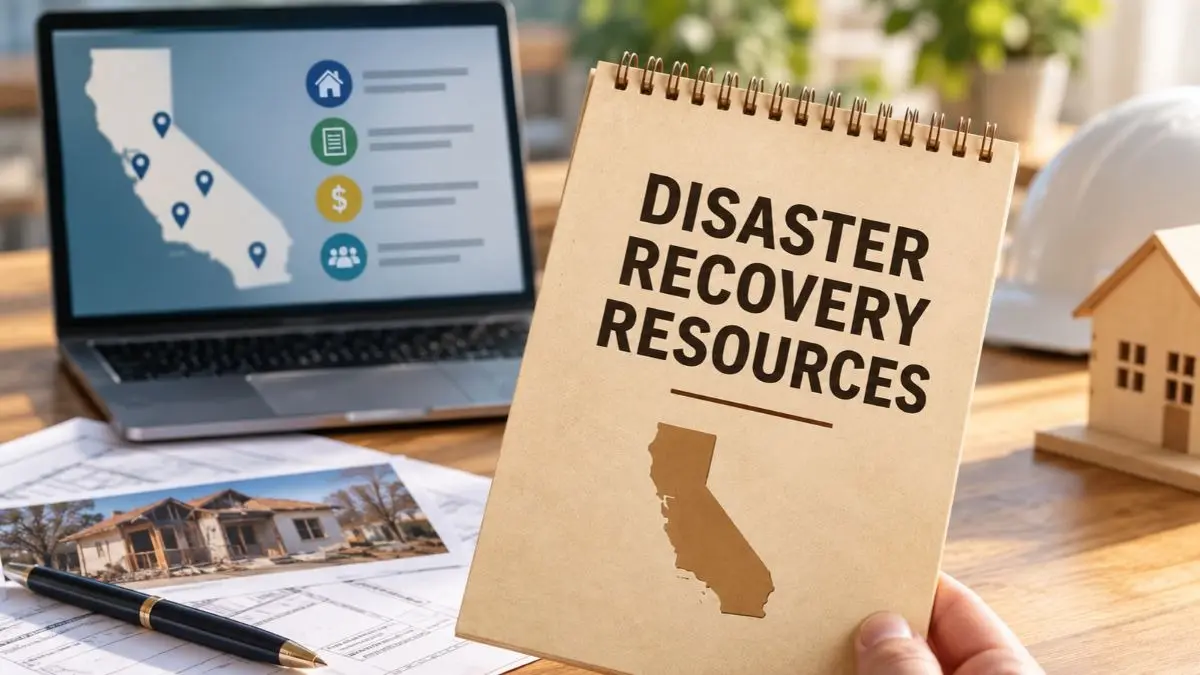
- The California Disaster Rebuilding Portal (HomeRebuildNetwork.org): A centralized digital platform developed in partnership with Prudent AI, participating lenders, and public-sector entities to simplify rebuilding finance options.
- The California Natural Disaster Recovery and Rebuild Forum: A physical and digital convergence bringing residents face-to-face with the exact agencies, lenders, insurers, and builders required to execute property restoration.
- The $100 Million Disaster Rebuilding Assistance Program: Administered via the California Housing Finance Agency (CalHFA), this state-backed initiative uses interest-rate buydowns and loan-loss guarantees to bridge the financing gap between insurance payouts and skyrocketing construction costs.
Chronology of a Broken System: The Homeowner’s Journey
To understand why modern disaster recovery needs radical reform, one must trace the chronological timeline a displaced family faces following a catastrophic event, such as a wildfire, flood, or earthquake.
Phase 1: Immediate Aftermath and Assessment (Days 1–30)
In the immediate wake of a disaster, families are evacuated or left homeless. Their primary concerns are shelter, food, and safety. Concurrently, they must notify their mortgage servicer and property insurance provider. However, confusion immediately sets in regarding mortgage payments. While forbearance options exist, navigating the paperwork while displaced creates immense friction.
Phase 2: The Bureaucratic Maze (Months 2–6)
As the shock wears off, the true economic reality sets in. Homeowners quickly discover that insurance payouts rarely cover the actual cost of rebuilding, exacerbated by inflation, labor shortages, and building code updates.
- Loss-Draft Hesitations: Homeowners must work with mortgage servicers to release insurance claim funds incrementally as construction milestones are met—a process often bogged down by inspections and rigid red tape.
- The Financing Gap: Traditional lenders may be hesitant to extend new construction loans to borrowers who are already carrying distressed mortgages on a destroyed property.
Phase 3: The Project Management Nightmare (Months 6–18+)
Without a centralized guide, the homeowner transitions into a stressed project manager. They must coordinate architects, secure municipal permits from overwhelmed local planning offices, negotiate with builders, and track down state or federal relief funds. If any single component stalls—such as a delayed permit or an unapproved loan modification—the entire rebuilding timeline collapses.
Recognizing that this workflow is untenable for families already carrying significant emotional and financial burdens, industry leaders realized that policy design must account for the messy reality of execution.
Supporting Data and Financial Mechanisms
The economic realities of post-disaster recovery in high-cost states like California require significant financial intervention. The $100 million Disaster Rebuilding Assistance Program serves as a vital case study in modern public-private financial engineering.
The Construction Cost Gap
According to regional real estate data, the average cost per square foot to rebuild after a major wildfire has risen drastically over the last five years. Insurance policies, frequently capped by outdated replacement cost estimates or underinsurance issues, often leave a $100,000 to $300,000 financing gap per household.
Financial Engineering via CalHFA
To close this chasm, the California Housing Finance Agency’s program employs two primary financial tools:
- Interest-Rate Buydowns: By subsidizing the interest rates on specialized construction loans, the program reduces the monthly debt service burden for homeowners who are simultaneously paying for temporary housing and a paused or active primary mortgage.
- Loan-Loss Guarantees: These guarantees provide financial backing to participating lenders, mitigating the perceived risk of extending credit to disaster victims whose equity has been temporarily wiped out.
The Technological Solution: HomeRebuildNetwork.org
Recognizing that capital allocation is useless if borrowers cannot find or access it, the California MBA partnered with technology provider Prudent AI. The result is the California Disaster Rebuilding Portal.
- Functionality: The portal replaces a fragmented web of state agency pages and private lender requirements with a single, highly visible digital front door.
- Accessibility: Homeowners can input their specific geographic and financial parameters to immediately identify eligible rebuilding-finance programs, connect with vetted regional lenders, and access step-by-step guidance.
Official Responses and Industry Perspectives
The shift from passive lobbying to active, operational advocacy has redefined the role of trade associations in the financial services sector.
Paul Gigliotti on Modern Advocacy
Paul Gigliotti, CEO of the California MBA, has consistently emphasized that education and legislative pushback are only the first steps of effective advocacy.
"When I became CEO of the California MBA, I brought a simple belief with me: Advocacy could be expanded through collaboration. I have always viewed advocacy as education—bringing the people who understand an issue into the conversation so policymakers can see how a proposal will work in the real world. But this year has sharpened that belief. Education is only the beginning. Advocacy must also help good policy survive contact with real life."
Gigliotti notes that while securing budget allocations in Sacramento or stopping harmful bills is critical, the true test of success happens on the ground. "If the people a policy was designed to help cannot understand it, find it or use it, the work is not finished," he stated.
The Role of Public-Sector and Industry Partners
The operational success of initiatives like the California Disaster Rebuilding Portal relies entirely on deep cooperation across multiple sectors. Participating entities include:
- Mortgage Lenders and Servicers: Providing flexible forbearance, streamlined loss-draft processing, and specialized construction loan products.
- Local Municipalities: Engaging directly with residents at recovery forums to demystify the permitting and zoning approval process.
- Insurance Representatives: Clarifying policy structures and expediting loss adjustments in real-time.
By breaking down the walls between these disparate groups, trade associations are proving that industry membership dollars can be leveraged to build direct consumer infrastructure rather than just lobbying power.
Implications for the Future of Disaster Recovery
The innovative framework being pioneered in California carries profound implications for housing markets, mortgage banking, and public policy nationwide. As climate change increases the frequency and severity of natural disasters across the United States, systemic vulnerabilities in housing finance will only compound.
1. A New Blueprint for State-Level Trade Associations
The model established by the California MBA demonstrates that trade groups can—and should—play an active convening role during crises. Associations are uniquely positioned to sit at the intersection of public policy, private capital, and consumer execution. By identifying where institutional handoffs fail, associations can translate systemic problems back to policymakers and help engineer practical solutions.
2. The Evolution of Housing Finance Technology
The integration of artificial intelligence and centralized portals (such as HomeRebuildNetwork.org) marks a turning point in how consumers interact with disaster relief. Future disaster responses will likely require standardized, interoperable digital conduits that connect borrowers, servicers, and government agencies instantaneously, minimizing the friction of paper-based documentation.
3. Redefining the Standard of Success
Ultimately, the initiatives in California establish a new benchmark for evaluating community resilience and industry leadership. As Gigliotti aptly concludes:
"The test of advocacy is not whether we can point to a bill number, a budget allocation or a successful announcement. The test is whether a family knows what to do Monday morning. That is the standard. And that is where our work begins."
As other states face mounting climate and housing pressures, the collaborative, tech-forward, and consumer-centric model forged in California will undoubtedly serve as a guiding light for the future of American housing stability.
