

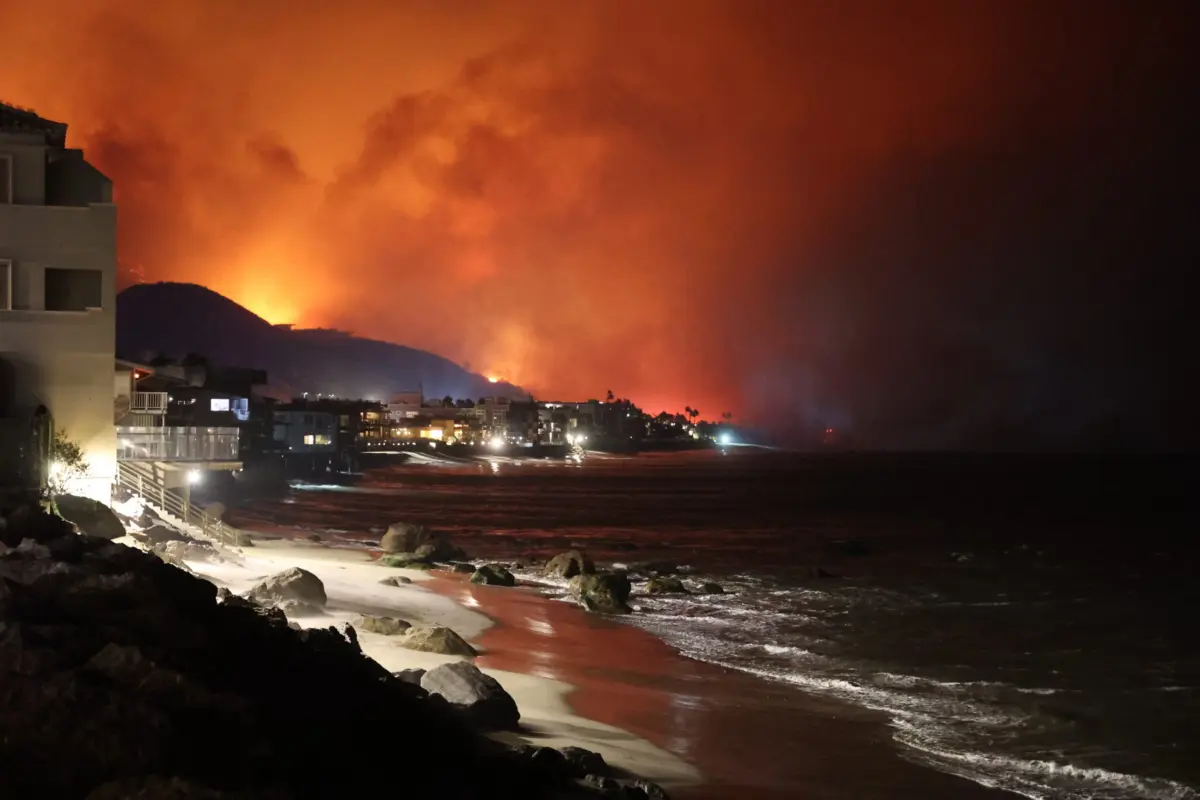
SACRAMENTO, Calif. — In a sweeping legislative move aimed at closing long-standing consumer protection gaps, California Governor Gavin Newsom has signed Assembly Bill 1795, officially known as the Smoke Damage Recovery Act. Authored by Assemblymember Mike Gipson and sponsored by California Insurance Commissioner Ricardo Lara, the newly minted law establishes rigorous, standardized protocols for the investigation, testing, and restoration of smoke-damaged residential properties.
The legislation arrives at a critical juncture for a state continuously besieged by climate-driven natural disasters and industrial accidents. By establishing clear regulatory guardrails, AB 1795 fundamentally reshapes the relationship between property insurance policyholders and carriers, ensuring that victims of airborne contamination are not left to shoulder the physical, emotional, and financial burdens of recovery alone.
Main Facts: What AB 1795 Changes for California Homeowners
At its core, AB 1795 addresses a historically gray area in property insurance claims: the remediation of smoke and particulate contamination. While structural fire damage has clear assessment guidelines, smoke damage has frequently triggered prolonged disputes between policyholders and insurance adjusters over the extent of contamination, the necessity of specialized testing, and the definition of a "safe" living environment.
The statute introduces several sweeping mandates designed to tilt the playing field back toward consumers:
- Presumption of Wildfire Causation: The law creates a legal presumption that smoke damage discovered within a declared wildfire impact area is a direct result of that wildfire. This shifts the evidentiary burden away from the homeowner, who previously had to prove the microscopic provenance of toxic soot and particulate matter in their living spaces.
- Mandatory Insurer-Funded Testing: Insurers are now legally required to cover the costs of necessary professional testing, air sampling, and HVAC system analysis. Under the previous status quo, homeowners often paid out-of-pocket for industrial hygienists to document invisible chemical residues.
- Protection of Additional Living Expense (ALE) Benefits: The legislation strictly prohibits insurance carriers from unilaterally terminating or cutting off ALE benefits—funds designated for temporary housing—until a home has been fully restored and officially certified as safe to reoccupy. This prevents families from being forced back into toxic, smoke-damaged environments prematurely.
- Interagency Evaluation and Future-Proofing: AB 1795 directs the California Department of Insurance (CDI) and the California Governor’s Office of Emergency Services (CalOES) to continuously evaluate the evolving challenges posed by smoke and particulate contamination. They are tasked with developing ongoing recommendations to fortify consumer protections against future large-scale contamination events.
Chronology of a Crisis: How the Legislative Push Unfolded
The path to AB 1795 was forged through a combination of mounting consumer grievances, intense regulatory oversight, and sudden urban environmental catastrophes that exposed vulnerabilities in California’s insurance framework.
Early 2025: The Post-Wildfire Reckoning
As seasonal wildfires increasingly encroached upon suburban and urban interfaces, the CDI began receiving an unprecedented volume of complaints regarding disputed smoke damage claims. Homeowners reported that while their structures remained standing, fine particulates, carcinogenic polycyclic aromatic hydrocarbons (PAHs), and heavy metals had permeated every porous surface, insulation layer, and ventilation duct. Insurance adjusters, however, frequently denied coverage, claiming the damage was merely cosmetic or that the source could not be definitively traced to a specific wildfire event.
June 2025: The L.A. Wildfires and the Task Force
The breaking point occurred following a series of destructive fires in the greater Los Angeles area in June 2025. The sheer volume of disputed claims prompted Insurance Commissioner Ricardo Lara to take decisive executive action, establishing the Smoke Claims and Remediation Task Force.
Composed of wildfire survivors, consumer advocates, industrial hygienists, public health experts, and lawmakers, the task force conducted a deep-dive investigation into market practices. Its findings were stark: wildfire victims were falling through massive regulatory gaps, routinely facing denied claims, delayed inspections, and aggressive efforts by carriers to prematurely cut off temporary housing stipends while homes remained uninhabitable.
June 2026: The Boyle Heights Warehouse Fire
While the task force was formulating its recommendations, a different kind of smoke crisis struck the heart of Los Angeles. In June 2026, a catastrophic fire engulfed the Lineage Logistics cold storage warehouse in Boyle Heights.
The massive blaze—consuming a staggering 491,000-square-foot facility—sent towering plumes of dark, toxic smoke billowing across densely populated urban neighborhoods for days. The industrial disaster raised immediate questions regarding insurance coverage for non-wildfire airborne contamination, highlighting that urban centers were just as vulnerable to prolonged particulate fallout as rural interface zones. The overlapping crises provided the political momentum necessary to fast-track AB 1795 through the legislative process, culminating in Governor Newsom’s signature.
Supporting Data: The Scale of Contamination and Consumer Vulnerability
To understand the necessity of AB 1795, one must examine the unique scientific and economic realities of smoke damage. Modern structural and wildland fires do not merely burn wood; they consume modern building materials, plastics, electronics, and synthetic textiles, generating a complex aerosolized soup of toxic chemicals.
According to industrial hygiene studies presented to the CDI’s task force:
- Microscopic Penetration: Fine particulate matter ($PM_2.5$ and smaller) can bypass standard household dust filters, settling deep into drywall, subflooring, and soft furnishings.
- Off-Gassing and Health Risks: Residues left behind by burned synthetic materials continuously off-gas volatile organic compounds (VOCs), triggering severe respiratory distress, asthma attacks, and long-term carcinogenic risks for returning residents.
- The Cost Discrepancy: Prior to the passage of AB 1795, professional remediation for a heavily smoke-impacted home often ranged from $20,000 to over $100,000, depending on HVAC replacement and structural cleaning. When insurers refused coverage, many lower- and middle-income families were forced to clean the homes themselves, exposing their families to hazardous toxins, or abandon their properties entirely while continuing to pay mortgages on uninhabitable houses.
Furthermore, economic data from the CDI indicates that Additional Living Expense disputes have risen by over 140% over the last five wildfire seasons, as housing shortages across California made finding alternative rentals increasingly difficult and expensive. The prohibition of premature ALE termination directly addresses this financial squeeze.
Official Responses: Industry Caution Meets Consumer Advocacy
The signing of AB 1795 has elicited a complex array of responses from stakeholders across the insurance, legal, and consumer advocacy landscapes.
The Insurance Industry Perspective
While insurers acknowledge the need for clarity, trade organizations representing property and casualty carriers have expressed cautious optimism paired with a demand for rigorous scientific oversight during the regulatory rulemaking phase.
The American Property Casualty Insurance Association (APCIA) issued a formal statement characterizing the new law as “a meaningful step toward clearer guidance on smoke damage claims.” However, the association emphasized that the long-term success of the statute hinges on how state regulators implement its provisions.
"APCIA remains committed to working in good faith with policymakers, regulators, consumers, and scientific experts to support standards that protect consumers, improve transparency and understanding, and help maintain affordable and available insurance coverage for Californians," the association’s statement read.
Industry representatives have stressed that as the California Department of Insurance drafts regulations around testing standards, the methodologies must be strictly “grounded in credible science, valid methodologies, and the best available technical expertise” to prevent inflated remediation claims that could further destabilize California’s already strained property insurance market.
Consumer Advocates and Regulators
Conversely, consumer protection groups and public health advocates have hailed AB 1795 as a historic victory for disaster survivors. For years, advocates argued that insurance policies contained ambiguous language regarding "direct physical loss," which carriers weaponized to deny smoke claims by demanding impossible burdens of proof from homeowners.
Insurance Commissioner Ricardo Lara championed the bill as an essential tool to restore fairness and accountability to the insurance marketplace.
"For too long, wildfire survivors have been left to navigate a labyrinth of uncertainty, fighting insurance companies over microscopic damage that makes their homes unlivable," regulatory stakeholders noted during the legislative rollout. "AB 1795 establishes a clear, equitable baseline that puts the health and well-being of California families first."
Implications: What AB 1795 Means for the Future of California Insurance
The enactment of the Smoke Damage Recovery Act carries profound implications for the state’s insurance ecosystem, property markets, and disaster recovery infrastructure.
1. Shifts in Claims Handling and Litigation
Insurance carriers operating in California will be forced to overhaul their claims-adjusting protocols. Adjusters can no longer issue blanket denials for smoke claims based on visual inspections alone. Instead, carriers must budget for certified industrial hygienist testing and factor mandatory air quality clearances into their claims reserves. This is expected to reduce the volume of protracted civil litigation between policyholders and insurers, replacing courtroom battles with standardized scientific benchmarks.
2. Interplay with the Broader Insurance Crisis
California’s property insurance market has faced severe headwinds in recent years, with numerous major carriers reducing their footprint, non-renewing policies, or exiting the state entirely due to escalating wildfire risks. Industry critics have occasionally raised concerns that new mandates could drive up claim payout costs, potentially translating to higher premiums for consumers.
However, proponents of AB 1795 argue that standardizing the process will ultimately reduce administrative and legal friction, bringing greater predictability to the market. By establishing objective criteria for what constitutes smoke damage, both carriers and consumers will operate under a shared set of rules, curbing fraudulent or speculative claims while ensuring legitimate losses are paid promptly.
3. Preparation for Future Disasters
With climate change exacerbating both the frequency and intensity of wildfires—while urban industrial accidents remain an unpredictable hazard—AB 1795 future-proofs California’s disaster response framework. The mandated collaboration between the CDI and CalOES ensures that the state will continuously update its technical guidelines as environmental science evolves.
Ultimately, AB 1795 signals a philosophical shift in California public policy: recognizing that the invisible scars of a disaster—the microscopic soot, ash, and chemical residues lingering long after the flames have been extinguished—are just as destructive to a home and family as structural fire damage, and demand an equally robust, legally enforceable standard of care.
