

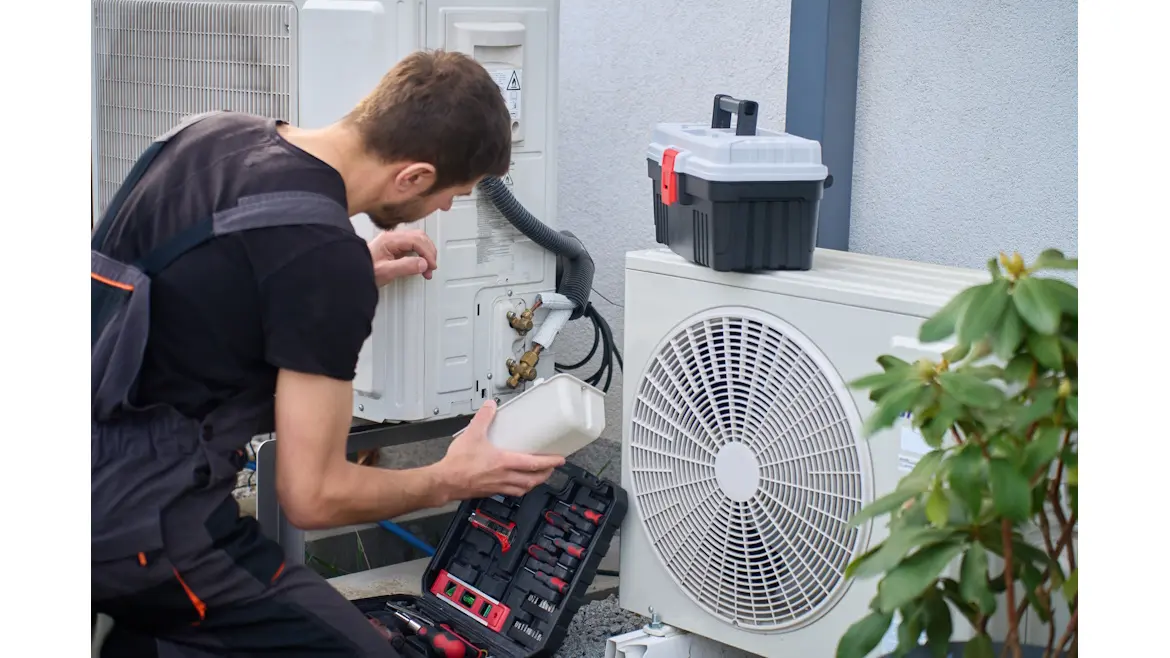
SACRAMENTO, Calif. — In a legislative milestone poised to reshape the residential heating, ventilation, and air conditioning (HVAC) landscape, the California Legislature overwhelmingly passed a measure on August 25 designed to establish the nation’s first unified, statewide permitting process for residential heat pump installations.
Senate Bill 222 (SB 222), known as the Heat Pump Access Act, successfully navigated both chambers of the state legislature with bipartisan support. Authored by Senator Scott Wiener (D-San Francisco), the legislation addresses chronic bureaucratic bottlenecks, exorbitant soft costs, and inconsistent local ordinances that industry advocates argue have slowed the state’s clean energy transition.
If signed by Governor Gavin Newsom—who faces a September 30 deadline to act—California will become the first state in the nation to mandate a standardized statewide framework for residential heat pump HVAC systems and heat pump water heaters. Co-sponsored by the Building Decarbonization Coalition, SPUR, and the Bay Area Air District, the bill aims to clear a path for contractors and homeowners alike, replacing a fragmented municipal regulatory web with modern, streamlined digital infrastructure.
Main Facts: What SB 222 Entails
At its core, SB 222 is designed to dismantle the "patchwork" regulatory environment that currently governs home improvement projects across California’s roughly 600 local municipal and county jurisdictions. At present, an HVAC contractor working across neighboring cities may encounter wildly divergent local codes, disparate fee structures, unique paper-based application mandates, and conflicting inspection schedules. This administrative friction frequently translates into added labor hours, project delays, and inflated costs for consumers.
To resolve these challenges, SB 222 introduces rigorous standardization requirements that local jurisdictions must phase in over the coming years:
- Asynchronous Inspections: Beginning July 1, 2027, local building departments will be legally required to offer asynchronous inspections for qualifying residential heat pump installations. This modification eliminates the requirement for a licensed contractor and a municipal building inspector to be physically present at the job site at the exact same time, significantly reducing scheduling bottlenecks.
- Online Automated Permitting: By July 1, 2028, local jurisdictions must deploy online, automated permitting portals for qualifying installations. Under this digital system, permits will be issued in real time once contractors input standardized project parameters verifying that technical requirements have been met.
- Equitable HOA Guardrails: The legislation establishes clear provisions designed to curb restrictive, punitive, or unnecessary bans and aesthetic constraints imposed by homeowners associations (HOAs) on exterior residential heat pump equipment and water heaters.
- Rigorous Technical Standards: To ensure quality control and consumer protection, the measure mandates that qualifying contractors certify that a proper ACCA-compliant load calculation or equivalent sizing methodology was performed to accurately size the replacement equipment before fast-track permits are issued.
- Scope of Application: The law is strictly tailored to retrofit projects in existing residential homes. It exempts new residential construction, where standardized building processes are already more easily integrated.
Chronology: The Path of SB 222
The journey toward statewide heat pump permitting reform reflects years of lobbying, coalition building, and legislative maneuvering by climate advocates, labor representatives, and HVAC industry stakeholders.
- Early Context and Grassroots Advocacy: For years, contractors and consumer advocacy groups voiced growing frustration over municipal inefficiencies. While state incentives heavily promoted electric heat pumps, the ground-level reality of pulling local permits often discouraged homeowners from making the switch.
- Drafting and Introduction: Senator Scott Wiener, recognizing that climate goals were being hamstrung by local bureaucracy, drafted SB 222 with input from municipal planning experts, environmental organizations, and HVAC trade groups.
- The Legislative Push: Throughout the spring and summer legislative sessions, co-sponsors including the Building Decarbonization Coalition and SPUR marshaled data illustrating how administrative delays translate into hundreds of dollars in added costs per installation.
- August 25 Floor Votes: The legislative endgame culminated on August 25. The California State Senate approved the measure with a decisive 26-5 vote, swiftly followed by the State Assembly, which passed the bill by a wide 60-8 margin.
- Current Status: Having cleared both legislative chambers, SB 222 has officially been transmitted to Governor Gavin Newsom’s desk. The governor holds until September 30 to sign the bill into law, allow it to become law without his signature, or issue a formal veto.
Supporting Data: Economic and Environmental Impacts
Supporters of SB 222 have anchored their campaign in robust economic data and consumer research, emphasizing that heat pumps are no longer just an environmental luxury, but an essential tool for public health, grid reliability, and household budgeting.
Financial Savings for Homeowners
Data compiled from TECH Clean California highlights the tangible financial benefits of electrification. Households that transition from traditional fossil-fuel systems to a heat pump for space heating and cooling save an average of $304 annually. Similarly, homeowners replacing a conventional gas water heater with an energy-efficient heat pump water heater save an average of $97 annually.
For residences lacking pre-existing central air conditioning—a common vulnerability during California’s intensifying summer heatwaves—adding a heat pump system results in a median increase of just $3 per month in operational energy costs, according to program findings.
Customer Satisfaction and Public Health
Broad consumer satisfaction metrics further bolster the push for market acceleration. A statewide survey cited by bill proponents revealed that more than 90% of heat pump owners are satisfied with the performance of their heat pump HVAC systems or water heaters.
Furthermore, public health advocates emphasize the cooling imperative. With extreme heat events becoming more frequent and severe due to climate change, fast-tracked permitting directly translates into faster access to life-saving indoor climate control for vulnerable populations.
Official Responses and Stakeholder Perspectives
The broad bipartisan legislative vote and diverse coalition backing SB 222 underscore a unified recognition that California must modernize its administrative infrastructure to meet its ambitious climate targets.
Senator Scott Wiener emphasized the immediate human and financial stakes of the legislation during floor debates:
"Speeding up low-cost installations for heat pumps is how we protect California families from extreme heat and rising energy costs," Wiener stated. "Californians need to be able to afford their monthly utility bills, and they need cooling to guard against the risks of extreme heat."
The contracting and advocacy community welcomed the legislative breakthrough as a long-overdue correction to systemic inefficiencies. Madison Vander Klay, government affairs manager at the Building Decarbonization Coalition, underscored the practical relief the bill offers field professionals:
"Californians and the contractors who serve them deserve a simpler, faster, more predictable and affordable process for installing heat pumps."
Colleen Corrigan, sustainability and resilience policy manager at SPUR, highlighted the intersection of affordability and climate resilience:
"Heat pumps are one of our best tools for cutting pollution, lowering energy bills, and keeping people safe from extreme heat. But right now, inconsistent local permitting and avoidable soft costs are adding hundreds of dollars to every installation."
From a regional air quality perspective, Alan Abbs, legislative officer for the Bay Area Air District, pointed to the cumulative environmental dividends of replacing combustion appliances:
"Every gas furnace and water heater we replace with a heat pump means cleaner air in our neighborhoods and less pollution across the Bay Area."
Broader Implications: Decarbonization and the HVAC Industry
The passage of SB 222 arrives at a critical juncture for California’s climate policy. The state is operating under aggressive administrative mandates set by Governor Newsom’s administration, which include a target of installing 6 million heat pumps by 2030 and fostering 7 million climate-ready homes by 2035.
Until now, the state’s financial incentive programs have successfully stimulated consumer demand. However, the supply side—specifically the mechanics of project execution—has frequently choked momentum. By streamlining the administrative pipeline, SB 222 addresses the "soft costs" (permitting fees, administrative overhead, and inspection delays) that can account for a significant percentage of total project expenses.
What This Means for HVAC Contractors
For HVAC contractors and mechanical service providers doing business in California, the implementation of SB 222 represents both an operational evolution and a significant business opportunity.
- Reduced Administrative Friction: Contractors will no longer need to maintain extensive, custom-tailored knowledge bases for dozens of distinct municipal building departments. A standardized compliance structure allows office personnel to process paperwork with speed and predictability.
- Cross-Jurisdictional Mobility: Technicians and contracting firms can more easily scale their operations across county and municipal lines, increasing their potential service radius without getting bogged down in localized bureaucratic red tape.
- The Transition Timeline: While the law takes effect immediately upon gubernatorial signature, contractors must prepare for the phased implementation dates. Asynchronous inspections will become mandatory on July 1, 2027, followed by fully automated online real-time permitting on July 1, 2028.
- Emphasis on Professional Standards: Because expedited permitting is contingent on certified load calculations, contractors who already practice rigorous engineering and sizing methodologies will find themselves uniquely positioned to benefit from the fast-track portals.
Conclusion
As the clock ticks toward the September 30 deadline, all eyes remain on Governor Newsom’s office. If signed, SB 222 will establish a national blueprint for how states can marry ambitious climate policy with practical, business-friendly administrative reform—proving that saving the planet and saving contractors time and money can go hand in hand.
