

SACRAMENTO, Calif. — In a sweeping policy move that sets a new national precedent for artificial intelligence regulation, California Governor Gavin Newsom has signed a comprehensive package of seven bills aimed at curbing the immense resource demands of the state’s booming AI infrastructure. The newly enacted laws fundamentally shift the financial and environmental burden of the artificial intelligence boom, requiring massive data centers to shoulder the costs of local power grid and water system upgrades rather than passing those expenses onto everyday ratepayers.
The legislation marks a significant escalation in the ongoing friction between the rapid, power-hungry expansion of generative AI and the physical limits of municipal utilities. By forcing tech giants and data center operators to pay their own way, California is attempting to shield local communities from skyrocketing utility bills, grid instability, and overstressed water supplies.
Main Facts
The core of Governor Newsom’s newly signed legislative package targets the infrastructure strain caused by the rapid proliferation of AI data centers across California.
- Grid and Utility Cost Shifting: The package directs the California Public Utilities Commission (CPUC) to establish a distinct, dedicated rate classification specifically for data centers. This ensures that the energy-intensive facilities cannot piggyback on residential or small-business utility structures. Furthermore, data centers are now legally required to pay directly for local power grid enhancements and water system overhauls necessitated by their operations.
- Resource Transparency and Disclosures: Under the new rules, developers proposing new data centers must formally disclose detailed projections of their estimated water use, comprehensive energy efficiency plans, and regional drought-mitigation strategies to local governments before breaking ground.
- Streamlined Approval Contingencies: To qualify for expedited or streamlined environmental and municipal approval processes, data center projects must meet strict statutory thresholds regarding energy efficiency, water consumption, and green fuel usage.
- Political and Regulatory Context: The legislation arrives on the heels of a related executive order signed by Governor Newsom last week, which accelerates the development of regulatory "kill switches" for advanced artificial intelligence models.
Chronology of the AI Infrastructure Crisis in California
The journey toward these landmark regulations reflects years of mounting anxiety over the sheer physical footprint of the tech industry’s latest gold rush.
The Rise of Hyper-Scale Computing (2022–2024)
Following the public explosion of generative AI sparked by models like OpenAI’s ChatGPT, tech giants embarked on a historic spending spree to construct massive data centers. Northern California’s Silicon Valley and several rural and suburban counties across the state quickly became prime locations for these facilities, which require unprecedented amounts of electricity to power racks of specialized graphics processing units (GPUs) and millions of liters of water daily for liquid cooling systems.
The Local Backlash and Grid Warnings (2025)
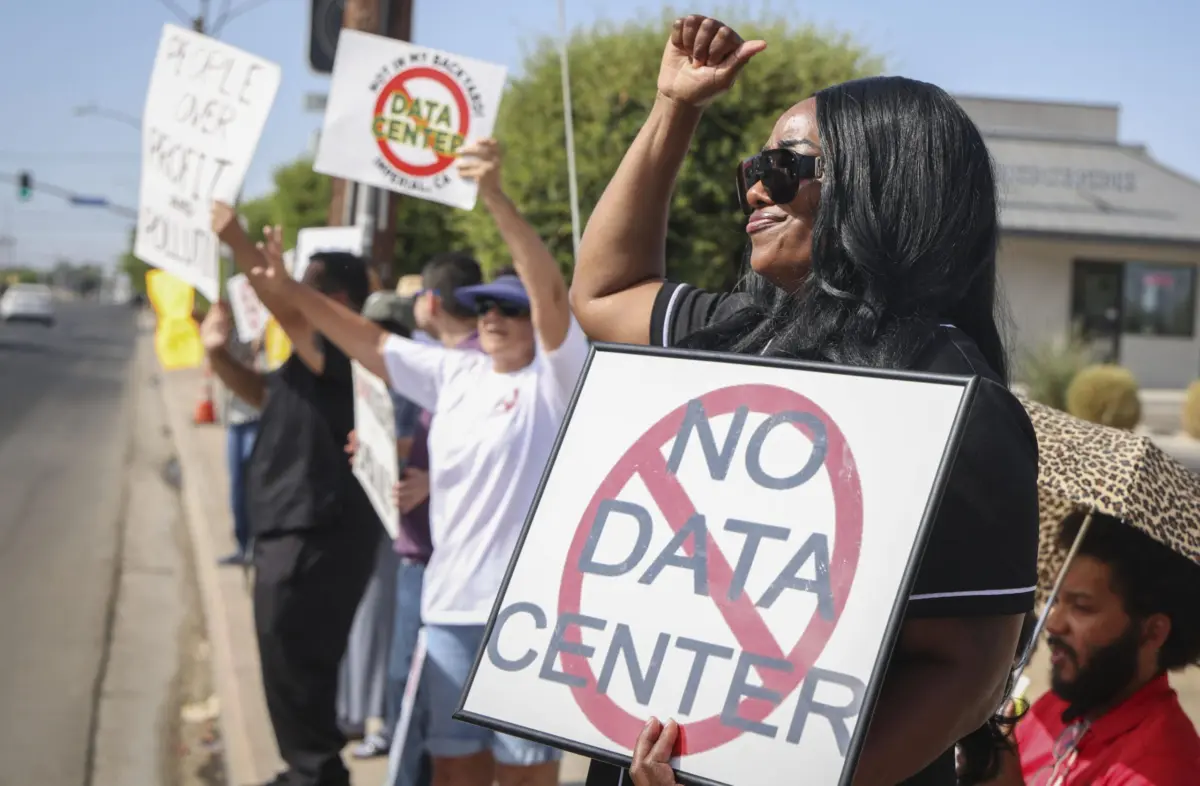
By early 2025, regional utility providers and municipal governments began sounding alarms. Grid operators warned that the localized clustering of data centers threatened to trigger rolling blackouts, strain aging substation transformers, and deplete local aquifers. Community groups and environmental advocates organized protests outside municipal offices, pointing out the glaring paradox of households facing rising electricity tariffs while tech companies enjoyed cheap, subsidized power to train massive neural networks.
Legislative Push and Federal Contrast (Mid-2026)
Throughout the 2026 legislative session, state lawmakers worked in tandem with environmental groups to craft a legislative package that would bite back against unregulated expansion. The bills moved rapidly through the state legislature, drawing intense lobbying from big tech associations while earning strong support from consumer watchdog groups.
On September 21, 2026, Governor Newsom officially signed the seven-bill package into law, cementing California’s position as the most aggressively regulated state in the nation concerning AI infrastructure.
Supporting Data and Environmental Realities
The urgency behind Newsom’s legislative package is rooted in staggering metrics regarding resource consumption. Modern AI data centers are fundamentally different from traditional web-hosting server farms. Training and operating frontier large language models (LLMs) requires continuous, heavy-load computing power that operates 24 hours a day, 7 days a week.
- Power Demands: A single large-scale AI data center can consume as much electricity as a medium-sized American town—often ranging from 100 megawatts to over a gigawatt of continuous power.
- Water Consumption: Beyond electricity, cooling massive server arrays requires millions of gallons of water daily. In a drought-prone state like California, competing with agricultural and residential needs has become a flashpoint. Studies cited by environmental coalitions indicate that a typical mid-sized AI facility can consume water equivalent to the daily usage of tens of thousands of households.
- Transmission Bottlenecks: According to regional grid planners, integrating these massive loads requires billions of dollars in high-voltage transmission line upgrades, localized substation retrofits, and backup generation infrastructure. Prior to the new laws, these capital expenditures were frequently socialized across all utility ratepayers, driving up monthly electricity bills for ordinary Californians.
Official Responses and Political Posturing
The signing of the bills has ignited a sharp debate, drawing stark contrasts between state-level intervention and federal deregulation trends.

In a pointed statement accompanying the bill signing, Governor Newsom sharply criticized the federal government’s approach to the technology sector.
"While the Trump administration moves toward deregulation, communities are left to deal with the consequences — higher electricity demand, grid constraints, water use, and pollution," Newsom said in the official press release. "With these laws, we are ensuring that Californians remain in the driver’s seat — and that those profiting from data centers aren’t doing so at our expense."
Consumer advocacy groups and municipal leaders have largely praised the legislation as a long-overdue check on corporate overreach. Representatives from utility labor unions and environmental justice organizations noted that the laws finally provide local municipalities with the legal teeth needed to say "no" to projects that threaten local resources.
Conversely, industry trade groups and tech sector lobbyists have expressed caution, warning that the heavy regulatory burden and mandated financial contributions could slow down AI development in California. Some tech executives argue that forcing data centers to pay entirely for infrastructure upgrades could incentivize companies to shift future capital investments, data center construction, and high-tech talent to neighboring states with looser regulatory frameworks, such as Texas or Nevada.
Broader Implications for the Tech Industry and Future Regulation
Governor Newsom’s legislative package is more than just a localized California policy—it serves as a bellwether for the entire United States technology landscape. As AI adoption accelerates globally, the intersection of artificial intelligence and physical infrastructure has transformed from a backroom utility issue into a central pillar of public policy.
1. The "California Effect" on National Policy
Historically, regulations passed in California—particularly regarding environmental standards and consumer privacy (such as the CCPA)—tend to become de facto national standards as companies find it easier to comply across the board rather than fragmenting their operations state-by-state. These new data center laws could inspire similar legislative efforts in Washington state, Oregon, Virginia (the data center capital of the East Coast), and Texas.
2. Economic Friction vs. Sustainability
The legislation forces a reckoning within the artificial intelligence sector. For years, the prevailing narrative around AI focused solely on software capabilities, algorithmic breakthroughs, and market valuations. The California laws force a sudden and stark realization of the physical reality: AI has a heavy, tangible mass. Companies must now factor physical infrastructure costs directly into their financial models.
3. Energy Market Innovations
To comply with the new rules while maintaining aggressive training schedules, tech giants may be forced to innovate on the energy front more rapidly than anticipated. This could accelerate corporate investments in private microgrids, direct partnerships with renewable energy developers (such as dedicated solar and wind farms), and even the revival or direct funding of advanced nuclear energy facilities to power future generations of data centers independently.
Ultimately, by demanding that the architects of the artificial intelligence revolution pay for the physical tracks their trains run on, California has redrawn the boundaries between digital innovation and public welfare.
