

For more than a century, two majestic, towering-sailed schooners bore witness to American history. The Pilot and the Victory Chimes served their country through the crucible of world war, hosted legendary oceanographers like Jacques Cousteau, and were immortalized in the numismatic history of the United States—with the Victory Chimes famously gracing the reverse of the 2003 Maine state quarter.
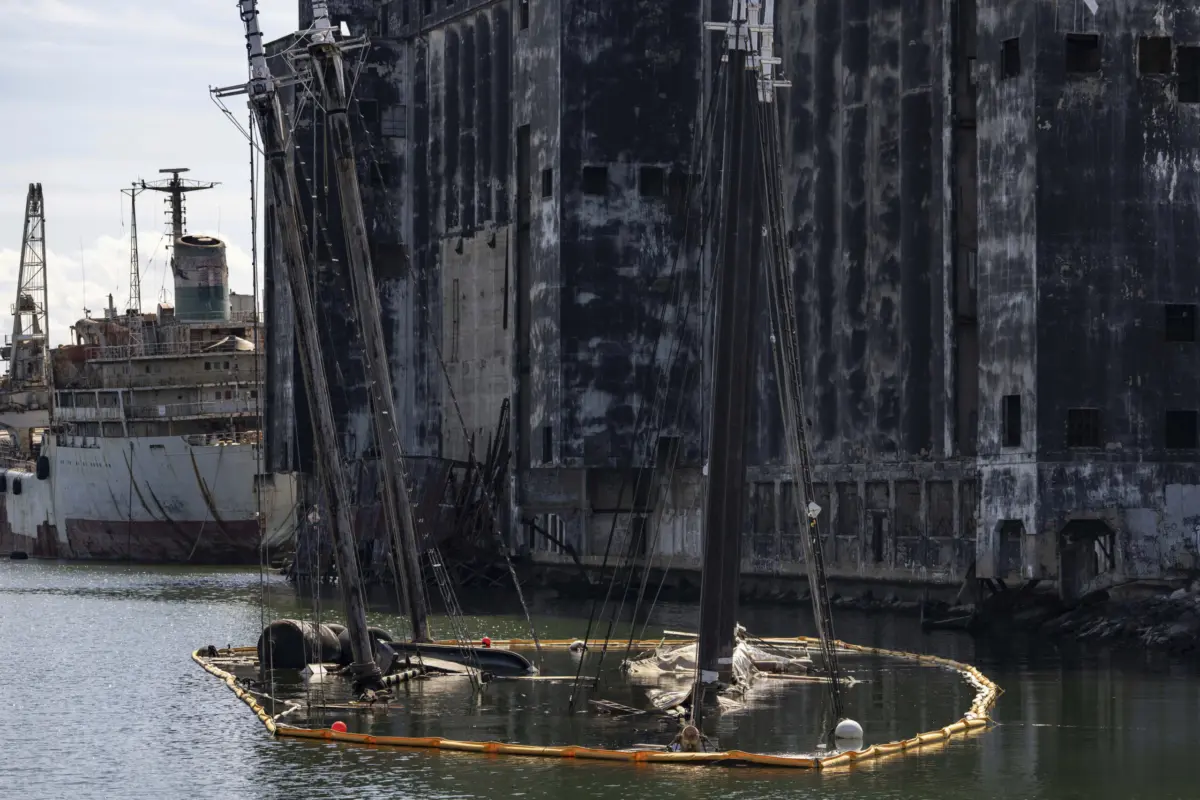
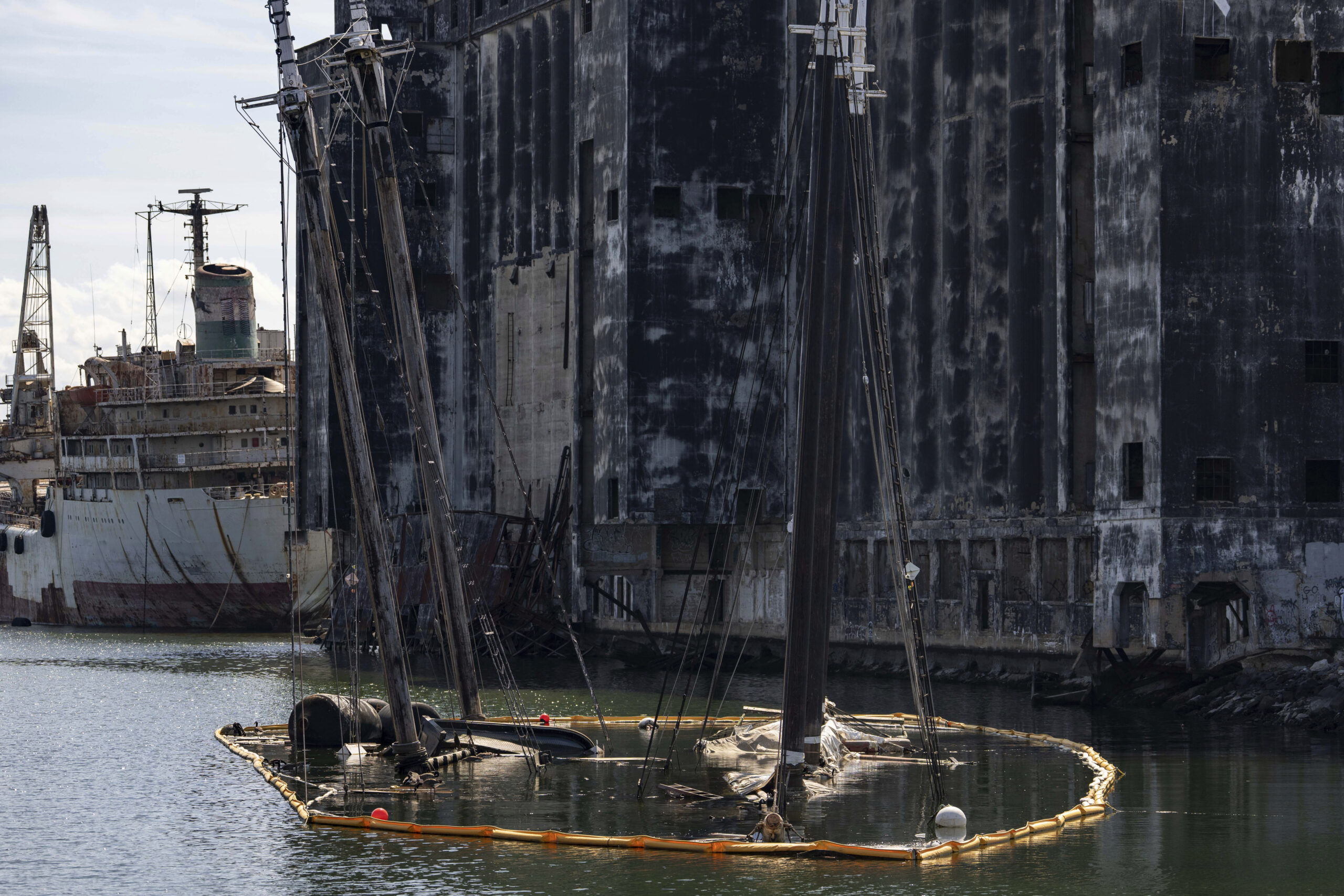
Today, however, these national maritime treasures rest in a watery grave. Docked in an inlet just off New York City’s notoriously polluted Gowanus Canal in Brooklyn, both historic vessels sank in early July following a series of strong squalls.
As the wooden hulls remain submerged beneath the surface of the toxic New York waterway, a fierce debate has ignited across the maritime community. Preservationists, historians, and local advocates are demanding accountability from the vessels’ corporate owners, pressing for answers regarding how the sinkings occurred, and questioning whether a genuine commitment exists to salvage these irreplaceable artifacts before time, tide, and decay claim them forever.
Main Facts: The Loss of the Pilot and Victory Chimes
The disaster unfolded quietly in early July in the Henry Street Basin, located in Brooklyn’s industrial Red Hook neighborhood near the mouth of the Gowanus Canal. The vessels involved are formidable pieces of naval architecture:
- The Pilot: Built over a century ago, this 121-foot (37-meter) vessel originally operated as a pilot boat, ferrying maritime harbor pilots out to massive incoming ships navigating the treacherous waters of Boston Harbor. During World War II, the schooner was pressed into service by the United States Coast Guard. In the 1970s and 1980s, it transitioned into an educational and scientific research vessel, hosting famed oceanographer Jacques Cousteau. In 2015, the ship was acquired by Crew, a New York City-based hospitality company that specializes in converting historic vessels into floating bars and restaurants, subsequently operating as an oyster bar.
- The Victory Chimes: Dating back to 1900, this 128-foot (39-meter) schooner holds a revered place in American nautical heritage. Listed on the National Register of Historic Places, the Victory Chimes is the last surviving Chesapeake ram—a distinct class of flat-bottomed, centerboard schooner engineered specifically to navigate the narrow, shallow waterways of the Chesapeake Bay and the mid-Atlantic coast. Crew acquired the vessel at auction approximately three years ago.
Both ships sank around the exact timeframe that severe squalls battered the New York metropolitan area. However, maritime authorities, local observers, and naval architects have noted that while severe weather was present, the exact causal chain leading to the simultaneous or sequential sinkings of both large wooden ships remains undetermined.
The current owner, Crew, is navigating a complex web of legal, financial, and logistical hurdles. Alex Pincus, CEO of Crew, issued a statement regarding the ongoing crisis:
"Raising wooden vessels of this size is a highly complex operation that requires specialized equipment, careful planning and extensive coordination. The vessels remain submerged as part of that ongoing process while assessments and planning continue."
Despite these assurances, critics and maritime heritage advocates remain deeply skeptical about the company’s long-term intentions and urgency.
Chronology of a Maritime Tragedy
To understand how two icons of American sailing ended up on the muddy floor of a Brooklyn industrial basin, it is necessary to trace their journeys from functional working vessels to modern commercial attractions, and finally to their present state of ruin.
The Golden Age of Working Sail (1900–1980s)
- 1900: The Victory Chimes is launched, beginning decades of hauling freight and navigating shallow coastal channels as the last of the Chesapeake rams.
- Mid-20th Century: The Pilot serves faithfully as a Boston pilot schooner before transitioning to Coast Guard patrols during World War II.
- 1970s–1980s: The Pilot shifts to marine education and conservation. During this era, Jacques Cousteau boards the vessel, utilizing its platform for marine research and public awareness.
Commercial Adaptation and Relocation (2010s–2024)
- 2015: Crew acquires the Pilot, bringing the vessel to New York City and converting its decks into a high-end, seasonal floating oyster bar.
- Circa 2021: Crew purchases the Victory Chimes at auction, adding the historic Chesapeake ram to their portfolio of repurposed maritime properties.
- Recent Years: Both vessels are docked at prominent locations, including Brooklyn Bridge Park, serving as tourist attractions and hospitality venues. Eventually, the ships are relocated further south to the Henry Street Basin, just off the Gowanus Canal in Red Hook.
The Disaster and Aftermath (July–August 2026)
- Early July 2026: Strong squalls roll through New York City. Sometime around these severe weather events, both the Pilot and the Victory Chimes take on water and sink while moored in the Henry Street Basin.
- Late August 2026: Debris from the sunken schooners is photographed floating in the basin, drawing public attention and sparking outrage from local environmental and historical preservation groups. Company officials confirm they are consulting with marine surveyors and salvage experts, though the ships remain underwater.
Supporting Data and Technical Realities
The challenge of recovering and restoring vessels of this magnitude cannot be overstated. Marine experts point out that wooden shipbuilding techniques from the turn of the 20th century are largely lost to modern commercial manufacturing, compounding the difficulty of any potential rescue operation.
Charlie Weidman, a seasoned marine specialist with Charlie’s Marine Service in Rockland, Maine, who previously shared a dock with the Victory Chimes, offered a stark and unsentimental assessment of the situation. Weidman noted that even if the physical hulls can somehow be successfully raised from the depths of the basin, the structural rebuilding process would be extraordinarily prohibitive—both financially and materially.
"They’re not the saviors that they paint themselves to be," Weidman remarked, criticizing the commercial narrative often adopted by companies that repurpose historic watercraft. "They’re like, We’re saving the boat. You’re trying to monetize that boat. You’re just trying to make a buck here."
According to Weidman and other shipwrights, sourcing the specific, high-grade timber required to repair vessels built around 1900 is exceedingly difficult today, as old-growth forests that provided massive, rot-resistant timbers are virtually nonexistent.
Amanda Pleau, spokesperson for the Maine Maritime Museum, echoed the immense historical fragility of such artifacts, noting that the loss of the boats is "sad, but not entirely unexpected."
"Maintaining such historic schooners is very difficult," Pleau explained. "Most turn-of-the-century schooners lasted less than 20 years. That’s also why historic vessels are so special; it’s not uncommon in Maine to come across a home that’s more than 100 years old, but the remaining ships are few and far between."
Official Responses and Community Outrage
The sinking has triggered sharp friction between corporate ownership, local environmental advocates, and historical societies in both New York and Maine.
Brad Vogel, a dedicated member of the Gowanus Dredgers—a local canoe club whose members regularly paddle the waters near the Henry Street Basin—did not mince words when discussing the incident. He characterized the potential permanent loss of the schooners as "a shame" and "in some ways unforgivable."
"People in Maine, people in New York City, do want answers, and want to know what’s going on," Vogel stated. "And it’s not at all certain that there is a commitment to raising the vessels."
Steve Bromage, executive director of the Maine Historical Society, emphasized the profound cultural loss represented by the sinking of the Victory Chimes. Because it is the final surviving Chesapeake ram, its deterioration directly impacts the nation’s collective maritime identity.
"The loss of the ship is heartbreaking for Maine and the nation’s maritime heritage," Bromage said. "While salvaging her requires tremendous effort and expense, it would be very unfortunate to lose such an important part of history."
Compounding public frustration is a notable silence from key municipal and federal entities. The Brooklyn Bridge Park Corporation, which previously managed the slips where the ships were docked before their move to Red Hook, declined to respond to repeated requests for comment. Furthermore, officials from the United States Coast Guard and the New York City municipal government have thus far failed to answer specific inquiries regarding the circumstances of the sinkings, environmental oversight in the Henry Street Basin, or mandates for wreck removal.
Implications: The Shadow of the Gowanus Canal
The location of the sinking adds a troubling environmental dimension to an already tragic cultural story. The Gowanus Canal and its adjoining inlets, including the Henry Street Basin, constitute a federal Superfund site designated by the U.S. Environmental Protection Agency (EPA). Long regarded as one of the most toxic waterways in the United States, the canal’s sediment is heavily laced with heavy metals, coal tar waste, PCB compounds, and raw sewage from decades of industrial neglect.
While a multi-million-dollar, long-term environmental remediation and dredging project is currently underway to clean up the Gowanus watershed, the sudden introduction of two massive, decaying wooden hulks—complete with paints, varnishes, historical fixtures, and onboard materials—into these fragile waters raises serious concerns among environmental watchdogs.
Furthermore, the incident casts a long shadow over the broader practice of repurposing historic working watercraft for modern commercial hospitality. While converting retired schooners into floating bars, restaurants, and museums offers a creative revenue stream to fund ongoing maintenance, it also exposes fragile, irreplaceable wooden structures to the high-traffic, high-stress environments of urban industrial ports. When commercial viability clashes with the brutal realities of severe weather, deferred maintenance, and the hazards of polluted urban basins, maritime heritage is often the casualty.
As CEO Alex Pincus and his team at Crew continue their consultations with marine salvage underwriters and surveyors, the clock is ticking. Every day that the Pilot and the Victory Chimes remain submerged in the brackish, toxic waters of the Brooklyn waterfront, the integrity of their historic timbers degrades further.
Whether this chapter ends with a miraculous, multi-million-dollar marine salvage operation or with the tragic, permanent dissolution of two of America’s finest sailing legends remains to be seen. What is certain, however, is that the maritime communities of Maine, New York, and the nation at large will demand full accountability for how these giants of the sea were allowed to fall.
