

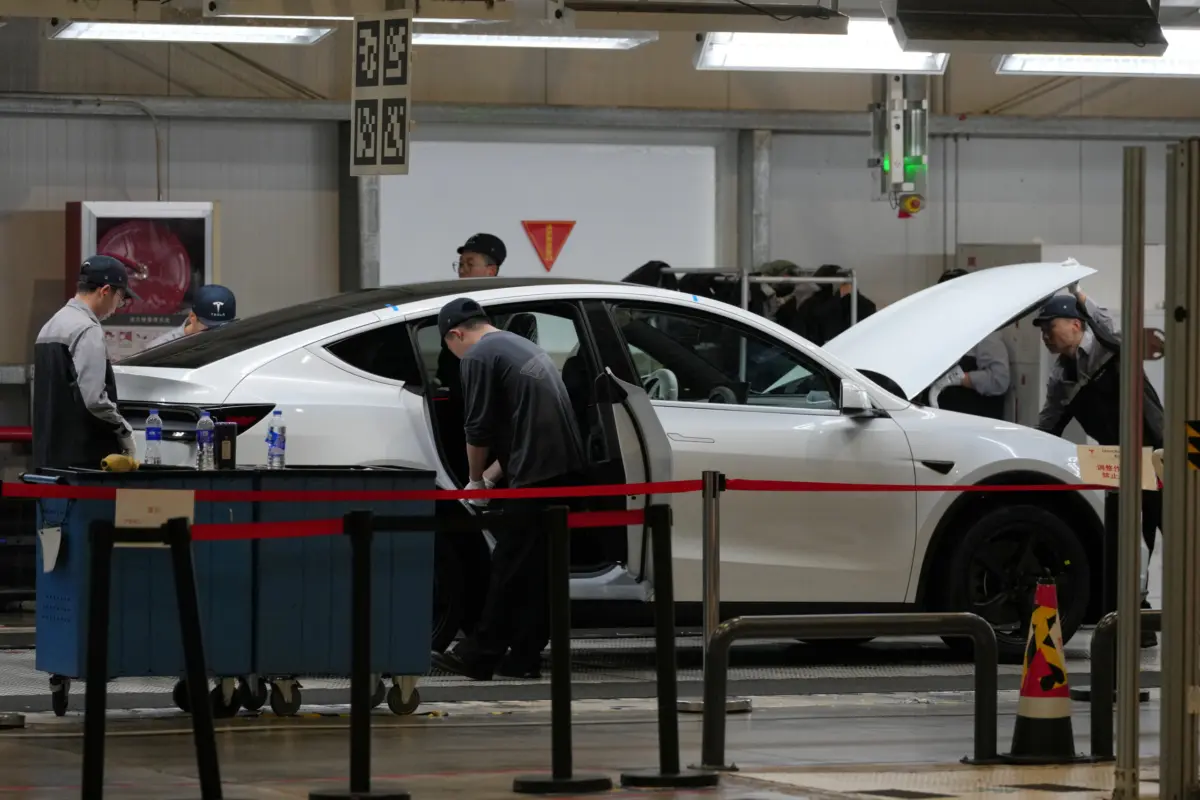
SHANGHAI/BEIJING/LOS ANGELES — In what has rapidly unfolded as a watershed moment for the global automotive industry, China has orchestrated the largest vehicle recall in its history. Affecting a staggering 4.3 million electric vehicles (EVs) across nine major automakers—including industry heavyweights Tesla, Xiaomi, and Leapmotor—the mass recall directly addresses one of the most terrifying, long-standing fears haunting modern motorists: the prospect of being trapped inside a disabled or burning vehicle when the power fails.
Beyond resolving an urgent mechanical vulnerability, the sweeping regulatory action underscores a profound geopolitical and industrial shift. Beijing is no longer merely a fast-growing consumer hub or a rapid manufacturer of advanced electric mobility; it is aggressively seizing the mantle of global standard-bearer for vehicle safety, reshaping how the world’s most advanced cars are designed, marketed, and regulated.
Main Facts: The Anatomy of the Massive Recall and Regulatory Overhaul
The coordinated recall targets a design trend popularized by Silicon Valley and swiftly mimicked worldwide: sleek, minimalist, flush-mounted electronic door handles and hidden interior emergency releases.
While these aesthetic choices contribute to aerodynamic efficiency and futuristic styling, they have introduced critical safety hazards. In the event of a severe collision or a total electrical system failure, occupants—or rescuers on the outside—have repeatedly found themselves unable to locate or operate the obscure mechanical levers and buttons required to open the doors manually.
To remedy the issue across the 4.3 million affected vehicles, automakers are deploying a two-pronged fix:
- Physical Modifications: Installing high-visibility, clearly marked labels and instructions next to interior door-release mechanisms to ensure intuitive operation under high-stress conditions.
- Software Patches: Issuing over-the-air (OTA) updates designed to automatically lower vehicle windows in emergency scenarios, providing an alternative egress and rescue route.
This recall builds directly upon a foundational regulatory crackdown announced in February, when Beijing officially banned exterior electronic door handles that lack a traditional, direct manual mechanical override. While existing fleets are being retrofitted via the recall, the ban on pure electronic-only minimalist exterior handles will apply strictly to all newly approved models starting next year.
Chronology of Events: From Tech-First Proliferation to Strict Oversight
To understand how China became the epicenter of this safety revolution, it is necessary to trace the rapid evolution of its domestic automotive sector alongside unfolding global safety incidents:
- Late 2023 – 2024: Minimalist flush door handles and reliance on digital, touchscreen-heavy interfaces become ubiquitous across premium EVs, led by Tesla and aggressively copied by rising Chinese brands like Xiaomi and Leapmotor.
- October 2025: A fatal crash involving a Xiaomi SU7 sedan in China ends in tragedy; state media reports that post-crash fires broke out and bystanders were physically unable to open the doors to rescue the trapped driver. Similar fatal incidents and legal complaints accumulate in Western markets regarding Tesla models.
- February 2026: China’s regulatory authorities issue a sweeping ban on exterior electronic door handles that lack traditional manual backups, setting an enforcement deadline for new models the following year.
- July 2026: In the United States, the National Highway Traffic Safety Administration (NHTSA) responds to a petition seeking a defect investigation into the mechanical emergency door releases on roughly 180,000 Tesla Model 3 vehicles, stating the issue will be folded into broader, ongoing rule-making rather than an immediate standalone recall.
- August 2026: Nine automakers—including Tesla, Xiaomi, and Leapmotor—announce the unprecedented 4.3-million-vehicle recall in China to fix hidden emergency releases, signaling the formal arrival of Beijing’s assertive regulatory stance.
Supporting Data and Market Context: A New Paradigm in Global Influence
Historically, the blueprint for global automotive safety standards was drafted in Western capitals. Regulators in the United States (via the NHTSA) and the European Union historically set the pace for crash-testing standards, seatbelt mandates, and airbag requirements. However, changing market realities have dramatically shifted the tectonic plates of industrial influence.
China is now, by an overwhelming margin, the world’s largest electric vehicle market. Electric and plug-in hybrid vehicles account for nearly 55% of all new cars sold domestically. This sheer scale grants Beijing unprecedented leverage over multinational manufacturers who view the Chinese market as indispensable to their bottom lines.
According to Pedro Pacheco, vice president of research at advisory firm Gartner, the trajectory is unmistakable. "The trend is clear: China is, bit by bit, approaching regulatory leadership for advanced vehicle tech," Pacheco noted.
This sentiment is echoed by Bill Russo, CEO of Shanghai-based consultancy Automobility, who characterizes the current climate as a definitive transition era. "It’s a shift from rapid EV innovation and feature proliferation toward a much more assertive safety-regulation phase," Russo explained. For years, Chinese and international automakers prioritized rapid software iterations, fast-charging architectures, and minimalist user experiences. Now, government oversight is reining in aesthetic excesses in the name of public safety.
Official Responses and Bureaucratic Contrasts
The aggressive stance taken by Chinese regulators stands in stark contrast to the sluggish regulatory pacing observed in Western democracies, drawing sharp criticism from consumer advocacy groups.
Michael Brooks, executive director of the Washington, D.C.-based Center for Auto Safety, pointed out that Western regulators have repeatedly stumbled when attempting to keep pace with hyper-fast technological advancements, ranging from autonomous driving systems to complex touchscreen-driven cabins.
Brooks highlighted systemic bureaucratic delays in the U.S., noting that certain basic safety requirements—such as rear seat-belt warnings—have dragged on for over a decade due to heavy industry pushback and political lobbying.
"There are so many ways for a regulation to get thwarted, changed, withdrawn by an incoming administration," Brooks said. "These are the kind of delays you would never see in China."
When contacted for comment regarding door-handle safety and potential mirroring of Chinese actions, Western regulatory bodies remained tight-lipped. The NHTSA declined to comment for this report, while European regulators—who flagged door-handle designs as a key regulatory priority last year—did not respond to inquiries from Reuters. China’s State Administration for Market Regulation also declined to provide formal comment.
Beyond door mechanisms, China has repeatedly demonstrated a willingness to outpace Western regulators in consumer protection. Last year, Beijing banned ambiguous marketing terms like "smart driving" and "autonomous driving" when describing advanced driver assistance systems (ADAS). While the U.S. state of California similarly penalized Tesla last year over its use of the term "Autopilot," China’s blanket national bans are far more restrictive and uniformly enforced.
Implications: Global Spillover and the Tesla Factor
The ramifications of China’s mass recall extend far beyond its borders, posing a strategic dilemma for global automakers. Because companies like Tesla operate integrated global manufacturing and supply chains, maintaining separate engineering standards for different regional markets is economically inefficient.
According to analysts like Bill Russo, China’s new safety mandates will likely serve as a de facto global standard. "Because China is such an important sales and production market for Tesla, I would expect Tesla to design toward the Chinese requirement rather than maintain a completely separate solution just for China," he observed.
If Tesla and other global manufacturers redesign their door handles and emergency release mechanisms to comply with Beijing’s new mandates for Chinese-market vehicles, those safer, more accessible designs will inevitably find their way into models sold in North America, Europe, and beyond.
Ultimately, the 4.3-million-vehicle recall marks a profound philosophical turning point for the electric vehicle era. The unchecked "move fast and break things" ethos imported from the tech sector into automotive manufacturing is officially colliding with the hard realities of public safety. And as the recent wave of regulatory actions proves, the rules of the road for the future of mobility are increasingly being written in Beijing.
