

By Global Climate News Desk
Updated August 2026
Main Facts
Human-driven climate change has fundamentally altered the scale and severity of Canada’s wildfire season, according to a landmark scientific report published Thursday by World Weather Attribution (WWA). The research reveals that global warming has made the extreme fire weather fueling massive blazes across Ontario and the Northwest Territories at least twice as likely to occur.
With global average temperatures currently hovering approximately 1.4 degrees Celsius above pre-industrial levels, Canada is experiencing an unprecedented surge in scorching, arid weather conditions. These meteorological ingredients are precisely what transforms minor, routine ignitions into fast-moving, uncontrollable infernos.
The WWA findings emphasize that the severe conditions behind recent blazes in Ontario are now twice as probable as they would be in a theoretical world untouched by human greenhouse gas emissions. The situation is even more alarming in the Northwest Territories. In that region, a week of fire weather as extreme as this year’s—an event that historically occurred roughly once a decade in a stable climate—is now projected to return every two years.
This quantitative leap in disaster frequency has pushed emergency services to their absolute limits. Friederike Otto, a professor in climate science at Imperial College London and a coauthor of the study, noted that doubling the likelihood of such extreme events is “really bad.”
“Given the immense challenge of containing wildfires, even if just a little bit worse, it would mean that everything is even stretched further,” Otto explained, pointing to exhausted firefighting personnel, depleted equipment reserves, and strained federal resources.
The study underscores a grim reality for Canada, which is enduring yet another catastrophic burn season. More than 4,000 fires have been officially recorded nationwide, scorching a collective area roughly equivalent to the size of Switzerland. This staggering destruction represents a nearly 45% increase over the 30-year historical average spanning from 1994 to 2023, with Ontario and the Northwest Territories absorbing the most catastrophic impacts.
Chronology of a Crisis: The 2026 Wildfire Season Unfolds
To understand the trajectory of Canada’s current climate emergency, one must look at how the spring and summer weather patterns converged into a relentless environmental disaster.
Late Spring: The Early Spark
The warning signs for the 2026 fire season began manifesting much earlier than usual. Unusually low winter snowpacks across western and central Canada melted weeks ahead of schedule. By late May, a persistent high-pressure ridge—often referred to by meteorologists as a "heat dome"—settled over the country’s midsection. This atmospheric blocking pattern trapped hot, dry air over the boreal forests of Ontario, Manitoba, and the Northwest Territories.
June: The Infernos Ignite
By late June, the accumulated dryness reached critical thresholds. A series of intense lightning storms swept across the tinder-dry landscape of the Northwest Territories and northern Ontario. Without sufficient soil moisture or recent rainfall to suppress initial strikes, multiple lightning ignitions quickly metastasized into fast-moving crown fires. Entire communities were placed on high alert as smoke plumes began blocking out the sun.
July: Escalation and Regional Spread
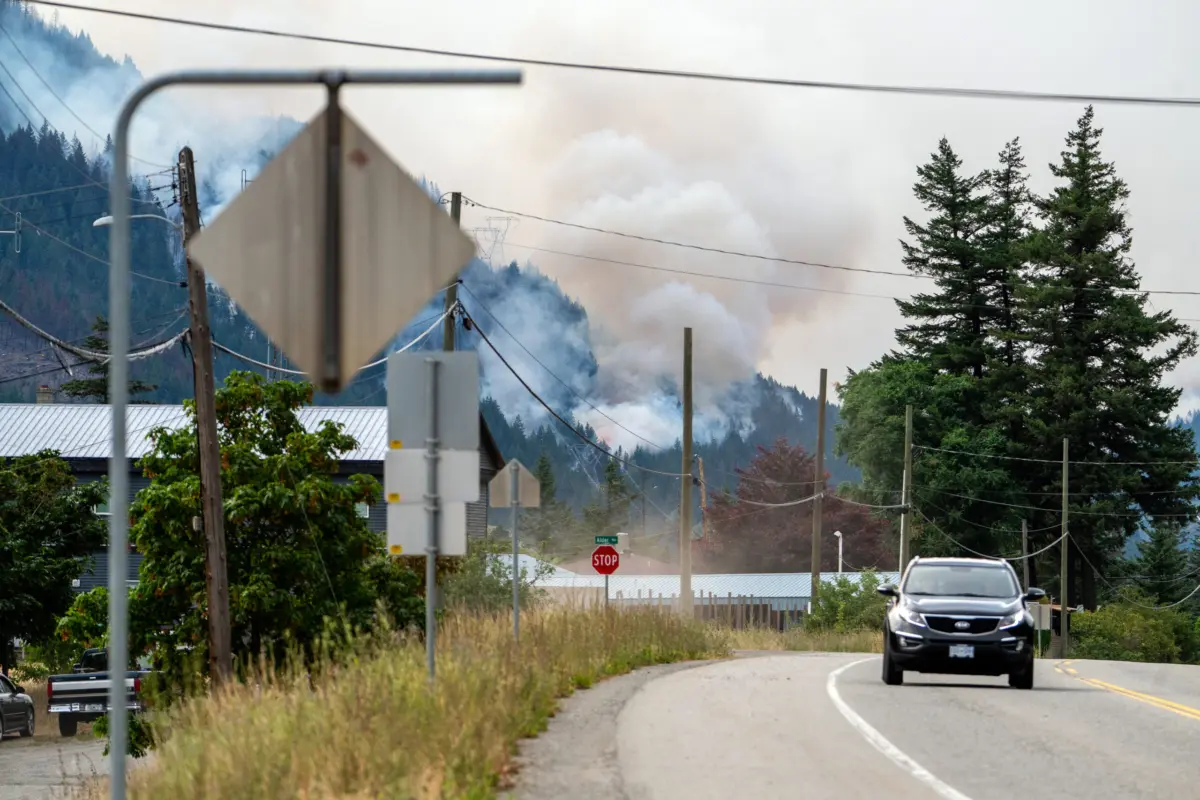
By mid-summer, the fire situation deteriorated into a national crisis. Massive blazes, such as the Brunswick Creek Wildfire photographed near Boston Bar, British Columbia, showcased the unpredictable nature of modern fires. Thousands of residents across multiple provinces and territories were ordered to evacuate under mandatory orders. Thick smoke drifted southward across the international border, enveloping major U.S. metropolitan areas in toxic hazes and bringing the transboundary nature of climate change into sharp diplomatic focus.
August: Scientific Quantification
As the acreage burned surpassed historical baselines and continued to climb, the release of the World Weather Attribution report in early August provided the empirical backing linking these local disasters directly to global anthropogenic warming. The report solidified what firefighters and local residents had suspected for months: this is no longer a normal cycle of nature, but a symptom of a rapidly warming planet.
Supporting Data and Methodology
To measure the precise impact of climate change on Canada’s forests, the international team of researchers utilized a rigorous scientific framework combining observational weather data with advanced climate modeling systems.
Dissecting the Numbers
- 4,000+: The total number of individual wildfires recorded across Canada so far in the current season.
- Switzerland-Sized: The cumulative land area scorched by these blazes, representing a vast expanse of destroyed boreal forest, wildlife habitat, and indigenous lands.
- +45%: The increase in total burned acreage compared to the 30-year historical baseline average between 1994 and 2023.
- 2x to 5x: The multiplier by which human-induced climate change has increased the probability of extreme fire weather in affected regions like Ontario and the Northwest Territories.
How the Study Was Conducted
The researchers focused on two primary metrics: meteorological indices measuring atmospheric dryness and heat, and indicators reflecting how difficult it is for fire suppression crews to contain an outbreak once it starts.
By comparing modern observational data against counterfactual climate models—simulations of the Earth running without historical human greenhouse gas emissions—the team isolated the exact contribution of global warming. They also analyzed shifts in seasonal rainfall patterns, noting that prolonged regional droughts have increasingly preceded and exacerbated the fire season.
“Our research is yet another piece of evidence for this shift being due to climate change,” said Theodore Keeping, a research associate at Imperial College London and a coauthor of the study. “The geographic spread of these fires is scary and shows that despite preparedness from wildfire governance, adaptation alone is not enough.”
Official Responses and International Fallout
The catastrophic environmental damage has sparked intense domestic debate and international friction, elevating wildfires from a regional forestry issue to a top-tier geopolitical concern.
Domestic Strain and Governance Challenges
Canadian federal and provincial authorities have faced mounting pressure to overhaul emergency preparedness strategies. With fire seasons starting earlier and ending later, traditional firefighting models—which rely heavily on sharing seasonal personnel and equipment internationally—are becoming unsustainable. Provincial forestry ministries have reported severe shortages of heavy airtankers, bulldozers, and specialized hotshot crews.
Indigenous communities, who often live closest to the boreal forests most vulnerable to destruction, have borne a disproportionate burden of the evacuations, cultural displacement, and long-term health hazards associated with toxic smoke exposure.
Transboundary Diplomacy and Trade Tensions
The environmental crisis has also spilled across borders, most notably into the United States. In recent weeks, dense plumes of Canadian wildfire smoke drifted deep into the U.S. interior, turning the skies over New York City and the Northeast a surreal, apocalyptic orange.
The air quality deterioration led to widespread health warnings, grounded flights, and canceled outdoor events across major American cities. The environmental fallout prompted sharp political reactions. Notably, U.S. political figures, including President Donald Trump, voiced sharp criticisms over the cross-border air pollution, going so far as to threaten trade tariffs against Canada in response to what critics framed as inadequate domestic emissions and fire management controls.
This friction highlights an emerging reality of the climate crisis: ecological disasters do not respect national borders, and the resulting economic and political costs will increasingly strain international alliances.
Broader Implications: A Global Pattern of Fire
Canada’s crisis is not happening in a vacuum. It forms part of a catastrophic global pattern of escalating wildfire activity driven by systemic atmospheric warming.
Earlier this year, catastrophic blazes tore through wide swaths of Patagonia in Chile and Argentina, destroying fragile ecosystems and claiming at least 20 human lives. Meanwhile, across the Mediterranean basin, severe summer heatwaves triggered massive fires in France, Spain, Portugal, and Greece, forcing hundreds of thousands of local residents and international tourists to evacuate coastal and rural areas under harrowing conditions.
The Feedback Loop of Destruction
Beyond the immediate threats to human life, infrastructure, and regional air quality, these mega-fires unleash a devastating feedback loop for the global climate. As millions of acres of boreal forest and temperate woodland burn, centuries of stored carbon dioxide are released back into the atmosphere in a matter of days. This massive pulse of greenhouse gases further warms the planet, guaranteeing that future fire seasons will start with an even higher atmospheric baseline.
Furthermore, the destruction of vast swaths of forest permanently diminishes the Earth’s natural carbon sinks, reducing the planet’s capacity to absorb future emissions.
As the WWA report makes clear, waiting for adaptation strategies to catch up with the pace of environmental collapse is a losing gamble. Without aggressive, immediate global reductions in greenhouse gas emissions, the unprecedented fire weather seen in Canada this year will soon transition from a shocking anomaly into the standard summer reality.
