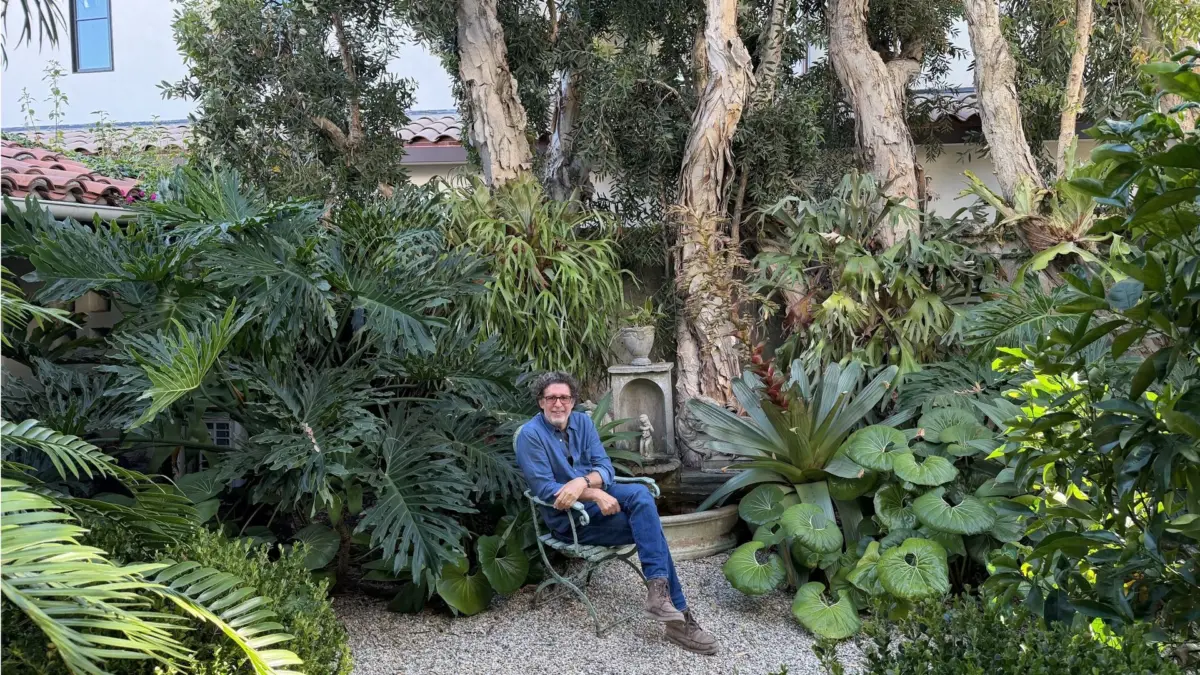
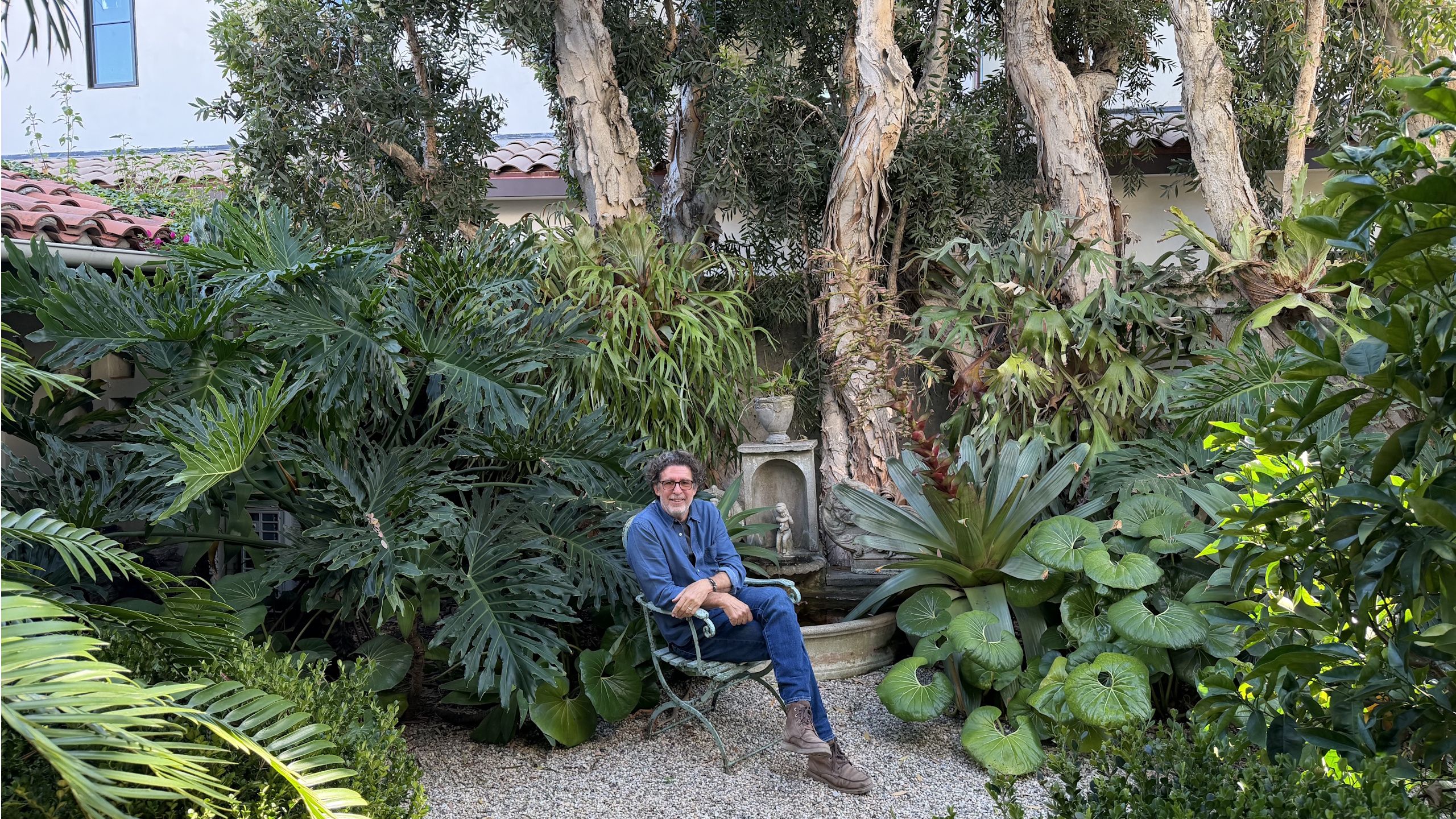
For twenty years, landscape designer, horticulturist, and renowned antiques collector Stephen Block has been quietly rewriting the rules of West Coast outdoor living. In a state traditionally dominated by manicured lawns, water-intensive English borders, or minimalist desert xeriscaping, Block has forged an entirely different path. Tucked away in his Southern California backyard is a lush, tropical, and deeply soulful sanctuary where rare shade-loving foliage collides with timeworn European antiques.
As the founder of the prominent design firm Inner Gardens—which operates a main showroom in Culver City and a nursery showroom in Malibu—Block approaches both his professional projects and his personal sanctuary with a singular philosophy: the embrace of wabi-sabi, the traditional Japanese aesthetic centered on the acceptance of transience and imperfection.
In a rare retrospective look at his personal grounds, Block reflects on two decades of digging, collecting, global travel, and botanical experimentation, offering a masterclass in how time, patina, and oversized planting can transform a blank slate into a living work of art.
Main Facts: Anatomy of an Oasis
The Property: A 9,000-square-foot residential lot in Southern California featuring a lush shade garden, a pool, an outdoor entertaining patio, and architectural zoning.
The Chronology: Developed continuously over a 20-year period, evolving from a barren expanse of dirt and Melaleuca trees into an abundant, multi-layered microclimate.
Core Design Philosophy: The marriage of horticulture and antiquity, guided by the Japanese principle of wabi-sabi (valuing chipped edges, fading paint, structural wear, and natural weathering).
Key Plant Species: Oversized Philodendron selloum, round-leaved Ligularia, and an extensive collection of flourishing staghorn ferns (Platycerium).
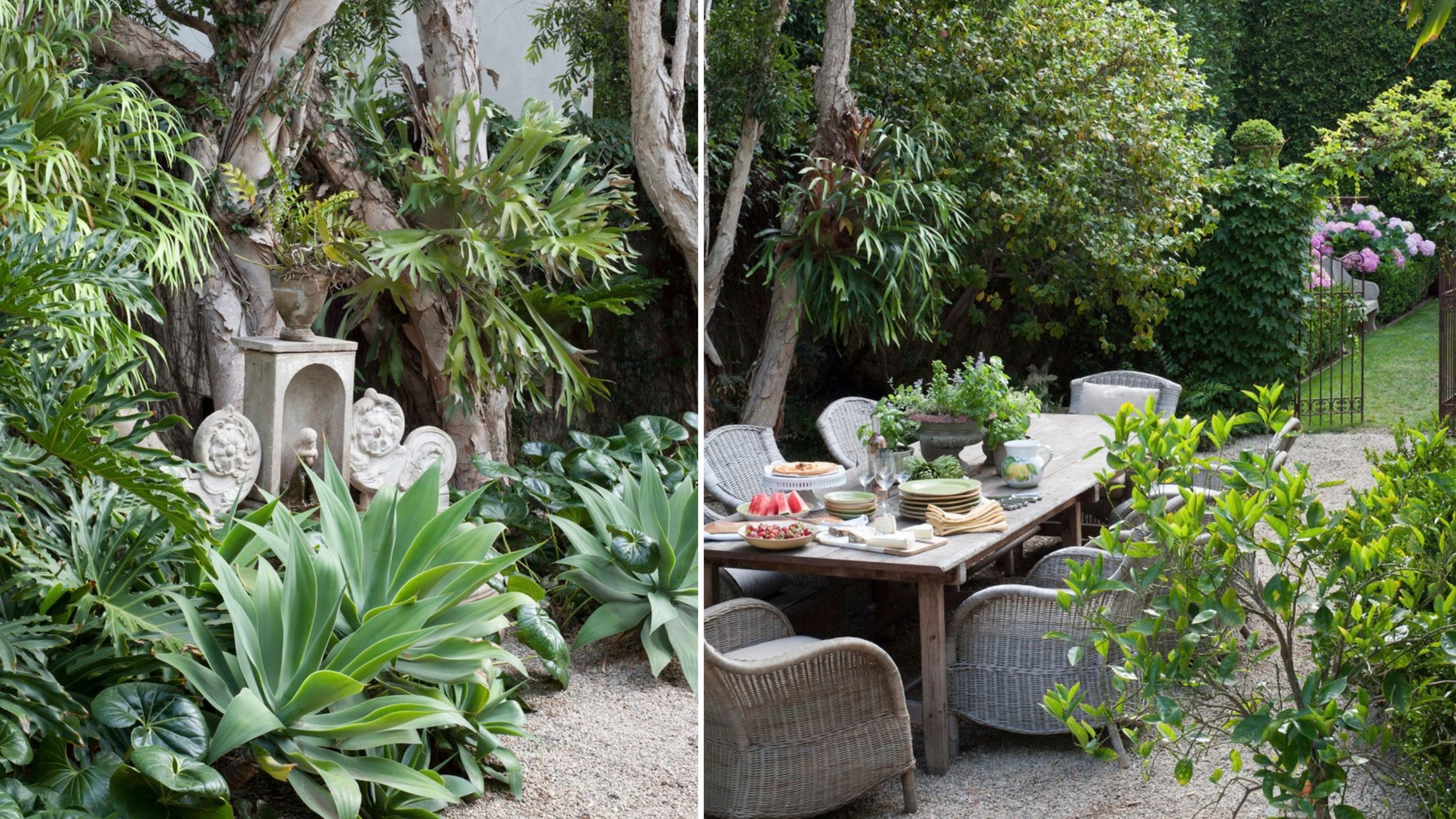
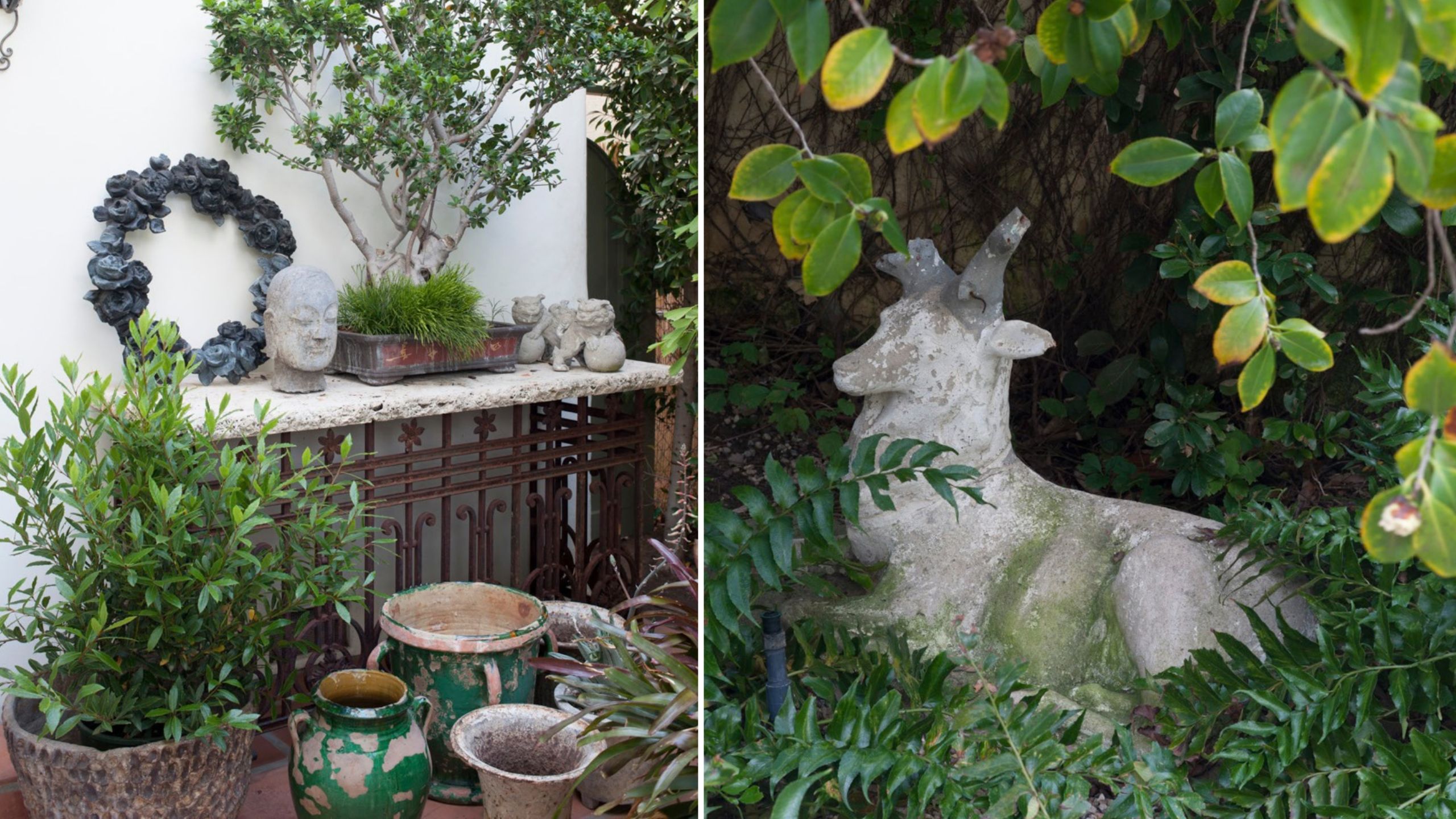
Signature Antiques: A classical yet rugged fountain sourced from South Carolina, an antique 1920s iron gate, weathered terracotta vessels from Europe, a distressed French farmhouse table, faded turquoise chairs from the south of France, and repurposed heart-shaped stone tables from Texas.
Chronology: Building a Garden From the Ground Up
The Blank Canvas (Years 0–5)
When Stephen Block and his family first acquired the property two decades ago, the landscape offered virtually nothing in the way of inspiration. It was essentially 9,000 square feet of baked Californian dirt populated only by stands of Melaleuca trees.
Block, who admits he did not inherit an innate green thumb, found his horticultural awakening triggered by a singular, mesmerizing moment: watching a new leaf unfurl from a small rubber plant (Ficus elastica). Captivated by the silent dynamism of the plant world, he pivoted his trajectory, ultimately studying horticulture at the University of Florida.
Armed with a fresh botanical education, Block approached the barren yard not as a blank architectural blueprint, but as an ecological canvas. "I’ve always approached design from the perspective of the plant world, even indoors," Block notes. "I joke with my architect friends that where they see a wall, I see a hedge."
Scaling Up and Creating Microclimates (Years 5–15)
Recognizing the harsh glare and intense thermal load of the Southern California summers, Block bypassed traditional sun-loving flora in favor of a dense, shaded tropical sanctuary. On the left side of the garden, he anchored the space with colossal Philodendron selloum, carpeting the understory with Ligularia—prized for its striking, sculptural round leaves.
Simultaneously, Block leaned into a lifelong obsession: collecting staghorn ferns. Hanging juvenile specimens from the property’s existing trees, he watched over the years as they swelled to three times their initial size, creating monumental floating sculptures overhead.
Rather than succumbing to the design trap of utilizing small plants for a small space, Block championed the opposite approach. He realized that oversized foliage in a modest footprint actually tricks the eye, making the environment feel grand, immersive, and enveloping.
The Antiques Integration and Maturation (Years 15–20)
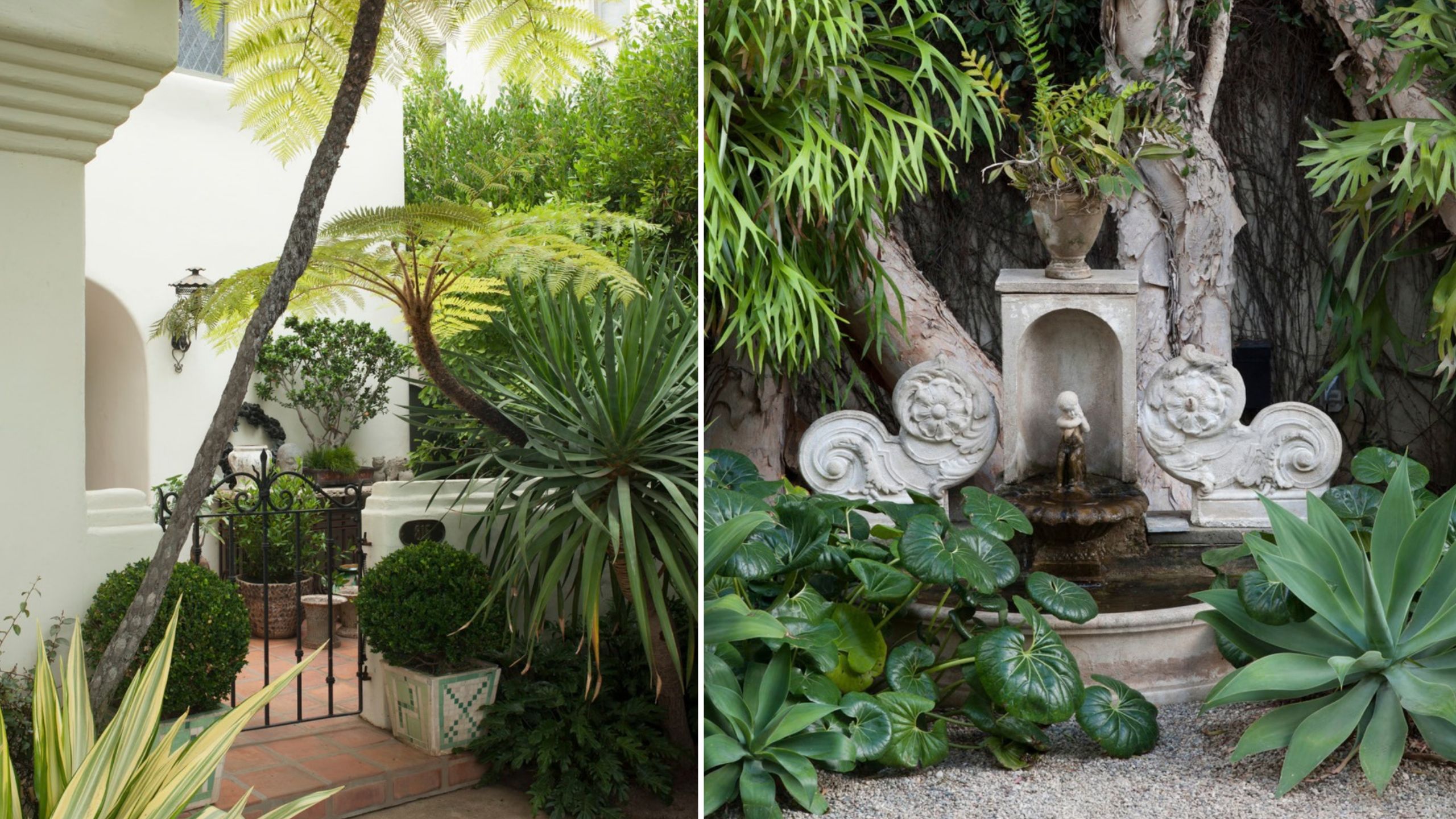
As the botanical canopy matured, Block layered in the historical anchor points of his design: a global curation of garden antiques. The anchor of the entire layout is a robust, classical fountain discovered in South Carolina, prized not for its pristine condition, but for its rugged, unyielding character.
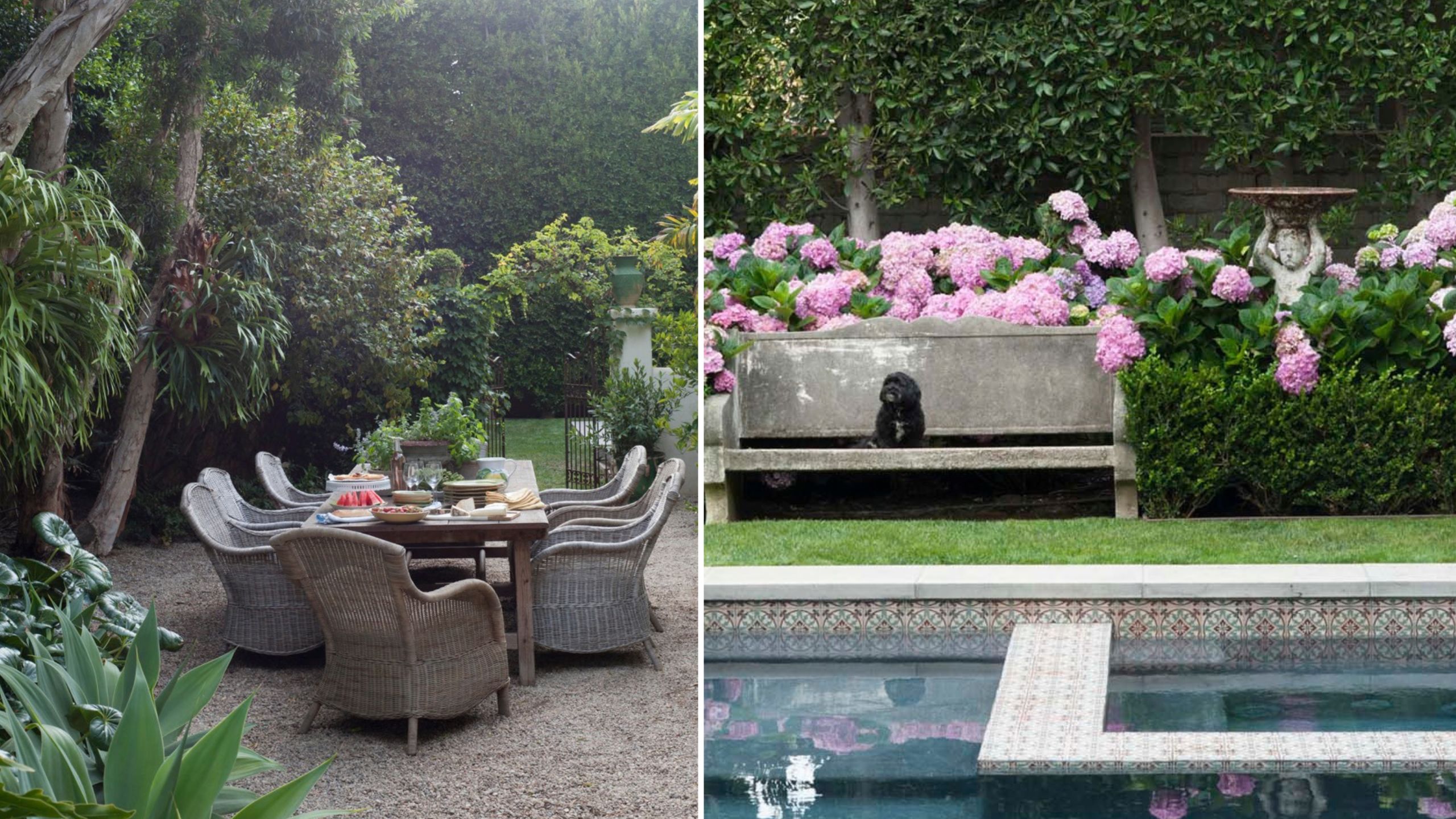
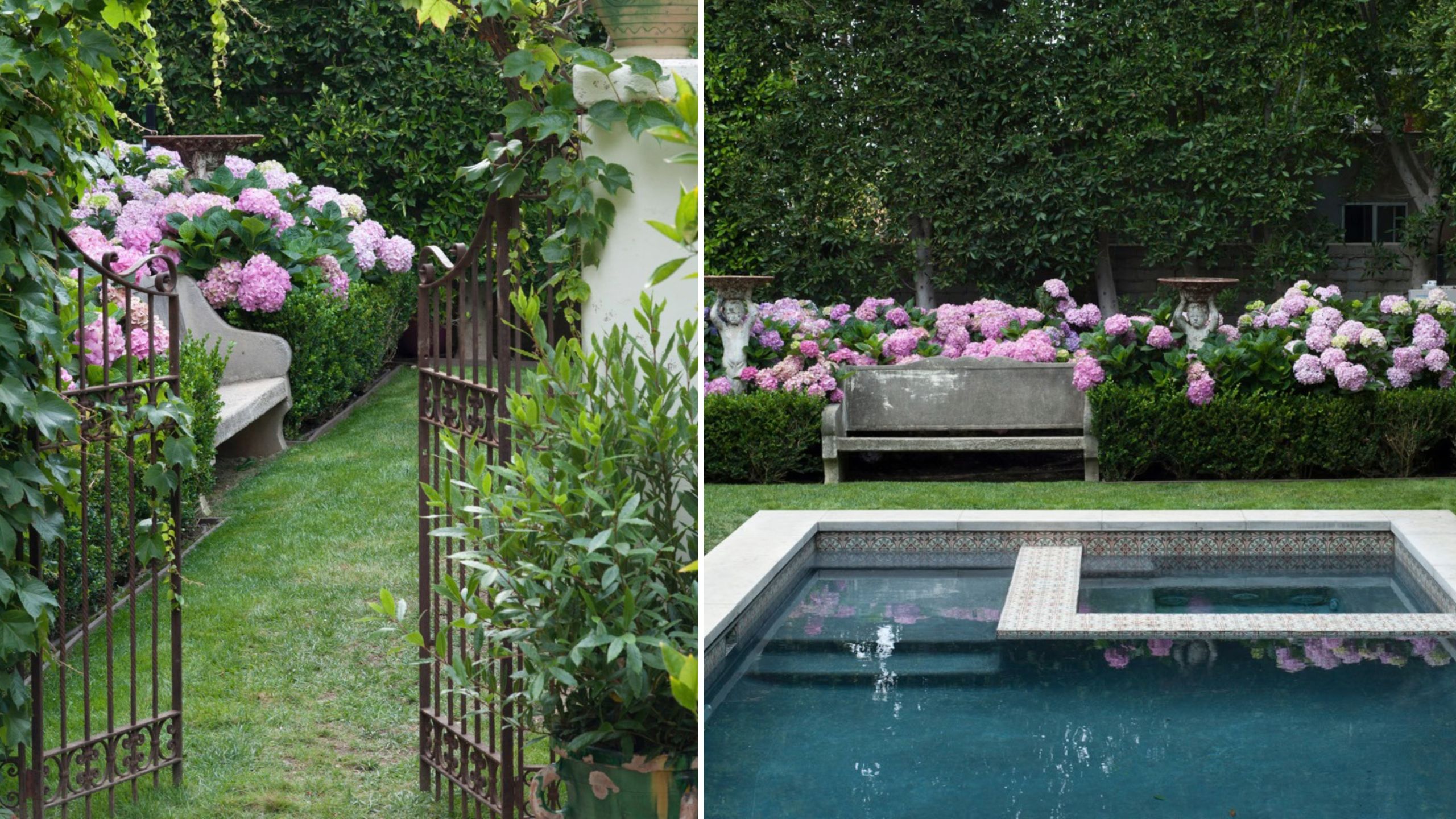
To divide the pool area from the primary entertaining zone, Block integrated a salvaged 1920s iron gate, framing it with custom masonry walls and pilasters topped by mismatched antique urns choked with cascading vines. Today, the garden functions as a living tapestry where friends and family gather for celebrations, and where Block’s mind never truly stops designing.
Supporting Data & Horticultural Insights: Defying the Californian Climate
Block’s twenty-year experiment offers critical lessons for modern landscape architecture, particularly in regions grappling with water scarcity and climatic volatility.
The Death of the Manicured Lawn
In a region historically obsessed with velvety, emerald-green turf grass, Block’s garden presents a radical counter-narrative. Maintaining a pristine English lawn in California demands unsustainable water volumes. By swapping turf for native grasses, drought-tolerant varieties, and shade-loving tropicals, Block proves that lushness does not require excessive resource consumption.
Once established, his shade-tolerant philodendrons and ferns require surprisingly minimal irrigation.
Rethinking Irrigation: The Anti-Automatic Stance
Block is a vocal critic of indiscriminate automatic sprinkler systems. In his view, automated timers encourage lazy gardening and severe water waste. Instead, he advocates for tactile, responsive horticultural care:
Manual Testing: Gardeners should physically stick a finger into the soil or utilize a moisture probe.
Maturation Scaling: As gardens age and root systems drive deeper, plants naturally require less frequent watering. Failing to dial back automated systems as a landscape matures results in root rot and massive resource waste.
Official Perspectives and Design Philosophy
Block’s worldview is deeply rooted in his upbringing. Raised by parents who ran a used furniture and antique business in Florida, he learned early on to look past superficial damage and recognize underlying potential. Whether pulling an old metal bucket from the Los Angeles River to pair with a striking succulent—a practice that launched the commercial success of Inner Gardens—or scouring the flea markets of Paris, Provence, and Italy, Block seeks soul above all else.
The Gospel of Wabi-Sabi
At the core of Stephen Block’s aesthetic is wabi-sabi, the Japanese philosophy celebrating objects that bear the marks of time, use, and weathering.
"I don’t like things that are perfect. If they’re too perfect, I don’t buy them," Block explains.
He recalls receiving a pair of pristine 18th-century Italian terracotta busts early in his career. Because they looked as though they had been preserved in a sterile indoor display case rather than weathered by the elements, they failed to capture his interest. Conversely, he treasures garden elements that have been "knocked over 200 times," accumulating chips, fading paint, and structural scars.
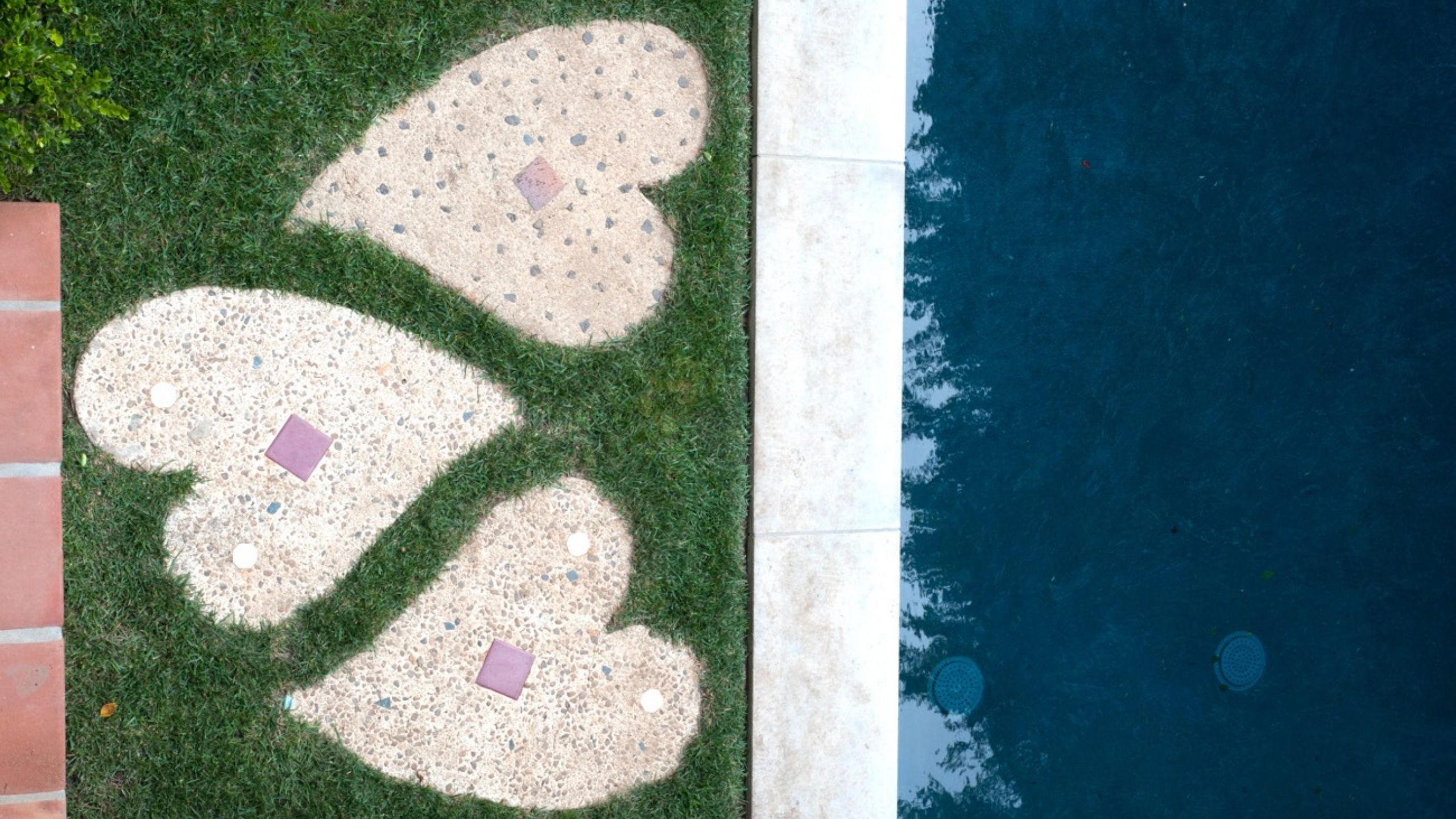
Even structural anomalies in his own yard are celebrated rather than corrected. The central fountain is visibly sinking on one side, yet Block refuses to level it. Three heart-shaped stones near the pool—repurposed from rusty iron-based tables found in Texas—pay tribute to his three daughters while embracing raw industrial decay. The outdoor dining space features a weathered, splintering farm table surrounded by faded, mismatched turquoise chairs from the south of France that bear the physical impressions of decades of sitters.
Implications: The Future of Residential Landscape Design
Stephen Block’s twenty-year garden diary serves as a timely blueprint for contemporary landscape designers, homeowners, and urban planners facing ecological and aesthetic shifts.
A Shift Away from Sterile Perfection: As modern consumers experience "designer fatigue" from hyper-manicured, sterile outdoor spaces, Block’s work points toward a more authentic, narrative-driven style of gardening. Homes are increasingly valued as sanctuaries of personal history rather than static museum pieces.
Climate-Resilient Lushness: Block shatters the false dichotomy that sustainable, drought-conscious landscaping must look arid, stark, or sparse. By utilizing shade-tolerant tropicals and microclimate management, designers can achieve deep jungle aesthetics without draining local aquifers.
The Garden as a Living Organism: Perhaps the most vital takeaway from Block’s two decades of cultivation is that a garden should never be viewed as a finished product. True landscape design accounts for time, decay, growth, and surprise. By allowing plants to stretch and antiques to weather organically, designers create spaces that possess true character, depth, and soul.
For more inspiring design ideas, expert horticultural advice, and deep dives into extraordinary private spaces, explore our ongoing Garden Diaries series and subscribe to the Homes & Gardens newsletter.