

SACRAMENTO, Calif. — In a significant development reflecting the ongoing evolution of California’s commercial and property insurance markets, Farmers Insurance has officially filed an upgraded business insurance rating plan with the California Department of Insurance (CDI). The comprehensive filing aims to expand commercial insurance coverage for business owners across the state while implementing an average statewide rate adjustment exceeding 15%.
The strategic maneuver incorporates core elements of the state’s high-profile Sustainable Insurance Strategy. Notably, the proposal includes a commitment to extend crucial commercial coverage into geographic zones formally designated by the CDI as wildfire-distressed areas—regions that have historically struggled to secure adequate and affordable protection.
The move by Farmers is the latest in a series of encouraging signals from major national carriers responding to regulatory reforms spearheaded by Insurance Commissioner Ricardo Lara. As the state works to stabilize an insurance market crippled by catastrophic natural disasters, tightening reinsurance markets, and a mass pullback of private capital, major insurers are beginning to re-engage with California policyholders across both personal and commercial lines.
Main Facts
The newly proposed rating plan submitted by Farmers Insurance introduces several sweeping changes to how the carrier will evaluate, price, and distribute commercial insurance products throughout California.
- The Rate Adjustment: The filing calls for an average statewide upward rate adjustment of more than 15%. However, the carrier notes that actual rate changes will vary significantly depending on the specific policy type, risk profile, and geographic location.
- Targeted Commercial Segments: Farmers’ new rating plan focuses heavily on expanding and refining offerings for key economic sectors. These include habitational properties—such as apartments, condominiums, and planned unit development (PUD) communities—alongside auto service shops, commercial real estate, retail establishments, office spaces, service providers, and wholesale business segments.
- Wildfire-Distressed Commitments: Under the terms of the proposal, Farmers has pledged to write more than 1,500 new business owner and business property insurance policies within designated wildfire-distressed areas over the next two years.
- Underwriting Standards: While the plan broadens the availability of coverage, business insurance customers will still be strictly required to meet updated underwriting guidelines to be considered eligible for coverage under the new rating structure.
- Proposed Implementation: Farmers has requested an effective date of February 1, 2027, for the new rating plan, subject to ongoing review and approval by the California Department of Insurance.
Chronology of Market Shifts and Regulatory Reforms
The journey toward California’s current regulatory pivot has been marked by escalating catastrophe losses, carrier retrenchment, and aggressive legislative intervention.
Late 2025: Personal Lines Begin to Thaw
The groundwork for Farmers’ recent commercial expansion was laid in the final months of 2025. Facing mounting pressure and anticipating structural improvements in the state’s regulatory environment, Farmers announced late last year that it would completely eliminate a restrictive cap on the number of homeowners insurance policies it offered in California. Prior to this shift, Farmers’ homeowners offerings had been strictly limited to a maximum of 9,500 new policies per month—a bottleneck that frustrated consumers and agents alike.
Early 2026: A Wave of Industry Re-Engagement
The momentum toward stabilization accelerated rapidly through the first half of 2026, directly tied to the rollout of Commissioner Lara’s Sustainable Insurance Strategy:
- April 2026: The Travelers Companies officially notified the CDI of its intent to significantly expand its homeowners insurance offerings across California, explicitly citing the Sustainable Insurance Strategy as the catalyst for the strategic reversal.
- June 2026: Zurich joined the movement, filing its own growth plan under the umbrella of the Sustainable Insurance Strategy, further signaling that major global insurers viewed California’s regulatory reforms as a viable path forward for long-term profitability and market participation.
February 2027 Horizon: Farmers’ Commercial Push
Now, with the submission of its upgraded business insurance rating plan targeted for a February 2027 rollout, Farmers is translating the momentum previously seen in personal lines directly into the commercial sector, attempting to capture underserved market segments while managing aggregate risk through higher rate adequacy.
Supporting Data: The 2025 L.A. Wildfires as a Tipping Point
To fully understand the urgency driving both insurance carriers and state regulators, one must examine the catastrophic events of January 2025.
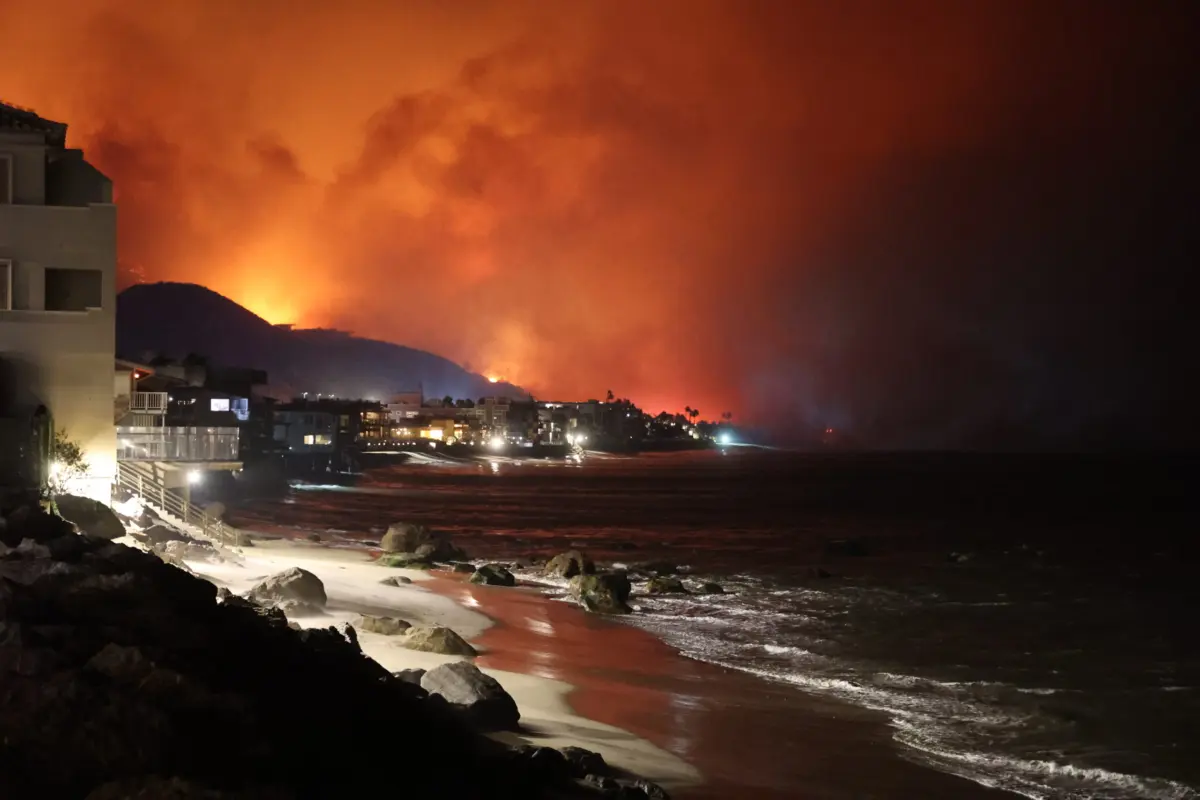
The destructive Southern California wildfires of early 2025—most notably the Eaton and Palisades fires—went down in history as the second and third worst wildfire disasters in the state’s recorded history. The sheer velocity, intensity, and urban interface footprint of these fires resulted in catastrophic property destruction across Los Angeles County.
Financial fallout from the January 2025 conflagrations hit the insurance industry hard. Several large national and regional carriers sustained individual losses well in excess of $1 billion. Industry analysts widely regard the 2025 L.A. wildfires as a definitive tipping point for California’s modern insurance crisis.
Faced with unsustainable loss ratios and the prohibitive cost of securing reinsurance, carriers initially responded by halting or drastically curtailing the writing of new homeowners and commercial property policies throughout the state. This private market contraction created a severe capacity crunch, forcing thousands of commercial enterprises and homeowners onto the state’s insurer of last resort, the FAIR Plan, which itself faced unprecedented financial exposure.
Official Responses and Legislative Action
The crisis forced an aggressive, multi-pronged response from California lawmakers and insurance regulators, altering the state’s legislative and regulatory landscape.
The Sustainable Insurance Strategy
At the center of the state’s recovery efforts is the Sustainable Insurance Strategy, championed by Insurance Commissioner Ricardo Lara and the CDI. Designed specifically as a direct response to carriers curtailing or halting operations in California, the strategy aims to modernize the state’s regulatory framework. It permits insurers to incorporate modern catastrophe modeling and the costs of reinsurance into their rate-making processes—concessions that consumer advocates monitor closely but which industry leaders argue are vital to restoring financial solvency and enticing private insurers back into high-risk zones.
Legislative Momentum
Beyond administrative reforms enacted by the CDI, numerous pieces of state legislation have been introduced to address the systemic vulnerabilities exposed by recurring wildfire seasons. Lawmakers have advanced bills ranging from enhanced mandatory defensible space requirements to financial backstops for the FAIR Plan and streamlined approval processes for rate filings. These legislative measures continue to make their way through the California Legislature, creating a parallel track of reform alongside the CDI’s administrative actions.
Implications for California Business Owners and the Broader Economy
Farmers Insurance’s filing carries profound implications for the state’s commercial landscape, touching upon affordability, availability, and economic resilience.
Increased Access at a Higher Cost
For business owners operating in habitational real estate, retail, office spaces, and auto service industries, the primary implication is a double-edged sword. On one hand, the expansion plan signals that coverage will become accessible again, particularly for enterprises located in wildfire-distressed regions that have struggled to find admitted market options. On the other hand, the reality of a 15% average rate hike means that operating costs will rise significantly. Businesses must budget carefully for increased fixed overhead as these rate adjustments take effect in early 2027.
The Balancing Act of Wildfire Mitigation
By tying policy availability in distressed areas to specific underwriting guidelines and structured commitments (such as writing 1,500 new policies over two years), Farmers and other participating carriers are placing a heavy emphasis on property-level mitigation. Business owners seeking coverage under these new plans will likely be expected to demonstrate rigorous compliance with brush clearance, roof hardening, and community-level defense strategies.
A Stabilizing Commercial Market
Ultimately, Farmers’ strategic pivot indicates that major insurers are regaining confidence in California’s economic viability. As Zurich, Travelers, and Farmers adjust their models to align with the Sustainable Insurance Strategy, the commercial insurance market is showing early signs of transitioning away from emergency crisis management and toward structured recovery. If successful, these plans could alleviate the severe pressure currently placed on surplus lines and non-admitted markets, offering California enterprises a more stable, predictable foundation for the years ahead.
