

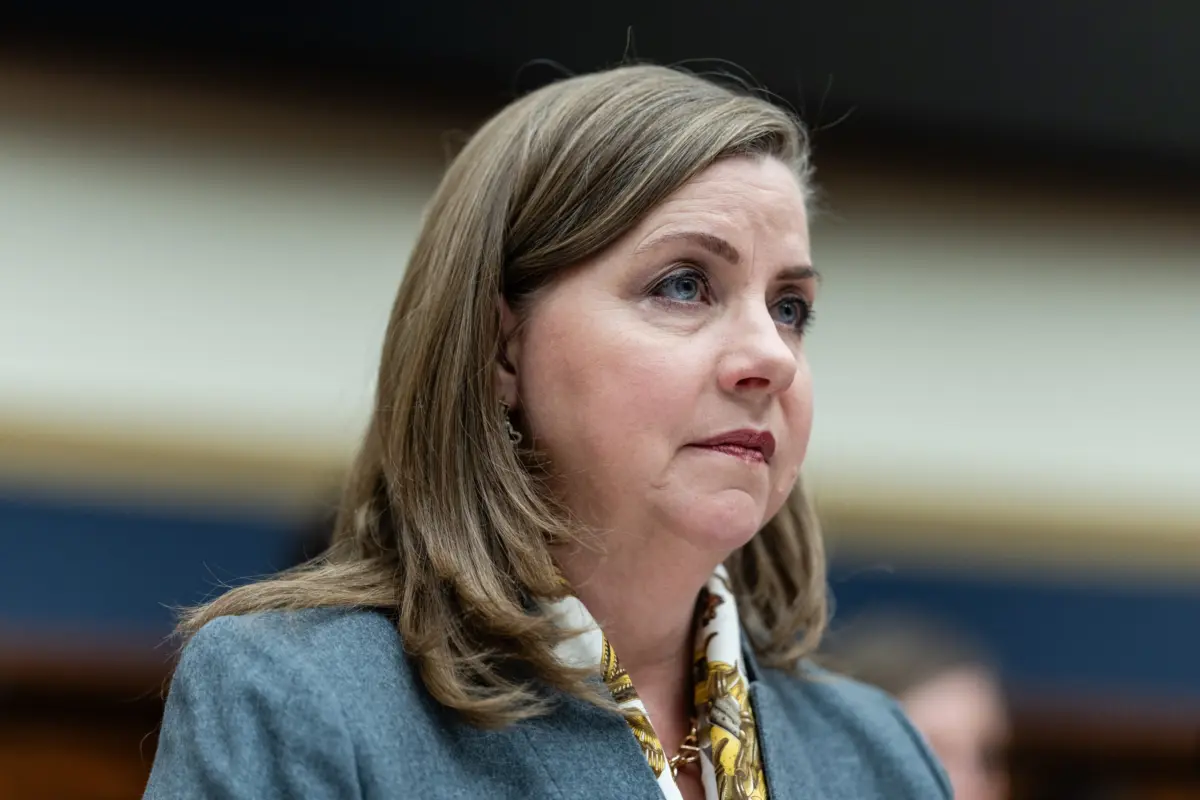
WASHINGTON — As financial institutions increasingly integrate artificial intelligence into their core operations, the United States Federal Reserve is issuing a stern wake-up call to the banking sector. Federal Reserve Vice Chair for Supervision Michelle Bowman warned lenders on September 29 that while artificial intelligence holds transformative potential for financial services, it simultaneously introduces unprecedented cybersecurity vulnerabilities that demand immediate reinforcement.
Speaking at a financial industry event in Colorado, Bowman addressed the dual-edged nature of the technology, emphasizing that financial organizations must aggressively insulate their digital infrastructure against malicious actors who are leveraging the exact same technological breakthroughs to orchestrate sophisticated cyberattacks.
Her remarks highlight a critical inflection point for the global financial system. As machine learning models, automated data processing, and generative AI become ubiquitous in banking, the regulatory landscape is shifting to address the hidden perils lurking beneath innovation. While the central bank remains committed to avoiding heavy-handed micro-management, federal regulators are increasingly making cybersecurity and AI resilience top priorities.
Main Facts
The overarching narrative emerging from Bowman’s address centers on the dual reality of artificial intelligence in modern banking: it is both an indispensable defensive asset and an escalating operational hazard.
- The Dual-Edged Sword: AI allows banks to process vast amounts of transaction data, automate customer service through natural language processing, and flag anomalous activities in real-time. Conversely, malicious cyber actors are utilizing generative AI and advanced machine learning to automate phishing schemes, bypass conventional security protocols, and execute hyper-targeted cyber intrusions.
- Back-to-Basics Cyber Hygiene: Despite the futuristic nature of AI threats, Bowman stressed that defense begins with fundamental cybersecurity hygiene. This includes comprehensive asset inventories, phishing-resistant multifactor authentication (MFA), strict identity and access controls, and rapid vulnerability patching programs.
- Regulatory Balancing Act: The Federal Reserve aims to strike a delicate balance between rigorous oversight and operational flexibility. Regulators acknowledge that maintaining robust cyber defenses can disproportionately burden smaller institutions, prompting the Fed to tailor its Information Technology (IT) examinations based on an institution’s specific risk profile.
- Strategic Regulatory Pauses: Earlier this year, reports indicated that U.S. banking regulators temporarily paused certain cyber-related examinations. This strategic pause was intentionally designed to grant financial institutions the breathing room necessary to upgrade and bolster their internal systems against newly identified AI-enabled threats.
Chronology of Events and Regulatory Evolution
The integration of artificial intelligence into banking has accelerated dramatically over the past several years, prompting a reactive evolution in regulatory oversight.
Early Adoption and Innovation (2021–2022)
Financial institutions aggressively adopted cloud computing and early-stage AI models to optimize loan underwriting, fraud detection, and algorithmic trading. During this period, regulatory bodies primarily focused on general data privacy, algorithmic bias, and fair lending practices, while traditional cybersecurity guidelines governed network integrity.
The Generative AI Explosion and Emerging Threats (2023)
The public release and commercial proliferation of advanced generative AI models fundamentally altered the threat landscape. Cybercriminals quickly weaponized these tools to draft hyper-realistic spear-phishing emails, mimic executive voices for social engineering scams, and automate vulnerability scanning against banking mainframes at unprecedented speeds.
Regulatory Pause and Strategic Realignment (Early 2024)
Recognizing that community and regional banks were struggling to keep pace with sophisticated, AI-driven cyber risks, U.S. regulators—including the Federal Reserve—implemented strategic pauses on specific cyber-related examinations. This period allowed institutions to redirect capital and IT resources toward overhauling legacy systems and hardening network perimeters against next-generation threats.
The Bowman Directive (September 29, 2024)
Delivering her prepared remarks in Colorado, Vice Chair Michelle Bowman formally articulated the Federal Reserve’s current stance. She synthesized the lessons learned from the regulatory pauses, reaffirming that the Fed will not micromanage technological implementation while demanding that bank boards and senior executives take absolute ownership of their cyber resilience.
Supporting Data and Technical Context
To fully understand the urgency behind Bowman’s warnings, one must examine the intersection of modern banking infrastructure and contemporary cyber threat data.
Financial institutions represent some of the most lucrative targets in the global digital economy. According to industry cybersecurity reports, the financial sector experiences cyberattacks at a rate significantly higher than most other commercial industries. The integration of AI into these attacks has compressed the lifecycle of a cyber breach from weeks to mere minutes.
- The Speed of AI Attacks: Traditional malware often required manual deployment and continuous human oversight. AI-driven malware and automated exploit scripts can autonomously probe corporate networks, discover unpatched software vulnerabilities, and pivot laterally across internal servers without human intervention.
- The Cost of Non-Compliance and Breaches: Financial losses extend far beyond direct capital theft. Regulatory fines, reputational damage, customer remediation costs, and operational downtime regularly run into the tens of millions of dollars per major incident.
- Resource Allocation Realities: While Wall Street giants maintain dedicated cybersecurity workforces numbering in the thousands, community banks often operate with lean IT teams. Data from regulatory filings shows that community institutions spend a disproportionately high percentage of their operational budgets on basic compliance and IT maintenance, making external regulatory tailoring vital for their survival.
Official Responses and Industry Perspectives
The reaction to Vice Chair Bowman’s remarks has reverberated throughout the financial, technological, and regulatory spheres. Industry stakeholders have offered diverse perspectives on how banks should navigate this technological frontier.
The Federal Reserve’s Position
Bowman reiterated a core philosophy that has defined her tenure: regulatory restraint paired with accountability. "AI offers great potential—both to threat actors and those buttressing their defenses to those threats," Bowman noted. She underscored that while the Fed recognizes the administrative hurdles facing smaller lenders, it will not compromise on baseline security expectations.
Furthermore, Bowman emphasized that cybersecurity cannot be outsourced exclusively to a chief information security officer (CISO). Proactive risk management requires active engagement from bank boards of directors and senior management teams, who must understand the technological dependencies of their institutions.
Community Bank Advocates
Representatives for community and regional banks have generally welcomed the Fed’s tailored approach to IT examinations. Industry trade groups have long argued that applying uniform regulatory standards to institutions with vastly different balance sheets and technological footprints stifles innovation and drains resources. By pledging to adjust examination rigor based on individual risk profiles, the Fed has signaled a pragmatic willingness to accommodate smaller lenders striving to upgrade their defenses.
Cybersecurity Experts
Independent cybersecurity analysts have praised Bowman’s emphasis on "back-to-basics" cyber hygiene. Many experts have warned that financial institutions frequently become so enamored with acquiring advanced security tools—including proprietary AI defense platforms—that they neglect foundational security practices, such as maintaining accurate asset inventories and enforcing multifactor authentication across all administrative accounts.
Implications for the Financial Sector
The convergence of artificial intelligence, cybersecurity, and federal regulation carries profound implications for the future of banking.
1. Shift in Risk Management Culture
Bank leadership can no longer treat cybersecurity as a back-office IT concern. With federal regulators signaling that oversight will heavily scrutinize board-level engagement, directors must educate themselves on the operational risks introduced by AI systems. Governance frameworks must explicitly account for algorithmic drift, third-party vendor AI integrations, and the security posture of cloud service providers.
2. Widening Resource Gaps
Despite the Federal Reserve’s pledge to tailor examinations for community banks, a stark operational divide remains between megabanks and smaller lenders. Larger institutions can invest heavily in proprietary AI defense systems and dedicated threat-hunting teams, whereas community banks may struggle to afford the specialized talent required to monitor sophisticated AI-driven threats. This dynamic could accelerate consolidation within the banking sector as smaller institutions find the cost of compliance and security unsustainable.
3. The Evolution of Regulatory Frameworks
As generative AI continues to mature, federal regulators will inevitably refine their supervisory expectations. While the current posture avoids direct micromanagement, a major systemic breach or catastrophic AI-related failure could prompt a sharp pivot toward more prescriptive regulations. Financial institutions are therefore incentivized to proactively police their own AI deployments, ensuring transparency, robust testing, and continuous auditing before regulatory intervention becomes mandatory.
Conclusion
Michelle Bowman’s address serves as both an endorsement of technological progress and a sobering reminder of systemic vulnerability. Artificial intelligence holds the key to greater operational efficiency, advanced fraud detection, and superior customer experiences in modern banking. However, as the digital battlefield evolves, financial institutions must pair their enthusiasm for innovation with an unyielding commitment to cybersecurity fundamentals. In the era of AI-driven threats, passive defense is no defense at all.
