

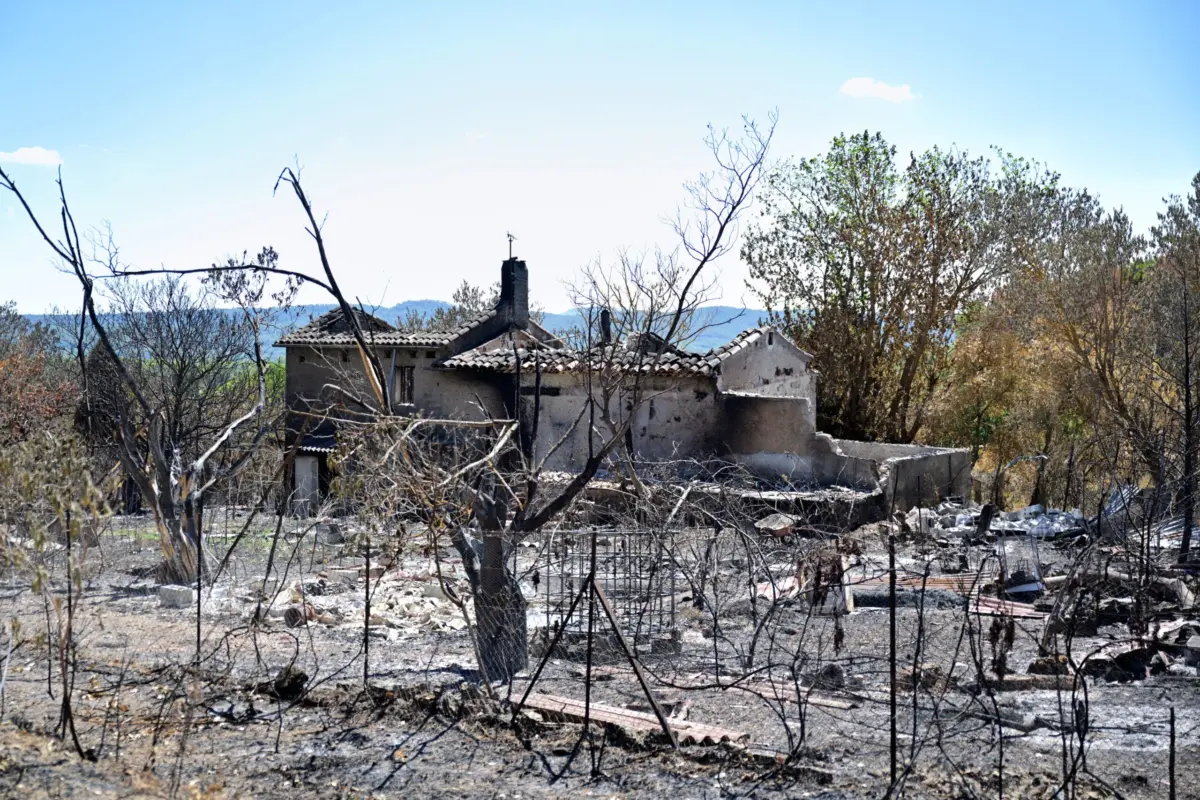
BORDEAUX, France — French emergency services scrambled to contain an aggressive and fast-moving wildfire in the southwestern Landes region on Friday, forcing the immediate evacuation of 525 residents from the threatened village of Luglon. The inferno, which ignited on Thursday, has already scorched approximately 1,100 hectares (2,700 acres) of dense pine forest and advanced perilously close to human settlements, underscoring what authorities have described as an unprecedented and harrowing fire season across Western Europe.
The flare-up in Landes comes on the heels of a brutal summer defined by relentless heatwaves, severe agricultural and hydrological drought, and historic devastation that has already surpassed the grim records set during the catastrophic wildfire season of 2022. As firefighters wage a relentless, round-the-clock war against the flames, the crisis has reignited intense national debates surrounding climate adaptation, forestry management, and human negligence.
Main Facts
The current emergency centers on the rural community of Luglon, situated in the heart of France’s Landes department. According to senior regional official Gilles Clavreul, the fire broke out on Thursday under conditions of extreme meteorological stress. Fueled by dry winds, high ambient temperatures, and the highly combustible resin of the region’s vast pine plantations, the blaze advanced rapidly. By Friday, the fire line had penetrated to within a terrifying two kilometers (1.2 miles) of Luglon’s population center.
In response to the escalating threat, local prefectures ordered the immediate evacuation of 525 people to ensure public safety. Key infrastructure and transit routes have also been severely impacted; critical roads running both north and south of the village have been completely closed to regular traffic to facilitate the movement of emergency vehicles and prevent civilian entrapment.
The sheer scale of the operation requires massive logistical mobilization. Approximately 500 firefighters, equipped with specialized all-terrain heavy vehicles, have been deployed to the front lines. They are supported from the air by an armada of six specialized firefighting aircraft—including water-bombing Canadairs—making desperate, low-altitude drops through choking plumes of thick, black smoke in an effort to blunt the forward momentum of the fire.
Despite these desperate measures, officials have struck a sobering tone regarding the immediate outlook. "The situation is unfavorable and the fire remains raging," Clavreul bluntly informed reporters during a Friday press briefing, refusing to speculate prematurely on the precise ignition source of the Luglon blaze.
Chronology of the Crisis
To understand the volatile nature of the current emergency in Luglon, it is necessary to contextualize it within the broader timeline of France’s disastrous summer fire season:
- Late July: The southwestern tourist haven of Arcachon Bay becomes the epicenter of a national tragedy. Two massive, fast-moving wildfires roar through the region, ultimately obliterating more than 50,000 hectares (124,000 acres) of timber and residential land. The intensity of the blazes triggers the emergency evacuation of roughly 220,000 residents and vacationers, marking one of the largest peacetime evacuations in modern French history.
- Late July (Simultaneous Events): Near Bordeaux-Mérignac Airport, a separate, aggressive fire breaks out. Tragically, the blaze claims the lives of two firefighters in the line of duty, sending shockwaves through the nation’s emergency response community.
- Friday, August (Recent Developments): French media reports reveal a major breakthrough in the investigation into the fatal Bordeaux airport fire. A 15-year-old youth is formally arrested and placed under judicial investigation after allegedly discarding a glowing cigarette butt that triggered the deadly catastrophe.
- Thursday: A new fire ignites in the pine-dense Landes region near the commune of Luglon. Fanned by drought-stressed vegetation and rising afternoon temperatures, the fire spreads uncontrollably throughout the day and into the night, devouring over 1,000 hectares in less than 24 hours.
- Friday Morning: The fire closes to within two kilometers of Luglon’s residential core. Regional authorities order the immediate evacuation of 525 citizens. Ground crews numbering 500 personnel, backed by six aerial assets, establish defensive perimeters as temperatures push toward the mid-30s Celsius.
Supporting Data and Environmental Context
The meteorological and statistical backdrop of the 2026 French fire season paints a picture of systemic ecological strain. The southwestern corner of France has endured a punishing sequence of summer heatwaves, transforming vast swaths of the countryside into a virtual tinderbox.
On Friday afternoon, ambient temperatures in the Landes region soared to a blistering 36 degrees Celsius (97 degrees Fahrenheit). Combined with relative humidity plunging to dangerous lows and weeks of minimal precipitation, the local environment has reached maximum flammability ratings.
The geography of the Landes department inherently compounds this risk. The region is famously swathed in vast monoculture pine forests—an economic powerhouse for the timber industry, but an ecological liability during prolonged droughts. Pine needles and dry underbrush create a continuous fuel bed that allows fires to spread with terrifying speed and intensity.
Statistical tracking released by civil protection authorities confirms the historic severity of the crisis. The total cumulative area burned across France over the course of this single summer has already outstripped the previous record-shattering figures recorded in 2022. Every region is stretched to its absolute operational limit, with equipment, personnel, and financial reserves being rapidly depleted.
Official Responses and the War on Arson
As the fires continue to ravage the landscape, French authorities are facing mounting pressure not only to extinguish the active flames, but also to address the alarming frequency with which these blazes are initiated. While prolonged climate-driven droughts create the necessary preconditions for fires, human behavior remains a catastrophic catalyst.
The French Interior Ministry released sobering statistics highlighting the prevalence of human-caused fires. Nationwide, law enforcement agencies have arrested a staggering 474 individuals on suspicion of starting fires—encompassing both intentional arson and catastrophic negligence.
Particularly concerning to sociological and law enforcement analysts is the demographic breakdown of those detained:
- Minors: Of the 474 suspects apprehended, 183 are under the age of 18.
- Intentional Arson: Approximately 70% of all detained individuals are explicitly suspected of deliberate arson, while the remainder face charges related to reckless endangerment and criminal negligence (such as unattended campfires, illegal burning of agricultural waste, or discarded cigarette butts).
The gravity of these criminal investigations was underscored on Friday following reports regarding the fatal July fire near Bordeaux airport. According to regional newspaper Sud Ouest, a 15-year-old minor was placed under formal judicial investigation after allegedly tossing away a cigarette butt that sparked the inferno, which directly caused the deaths of two professional firefighters. While the Bordeaux prosecutor’s office initially declined to provide immediate commentary on the leak, the case has ignited a fierce national debate regarding parental supervision, environmental education, and the legal accountability of minors in ecological disasters.
Political leaders have responded with calls for zero tolerance. Interior Ministry officials have vowed to pursue maximum legal penalties for anyone convicted of starting fires, emphasizing that the willful or reckless destruction of national forests constitutes a violent assault on public safety and ecological security.
Socioeconomic and Ecological Implications
The compounding disasters of the 2026 summer are leaving deep, lasting scars across southwestern France that will reverberate for years—if not decades—to come.
1. Ecological Devastation and Biodiversity Loss
The destruction of hundreds of thousands of hectares of forest represents an ecological catastrophe. Ancient habitats have been erased, threatening native fauna, disrupting delicate ecosystems, and destroying carbon sinks that are vital for France’s national climate goals. Furthermore, scorched earth left bare by fires is highly susceptible to autumn flash flooding and severe soil erosion, threatening regional watersheds.
2. Economic Fallout in Tourism and Timber
The Landes and Arcachon Bay regions rely heavily on two primary economic pillars: tourism and forestry. The repeated evacuation of resort towns, the cancellation of summer holiday bookings, and the smoke-choked skies threaten the livelihoods of thousands of local business owners, hoteliers, and hospitality workers. Simultaneously, the loss of millions of euros worth of timber in Landes will deal a severe, multi-year blow to the domestic French timber and paper industries.
3. Paradigm Shift in Emergency Management
French civil protection agencies are being forced to completely rethink their operational models. Historically, major wildfire threats were considered localized seasonal problems largely restricted to Mediterranean departments like the Var or Bouches-du-Rhône. The expansion of catastrophic mega-fires northward into departments like Landes and Gironde proves that southwestern France is now an active frontline in the climate emergency.
Calls are growing louder among civil servants, ecologists, and municipal leaders for increased long-term funding. Key demands include:
- Expanding the permanent fleet of heavy-lift firefighting aircraft.
- Enhancing early-detection sensor networks utilizing artificial intelligence and satellite monitoring.
- Revising forestry management protocols—such as introducing wider firebreaks, diversifying tree species, and reducing the density of flammable monoculture pine plantations.
As the 525 evacuees from Luglon wait anxiously in municipal shelters for news of their homes, and as 500 exhausted firefighters continue to battle the relentless wall of fire in the Landes undergrowth, France is left confronting a sobering reality. The summer of 2026 is no longer just a weather event; it is a profound historical turning point demanding an urgent, systemic transformation of how the nation protects its people, its economy, and its natural heritage.
