

Main Facts
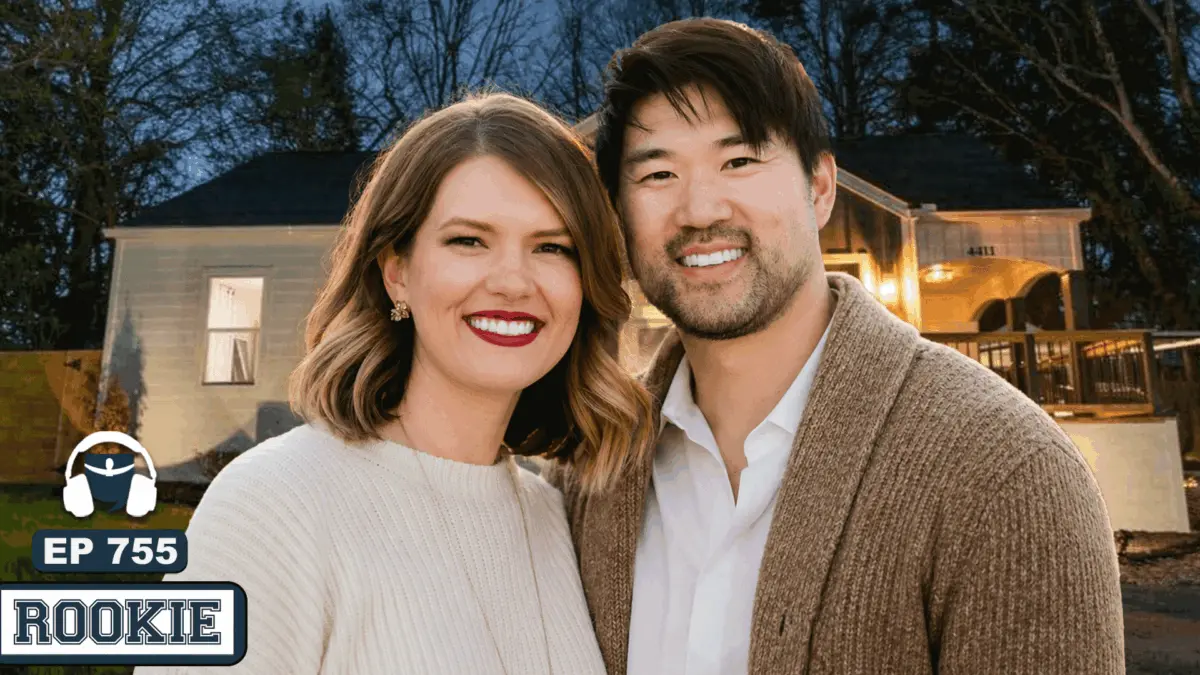
In the high-stakes world of real estate investing, few stories mirror the rapid trajectory of Chris and Ksenia Kim. What began in 2020 as a cautious, traditional entry into the student housing market near the University of Tennessee in Knoxville has blossomed into a thriving enterprise. Today, the couple operates Rocky Top States, a robust portfolio consisting of nine owned properties and eight co-hosted short-term rentals, totaling 17 operational units.
Crucially, this portfolio expansion served as the vehicle for both founders to leave their demanding corporate W-2 careers. Ksenia, who built her career in public accounting and Big Four consulting specializing in operations and automation, and Chris, a former university employee, achieved financial independence and corporate exit in just four years. Their journey underscores the viability of real estate as a tool for reclaiming time, redesigning family life, and achieving systemic wealth generation through short-term rentals (STRs).
Chronology
2020: The Corporate Breaking Point and the First Acquisition
Before stepping into real estate, Chris and Ksenia faced a lifestyle crossroads. Ksenia’s corporate career required constant travel, and despite transitioning to remote work around 2017–2018, her professional demands clashed with their shared vision of starting a family. Chris was working at a university, drawing inspiration from his parents, who had successfully built a rental portfolio following the 2008 financial crisis.
With their first child on the way, the couple pooled their savings—derived from years of corporate salaries—to purchase their first investment property: a one-bedroom, one-bathroom condo located within a mile of the University of Tennessee campus. Purchased for $240,000, the unit was intended to function as a conventional long-term rental targeted at university students.
The Accidental Pivot to Airbnb
The timeline of their acquisition collided with the academic calendar. Having closed on the property in the late spring of 2020 just as their daughter was born, they faced a stark financial reality: student tenants would not return until August. Facing the prospect of carrying a mortgage for four empty months without rental income, the couple decided to experiment with a short-term rental strategy via Airbnb to bridge the gap before placing a student in the unit.
The pivot yielded immediate, unexpected results. Within two hours of listing the condo on Airbnb, they secured their first booking. By day three, their calendar was fully booked for the next six months at a static rate of $129 per night—completely missing out on dynamic pricing opportunities during high-demand University of Tennessee home football games, where nightly rates in the market could surge to thousands of dollars.
The early days were not without operational friction. At 2:00 AM on their very first night of hosting, a guest locked themselves out. Compounding the stress, the couple had a five-month-old infant sleeping at home. Chris rushed to the property, unlocked the door, and immediately identified a design flaw: a lockable doorknob paired with a digital deadbolt. They removed the locking mechanism the next day, establishing a culture of rapid operational problem-solving that would define their business.
2022: Scaling via Home Equity and Larger Assets
Buoyed by cash flow that quadrupled what a traditional long-term rental would have generated—bringing in roughly $3,800 to $4,000 per month in revenue compared to an estimated $300 to $400 long-term—the Kims abandoned their student-housing model and committed fully to the short-term rental space.
By late 2022, they set their sights on expansion. Lacking immediate liquid cash reserves due to the furnishing and setup costs of their first unit, they tapped into the substantial equity built up in their primary residence—purchased in 2018—by securing a Home Equity Line of Credit (HELOC). Using this leveraged capital, they acquired a larger, four-bedroom, three-bathroom single-family home listed at $650,000. This acquisition proved that their operational model could scale beyond small condos into larger family-sized properties.
December 2023–Present: Full-Time Entrepreneurship
As the portfolio expanded through disciplined reinvestment and co-hosting agreements, the revenue began eclipsing their corporate salaries. Chris stepped away from his job first to manage daily on-the-ground operations, guest communications, and maintenance calls. By December, following a sustained period of portfolio growth and revenue stabilization, Ksenia officially walked away from her corporate W-2 role. Today, the couple manages nine properties of their own and co-hosts an additional eight, operating a unified team under Rocky Top States.
Supporting Data
The financial transformation experienced by the Kims highlights the quantitative advantages of short-term rentals over traditional buy-and-hold strategies when executed correctly:
- Cash Flow Multiplier: Traditional long-term leasing on their initial condo was projected to net $300 to $400 monthly. Operating the same unit as an Airbnb generated average monthly revenues between $3,800 and $4,000, resulting in a 4x increase in cash flow.
- Portfolio Scale: In four years, the enterprise expanded from a single 1-bedroom condo to 17 total units (9 owned, 8 co-hosted) in Knoxville, Tennessee.
- Market Niche: Approximately 80% of their guest demographic consists of individuals affiliated with the University of Tennessee, including alumni, visiting parents, and academic conference attendees.
- Financing Strategy: The portfolio’s second major acquisition was funded entirely by leveraging accumulated equity from their primary residence via a HELOC, effectively trading residential equity for high-yielding commercial asset equity.
Official Responses
Reflecting on their journey during their appearance on the Real Estate Rookie podcast, co-hosts Ashley Kehr and Tony J. Robinson emphasized the rare synergy of the couple’s partnership and operational discipline.
"What makes two people work as spouses also allows them to work together as business partners," noted Tony J. Robinson, highlighting how natural divisions of labor keep the enterprise stable. "The details that Chris is good at, Ksenia doesn’t want to do, and the things Ksenia is really good at, Chris doesn’t want to do."
Reflecting on the psychological barrier of leveraging personal property equity, Ksenia Kim explained:
"We were really trading our equity for an equity in another property. Is it a risk? Absolutely. But trading equity from one property to another property did not feel like an outflow. It almost felt like an expansion or a trade."
Chris Kim added regarding their decision to manage and clean their first property independently:
"Not outsourcing anything really accelerated how to operate a short-term rental… allowing us to do it ourselves really accelerated that path forward. Once we realized we could make this a successful move, that was the biggest shift."
Implications
The success of Chris and Ksenia Kim offers a blueprint for aspiring real estate investors, particularly young families navigating demanding professional careers:
- The Power of Operational Immersion: By handling initial cleanings, guest communications, and maintenance issues themselves, the Kims gained a granular understanding of the hospitality business. This firsthand experience allowed them to establish rigorous quality standards that later made training cleaning crews and scaling systems seamless.
- Mitigating Analysis Paralysis: The couple’s transition proves that waiting for perfect conditions is often the greatest deterrent to wealth creation. By treating their initial property as a test run and systematically working through "what-if" scenarios, they neutralized fear and took decisive action.
- Redefining Family Freedom: Beyond the financial metrics, the ultimate implication of the Kims’ corporate exit is time sovereignty. By building an asset-backed business together, they have eliminated overnight travel, secured complete schedule flexibility for school pickups and extracurricular activities, and embedded their children into the operational reality of entrepreneurship—proving that real estate can accelerate lifestyle design decades ahead of traditional retirement timelines.
