

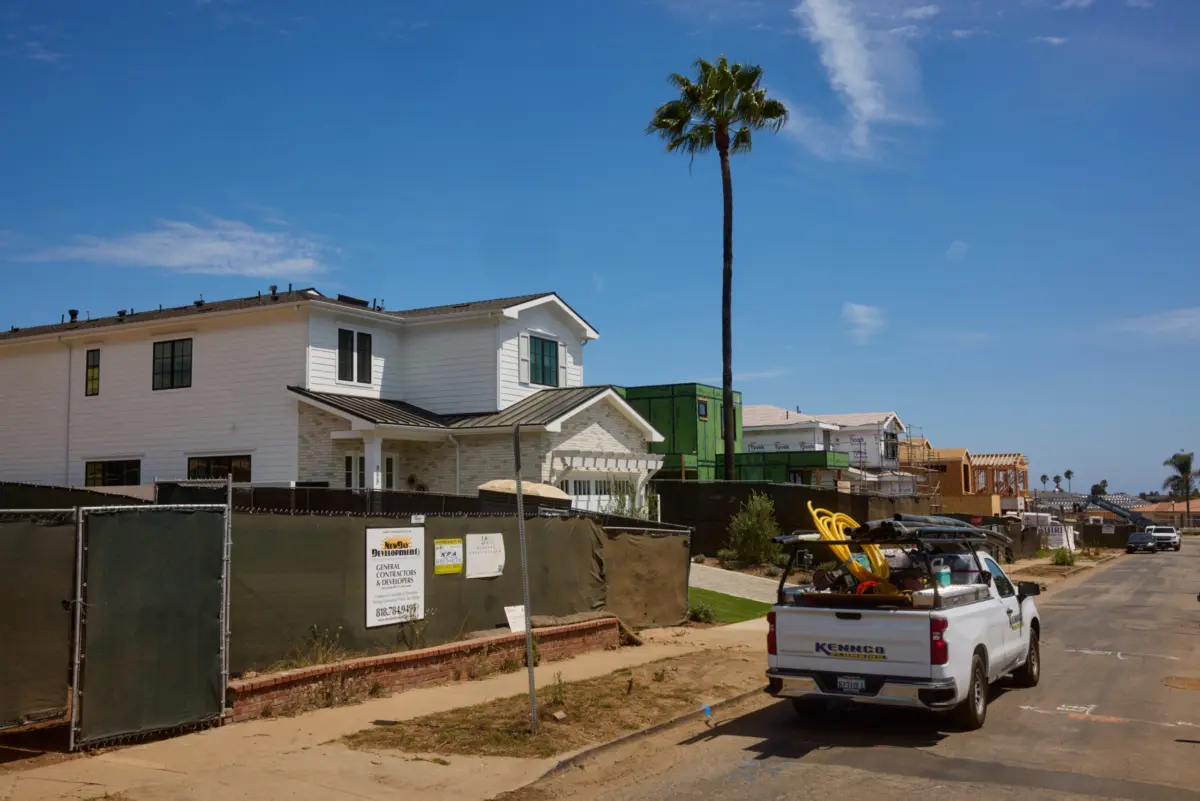
LOS ANGELES — More than a year after catastrophic wildfires reduced thousands of structures to ash in some of Southern California’s most affluent neighborhoods, a pioneering nonprofit is advancing an unprecedented financial strategy. The Uplifters Foundation is preparing to tap the public debt market to construct high-end housing in the slow-to-recover Pacific Palisades enclave, rolling out a novel model that could soon be replicated across disaster-prone communities nationwide.
Under the proposed initiative, the Uplifters Foundation plans to issue up to $250 million in municipal bonds through the California Public Finance Authority. While traditional nonprofit entities frequently issue tax-advantaged debt to finance low-income or subsidized affordable housing, this venture breaks the mold by utilizing municipal financing mechanisms to build multi-million-dollar homes for private purchase.
If successful, the blueprint could establish a precedent for how affluent and middle-income enclaves recover from climate-fueled natural disasters when conventional insurance payouts, personal savings, and federal aid fall short.
Main Facts: The $250 Million Municipal Bond Strategy
The core of the Uplifters Foundation’s plan centers on leveraging capital markets to bypass traditional, sluggish construction bottlenecks. By issuing up to $250 million in municipal debt, the nonprofit aims to construct roughly 60 new single-family homes in the Pacific Palisades. Each property is projected to cost approximately $3 million.
Unlike traditional affordable housing programs targeted at low-income populations, these residences are being marketed by the foundation as "attainable" relative to the hyper-inflated post-fire market of the Palisades. Uplifters President Lee West has engaged homebuilders to design three- to four-bedroom, three- to four-bathroom residences averaging roughly 2,600 square feet. These footprints are intentionally smaller than many of the sprawling modern replacements currently rising across the neighborhood.
Crucially, the bond deal requires zero financial backing or direct liability from the City of Los Angeles or other taxpayer-funded agencies. For a municipal government grappling with billions in infrastructure damage and limited fiscal breathing room, this zero-risk profile made the proposal an attractive policy experiment.
The project relies on a lease-to-buy structure. Initially, the newly constructed homes will be leased to qualified residents who are given an option to purchase. To prevent predatory real estate speculation, the terms include structured price reductions for occupants who maintain long-term residency of at least three years, deliberately discouraging short-term "flipping."
Chronology of Crisis: From January 2025 Inferno to Present Stagnation
To understand the desperate need for creative capital solutions in the Palisades, one must look back at the harrowing events of January 2025.
January 2025: The Twin Disasters
In early January 2025, Southern California was struck by a devastating siege of wildfires. Simultaneous blazes tore through the Pacific Palisades on the western edge of Los Angeles and the Altadena community to the east. The fires moved with terrifying speed, fueled by fierce Santa Ana winds and parched brush, ultimately claiming 31 lives and generating an estimated $40 billion in insured losses.
In the Pacific Palisades alone, more than 5,000 homes were incinerated. The historic neighborhood, affectionately nicknamed "Mayberry by the Sea" for its tight-knit, small-town atmosphere, was virtually hollowed out overnight.
The Slow Road to Rebuilding
In the year and a half following the disaster, the pace of recovery in the Palisades has been agonizingly slow. According to city data, construction permits have been issued for only about one-third of the destroyed properties. More telling of the systemic paralysis, only 42 individual addresses had received certificates of occupancy as of mid-2026.
Many displaced residents—particularly retirees and multi-decade homeowners—found themselves critically underinsured or entirely lacking the personal capital required to clear debris and commission modern construction under stricter, post-disaster building codes. Confronted by complex architectural design phases, soaring material costs, and labyrinthine municipal permitting processes, many gave up.
Consequently, local leaders grew increasingly terrified that vast swathes of the Palisades would languish indefinitely as empty, weed-strewn lots guarded by rusted chain-link fences. Concurrently, outside investors swooped in, purchasing vacant lots at a blistering pace of roughly one per day for an average of $2 million, snapping up land to erect massive, speculative "McMansions" that threaten to permanently alter the architectural soul of the neighborhood.
Mid-2026: Municipal Endorsement
Facing the threat of long-term blight, the Los Angeles City Council stepped in. On Tuesday, the council approved a second supporting resolution recognizing the Uplifters bond issuance as a community benefit that actively lessens "the burdens of the government of the City of Los Angeles."
With municipal political hurdles clearing, Uplifters co-founders Steven Dietz and Lee West anticipate finalizing the bond marketing and closing process later this year, with the first wave of newly constructed homes targeted to be move-in ready by 2028.
Supporting Data and Financial Realities
While the Uplifters Foundation champions its model as a lifeline for a stalled recovery, housing analysts point out significant financial caveats regarding who can actually benefit from the program.
The Math of "Attainable" Luxury
The Palisades has long been one of the wealthiest coastal enclaves in the United States. Prior to the 2025 wildfire, the median home price hovered near $4 million. While a $3 million price tag represents a relative discount compared to pre-fire valuations and incoming luxury developments, it remains entirely out of reach for the average working-class family.
According to data from the California Association of Realtors, purchasing a $3 million home with a standard 20% down payment (assuming July’s average 30-year fixed mortgage rate of 6.54%) requires a staggering household income of approximately $747,200.
"These are not government-subsidized affordable homes, and they will not work for every household," conceded Uplifters President Lee West.
Rather than serving low-income residents, the project targets middle-to-upper-middle-class households, former local homeowners who retained their land equity but lacked construction capital, or professionals priced out of the hyper-competitive speculative market.
Economic Impact on the City
Despite serving an affluent demographic, the project delivers tangible municipal benefits. According to the Los Angeles City Council’s resolution, constructing these 60 new homes will:
- Restore critical property tax revenue to municipal coffers, which plummeted following the destruction of thousands of tax rolls.
- Provide a psychological and physical catalyst, encouraging neighboring property owners who have hesitated to finally initiate their own rebuilding efforts.
- Alleviate neighborhood blight by replacing vacant dirt lots with active, tax-generating residences.
Official Responses and Perspectives
The project has sparked intense debate among urban planners, local politicians, and community stakeholders over the boundaries of public finance and disaster recovery ethics.
Traci Park, Los Angeles City Councilmember for the Palisades:
As the sponsor of the motions approving the bond issuance, Park has been a vocal proponent of breaking away from bureaucratic orthodoxy.
"We need to be willing to look at creative solutions to a problem that conventional approaches aren’t solving," Park said. "Even though it represents just 1% of the structures lost, it could offer a return for some families that cannot rebuild on their own. These lots may otherwise remain vacant for years."
Steven Dietz, Uplifters Foundation Co-Founder:
Dietz, a former venture capital executive and experienced accessory dwelling unit (ADU) developer, views the initiative as a scalable test case for modern disaster zones.
"If it works, it becomes a model for other communities to pursue," Dietz noted, emphasizing the strict anti-flipping covenants designed to preserve community stability. "It is intended to encourage long-term residency and discourage short-term flipping."
Skeptics and Housing Advocates:
While local officials praise the ingenuity of the deal, some housing advocates have raised questions regarding the equitable distribution of public financing tools. Critics argue that utilizing municipal bond authorities—which are frequently deployed for public infrastructure or deeply subsidized affordable housing—to facilitate the construction of $3 million luxury-adjacent properties highlights a broader systemic failure: the growing reliance on private and quasi-private capital markets to solve housing crises in wealthy enclaves, while lower-income disaster victims in other regions struggle for basic relief.
Furthermore, broader legal and insurance battles continue to roil the region. Just recently, legal disputes—such as a judge’s hesitation to hold local utility companies fully liable for the catastrophe—have dragged out financial settlements, leaving many fire victims entirely dependent on creative, grassroots interventions like the Uplifters initiative.
Implications: A New Blueprint for Climate Disaster Recovery?
As climate change accelerates the frequency and severity of urban-wildland interface fires across the American West—from the hills of Los Angeles to the suburbs of Boulder and the forests of Oregon—traditional post-disaster recovery frameworks are buckling under the pressure.
Insurance markets are retreating from high-risk zones, federal disaster relief is slow and overburdened, and local municipalities face severe budgetary constraints. In this vacuum, the Uplifters Foundation’s experiment in Pacific Palisades offers a fascinating glimpse into the future of community rebuilding.
By weaponizing the municipal bond market to cut through red tape, bypassing direct taxpayer liability, and engineering structures that incentivize permanent residency over speculative land grabs, the project attempts a high-stakes balancing act.
Whether this model can successfully scale beyond the affluent confines of the Pacific Palisades remains to be seen. However, as bulldozers prepare to break ground on Fiske Street, municipal leaders, housing developers, and climate-vulnerable communities across the country will be watching closely to see if Wall Street financial instruments can successfully rebuild what nature destroyed.
