

At a time when prospective homeowners and everyday buyers look at the U.S. real estate market with mounting apprehension, America’s largest financial institution is making an unprecedented statement of confidence. JPMorgan Chase has announced a staggering $750 billion capital deployment strategy targeting the housing sector through 2035. This massive financial commitment—surpassing the bank’s previous decade of housing investments by nearly 40%—arrives as the market presents a perplexing paradox: national home sales are cooling, affordability remains severely strained, yet institutional capital is flowing unabated into property and development.
This dynamic real estate landscape was the central focus of a recent episode of the On the Market podcast, hosted by real estate professionals Henry Washington, James Dainard, and Kathy Fettke. Together, the panel dissected the macroeconomic indicators shaping the market, evaluating whether JPMorgan’s monumental bet signals a foundation of long-term stability or a high-stakes gamble against persistent economic headwinds.
Chronology: How the 2026 Housing Market Unfolded
Understanding the current trajectory of real estate requires tracking the series of macroeconomic and localized shifts that have defined the market moving through the third quarter of 2026:
- Late Spring to Early Summer 2026: Interest rates hover near recent peaks, intensifying the affordability crisis for first-time and median-income buyers. Real estate velocity begins to decelerate in numerous suburban and secondary markets.
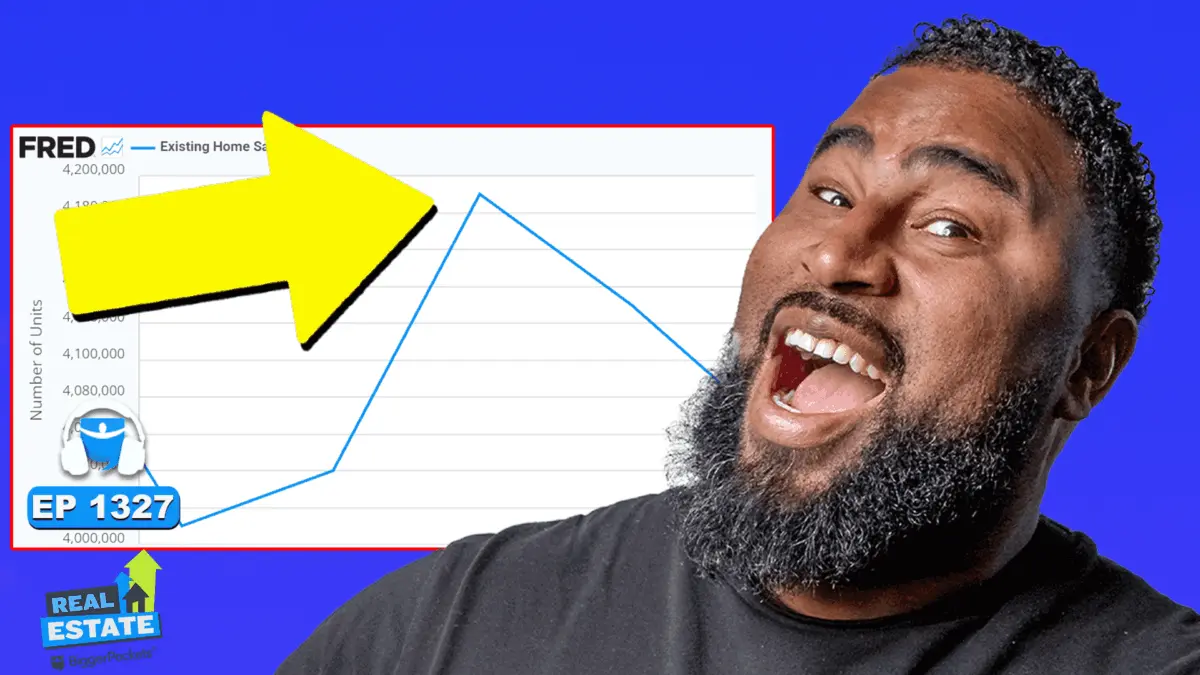
- July 2026: Existing home sales fall by 1.7% to a seasonally adjusted annual rate of 4.06 million units, according to data highlighted on US News. Despite slowing sales velocity, national median existing home prices climb 2% year-over-year to $434,000, marking the 37th consecutive month of annual price gains.
- Mid-August 2026: JPMorgan Chase officially expands its American Dream Initiative, scaling its housing investment and lending commitment to $750 billion through 2035.
- August 12, 2026: The Consumer Price Index (CPI) report for July is released, showing a modest 0.1% monthly increase. Annual inflation cools to 3.4%, and core CPI dips to 2.5%, signaling a potential plateau in inflationary pressures.
- Late August/Labor Day 2026: Real estate operators report a localized uptick in buyer activity, heavily concentrated in either lower-cost, unrenovated homes or high-end luxury properties, leaving middle-market flips experiencing prolonged days on the market.
- September 2026: The Federal Reserve opts to maintain current interest rates, though a contentious 9–3 vote reveals underlying hawkish sentiments among central bank officials, leaving future monetary policy fluid.
Supporting Data & Market Metrics
The 2026 real estate environment is characterized by a stark bifurcation in buyer behavior, inventory velocity, and inflation data.
The Affordability Squeeze and Diverging Buyer Demographics
Real estate data points to a widening wealth gap directly impacting transaction velocity across different price points:
- Existing Home Sales: Down 1.7% in July to an annual rate of 4.06 million.
- Median Home Prices: Reached $434,000 in July, a 2% year-over-year increase, representing 37 consecutive months of upward price movement.
- The Luxury vs. Starter Divide: While entry-level buyers struggle with high interest rates and borrowing costs, luxury real estate remains remarkably resilient. In many metropolitan areas, high-end properties priced above $1.5 million routinely go under contract within 30 days, fueled by accumulated stock market wealth.
- The "Grandma’s House" Phenomenon: Flipper inventories are seeing extended days on market. Conversely, clean, well-maintained, but entirely unrenovated homes (often referred to as dated or "grandma’s houses") trade at roughly a 15% to 20% discount compared to fully flipped properties and are selling significantly faster. Buyers prefer to purchase at a lower baseline price and tackle cosmetic updates incrementally.
Macroeconomic Indicators: Inflation and the Fed
- CPI Cooling: July’s CPI rose just 0.1%, bringing annual inflation down to 3.4%.
- Core Inflation: Core CPI dropped to 2.5%, the slowest pace observed since the post-pandemic economic surge.
- Interest Rate Probabilities: Following the inflation report, the CME FedWatch tool indicated a 61.9% probability that the Federal Reserve would keep benchmark interest rates steady at its upcoming monetary policy meeting, up from roughly 51% the previous day.
Official Responses and Institutional Strategy
The decision by JPMorgan Chase to inject $750 billion into the housing market represents a calculated long-term thesis on demographic demand and housing supply shortages.
JPMorgan Chase’s Three-Pronged Capital Deployment
The expansion of the bank’s American Dream Initiative breaks down into distinct financial buckets designed to stimulate various layers of the housing ecosystem:
- Multifamily and Developer Lending: Supplying capital to developers to increase the overall inventory of apartment and rental units.
- Mortgage Origination: Expanding consumer access to mortgage financing, particularly aiming to facilitate homeownership for first-time buyers with modest down payments.
- Affordable Housing Investments: Direct equity and debt investments into dedicated affordable housing funds, placing institutional capital directly at risk to generate social impact and stable yields.
Industry Commentary
During the On the Market discussion, the panel contextualized JPMorgan’s strategy within historical precedents.
"You always want to follow the money," noted real investor and developer James Dainard. "When you have bigger banks spending a lot of money on research and deploying that much capital into the housing market, they’re not really predicting a massive crash. Why would they provide so much financing for first-time home buyers putting down low down payments if they thought their asset was going to be worth 10% to 20% less in three years? They’re predicting stability."
Kathy Fettke drew parallels to the post-2008 recovery era, pointing out that institutional accumulation of residential real estate in 2012 preceded a major market normalization. "Big companies like Berkshire Hathaway investing in builders, JPMorgan Chase upping lending, and international firms buying American builders—these huge firms are a little more positive. They see this demand coming, they see this lack of housing, and they are all in."
Implications for Real Estate Investors and Consumers
For active investors, flippers, and buy-and-hold operators, the current market dynamics demand a strategic pivot away from generalized assumptions and toward granular, data-driven execution.
1. Ditch the Gut, Follow the Zip Code
As Henry Washington emphasized, broad national headlines do not dictate local reality. "Real estate is local. You can’t just buy anything at a discounted price anymore, throw it on the market, and make money… You have to study your market, see who the customers are that are transacting, and how they are transacting." Success in 2026 requires micro-analyzing velocity within specific zip codes and 10% price point blocks.
2. Adjusting the Flips: The Plan B Approach
With affordability acting as a primary friction point, traditional high-end flips are facing fierce competition and prolonged holding periods. Savvy operators are adopting a dual approach: evaluating properties both as full-scale renovations and as light-rehab, "clean-and-list" assets. By minimizing heavy renovation debt and lowering the final price tag to meet buyer purchasing power, investors can protect profit margins while significantly accelerating cash velocity.
3. Mitigating Debt and Holding Costs
High interest rates and extended market times magnify the danger of carrying expensive debt. Industry veterans recommend focusing heavily on reducing monthly holding costs—whether through refinancing flips into Debt-Service Coverage Ratio (DSCR) loans or partnering with distressed builders for bulk acquisitions of brand-new, energy-efficient inventory.
4. The Resilience of Buy-and-Hold
For landlords and long-term investors, the persistent affordability crisis in the for-sale market drives a continuous stream of creditworthy tenants toward the rental market. By capitalizing on distressed builder inventory or acquiring discounted properties that serve the working-class demographic, buy-and-hold investors can secure reliable cash flow while directly addressing the nationwide housing shortage.
Conclusion
JPMorgan Chase’s $750 billion bet serves as a powerful indicator that the foundational demand for American housing remains robust. While the market of 2026 requires navigating higher financing costs, cooling sales velocity, and a stretched consumer base, the underlying fundamentals point toward stability rather than a systemic downturn. For investors willing to look past the macro-level noise, master local data, and adapt their strategies to meet buyer affordability, the current market offers substantial opportunities for long-term wealth creation.
