

Main Facts
When a software update turns an expensive piece of hardware into a useless brick, who should bear the financial cost of the recovery? For modular computer pioneer Framework, the answer is straightforward: the manufacturer should foot the bill. However, computing giant Lenovo has taken a much more ambiguous approach.
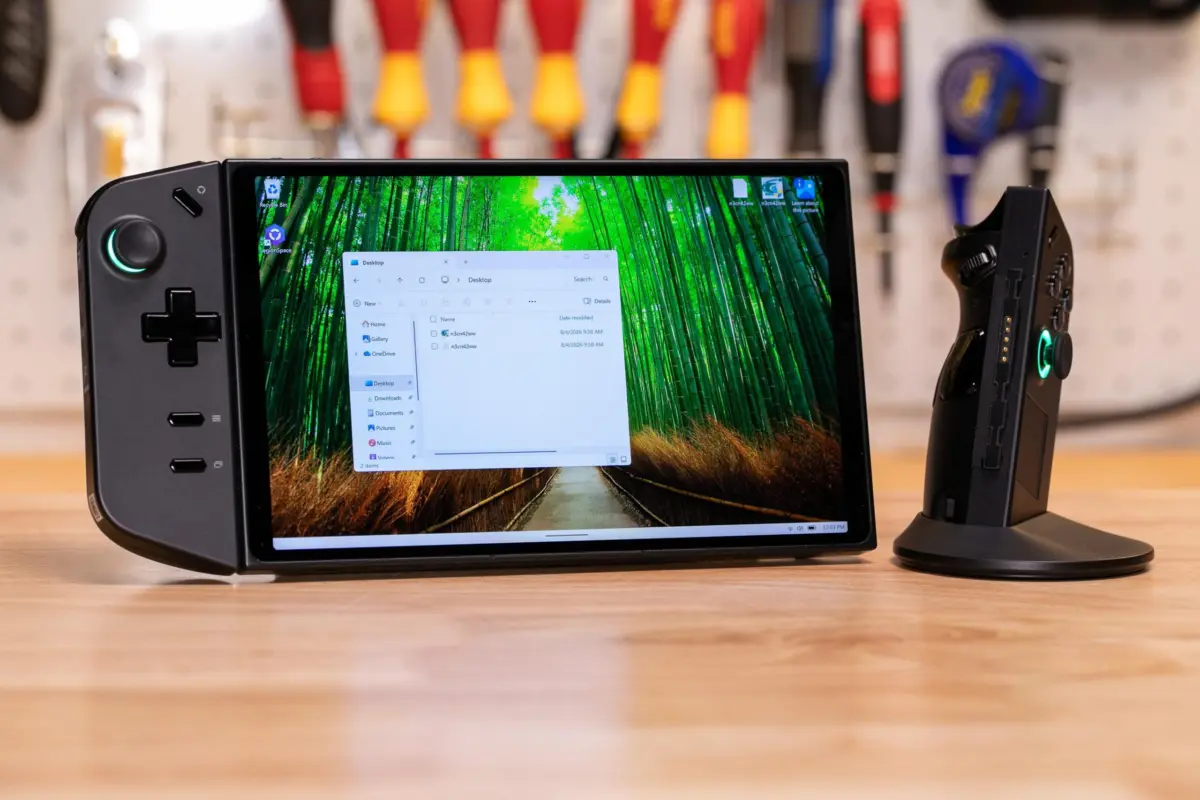
Following weeks of community outcry and mounting frustration on online forums, Lenovo has finally broken its silence regarding a faulty BIOS update that has been rendering a number of original Lenovo Legion Go handheld gaming PCs completely inoperable. The controversial update, identified as BIOS version V42 (N3CN42WW), has left users facing blank screens, unresponsive systems, and—in some cases—steep repair bills approaching $300 out of pocket.
Despite the growing crisis, Lenovo’s official response has largely pointed customers toward basic troubleshooting steps, such as holding down the power button, before advising them to contact customer support. While an internal support representative on the company’s official forums suggested that repairs should be covered under warranty—and potentially outside of warranty depending on local consumer protection laws—Lenovo has yet to issue a definitive, universal guarantee that it will absorb the cost of repairing devices damaged by its own faulty software. This hesitation has ignited a wider industry debate over corporate accountability, software validation protocols, and the obligations of hardware manufacturers when updates go catastrophically wrong.
Chronology of the Crisis
The unfolding situation surrounding the Legion Go V42 BIOS update follows a distinct timeline of discovery, community escalation, and eventual corporate acknowledgment:
- The Rollout Period (Late 2025 to Early 2026): For approximately two months, BIOS update version V42 (N3CN42WW) is made available for download directly through Lenovo’s support website. Crucially, the update is not pushed through Windows Update or Lenovo Space, meaning users have to actively seek it out on the support portal.
- Early February 2026: Reports begin trickling into online communities like Reddit (specifically the r/LegionGo subreddit) from users experiencing catastrophic failures. Affected owners report black screens, unresponsive boot sequences, and red status LEDs following the application of the V42 update.
- Mid-February 2026: Frustration boils over as users begin receiving repair estimates from official service centers, with some bills totaling nearly $300. Community threads multiply, detailing bricked devices, long waits for customer support, and a lack of official guidance from Lenovo.
- Late February 2026: Lenovo quietly pulls BIOS V42 from its support website as internal teams begin investigating the reports.
- Early March 2026: Lenovo officially breaks its silence, issuing a statement through communications director Jeff Witt acknowledging the blank screen issue and confirming the removal of the update. Simultaneously, a forum user identified as "Daniel_Legion" posts tentative information regarding warranty and repair policies, prompting tech journalists and consumers to demand further clarification.
Supporting Data and Technical Context
To fully understand the scope of the Legion Go BIOS crisis, it is important to examine the technical specifics of the hardware involved and the erratic nature of the bug itself.
Not every Legion Go owner was vulnerable to the issue. The problem is specifically isolated to the original Legion Go 8APU1 model. Later variations, such as the Legion Go S or the anticipated Legion Go 2, are unaffected. Furthermore, because Lenovo never distributed V42 through automated channels like Windows Update or the proprietary Legion Space utility, only users who manually downloaded and installed the file from Lenovo’s support pages during its active window were exposed to the risk.
Interestingly, the bug does not appear to strike every machine uniformly, making it a particularly elusive issue for quality assurance teams. According to statements shared by Lenovo representative "Daniel_Legion" on the company’s forums, testing environments yielded wildly different results:

- A testing team in Europe successfully reproduced the bricking phenomenon on three out of three devices tested.
- Other regional testing teams were entirely unable to replicate the black screen error, leading technicians to theorize that the glitch is tied to specific hardware components used in certain manufacturing batches, or that it requires a very specific set of system circumstances to manifest.
To test the volatility of the file, tech journalists performed stress-tests by intentionally installing the "forbidden" BIOS V42 on review units. In some instances, after a grueling six-minute sequence characterized by alternating black screens, progress bars, and warnings, the device ultimately recovered, booted successfully into Windows, and permitted normal gaming functionality—even enabling new features like gamepad PIN entry. For unfortunate users whose systems did not recover, however, the result was a permanent black screen requiring professional intervention.
Official Responses from Lenovo
Lenovo’s official communications have been doled out in two primary channels: a formal corporate statement provided to major tech publications, and scattered community forum posts by support staff.
The Corporate Statement
In an official statement provided to The Verge by communications director Jeff Witt, Lenovo outlined its awareness of the problem and detailed recommended troubleshooting steps for affected users:
"Lenovo is aware that some Legion Go devices may experience a blank screen during installation of BIOS version V42. BIOS V42 was not distributed through Windows Update or Legion Space, and Lenovo has removed the update from its support website while we continue our validation work. Users who have successfully completed the V42 update should not need to take further action at this time.
If a device encounters a blank screen during V42 installation, users may try pressing and holding the power button for approximately 10 seconds, waiting approximately one minute, and then powering the device on again. If the device does not resume normal operation, customers should contact Lenovo Support for further assistance.
Lenovo continues to evaluate and validate future BIOS updates for Legion Go."
The Forum Disclosures
Adding to the corporate guidance, a Lenovo employee posting under the moniker "Daniel_Legion" weighed in on an official Lenovo forum thread. According to their posts, devices suffering from the V42 bricking issue "should be repaired free of charge" if they are currently under warranty. Regarding units that have fallen out of warranty, the employee noted that repairs should still be handled free of charge, but added the caveat that customers should "please check local laws."

Industry observers have noted that relying on local consumer protection laws as the baseline for out-of-warranty support—coupled with the relative anonymity of a single forum post—provides cold comfort to consumers who are facing steep repair invoices for a software error generated by the manufacturer.
Industry Implications and Consumer Rights
The Lenovo Legion Go incident highlights a glaring double standard in the consumer electronics industry regarding software updates and hardware warranties.
When software or firmware distributed by a manufacturer actively destroys a device, the threshold for corporate responsibility should be clear-cut. Industry standards are increasingly being shaped by companies like Framework, which set a precedent by openly guaranteeing that if a company-issued software update bricks a computer, all resulting fixes and repairs are completely free of charge, regardless of warranty status.
By contrast, Lenovo’s initial response—instructing users to hold down power buttons, quietly pulling the file without a proactive notification campaign, and leaving out-of-warranty customers dependent on regional legal protections—feels reactive rather than proactive. Critics argue that hardware giants should not wait for exhaustive internal investigations to conclude before offering baseline assurances to their consumer base.
As handheld gaming PCs continue to bridge the gap between traditional consoles and portable Windows computers, manufacturers must establish robust, failsafe recovery mechanisms (such as dual-BIOS chips or accessible hardware recovery tools) and transparent, no-fault warranty policies for software deployment mishaps. Until major players like Lenovo adopt a zero-blame repair policy for manufacturer-induced software bricks, consumers will remain wary of clicking "update" on the devices they rely on.
