

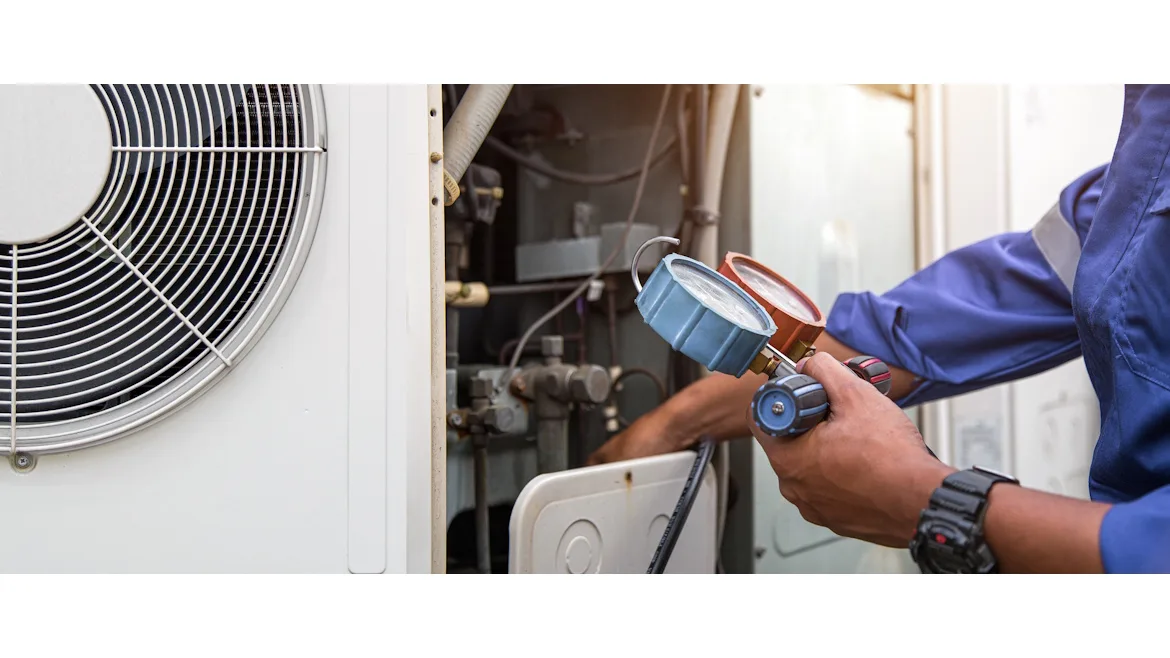
REFRIGERATION & HVACR MAINTENANCE — Refrigerant charging remains one of the most routine yet technically demanding services performed by heating, ventilation, air conditioning, and refrigeration (HVACR) contractors throughout the year. Whether executed during new system installations or in response to elusive refrigerant leaks, charging must be completed with pinpoint accuracy to ensure optimal cooling performance, system longevity, and maximum energy efficiency for the end-user.
Despite its frequency on service call sheets, improper refrigerant charging persists as a pervasive issue across the field. Systems routinely suffer from being either undercharged or overcharged, leading to diminished performance, excessive energy consumption, and premature equipment failure.
To combat these recurring challenges, industry veterans Anthony Maynor of RightTek HVAC Training and Rocky Berger of ARS/Rescue Rooter recently stepped forward to dissect the most common pitfalls plaguing technicians. By shedding light on these mistakes and outlining precise remediation strategies, industry leaders aim to elevate field standards and minimize costly callbacks.
Main Facts: The Anatomy of Refrigerant Charging
At its core, refrigerant charging is the process of adding or removing refrigerant from a closed-loop HVAC system to achieve optimal thermal performance. However, modern systems leave little room for guesswork.
- The Fallacy of Pressure-Only Checks: Relying solely on pressure gauges to gauge a system’s charge is a recipe for error. Accurate evaluations demand comprehensive superheat and subcooling calculations.
- The "70/70 Rule": Environmental variables dramatically influence readings. Both indoor and outdoor temperatures should ideally register at or above 70°F before a technician attempts to evaluate refrigerant levels.
- Airflow Before Charging (ABC): Inadequate airflow across the indoor coil corrupts pressure and temperature readings, frequently resulting in catastrophic misdiagnoses.
- The Complexity of Refrigerant Blends: Modern environmental standards have popularized refrigerant blends. Because these blends feature multiple boiling points—a phenomenon known as "glide"—technicians must carefully distinguish between bubble and dew points.
Chronology: The Step-by-Step Evolution of a Proper Service Call
To understand how errors occur, industry trainers outline the proper chronological sequence that every field technician should follow during a routine maintenance or installation check. Skipping steps in this timeline almost invariably leads to system misdiagnosis.
Phase 1: Pre-Inspection and Stabilization (Minutes 0–20)
Upon arrival, a technician’s first duty is not touching the gauge manifold. Instead, the focus must be on system stabilization and baseline checks:
- Visual and Mechanical Checks: Verify that air filters are pristine and that the indoor blower is clean and operating at the correct volume.
- Environmental Assessment: Confirm that both indoor and outdoor ambient temperatures meet the minimum threshold (the 70/70 rule).
- System Run-Time: Turn on the air conditioning equipment and allow it to run continuously for at least 15 to 20 minutes. This mandatory waiting period allows pressures and temperatures to settle into a steady state, preventing erratic readings.
Phase 2: Establishing Prerequisites and Weighing-In (New Installations)
When dealing with fresh installations, Rocky Berger emphasizes that charging cannot begin blindly. Technicians must calculate and weigh in extra refrigerant to account for factory-precharged lines versus the actual, extended length of line sets hidden behind walls or running across roofs. Relying on guesswork for line set volume inevitably skews the initial charge.
Phase 3: Dynamic Data Collection and Mathematical Evaluation
Once the system has stabilized and environmental parameters are confirmed, the technician transitions to gathering diagnostic metrics:
- Measuring Wet Bulb Temperature: Using a psychrometer, the technician captures the wet bulb temperature at the indoor coil to factor in humidity loads.
- Evaluating Superheat and Subcooling: Depending on whether the system uses a fixed orifice or a thermostatic expansion valve (TXV), the technician measures either superheat or subcooling, cross-referencing these figures against the manufacturer’s dynamic charging charts rather than arbitrary industry "rules of thumb."
Supporting Data: The Physics Behind the Pitfalls
To grasp why minor oversights compound into major equipment failures, contractors must examine the underlying thermodynamic principles governing air conditioning systems.
The Role of Airflow (The ABC Rule)
Every manufacturer design chart is predicated on a specific volume of air passing across the indoor coil—typically measured around 400 CFM (cubic feet per minute) per ton of cooling. If a filter is clogged or ductwork is constricted, airflow plummets.
When airflow is restricted, the heat transfer rate at the evaporator drops. Liquid refrigerant fails to boil off completely, causing suction pressures to fall and superheat to drop dangerously low. If a technician attempts to charge a system suffering from low airflow, they will mistakenly perceive a low-pressure condition and add refrigerant, severely overcharging the system and risking liquid slugging at the compressor.
Humidity and the Wet Bulb Factor
A common misconception among field personnel is that target superheat values are static—with many technicians stubbornly aiming for a universal "10 degrees of superheat." However, Maynor points out that target superheat is a dynamic, moving target dictated by environmental conditions, particularly humidity.

Air with higher humidity carries more British Thermal Units (BTUs) per pound, intensifying the total thermal load on the structure. Consequently, the evaporator boils off more refrigerant to absorb that energy. To prevent the evaporator from starving, manufacturers require a higher target superheat under humid conditions. Technicians lacking proper instrumentation—such as a meter equipped with a wet bulb thermometer—frequently miscalculate these parameters, leading to chronically underperforming systems.
Navigating Refrigerant Blends and "Glide"
The transition toward environmentally sustainable refrigerants has brought widespread adoption of refrigerant blends. Unlike single-component refrigerants (such as the legacy R-22), blends consist of multiple chemical compounds, each boiling at different temperatures.
Berger compares this phenomenon to cooking wine: the alcohol component boils off long before the water. In refrigeration terms, when a blend begins to boil inside the evaporator, the more volatile components vaporize first.
- Bubble Point: The temperature at which the first refrigerant in the blend begins to boil.
- Dew Point: The temperature at which the final component finishes boiling and transforms entirely into vapor.
- Glide: The temperature differential between the bubble point and the dew point.
Failing to account for glide leads to diagnostic disaster. Technicians must look to the dew point when evaluating superheat and the bubble point when measuring subcooling, always consulting the refrigerant manufacturer’s Pressure-Temperature (P-T) charts.
Official Responses and Industry Insights
Industry leaders and educational bodies have increasingly raised alarms regarding the gap between basic field practices and advanced technical requirements.
"If you are significantly off for the proper amount of airflow, then that obviously is going to throw off your pressures, your temperatures, and lead to a situation where you may misdiagnose something," warns Anthony Maynor. He notes that traveling across the country for training seminars reveals a startling percentage of active contractors who lack basic digital instruments capable of measuring wet bulb temperatures accurately.
Rocky Berger echoes these sentiments, stressing that shortcuts are the primary driver of callbacks. "Instead of one single temperature for saturation point, we’ve got to look at the dew point when we’re measuring superheat, and then the bubble point when we’re measuring subcooling, to avoid misdiagnosing the system," Berger explains.
Recognizing these vulnerabilities, organizations like the Air Conditioning Contractors of America (ACCA) have stepped up their educational outreach. ACCA emphasizes that rule-of-thumb techniques handed down through informal mentorships are no longer sufficient in an era of high-efficiency, variable-speed equipment and complex refrigerant chemistry.
Implications for Contractors, Businesses, and Consumers
The consequences of improper refrigerant charging stretch far beyond a single service call, impacting business bottom lines, consumer satisfaction, and environmental safety.
1. Financial and Operational Impact on Contractors
- Surging Callbacks: Incorrectly charged systems experience premature component failures—particularly compressor burnouts. Returning to fix warranty claims eats directly into a contractor’s profit margins.
- Reputational Damage: Homeowners and commercial facility managers quickly lose trust in service providers whose "tune-ups" result in higher utility bills or immediate secondary breakdowns.
2. Economic Burden on Consumers
- Skyrocketing Utility Bills: An improperly charged system must run longer and harder to achieve set temperatures, drawing excessive electrical current and driving up monthly utility expenses.
- Shortened Equipment Lifespan: Forcing a compressor to handle liquid slugging or operate outside its thermal envelope drastically reduces the operational lifespan of a multi-thousand-dollar HVAC investment.
3. Environmental Consequences
- Refrigerant Emissions: Incorrect diagnostic procedures often lead to unnecessary venting, purging, or over-pressurization, contributing directly to greenhouse gas emissions and violating strict environmental regulations enforced by agencies like the EPA.
The Path Forward: Professional Training
To mitigate these systemic risks, industry experts urge contracting business owners to invest heavily in ongoing continuing education for their field personnel. Transitioning away from outdated habits requires structured, professional instruction.
To bridge this knowledge gap, the Air Conditioning Contractors of America (ACCA) offers flexible, comprehensive training curricula tailored to technicians of all experience levels. Contractors looking to slash callback rates, protect their equipment warranties, and master advanced charging protocols can explore upcoming opportunities by registering for ACCA In-Person Training or enrolling in ACCA Live Virtual Training.
By replacing guesswork with rigorous, standards-based methodology, the HVACR industry can ensure that routine maintenance truly delivers on its promise of peak performance and reliability.
