

Main Facts
The budget laptop market is experiencing a profound crisis, colloquially dubbed “RAMageddon,” which has upended traditional pricing expectations and hardware configurations. Where $500 once secured a reliable, well-rounded everyday machine and $900 bought a premium device, surging component costs have thrown these boundaries into disarray.
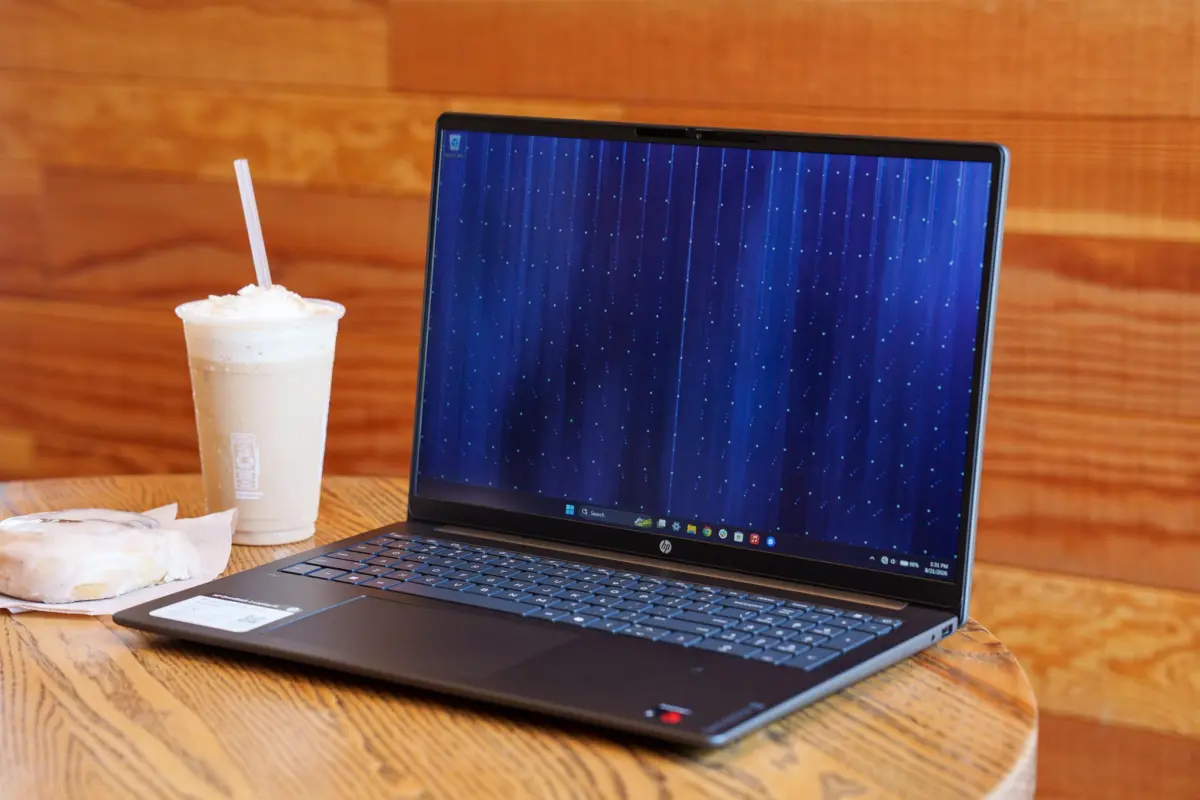
In this challenging fiscal environment, the HP OmniBook 3 16 has emerged as an unlikely anomaly. Retailing regularly for approximately $520 at major retailers like Walmart and Amazon, this 16-inch productivity laptop offers specifications that defy current industry trends: an 8-core Qualcomm Snapdragon X processor, 16GB of RAM, and a spacious 512GB solid-state drive (SSD).
While its build relies heavily on plastic, its display maxes out at a modest 300 nits, and its audio and keyboard components present notable compromises, the OmniBook 3 has successfully prioritized core performance metrics over superficial luxury. By refusing to hobble its multitasking capabilities with the stingy 8-core configurations plaguing competitors twice its price, HP has delivered a functional, highly portable Windows machine that feels like a breath of fresh air in an otherwise inflated market.

Chronology
To understand how the HP OmniBook 3 16 fits into the modern computing landscape, it is necessary to examine the timeline of shifting hardware standards and recent industry developments leading up to 2026:
- The Pre-Crisis Era (Historical Context): For years, the budget-to-midrange laptop market operated on predictable economics. A $500 machine could comfortably handle day-to-day productivity tasks, while a $900 investment secured superior build quality, brighter screens, and refined materials, without major compromises in core memory or storage.
- The Onset of "RAMageddon" (2024–2025): Global supply chain pressures and fluctuating memory pricing led manufacturers to aggressively cut corners. To maintain low entry-level price tags, prominent brands began shipping expensive machines—such as the $950 Microsoft Surface Laptop—with a baseline of just 8GB of RAM, rendering them increasingly obsolete for modern, multi-tab multitasking. Meanwhile, low-end competitors resorted to severe downgrades in CPU performance, storage speeds, and chassis durability to compete with Apple’s surging budget options, like the $700 MacBook Neo.
- December 2025: HP establishes a baseline for value-focused ARM architecture integration with the release of the OmniBook 5 14, hinting at a broader strategy to leverage Qualcomm’s Snapdragon chips for aggressive pricing.
- Mid-2026: The HP OmniBook 3 16 hits the market at a street price of around $520. Reviewers benchmarking the device discover that its generous 16GB RAM allocation and fast SSD allow it to outperform significantly more expensive 8GB rivals in real-world multitasking scenarios.
Supporting Data
A side-by-side performance comparison of the HP OmniBook 3 16 against its closest market competitors illustrates how its core specifications stack up in benchmark testing:
| Feature / Benchmark | HP OmniBook 3 16 | MacBook Neo | Chuwi UniBook | Microsoft Surface Laptop (13") | Acer Aspire 14 AI | Lenovo IdeaPad Slim 3x |
|---|---|---|---|---|---|---|
| CPU / Processor | 8-core Snapdragon X (X1-26-100) | Apple A18 Pro (6 cores) | Intel Core 3 304 ("Wildcat Lake", 5 cores) | Qualcomm Snapdragon X Plus (X1P-46-100) | Intel Core Ultra 7 256V (8 cores) | Qualcomm Snapdragon X (X1-26-100) |
| Graphics (GPU) | Adreno X1-45 | A18 Pro (5 cores) | Intel Graphics (1 core) | Adreno X1-45 | Intel Arc 140V (8 cores) | Adreno X1-45 |
| RAM | 16GB | 8GB | 8GB | 8GB | 16GB | 16GB |
| Storage (SSD) | 512GB | 256GB | 256GB | 256GB | 1TB | 256GB |
| Geekbench 6 (Single) | 2,142 | 3,402 | 2,385 | 2,348 | 2,769 | 2,137 |
| Geekbench 6 (Multi) | 10,593 | 8,508 | 6,187 | 9,421 | 10,930 | 9,728 |
| Geekbench 6 (OpenCL) | 9,577 | 19,798 | 6,019 | 9,554 | 28,556 | 9,689 |
| Premiere 4K Export | 12m 08s | 8m 30s | 1h 09m 29s | Crashed | 7m 28s | 12m 59s |
| Sustained SSD Reads | 5,017 MB/s | 1,736 MB/s | 2,395 MB/s | 3,804 MB/s | 6,391 MB/s | 5,738 MB/s |
| Sustained SSD Writes | 4,370 MB/s | 1,684 MB/s | 2,092 MB/s | 3,310 MB/s | 5,524 MB/s | 2,801.02 MB/s |
| Price (As Tested) | ~$520 | $699 | $449 | $949.99 | $1,049.99 | $749.99 |
Performance Analysis
As demonstrated by the benchmark data, the OmniBook 3 punches well above its weight class in multi-core processing and sustained storage performance. While single-core speeds and GPU muscle (particularly in OpenCL tasks and Adobe Premiere exports) are naturally limited by the entry-level Snapdragon X silicon, the inclusion of 16GB of RAM prevents the bottlenecks that cause devices like the Microsoft Surface Laptop and Chuwi UniBook to falter under heavy browser loads.

Furthermore, battery efficiency stands out as a major victory for the Qualcomm architecture. Users can consistently extract approximately 12 hours of mixed web browsing and media streaming on a single charge, reinforcing the laptop’s viability as an all-day productivity tool.
Official Responses and Industry Reception
Industry analysts and hardware reviewers have greeted the HP OmniBook 3 16 with a mixture of cautious relief and pragmatic critique. Major tech publications have highlighted the device as a masterclass in prioritized compromise.
- The Value Proposition: Consumer advocates point to the OmniBook 3 as proof that manufacturers can still deliver functional Windows laptops without forcing buyers to cross the $800 threshold. By focusing financial resources squarely on the RAM and SSD capacity rather than premium chassis milling or high-refresh-rate displays, HP has addressed the primary complaint of budget-conscious consumers.
- Critiques on Compromise: Tech reviewers have not overlooked the machine’s shortcomings. The stiffness of the keyboard—which leads to an elevated error rate for touch-typists—and the tinny, treble-heavy output of the dual speakers remain frequent points of criticism. Similarly, the 300-nit anti-glare IPS display is widely categorized as merely "adequate," failing to provide sufficient legibility under direct sunlight.
- The Enterprise Perspective: IT departments and corporate procurement specialists evaluating the machine have noted that issuing an OmniBook 3 to remote or office workers strikes an ideal balance between fiscal responsibility and operational capability, ensuring employees are not hamstrung by memory starvation.
Implications
The market reception of the HP OmniBook 3 16 carries significant implications for the future of personal computing, consumer electronics pricing, and hardware standards.

The Death of the 8GB Standard
The most immediate implication concerns memory provisioning. As software ecosystems—particularly web browsers, productivity suites, and AI-driven local operating system features—grow increasingly resource-hungry, 8GB of RAM has proven fundamentally inadequate for a smooth multi-year user experience. The OmniBook 3 demonstrates that consumers will actively seek out and reward brands that refuse to treat 16GB of RAM as an expensive, premium tier upgrade. Competitors will likely be forced to reevaluate their entry-level configurations if they hope to capture budget-conscious students and remote workers.
ARM Architecture Consolidation
Qualcomm’s Snapdragon X series continues to reshape the Windows-on-ARM landscape. By delivering acceptable everyday computing power coupled with exceptional battery endurance in sub-$600 hardware, Qualcomm is successfully eroding the historical dominance of x86 processors in the budget category. While these chips still face limitations in intensive creative applications and native gaming, their efficiency profile makes them ideal for the vast majority of consumers whose workflows are browser- and document-centric.
Vulnerability to Economic Volatility
Despite the immediate triumph of the OmniBook 3, long-term industry watchers harbor legitimate anxieties regarding market sustainability. The ultra-competitive pricing of the OmniBook 3—much like HP’s earlier OmniBook 5—runs the risk of being a temporary anomaly. If memory supply chains tighten further or inflationary pressures compound, the fragile ecosystem of sub-$600 productivity machines could easily contract, pushing consumers back into a market where basic utility commands a punishing premium.

For now, however, the HP OmniBook 3 16 serves as a welcome safe harbor for budget-conscious buyers, proving that sensible engineering and strategic prioritization can still yield a dependable machine without breaking the bank.
