

By Anthony Capkun
Published: August 31, 2026
Main Facts
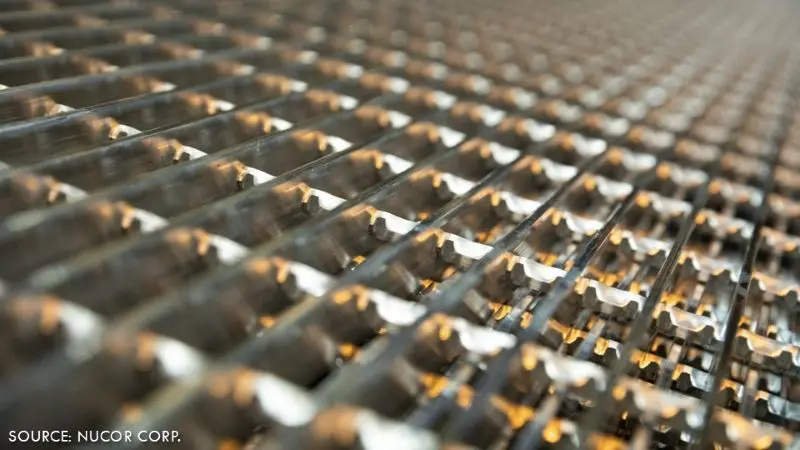
Nucor Corporation, North America’s largest steel producer and most circular steel recycler, has announced a significant $59 million capital investment to expand its established Vulcraft manufacturing facility located in St. Joe, Indiana. This strategic expansion is designed to broaden the plant’s operational capabilities by integrating state-of-the-art production lines specifically for high-quality steel grating products.
The multi-million-dollar project will not only modernize the industrial footprint in DeKalb County but will also create 20 new, high-paying, full-time professional and manufacturing jobs. These new positions will augment the facility’s already robust workforce, which currently supports more than 300 local employees. By incorporating steel grating capabilities into the St. Joe campus, Nucor aims to capture a larger share of the booming domestic construction and infrastructure markets, reducing supply chain friction for regional contractors while maximizing operational synergies within its expansive network of fabrication plants.
Chronology
The Historical Foundation: Nucor and Vulcraft
The roots of the St. Joe facility run deep within the corporate history of Nucor Corporation, tracing back to a pivotal era that fundamentally transformed the North American steel industry. Vulcraft was originally acquired by Nucor in 1962, a landmark transaction that marked the corporation’s official and aggressive entry into the steel fabrication sector. At the time of the acquisition, Vulcraft operated out of a single production facility situated in South Carolina.
Driven by visionary leadership, Nucor expanded the Vulcraft enterprise geographically before making the bold, strategic decision to backward-integrate into primary steel production—a move that eventually gave birth to Nucor’s renowned mini-mill business model.
The Birth of Vulcraft Indiana
A decade after the initial acquisition, as demand for reliable, prefabricated construction materials surged across the American Midwest, Nucor planted its flag in DeKalb County, Indiana. Opening its doors in 1972, the Vulcraft Indiana facility in St. Joe became Nucor’s fifth Vulcraft plant nationwide.
Over the subsequent decades, the St. Joe plant evolved from a regional supplier into a cornerstone of American construction engineering, supplying vital structural components for commercial warehouses, distribution centers, sports complexes, and heavy industrial facilities throughout North America. Today, Vulcraft stands as a titan within the structural steel sector, operating nine specialized manufacturing facilities across the continent and maintaining an awe-inspiring annual joist and deck production capacity of approximately 1.2 million tons.
Recent Strategic Expansion Wave in Indiana
The newly announced $59 million investment in St. Joe is far from an isolated event; rather, it represents the continuation of an aggressive, multi-year capital expenditure campaign by Nucor within the state of Indiana. This latest initiative marks the corporation’s fourth major industrial investment in the Hoosier State in recent years, highlighting Indiana’s business-friendly climate and robust manufacturing ecosystem.
- 2022 Crawfordsville Modernization: In 2022, Nucor committed a staggering $290 million to comprehensively modernize and upgrade its sheet mill operations in Crawfordsville, Indiana, ensuring cutting-edge environmental performance and product quality.
- 2023 Utility Infrastructure Facility: Demonstrating continued momentum, Nucor announced plans in 2023 to construct a $115 million utility infrastructure production facility situated in close proximity to its existing operations, catering directly to the rapidly expanding American energy grid.
- Waterloo Insulated Metal Panel Plant: Expanding its footprint into architectural building envelopes, Nucor invested $28.5 million to establish an advanced insulated metal panel production facility in Waterloo, Indiana. This plant was strategically located adjacent to the existing Nucor Building Systems Indiana campus to streamline logistics and cross-marketing.
Supporting Data
To fully contextualize the scope of Nucor’s latest investment in DeKalb County, it is helpful to examine the quantifiable parameters of the project alongside the broader operational capacity of the enterprise:
- Financial Commitment: $59 million allocated directly toward facility expansion, machinery acquisition, and infrastructure overhaul.
- Job Creation: 20 new full-time employment opportunities, adding specialized manufacturing, quality control, and logistics roles to the local economy.
- Current Workforce: Over 300 existing full-time employees at the Vulcraft Indiana St. Joe campus.
- Production Capacity Baseline: Vulcraft’s overarching North American network boasts an annual joist and deck production capacity of approximately 1.2 million tons, distributed across nine specialized manufacturing plants.
- Cumulative Indiana Capital Expenditure (Recent Years):
- Crawfordsville Sheet Mill Modernization: $290 million (2022)
- Utility Infrastructure Facility: $115 million (2023)
- Waterloo Insulated Metal Panel Facility: $28.5 million
- St. Joe Vulcraft Grating Expansion: $59 million (2026)
- Total Recent State Investment: $492.5 million
Official Responses
Corporate executives and regional public officials have lauded the announcement, emphasizing the mutual benefits of public-private cooperation and long-term industrial planning.
John Hollatz, Executive Vice President of Fabricated Construction Products at Nucor Corp., underscored the deep historical significance of the Vulcraft brand within the corporate portfolio.
"Vulcraft is where Nucor got its start in the steel industry, and it remains an important part of our growth today," said John Hollatz. "We appreciate Governor Braun and state and local DeKalb County leaders for their support as we continue to expand our manufacturing footprint in Indiana."
Hollatz’s sentiments reflect Nucor’s corporate philosophy of reinvesting heavily in the communities that have supported its industrial journey for over half a century. State and county leaders echoed this praise, pointing to the high-paying jobs and the economic multiplier effect that a $59 million capital injection brings to northeast Indiana. Local economic development boards have worked closely with Nucor representatives to streamline permitting, zoning, and infrastructure support, ensuring that the project breaks ground and moves toward commercial operation without bureaucratic delay.
Implications
Economic Impact on DeKalb County and the State of Indiana
The decision by Nucor to pour another $59 million into its St. Joe facility carries profound economic implications for DeKalb County and the broader Indiana manufacturing corridor. While the direct creation of 20 full-time jobs may appear modest compared to mega-projects, the positions associated with Nucor facilities are traditionally characterized by competitive wages, comprehensive benefits packages, and long-term career stability.
Furthermore, the indirect economic impact—often referred to as the multiplier effect—will stimulate local service providers, equipment maintenance contractors, transportation logistics companies, and housing markets throughout the St. Joe and greater Fort Wayne areas. By consistently choosing Indiana for its multi-million-dollar capital outlays, Nucor cements the state’s reputation as the beating heart of America’s heavy manufacturing renaissance.
Strategic Market Positioning and Product Diversification
From a commercial perspective, adding steel grating production capabilities to the Vulcraft Indiana portfolio addresses a critical bottleneck in the commercial and industrial construction sectors. Steel grating—widely used for industrial flooring, catwalks, trench covers, and stair treads—is a high-demand commodity integral to heavy industrial plants, water treatment facilities, oil and gas installations, and commercial high-rises.
By manufacturing steel grating in-house at an established structural component hub, Nucor can offer a more comprehensive, bundled package to general contractors and steel fabricators. Instead of sourcing joists, decking, and grating from disparate suppliers across different regions, customers can increasingly rely on Nucor as a single-source provider. This operational integration drastically reduces freight expenses, minimizes project delivery lead times, and insulates Nucor against volatile external supply chain disruptions.
Environmental Stewardship and Sustainable Manufacturing
As sustainability becomes a central pillar of modern architectural engineering, Nucor’s expansion underscores the environmental advantages of domestic, scrap-based steel production. Nucor operates as North America’s largest recycler, utilizing electric arc furnaces (EAFs) to melt recycled scrap metal into new steel products. This methodology yields a carbon footprint that is a fraction of traditional blast furnace steelmaking.
By expanding its grating production lines domestically, Nucor ensures that the steel used in critical industrial flooring and infrastructure projects is produced under some of the strictest environmental and labor standards in the world. This positions Nucor and its Vulcraft division favorably as major engineering firms and public infrastructure agencies increasingly demand verified, low-carbon building materials to meet corporate and governmental ESG (Environmental, Social, and Governance) mandates.
Conclusion
Nucor Corp.’s $59 million investment in its Vulcraft Indiana facility in St. Joe is a testament to the enduring viability of American manufacturing and the strategic value of continuous capital reinvestment. By bridging its historic roots in steel joist and deck fabrication with modern steel grating capabilities, Nucor is enhancing its product diversification, fortifying its supply chain resilience, and delivering tangible economic benefits to the state of Indiana. As construction projects across North America demand higher efficiency, faster delivery times, and stronger sustainability credentials, the upgraded St. Joe campus stands ready to anchor the next generation of industrial growth.
