

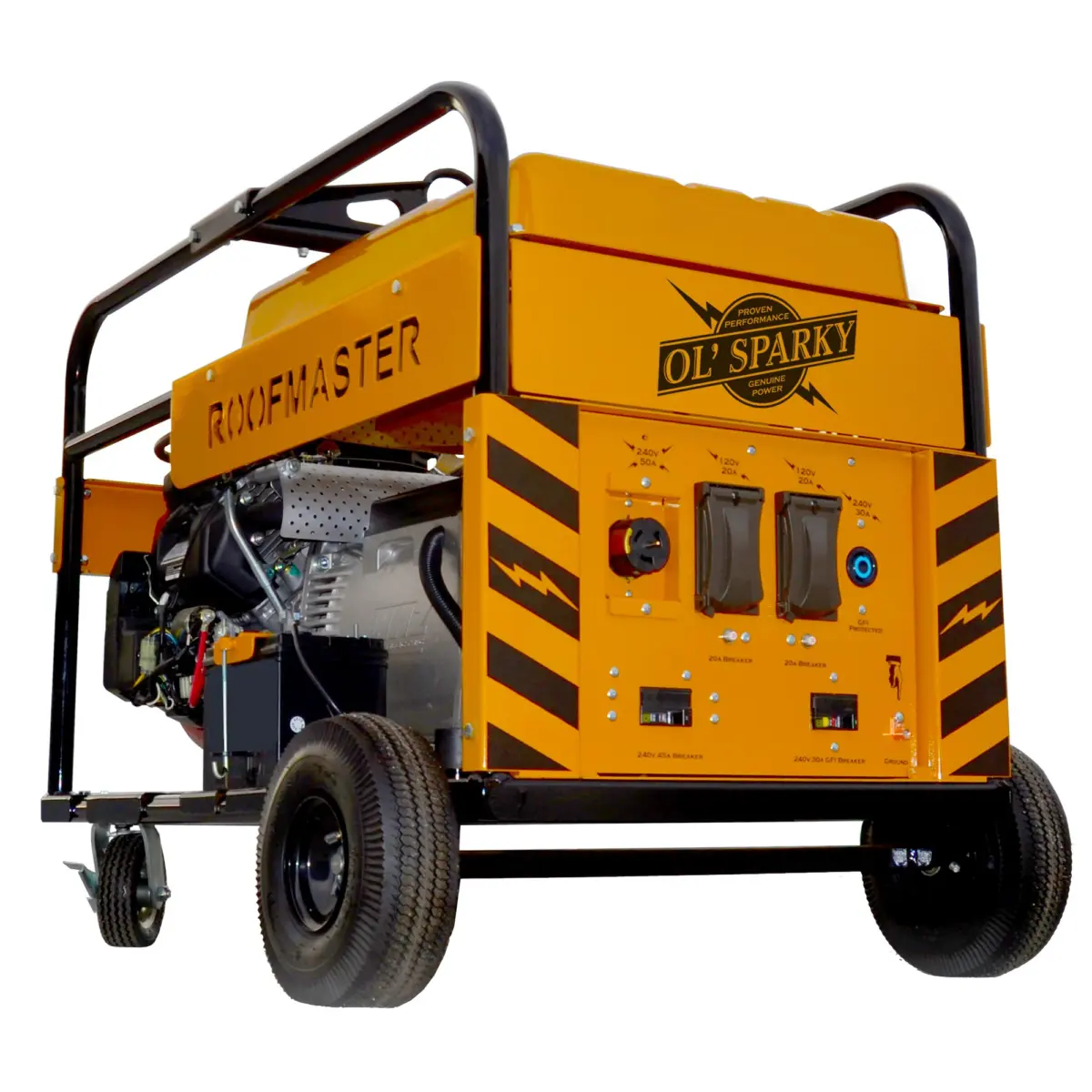
Main Facts: The Critical Link Between Job-Site Power and Single-Ply Success
In the landscape of commercial roofing, single-ply membrane installations—predominantly Thermoplastic Polyolefin (TPO) and Polyvinyl Chloride (PVC)—reign supreme. Despite severe supply chain bottlenecks, material allocation challenges, and macroeconomic headwinds over the past several years, single-ply applications remain far and away the largest segment of the commercial roofing industry.
However, the success of these single-ply installations hinges on a critical, often overlooked operational dependency: reliable, high-quality on-site power.
+-------------------------------------------------------------+
|                  THE SINGLE-PLY POWER CHAIN                 |
+-------------------------------------------------------------+
|                                                             |
|   [ Generator ]  =======>  [ Extension Cord ]  =======> [ Welder ] |
|   Provides clean           Must minimize                Fuses TPO/PVC
|   stable voltage           voltage drop                 membranes
|                                                             |
+-------------------------------------------------------------+
While roofing contractors frequently focus their capital investments and maintenance schedules on high-profile, specialized hot-air welding equipment—such as industry-standard Leister automatic welders—the generator powering these machines is frequently treated as an afterthought. This operational blind spot can be catastrophic. Modern hot-air welders are highly sophisticated, digitally controlled machines that require stable, clean, and consistent voltage.
According to John Davis, an industry specialist and technical author at Roofmaster® Products Company, neglecting generator maintenance is one of the leading causes of premature equipment failure and costly job-site downtime. When a generator fluctuates in voltage or suffers mechanical failure, it does not merely stall the engine; it can instantly destroy the sensitive electronic control boards of the expensive welders plugged into it.
To mitigate these risks, Roofmaster® Products Company—a leading provider of commercial roofing equipment, tools, and service—emphasizes the absolute necessity of rigorous generator maintenance. For contractors experiencing equipment issues, Roofmaster maintains specialized service centers staffed by certified mechanics in strategic regional hubs, including Los Angeles, California, and the Dallas-Fort Worth (DFW) metroplex in Texas.
Chronology: The Evolution of Single-Ply and the Rise of Digital Power Demands
To understand why generator maintenance has become so vital, it is necessary to examine how commercial roofing technology has evolved over the past half-century.
  1970s-1980s              1990s-2000s               2010s-Present
  [BUR Dominance]  =====>  [Single-Ply Boom]  =====> [Digital Integration]
  Open flames &            Analog welders;           Microprocessors;
  hot asphalt kettles      tolerant of power surges  requires clean, stable power
The Era of Built-Up Roofing (1970s–1980s)
For decades, the commercial roofing market was dominated by Built-Up Roofing (BUR) systems and modified bitumen. These systems relied heavily on open-flame torches, asphalt kettles, and heavy-duty mechanical applicators. Job-site power demands were relatively rudimentary, limited primarily to running simple electric drills, cut-off saws, and basic lighting. Generators used during this era were basic, mechanical workhorses. Voltage regulation was minimal because the tools being powered did not contain sensitive microprocessors; they could tolerate massive voltage drops and "dirty" power without failing.
The Rise of Thermoplastics and Single-Ply Membranes (1990s–2000s)
As building codes evolved and the demand for energy-efficient, reflective "cool roofs" surged, single-ply membranes like TPO and PVC began to capture significant market share. These materials required a fundamental shift in installation techniques. Instead of hot asphalt or open flames, contractors utilized hot-air welding technology to fuse the seams of the membrane sheets, creating a monolithic, watertight barrier.
Early hot-air welders were largely analog. While they required significant electrical wattage, their heating elements and basic electric motors were relatively resilient to the minor voltage fluctuations typical of standard construction-grade generators.
The Digital Revolution and the Supply Chain Crisis (2010s–Present)
In the last decade, hot-air welding technology underwent a digital revolution. To ensure perfect, code-compliant seams that satisfy strict manufacturer warranties, modern automatic welders (such as the Leister Varimat series) were equipped with digital displays, closed-loop temperature controls, GPS tracking, and onboard microprocessors. These components constantly monitor and adjust speed, temperature, and airflow.
This technological leap introduced a major vulnerability: sensitivity to power quality.
Simultaneously, between 2020 and 2023, global supply chain disruptions severely limited the availability of single-ply membranes and specialized repair parts. With materials scarce and project timelines compressed, contractors could no longer afford any job-site downtime. A blown circuit board on a digital welder due to a malfunctioning generator could sideline a crew for weeks while waiting for replacement parts, turning a highly profitable project into a financial liability.
Supporting Data: The High Cost of Power Fluctuations and Downtime
The technical relationship between a generator’s performance and a hot-air welder’s operational integrity can be quantified through electrical metrics and economic impact analysis.
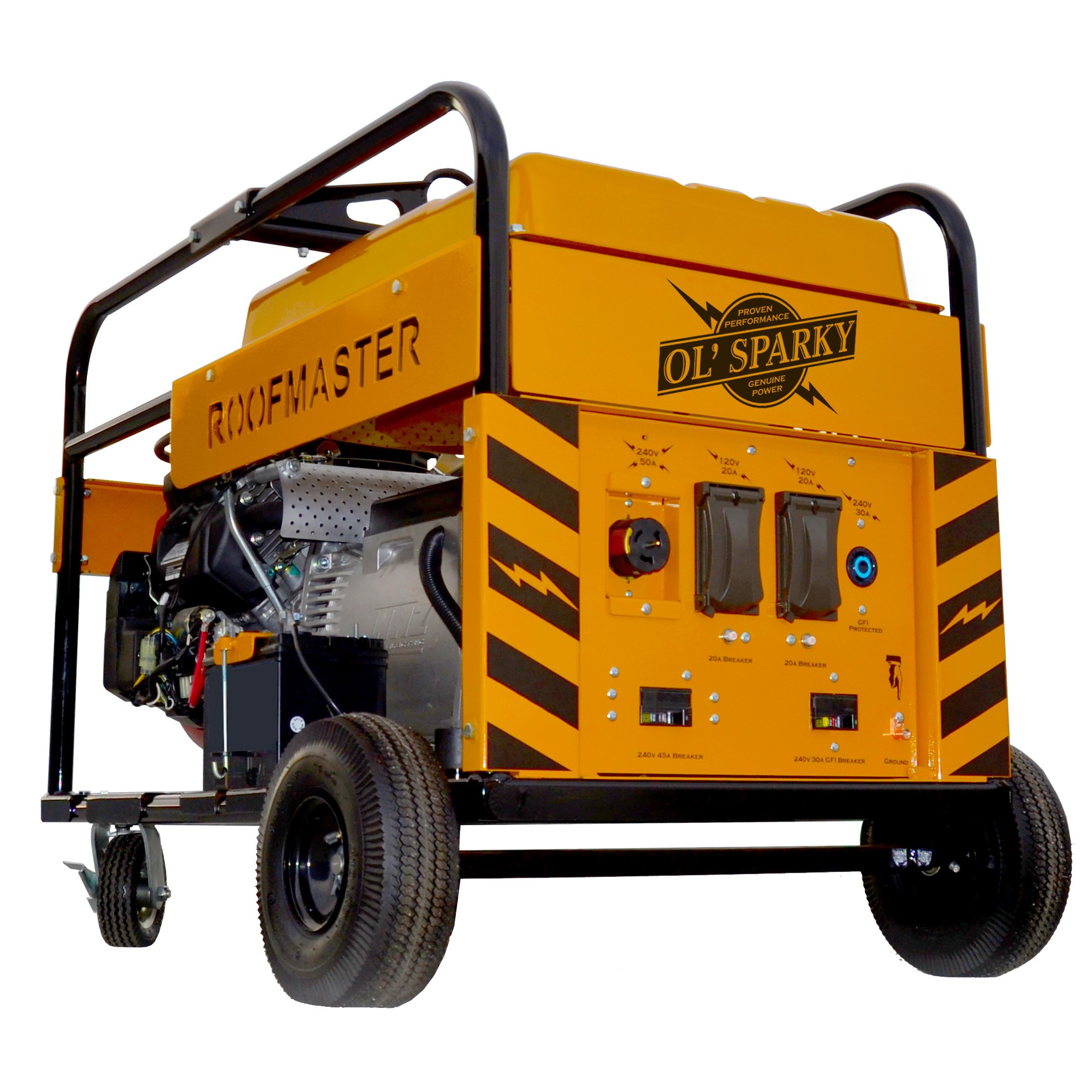
Technical Specifications: The Power Profile
A standard automatic hot-air welder operates under demanding electrical parameters. For example, a premier automatic welder typically requires:
- Voltage: 230V (Single-Phase)
- Amperage: 20A to 30A
- Wattage: 4,600W to 5,700W of continuous power
To run this equipment safely, a generator must not only meet the continuous wattage requirement but must also handle the initial surge wattage when the heating element and drive motor engage. Industry standards dictate that a generator should have a minimum rated capacity of 7,500W to 10,000W of clean power (ideally with a Total Harmonic Distortion, or THD, of less than 5% to protect digital control boards).
Economic Impact of Generator-Induced Failures
When a generator is poorly maintained, its engine speed (RPM) can fluctuate. Because generator voltage is directly tied to engine RPM, a sudden drop in speed causes a corresponding drop in voltage (voltage sag). Conversely, a sudden engine surge causes a voltage spike.
| Parameter | Impact on Digital Welder | Financial Consequences |
|---|---|---|
| Voltage Spike (>250V) | Fries the microprocessor and control board. | $1,500 – $3,000 for replacement parts + specialized labor. |
| Voltage Sag (<200V) | Motor runs hot, heating element fails to reach target temperature, causing weak, non-compliant seams. | Failed inspection, mandatory re-welding, potential warranty voiding. |
| Total Generator Failure | Entire crew is sidelined; project schedule slips. | Average idle crew cost of $250 – $500 per hour in lost productivity. |
Best Practices: The Generator Maintenance "Dos and Don’ts"
To prevent these costly failures, Roofmaster® Products Company advises commercial roofing contractors to implement a strict, preventative maintenance protocol for all job-site generators.
       DO                                  DON'T
  +-----------------------------------+   +-----------------------------------+
  | * Check oil levels daily          |   | * Start generator under load      |
  | * Use heavy-gauge cords (10 AWG)  |   | * Let stale fuel sit in tank      |
  | * Let engine warm up first        |   | * Daisy-chain auxiliary tools     |
  | * Service spark plugs & filters   |   | * Ignore voltage calibrations     |
  +-----------------------------------+   +-----------------------------------+
The "Dos" of Generator Maintenance
- DO Check Oil Levels Daily: Roofing environments are hot, dusty, and demanding. High operating temperatures cause engines to consume oil more rapidly. Running a generator even slightly low on oil can lead to engine overheating and erratic RPMs.
- DO Monitor and Calibrate Voltage Output: Periodically test the generator’s output with a reliable voltmeter under load. Ensure it consistently delivers stable voltage within the welder manufacturer’s specified tolerance (typically +/- 10% of 230V).
- DO Use High-Quality, Properly Rated Extension Cords: Voltage drop over long cord runs is a silent killer of electrical components. Always use heavy-duty, thick-gauge cords (minimum 10 AWG for runs up to 100 feet) to ensure the welder receives the full voltage output of the generator.
- DO Allow the Generator to Warm Up: Always start the generator and let it run idle for 3 to 5 minutes to stabilize its voltage output before plugging in or switching on any hot-air welding equipment.
- DO Schedule Routine Filter and Spark Plug Replacements: Clean air and fuel filters are vital in preventing engine sputtering. A fouled spark plug can cause engine misfires, leading to instantaneous voltage drops that damage electronic control circuits.
The "Don’ts" of Generator Maintenance
- DON’T Start or Stop the Generator Under Load: Never turn the generator off, or pull-start it, while the hot-air welder is plugged in and turned on. The transient power surges created during startup and shutdown are the primary cause of fried digital control boards.
- DON’T Run the Generator on Stale or Ethanol-Blended Fuel: Stale fuel gums up the carburetor, leading to a lean-running engine that hunts for RPMs, creating highly unstable electrical output. Use fresh, stabilized fuel, and empty the carburetor bowl if storing the unit.
- DON’T Overload the Generator: Do not daisy-chain other high-draw power tools—such as screw guns, compressor units, or heavy drills—onto the same generator circuit powering your automatic hot-air welder. Overloading causes severe voltage sags.
- DON’T Neglect Professional Calibration: Do not attempt complex mechanical or electrical governor adjustments on your own. If a generator’s speed or voltage output is erratic, it should be serviced immediately by a certified professional.
Official Responses and Expert Perspectives
Industry leaders emphasize that preventative maintenance is no longer optional in an increasingly digitized construction environment.
In technical bulletins, manufacturers of automatic hot-air welders consistently point to poor power quality as the number-one external cause of warranty claims and control board failures. They note that while their machines are engineered to withstand the rugged conditions of a job site, they cannot overcome the laws of physics when supplied with unstable electrical currents.
John Davis of Roofmaster® Products Company highlights the company’s proactive approach to addressing these challenges:
"We recognize that our customers are facing tighter project deadlines and higher quality standards than ever before. A broken welder or a failing generator isn’t just an inconvenience—it’s a bottleneck that threatens their bottom line. That is why we don’t just sell equipment; we provide the critical technical support and certified repair services necessary to keep crews running smoothly."
To support contractors, Roofmaster has invested heavily in expanding its service footprint. Their service centers in Los Angeles, CA and Dallas-Fort Worth, Texas are fully equipped to diagnose, service, and calibrate both complex hot-air welders and the generators that power them. These centers are staffed by certified mechanics who understand the precise tolerances required for commercial roofing equipment, ensuring that repaired units meet strict factory specifications before returning to the field.
Implications: The Strategic Advantage of Operational Reliability
As the commercial roofing market continues to prioritize single-ply membranes for their reflectivity, sustainability, and ease of installation, the contractors who succeed will be those who master the logistics of job-site execution.
The Competitive Edge of Maintenance
In an era characterized by labor shortages and tight margins, operational efficiency is a powerful differentiator. A contractor with a reputation for completing projects on time, without delays caused by equipment failure, is far more likely to secure lucrative municipal, institutional, and commercial contracts. Implementing a structured generator maintenance program transforms a basic utility task into a strategic business asset.
The Future of Job-Site Power
Looking ahead, the commercial roofing industry is likely to see further integration of smart technology on the roof. This includes the potential adoption of:
- Advanced inverter generators that offer exceptionally clean, computer-grade power with minimal THD.
- Hybrid battery-storage power stations designed to buffer voltage fluctuations and provide silent, emissions-free power for indoor or nighttime welding applications.
- Telematics on generators to alert fleet managers of maintenance needs (such as low oil or high operating hours) before a failure occurs on the roof.
Until these advanced technologies become universally adopted, the humble combustion generator remains the lifeblood of the commercial roofing job site. By adhering to the fundamental "Dos and Don’ts" of generator maintenance and leveraging the expertise of certified service providers like Roofmaster® Products Company, contractors can safeguard their equipment, protect their workers, and ensure the long-term integrity of their single-ply installations.
