

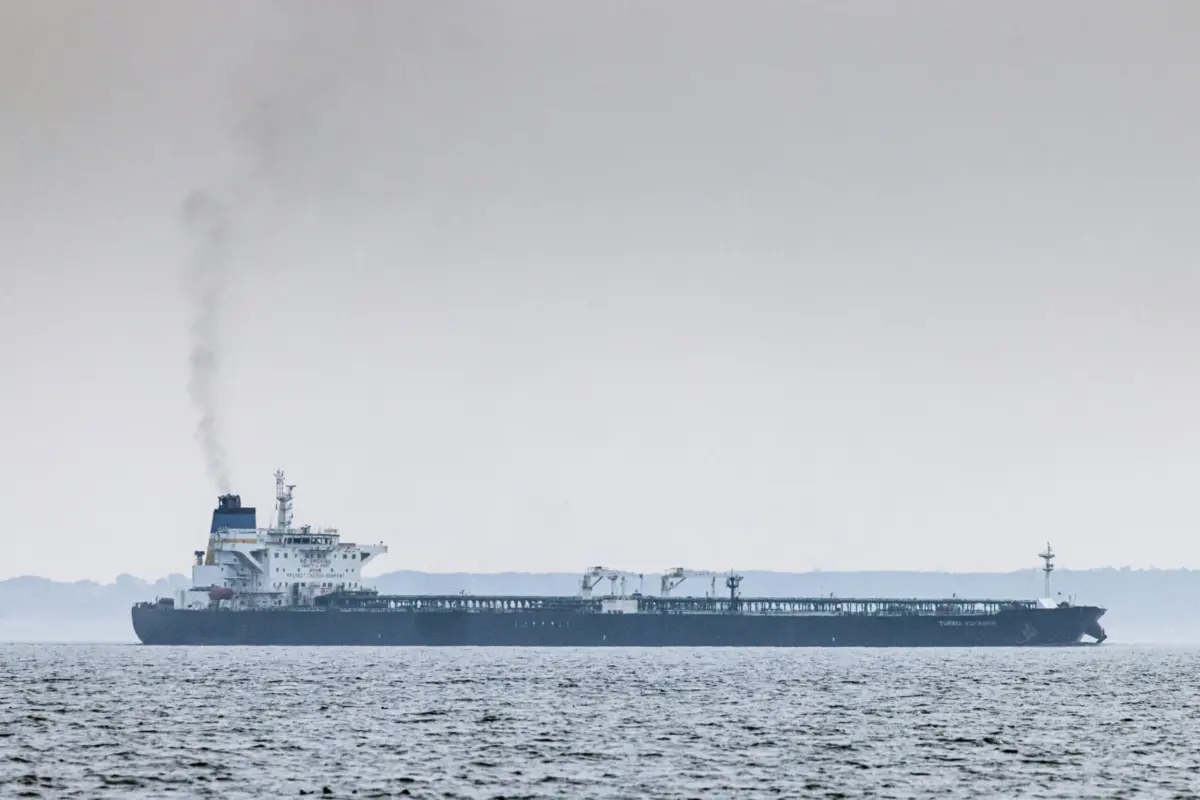
MOSCOW / VLADIVOSTOK — Russian President Vladimir Putin has issued a sharp and uncompromising warning to the European Union, threatening sweeping retaliation against any moves by Western nations to seize and liquidate Russian commercial shipping. Condemning the policy as an act of international "piracy and robbery," the Kremlin leader signaled that Moscow is prepared to strike back far beyond European waters, targeting Western maritime assets globally.
The escalating rhetoric marks a dangerous new phase in the economic and geopolitical war between Russia and the West. At the heart of the standoff is a contentious new sanctions mechanism approved by the European Union last month, designed to crack down on the sprawling network of tankers moving Russian energy products in defiance of Western price caps.
Main Facts
The current confrontation centers on an aggressive shift in maritime enforcement by European nations and the United Kingdom, which have increasingly targeted vessels suspected of violating Russian sanctions.
- The EU Sanctions Mechanism: As part of a newly enacted sanctions package, the European Union approved a legal framework allowing member states to seize, detain, and ultimately sell oil and other commercial goods transported by sanctioned vessels intercepted at sea.
- The Target: The primary focus of these Western operations is Russia’s "shadow fleet"—an aging armada of tankers operating under obscure third-country flags, often lacking transparent ownership or standard maritime insurance, designed specifically to circumvent Western oil embargoes and price caps.
- The Kremlin’s Response: Speaking during military exercises with the Pacific Fleet in Russia’s Far East, President Putin characterized the EU’s seizure policy as a blatant violation of international maritime law. He warned that Russia’s retaliation would not necessarily be confined to the geographic areas where Russian ships are targeted, but could occur anywhere Moscow deems "necessary and appropriate."
- Military Preparedness: Admiral Viktor Liina, commander of the Russian Pacific Fleet, reinforced Putin’s warnings by accusing Western nations of hypocrisy. Liina claimed that Western powers are increasingly relying on third-country-flagged vessels to move their own cargoes—effectively operating their own "shadow fleets"—and stated that Russian forces are fully prepared and coordinated to inspect and detain ships belonging to "unfriendly states."
Chronology of Escalation: From Price Caps to Seizures at Sea
The path toward potential open naval conflict over commercial shipping has evolved incrementally over the course of the conflict in Ukraine, marked by a steady tightening of Western sanctions and parallel retaliatory measures by Moscow.
Late 2022 – 2023: The Birth of the Price Cap and the Shadow Fleet
Following the G7’s implementation of a $60-per-barrel price cap on Russian crude oil, Moscow rapidly adapted by acquiring hundreds of older, uninspected tankers. These vessels, operating outside traditional Western insurance and maritime service networks, allowed Russia to maintain vital crude exports to buyers in Asia, primarily India and China, while blunting the financial impact of Western sanctions.
Late 2024: The Shift Toward Kinetic Interdictions
As intelligence agencies mapped the shadowy routes of these vessels, European authorities, led by the UK and Baltic nations, moved beyond mere port denials. Naval and coast guard assets began actively boarding, inspecting, and detaining Russia-linked vessels navigating critical chokepoints like the Danish Straits and the English Channel, citing environmental risks and sanctions evasion.
The risks associated with these aging vessels were underscored by environmental hazards, highlighted by incidents such as grounded shadow tankers causing massive ecological concerns—including a high-profile spill off the coast of Oman that blanketed hundreds of square kilometers.
Early 2026: The EU Asset-Liquidation Framework
The standoff escalated dramatically last month when the European Union formalized a policy allowing member states not just to detain, but to legally seize and liquidate the cargo and commercial vessels of targeted entities. This step crossed a major red line for Moscow, transforming administrative sanctions enforcement into what the Kremlin views as state-sponsored asset appropriation.
Mid-2026: Putin’s Pacific Declaration
During naval exercises in Russia’s Far East, President Putin formally responded to the EU’s liquidation mechanism. Labeling the policy "piracy and robbery," he authorized a doctrine of asymmetric, global retaliation, which was immediately backed by military leadership vowing interagency coordination to begin intercepting Western-linked commercial shipping.
Supporting Data and Economic Context
The clash over maritime trade is underpinned by billions of dollars in energy revenues that continue to fund the Kremlin’s military operations in Ukraine, despite years of punishing Western restrictions.
- Sanctioned Fleet Scale: Over the past four years, the United States, the United Kingdom, and the European Union have placed hundreds of individual tankers and shipping entities on sanctions blacklists. Despite this, the shadow fleet has successfully transported millions of barrels of crude daily.
- Environmental and Safety Toll: The proliferation of poorly maintained, unverified tankers has triggered severe maritime safety concerns. International maritime organizations have reported a sharp rise in near-misses, propulsion failures, and environmental threats in congested European waterways, such as the Baltic Sea and the North Sea.
- Global Trade Exposure: According to figures cited by Russian naval commanders, global trade routes are deeply intertwined, with Western nations frequently utilizing non-traditional shipping registries to move vital goods. This creates a vast pool of potential counter-targets for Russian naval and intelligence assets operating across global shipping lanes.
Official Responses and Diplomatic Posture
The rhetoric coming out of Moscow signals a hardening stance that rejects the legitimacy of Western maritime enforcement mechanisms.
- The Kremlin: Vladimir Putin’s public framing of the EU policy as "piracy" is designed to rally domestic support and delegitimize Western actions on the global stage. By emphasizing that international maritime law is being weaponized by Brussels, Moscow is attempting to court sympathy from nations in the Global South that remain wary of Western naval dominance.
- Russian Military Leadership: Commander Viktor Liina’s remarks point to a transition from diplomatic protest to active military posture. By asserting that interagency coordination is already in place to target "unfriendly states," the Russian military is signaling that commercial shipping lanes are now viewed as a legitimate theater of asymmetric economic warfare.
- Western Capitals: While official responses from Brussels, London, and Washington to Putin’s latest threats are still developing, Western diplomats have consistently maintained that enforcement measures comply with international law and are necessary to close loopholes that finance the war in Ukraine. Naval patrols in Northern Europe remain on heightened alert to protect critical infrastructure and monitor shadow fleet movements.
Implications for Global Shipping and Maritime Security
Putin’s vow to retaliate globally against Western commercial shipping introduces profound risks to international trade, maritime insurance markets, and geopolitical stability.
1. Increased Risk to Commercial Shipping
The explicit threat that Russian forces may target Western-linked or third-country vessels anywhere in the world transforms routine commercial transit into a high-risk endeavor. Shipowners, charterers, and freight forwarders navigating global chokepoints—from the Mediterranean to the Indo-Pacific—must now factor in the tangible threat of Russian interdiction or asymmetric retaliation.
2. Spiking Insurance and Freight Costs
As the threat of maritime conflict expands, marine war risk insurance premiums are expected to surge. Insurers may balk at covering vessels operating in or near regions where Russian retaliation is plausible, driving up operational costs and threatening global supply chain fluidity for energy and commodities.
3. The Threat of Escalation and Miscalculation
With Russian naval commanders openly discussing the inspection and detention of "unfriendly" vessels, the potential for a kinetic incident at sea has grown exponentially. A confrontation between Western naval forces protecting commercial shipping and Russian assets attempting retaliatory seizures could easily spiral into a direct military escalation between nuclear-armed powers.
4. A Fracturing of Global Maritime Law
The weaponization of sanctions enforcement by the EU—and the subsequent rejection of that authority through threats of global counter-seizures by Moscow—threatens to undermine the foundational principles of freedom of navigation and the UN Convention on the Law of the Sea (UNCLOS). As major powers increasingly bypass international legal frameworks in favor of retaliatory enforcement, the era of predictable, rules-based global maritime commerce faces an unprecedented crisis.
