

NEW YORK — Selecting the right window treatments for a residential space involves far more than simply picking a fabric or color that matches a living room rug. Homeowners are increasingly tasked with balancing intricate architectural requirements, energy efficiency, privacy, and aesthetic cohesion. Because every room in a house serves a distinct purpose, a "one-size-fits-all" approach to window dressings often leaves spaces falling short of their functional and stylistic potential.
To help homeowners navigate these design decisions, we spoke with Erica Flynn, executive creative director at Graber, a premier name in custom window treatments. Flynn breaks down the ideal window dressings for seven distinct areas of the home, offering a masterclass in how to pair style with practical performance.
The Main Facts: Bridging Aesthetics and Functionality
Window treatments serve as the critical finishing touch that anchors a room’s interior design. However, their role extends well beyond visual appeal. According to industry experts, window treatments are primary drivers of:
- Light Control: Regulating natural sunlight to prevent screen glare, protect furniture fabrics from UV fading, and create intentional moods.
- Thermal Regulation & Energy Efficiency: Minimizing heat gain during intense summer months and preventing heat loss through glass panes in the winter.
- Acoustic Control: Absorbing sound waves to minimize echoes in hard-surfaced rooms or block external neighborhood noise.
- Privacy: Shielding private family spaces from the outside world without entirely sacrificing natural illumination.
Flynn emphasizes that while design trends fluctuate, the core selection process should always be anchored in personal style paired with the strict functional demands of the room in question.
Chronology of Home Design: The Evolution of Window Dressings
To understand modern window treatment selections, it helps to examine how domestic spaces have evolved over the decades.
Early Architectural Shifts (Mid-20th Century)
Historically, homes featured smaller, compartmentalized windows designed primarily to keep outdoor elements at bay. Window treatments during this era leaned heavily toward heavy, multi-layered draperies and ornate valances, prioritizing formal appearance over thermal efficiency or mechanized convenience.
The Rise of Open-Floor Plans and Large Glass Surfaces (Late 20th Century)
As architectural styles shifted toward expansive floor-to-ceiling windows and sliding glass doors, traditional curtains proved inadequate. This era gave rise to functional horizontal blinds, vertical blinds, and early iterations of solar shading designed to combat massive glare and solar heat gain in sprawling great rooms.
The Modern Smart-Home Era (Present Day)
Today’s window treatments combine high-performance engineering with smart-home integration. Modern consumers look for motorized shades that tie into home automation systems, eco-friendly materials sourced from sustainable forests, and sleek, minimalist profiles—such as cellular and layered shades—that complement contemporary architecture without visual clutter.
Supporting Data: Room-by-Room Breakdown
Choosing the correct window dressing requires evaluating each room’s unique environmental challenges, such as humidity, exposure to direct sunlight, and foot traffic. Below is a room-by-room breakdown based on expert design recommendations.
1. The Bedroom: Cellular Shades or Roller Shades Paired with Drapery
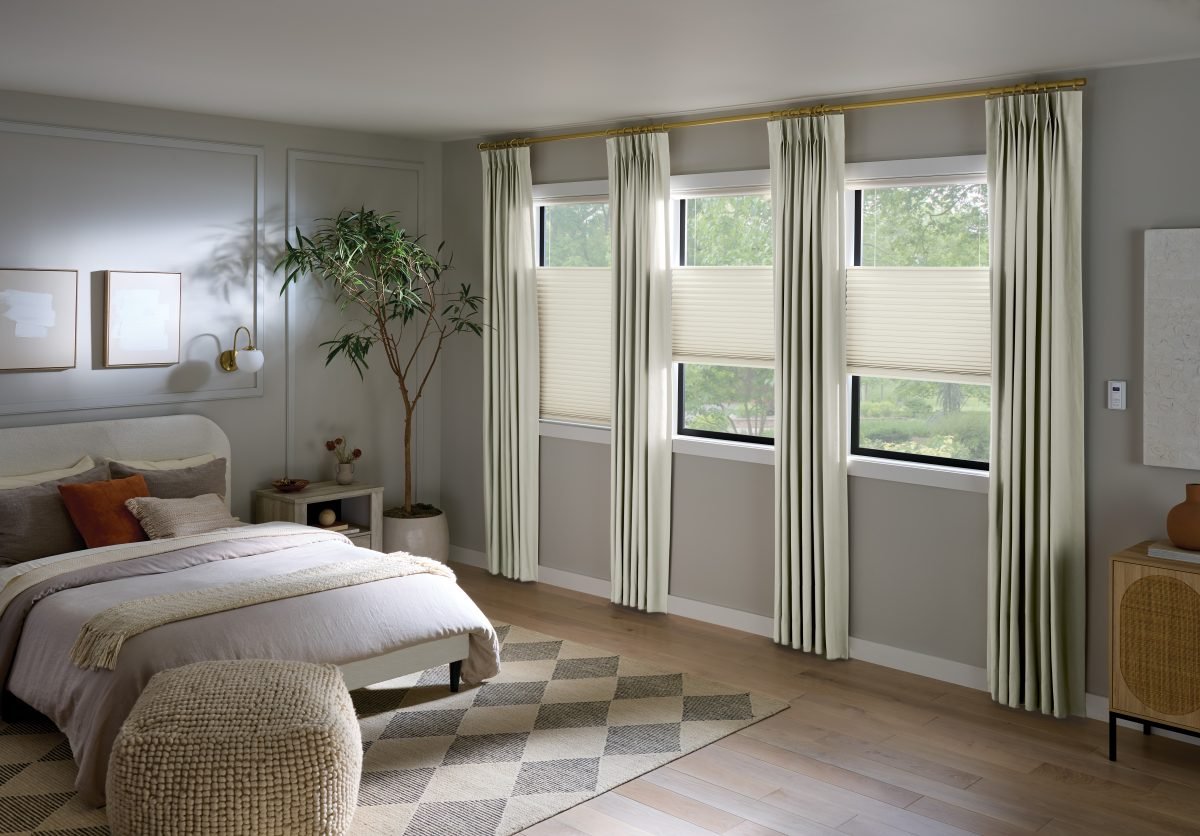
In a sanctuary dedicated to rest, light control and privacy reign supreme. Bedrooms require absolute darkness to support healthy circadian rhythms.
- Primary Options: Cellular shades featuring blackout fabrics are premier light-blockers that simultaneously offer superior top-level privacy and thermal insulation. Roller shades in room-darkening or blackout opacity are another streamlined choice.
- The Designer Touch: Flynn strongly recommends layering drapery over these shades. "Not only does drapery provide a soft, finished look, but it also does double duty for blackout, helping to eliminate any small light gaps that sometimes occur between shades and window trim," she notes.
2. The Living Room: Solar Shades or Wood Blinds
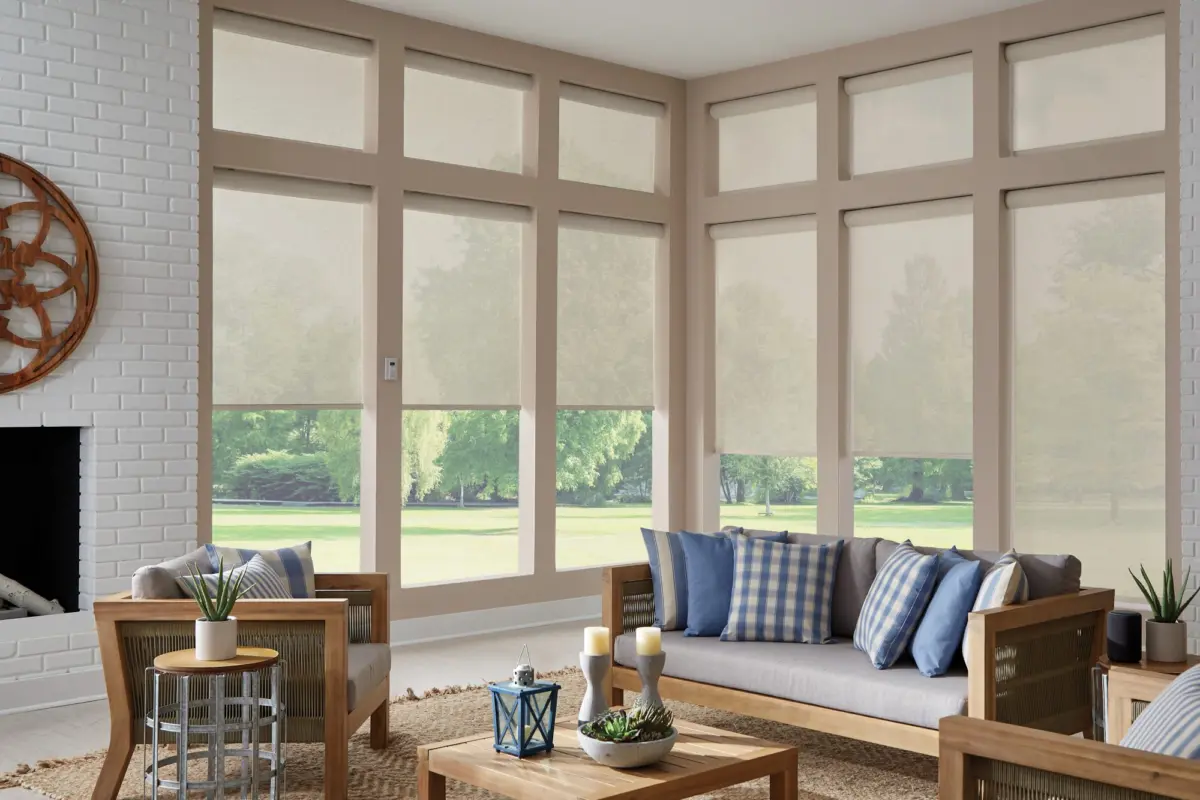
Living rooms require multi-functional window treatments capable of adapting throughout the day—from filtering harsh afternoon glare off a television to offering evening privacy from the street and enhancing curb appeal from the exterior.
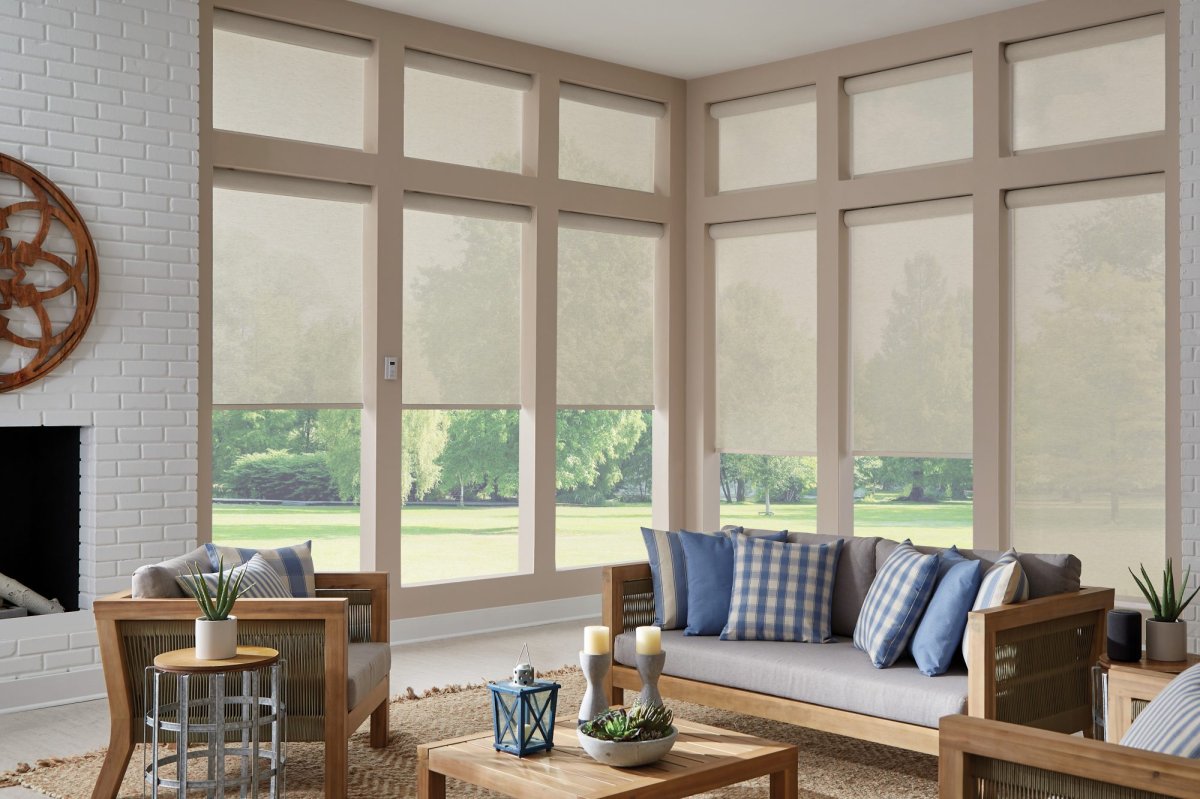
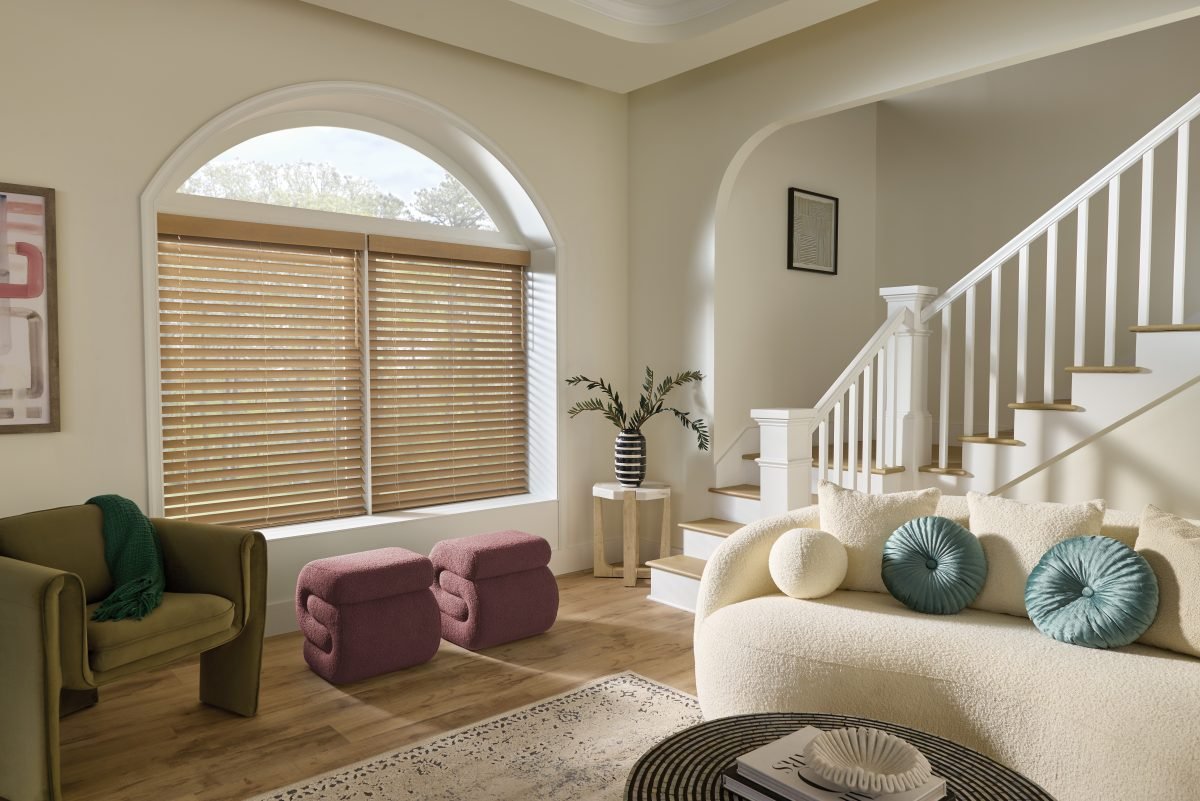
- Primary Options: Solar shades offer exceptional sun and heat protection. Depending on the chosen opacity, they can block up to 90 percent of harmful ultraviolet (UV) rays while maintaining outdoor sightlines. Alternatively, classic wood blinds offer precise light control and a warm, furniture-grade aesthetic.
- The Designer Touch: Pairing solar shades or wood blinds with decorative drapery panels introduces architectural warmth, frames the window gracefully, and adds a soft layer of evening privacy.
3. The Dining Room: Tailored Roman Shades and Drapery
Dining rooms are spaces defined by ambiance, hospitality, and formal gathering. The window treatments here should elevate the mood of the room.
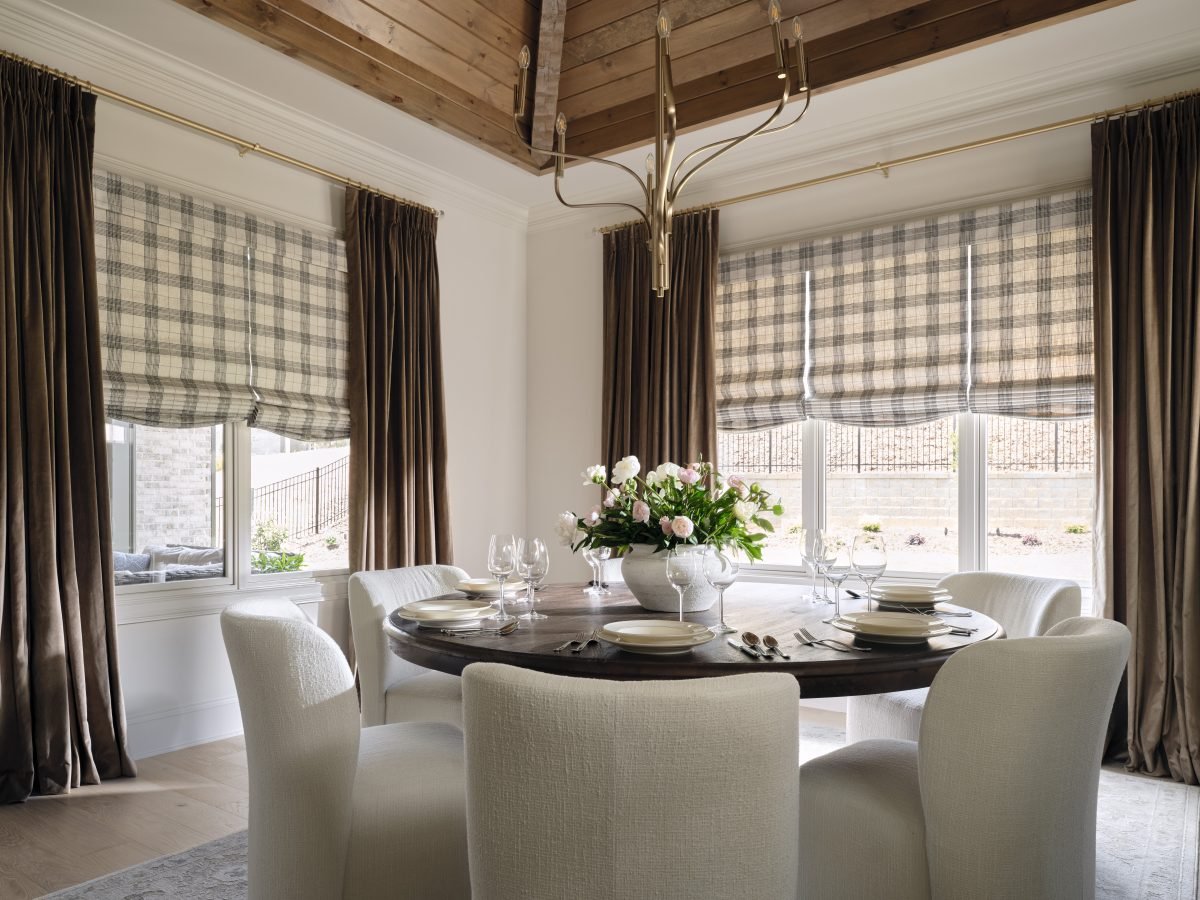
- Primary Options: Tailored Roman shades crafted from luxurious fabrics bring texture and refined elegance to dining spaces.
- The Designer Touch: Pairing full-length drapery with tailored Roman shades creates dramatic height and a formal, finished look. The drapery frames the exterior view, while the shades underneath allow precise control over light levels as dinner transitions into evening.
4. The Bathroom: Composite Blinds or Cellular Shades
Humidity, moisture, and frequent cleaning are the primary deciding factors when outfitting bathroom windows.
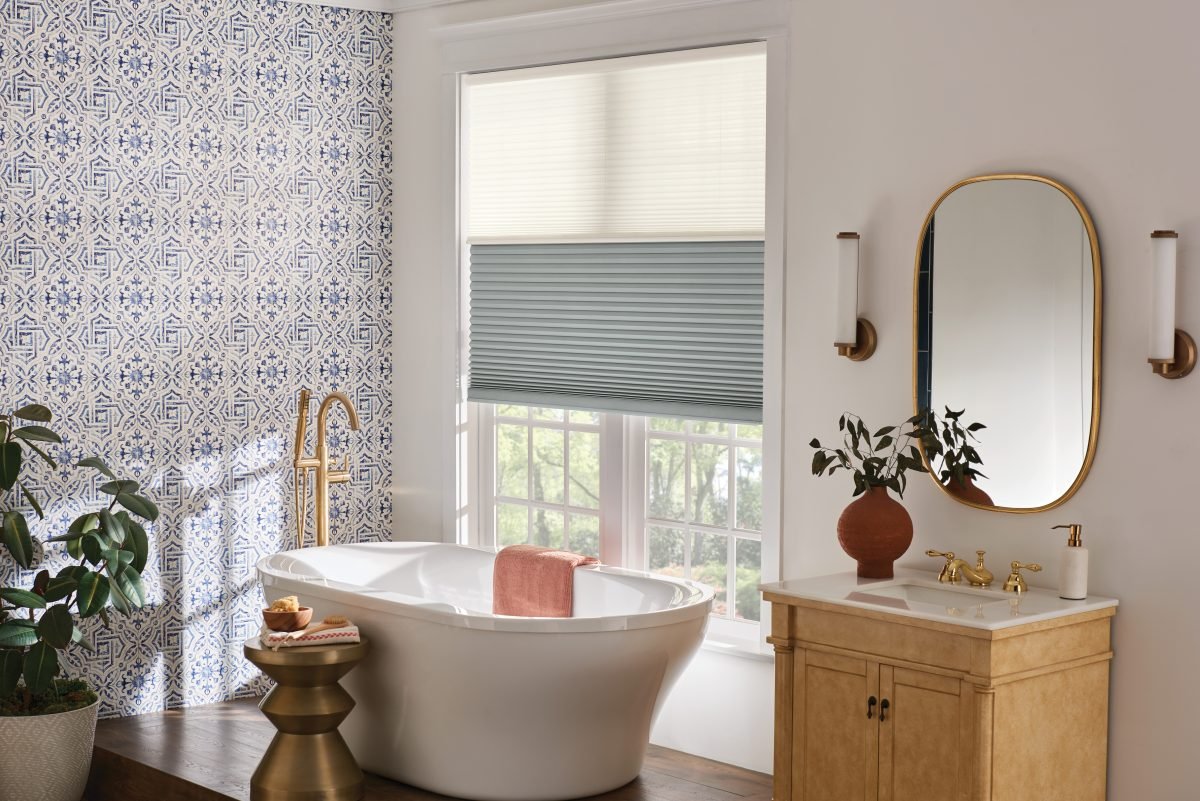
- Primary Options: Composite blinds are an exceptional choice because they naturally shrug off moisture, resist warping, wipe clean effortlessly, and allow easy adjustment for privacy. Top-down/bottom-up cellular shades also excel here, allowing light to pour in from the top while keeping the lower half of the window private.
- The Designer Touch: For maximum versatility, consider sun-up/sun-down cellular shades, which combine two distinct fabrics (such as a sheer fabric and a blackout fabric) on a single headrail.
5. The Kitchen: Faux Wood Blinds or Café Curtains
Kitchens demand durable materials that can withstand grease, steam, heat splashes, and the need for frequent cleaning.
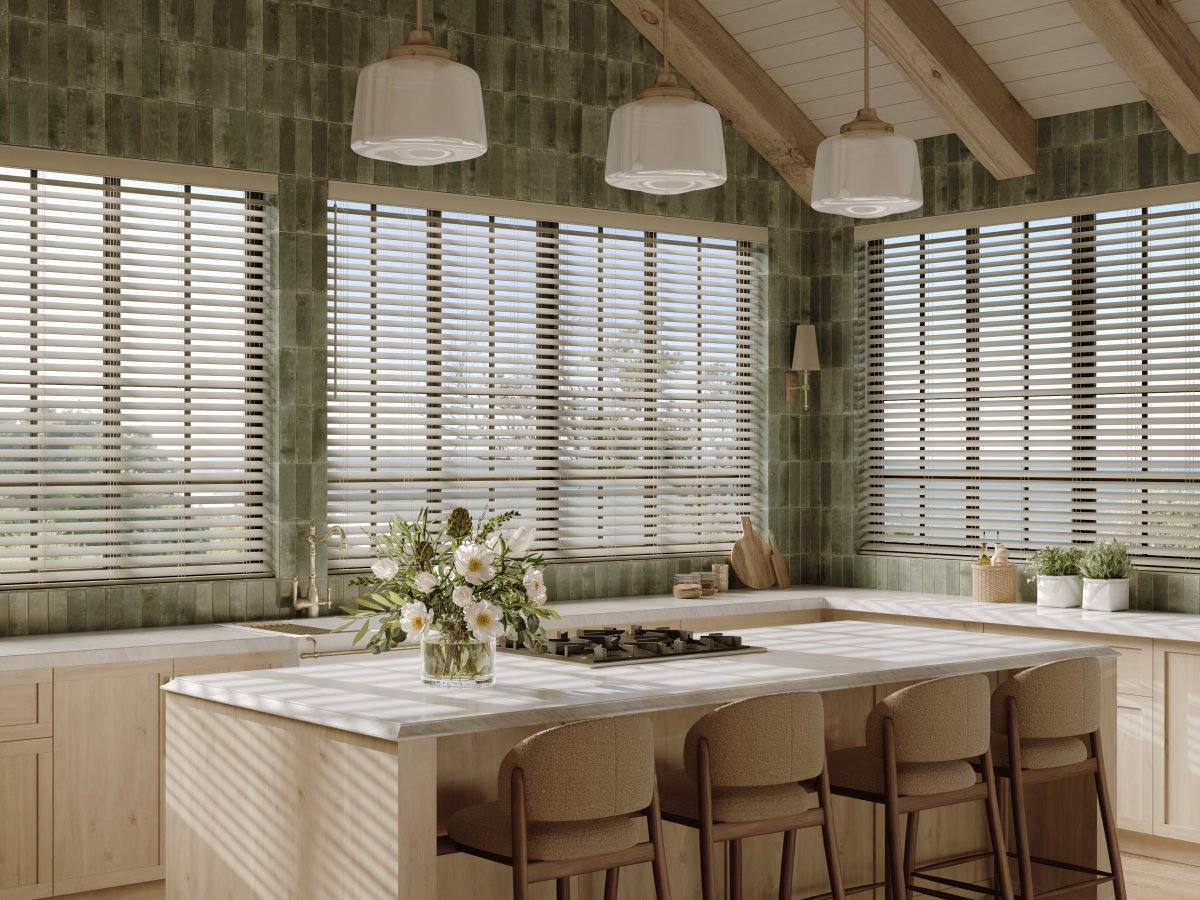
- Primary Options: Faux wood blinds, constructed from resilient PVC, offer stellar fire and moisture resistance while being remarkably easy to wipe down.
- The Designer Touch: For windows located away from active cooking zones—such as above a kitchen sink—café curtains offer a charming, classic look. They keep delicate fabrics safely away from water and dishes while introducing personality, privacy, and plenty of natural daylight.
6. The Home Office: Natural Woven Wood Shades, Layered Shades, or Solar Shades
With remote work deeply embedded in modern routines, a home office requires meticulous light management to eliminate computer screen glare. Additionally, the window treatment often serves as the visual backdrop during video conferences.
- Primary Options:
- Natural Woven Shades: Bring organic textures, colors, and patterns into the workspace.
- Layered Shades: Feature alternating bands of sheer and opaque fabric that can be aligned to diffuse light, block it entirely, or open up completely.
- Solar Shades: Effectively cut glare and UV exposure without making the room feel dim or closed off from the outdoors.
7. The Basement / Bonus Room: Cellular Shades or Roller Shades
Basements and bonus rooms often face unique climate challenges, including cooler ambient temperatures and use as dedicated media spaces.
- Primary Options: Cellular shades provide exceptional energy efficiency, trapping air within their honeycomb pockets to keep subterranean or bonus rooms comfortably insulated. For media rooms, blackout cellular shades or room-darkening roller shades cut down screen glare and create an authentic home theater atmosphere.
Official Responses and Expert Perspectives
Industry leaders emphasize that the process of selecting window treatments should be an empowering experience rather than an overwhelming chore.
"The choice ultimately comes down to your personal style and the desired functionality for light control and privacy in each space," explains Erica Flynn, executive creative director at Graber. Flynn notes that while overarching design rules exist, modern homeowners are encouraged to break traditional boundaries by blending materials—such as combining the rustic texture of woven woods with the clean lines of motorized roller cassettes—to achieve a customized interior ecosystem.
Furthermore, design specialists stress the importance of professional measurement and installation. Even the highest-quality custom shade can underperform if improperly mounted, leading to light leaks, operating friction, or an uneven profile against the window frame.
Implications for Modern Homeowners
Investing thought, time, and resources into strategic window treatments yields dividends that stretch far beyond immediate visual satisfaction. The broader implications include:
- Energy Savings: According to the U.S. Department of Energy, about 30 percent of a home’s heating energy is lost through windows, and roughly 76 percent of sunlight that falls on standard double-pane windows enters to turn into heat. High-performance cellular or solar shades significantly reduce HVAC loads, translating into lower monthly utility bills.
- Asset Protection: Continuous UV exposure causes hardwood floors, expensive upholstery, and fine artwork to fade and degrade. Quality solar and room-darkening treatments act as a protective shield, extending the lifespan of interior furnishings.
- Enhanced Well-Being: By optimizing natural light cycles in home offices and ensuring total darkness in bedrooms, thoughtfully chosen window treatments directly support mental focus, productivity, and restorative sleep hygiene.
Ultimately, viewing window treatments as vital architectural infrastructure rather than mere afterthoughts allows homeowners to curate living spaces that are as efficient and resilient as they are beautiful.
