

By Global Security Correspondent
Over the course of a tense and volatile summer, the security landscape of Europe has fundamentally fractured. As Vladimir Putin’s protracted war of attrition against Ukraine grinds on with heavy battlefield casualties and negligible territorial shifts, Moscow has significantly broadened the geographic and tactical scope of its aggression. Moving far beyond the physical trenches of the Donbas, the Kremlin is orchestrating an increasingly aggressive and reckless campaign of "hybrid warfare" deep inside European territory.
From armed drones hovering over major commercial airports and critical energy platforms in the Black Sea, to suspected arson attacks on defense-industrial facilities and coordinated cyberattacks on public utilities, European nations find themselves trapped in a dangerous gray zone between war and peace. Security officials, intelligence analysts, and political leaders across the continent warn that these actions represent the most severe test of European collective security in decades—and that it may only be a matter of time before these provocations result in civilian casualties.
Chronology of Escalation: A Summer of Sabotage
The alarming uptick in kinetic and cyber incidents over the summer months underscores a dramatic shift in Russian tactics, moving from covert cyber-espionage and election interference to overt physical sabotage.
- August 11: Military divers in Romania successfully locate and destroy two naval drones floating off the Black Sea coast, perilously close to a €4 billion ($4.7 billion) strategic energy project.
- August 19: Romanian authorities are forced to scramble two F-16 fighter jets to intercept and neutralize another maritime drone near the same critical Black Sea gas platform, which at the time housed hundreds of operational workers. Around the same period, Estonian defense contractor Milrem Robotics—a major supplier to NATO member states and Ukraine—suffers a suspected arson attack at its facilities.
- Early August: German law enforcement detects an armed Unmanned Aerial Vehicle (UAV) operating dangerously close to Leipzig airport, highlighting the acute vulnerability of civil aviation infrastructure.
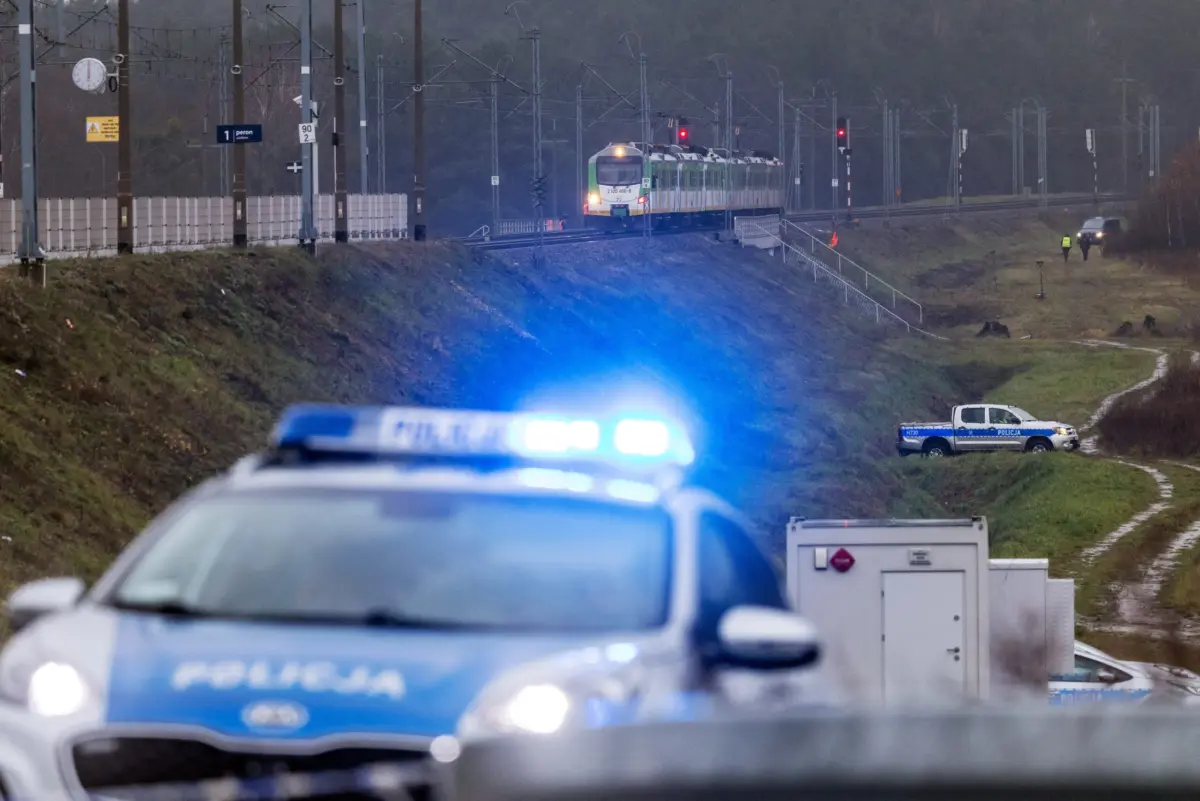
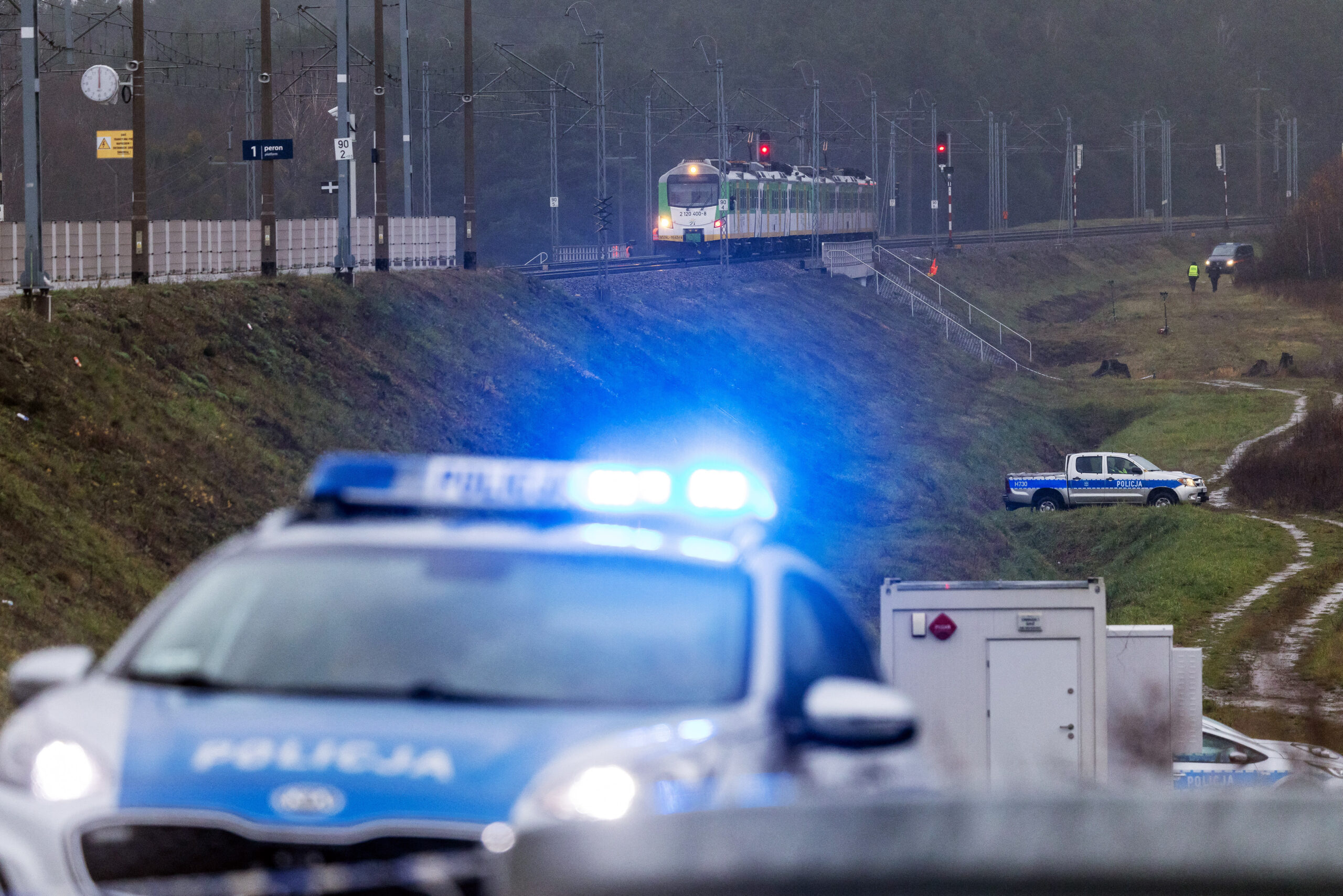
- Late August / Early September: A wave of infrastructure disruptions hits Poland, a vital logistical conduit for Western military aid to Ukraine. Prime Minister Donald Tusk publicly condemns a fire at a manufacturing plant owned by WB Electronics, one of Europe’s leading drone makers, identifying it as an explicit act of sabotage.
- Early September: A British man is arrested and formally charged under the UK National Security Act for passing sensitive intelligence regarding drone manufacturing sites in England to Russian intelligence handlers, while simultaneously preparing local acts of sabotage. This incident follows a string of suspicious events in the British Isles, including suspected arson attacks targeting the former home of UK Prime Minister Keir Starmer and anomalous Russian submarine activity near critical maritime infrastructure.
- Mid-September: NATO air defense jets are scrambled to intercept and subsequently down an unmanned aircraft that breaches Lithuanian airspace after originating in Belarus, a steadfast military ally of Moscow. Simultaneously, a border post incident between Ukraine and Moldova results in two civilian deaths, drawing sharp international condemnation.
Supporting Data and the Changing Threat Matrix
The sheer breadth, frequency, and audacity of these operations would have been unimaginable just a few years ago. Western intelligence agencies note that Moscow is deliberately structuring these operations through proxies and cutouts to maintain plausible deniability, prioritizing strategic psychological disruption and infrastructure testing over immediate physical destruction.
According to data compiled by security researchers, the focus of Russian operations has pivoted heavily over the past two months toward defense-industrial supply chains and logistics networks directly tied to the support of Ukraine.
Key data points illustrating the scale of the threat include:
- The Cyber Front: While physical attacks capture headlines, an estimated dozens of cyberattacks target European public utilities, municipal water supplies, energy grids, and hospitals every week. Many of these breaches go entirely unreported to the public to prevent widespread panic.
- Targeting Leadership: The personal security profiles of European defense executives have been radically overhauled. In 2024, arsonists targeted the private residence of Armin Papperger, CEO of German defense giant Rheinmetall AG, after Western intelligence uncovered a targeted Russian assassination plot. Papperger now travels under heavy, round-the-clock security details.
- Maritime and Airspace Violations: NATO’s Eastern Flank has recorded a multi-fold increase in unauthorized airspace incursions by drones and electronic warfare interference emanating from Russian territory and Kaliningrad.
Western counter-intelligence agencies are increasingly drawing parallels between their current operations against Russian networks and the counter-terrorism methodologies developed in the wake of the September 11, 2001, attacks. Much like al-Qaeda or the Islamic State, modern Russian intelligence relies heavily on decentralized networks of online-recruited proxies. However, security officials note a distinct operational differentiator: while Islamist extremists are typically driven by ideological radicalization, the operatives recruited into Moscow’s service are motivated purely by financial transactions.
Official Responses and Strategic Dilemmas
The rising tide of hybrid warfare has exposed deep structural vulnerabilities in open, democratic societies, forcing Western leaders to grapple with difficult strategic questions regarding deterrence, escalation management, and attribution.
NATO and European Union Leadership
Senior European officials have not minced words regarding the gravity of the situation. Kaja Kallas, the European Union’s foreign policy chief, has repeatedly warned that Europe is confronting an unprecedented "wave of increasingly kinetic hybrid attacks."
Similarly, Lithuanian Foreign Minister Kestutis Budrys offered a blunt assessment of the stakes during a recent security briefing:
"This is not hybrid, this is about explosives that can cause damage. There can be casualties. People may die. If we won’t stop this, it will escalate."
Despite these warnings, a unified, comprehensive NATO strategy continues to elude member states. James Everard, former NATO Deputy Supreme Allied Commander Europe, highlighted the inherent friction in defending open societies against closed, authoritarian adversaries:
"We struggle to counter so-called hybrid attacks with open societies that make it easy for the attacker. This is war without battle, and behind their nuclear shield Russia believes it can act with impunity, acting directly or through proxies."
National Governments
Individual nations are scrambling to fortify their defenses. Germany’s Interior Minister Alexander Dobrindt declared on September 1 that Germany is the "daily target of hybrid warfare" orchestrated by Moscow—an accusation that Kremlin spokesperson Dmitry Peskov predictably dismissed as "completely unfounded." In response to the Leipzig airport drone incident and ongoing cyber threats, Berlin has pledged to expedite the delivery of advanced Iris-T air-defense systems and thousands of strike drones to Kyiv.
In Poland, authorities announced a comprehensive expansion of airspace protection protocols and rapid-response capabilities, specifically citing the constant threat of "Russian provocations." Meanwhile, defense manufacturers like Germany’s Hensoldt AG are proactively investing in proprietary drone-detection and mitigation infrastructure around their plants, though they continue to lobby national governments for clearer legal frameworks to legally shoot down unauthorized UAVs.
Implications: The Brinkmanship of the Gray Zone
Security analysts point out that Vladimir Putin’s ultimate objective is to probe the limits of Western resolve, deliberately testing how far Moscow can push NATO members without crossing the threshold that would automatically trigger a collective military response under Article 5.
Emily Ferris, an associate fellow at the London-based Royal United Services Institute (RUSI), emphasizes that the alliance remains dangerously exposed due to a lack of defined boundaries:
"In the absence of clear red lines from NATO about the consequences of attacks like this, Russia is expanding to fill the space of the uncertainty."
Conversely, some strategic analysts argue that the Kremlin’s campaign is producing diminishing returns. Rather than eroding European political support for Ukraine, the relentless wave of sabotage and intimidation has galvanized European capitals, providing powerful political momentum for increased domestic defense spending, tighter intelligence-sharing agreements, and a fresh round of economic sanctions.
For ordinary citizens living near critical infrastructure hubs—from the energy grids of Finland to the rail networks of Poland—the new normal requires a fundamental adjustment in societal resilience. As Juha Räsänen, CEO of Finnish energy firm Savon Voima, pragmatically noted regarding the impossibility of achieving absolute physical security: "Physical security, physical monitoring, cameras and different types of detection methods are being increased all the time. But the most important thing is that people learn to tolerate power outages."
As winter approaches and the war in Ukraine enters another grueling phase, Europe finds itself standing precariously at a historical crossroads. Whether the continent’s leaders can successfully transition from reactive crisis management to a cohesive, proactive deterrence strategy will determine whether this shadow war remains contained—or erupts into open, devastating conflict.
