

By Global Maritime Correspondent
Updated: October 2026
Main Facts
Amid an intractable diplomatic stalemate between Washington and Tehran that has kept the vital maritime corridor officially closed to regular traffic, a high-stakes shadow operation is keeping the global energy grid alive. In the darkened, radar-dark waters of the Strait of Hormuz, a vanguard of civilian tanker captains—operating under strict military coordination with the United States Navy—is successfully ferrying millions of barrels of crude oil and liquefied natural gas (LNG) past a gauntlet of drones, missiles, and naval mines.
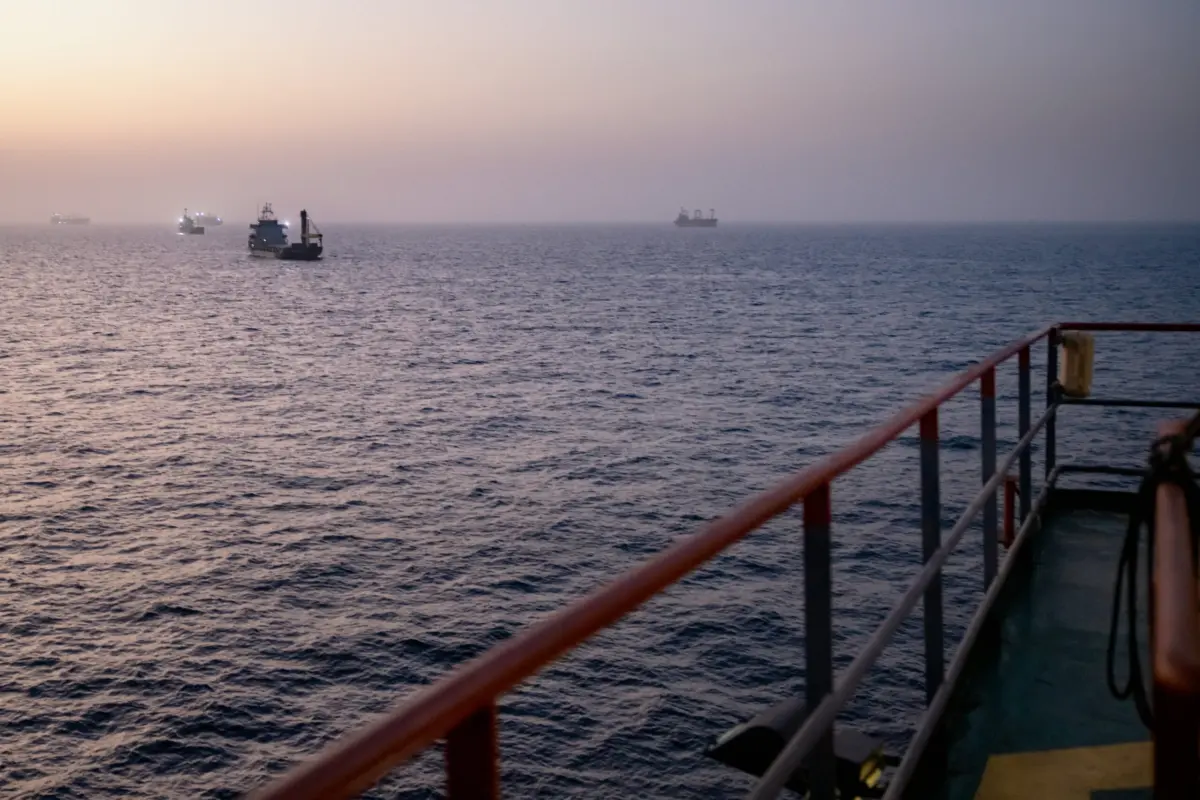
The operation relies on extreme secrecy, old-school seamanship, and intensive naval protection. To evade hostile detection, 300-meter-long supertankers navigate mere miles off the coast of Oman with their Automatic Identification System (AIS) transponders switched off, running completely dark with zero exterior lighting, silenced mobile phones, and a bare minimum of active radar.
Despite the constant threat of attack—estimated by shipping executives to carry a roughly one-in-twenty hazard rate per transit—these shuttle runs have propelled Middle Eastern crude flows back toward pre-war levels. Financial heavyweights JPMorgan Chase & Co. and Goldman Sachs Group Inc. report that daily oil flows through the Gulf have surged back to approximately 17.5 million barrels. This lifeline not only prevents severe global energy shortages and windfall spikes in consumer prices, but also reaps billions of dollars for shipowners, commodity traders, and hazard-pay-earning mariners willing to brave the crossing.
Chronology of the Crisis and the Shuttle Runs
The transformation of the Strait of Hormuz into a militarized clandestine corridor did not happen overnight. It is the culmination of months of escalating regional conflict that effectively shut down commercial shipping lanes and severed standard trade routes.
- Early Summer: As the diplomatic deadlock solidified and maritime threats multiplied, United States Central Command (CENTCOM) initiated quiet, backchannel coordination with select shipping executives, commodity traders, and tanker operators. The goal was to establish safe waypoints, map out routes clear of Iranian naval mines, and build a synchronized tracking and protection framework.
- Recent Weeks: LNG carriers, traditionally more conservative and slower to adapt due to the volatility of their explosive cargo, began utilizing the corridor. At least eight LNG vessels successfully traversed the strait under US security guarantees.
- The Night-Time Runs (Ongoing): Under current operational protocols, tankers approaching the strait execute a precise pre-transit ritual. Crews isolate transponder breakers, string sandbags and water-filled drums around the bridge to act as improvised blast shields, and prime emergency fire pumps. For the duration of the passage, bridges maintain complete radio silence except for mandatory thirty-minute check-ins with US Navy assets monitoring the route from above and alongside.
Supporting Data & Economic Incentives
The math behind the Strait of Hormuz shuttle runs is as staggering as the risks involved. For energy producers, commodity traders, and shipowners, the stakes are measured in billions of dollars. For the mariners themselves—predominantly drawn from lower-income nations such as the Philippines and India—the financial compensation is life-changing.
- 17.5 Million Barrels: Estimated daily crude oil flows through the Gulf, according to JPMorgan Chase, indicating a dramatic recovery toward pre-war volume baselines.
- 1 in 20 Hazard Rate: The current rough estimate by shipping executives of a tanker sustaining a direct hit or severe incident during a Hormuz transit, even with US naval protection.
- Lucrative Hazard Pay: Shipowners have offered extraordinary financial incentives to secure crews, with some packages providing an extra six months of base salary—or multi-fold pay multipliers—for completing a single successful rotation through the danger zone.
- 24 Lives Lost: The grim human toll recorded by the International Maritime Organization (IMO) among global seafarers caught in regional attacks since the onset of the conflict.
- 3-Month Stints: In recognition of the intense psychological and physical toll, many captains and crewmembers now negotiate shortened contract lengths, opting for intensive three-month rotations rather than traditional longer deployments.
Official Responses and Military Coordination
The success of the clandestine maritime bridge rests entirely on an unprecedented partnership between private commercial entities and the United States military.
In an official statement addressing the operation, US Central Command (CENTCOM) highlighted the scope of the intervention:
"American forces have assisted thousands of ships through the Strait of Hormuz in recent months by providing coordinated protection. We remain laser-focused and will continue working with US interagency partners, regional countries, and the shipping industry to increase the maritime traffic flow."
For the captains on the ground—or rather, on the rolling bridge wings—this protection is experienced as a reassuring, if surreal, presence. Operating in total darkness, crews frequently spot US military aircraft, including fighter jets and helicopters, patrolling the airspace above them.
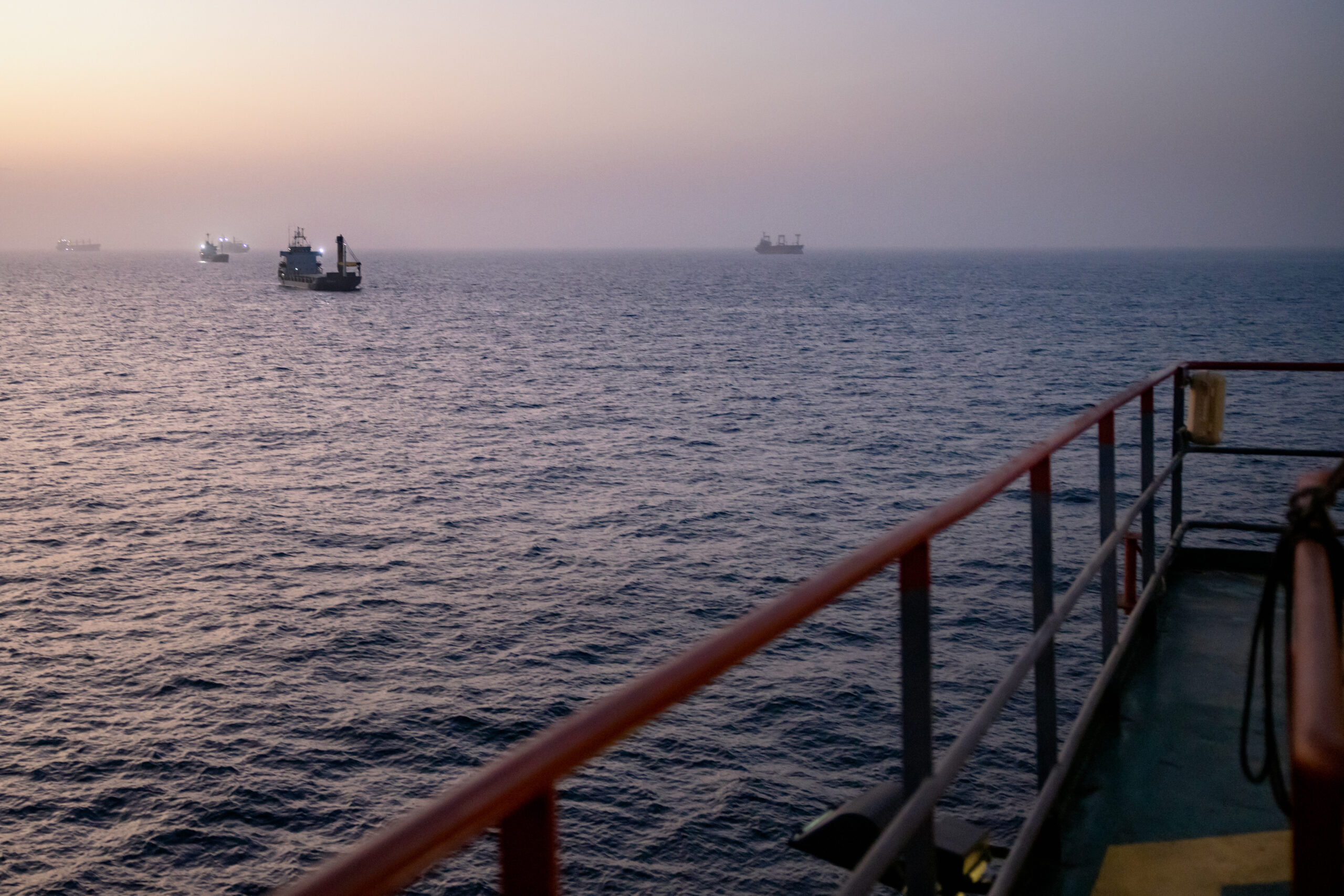
The communication protocol is relentless and structured. Ships maintain contact exclusively with naval handlers, reporting their coordinates, assessing regional conditions, and checking for incoming projectiles every half-hour. When incidents occur—such as when a tanker captain witnessed a sudden blast directly ahead of his vessel—the US Navy acts as an immediate traffic controller, assessing the debris field, determining whether surrounding ships can proceed, and directing vessels to maintain course.
Conversely, the state of Iran maintains its own active blacklist of commercial tankers engaged in the trade, raising the stakes for any vessel identified as participating in the US-backed shuttle system.
Implications for Global Trade, Geopolitics, and Seafarer Welfare
The emergence of the Hormuz shuttle economy carries profound implications for the future of international trade, maritime law, and the psychological wellbeing of the global merchant marine workforce.
1. The Fragility of Global Energy Security
While the current system has successfully skirted total market starvation, it remains a fragile house of cards. The global economy is essentially functioning at the whim of localized deterrence. If the coordination between the US Navy and commercial operators were to falter, or if a major LNG carrier were to suffer a catastrophic strike, the resulting shockwaves would instantly cripple global energy markets, spiking oil and gas prices to historic highs.
2. The Normalization of "Shadow Shipping"
The reliance on dark navigation, disabled AIS transponders, and military escorts points to a troubling new normal in geopolitics. Vital commercial straits are increasingly militarized chokepoints where traditional freedom of navigation has been replaced by bilateral, ad-hoc security arrangements. This sets a dangerous precedent for other volatile maritime corridors worldwide, including the Bab el-Mandeb strait and the South China Sea.
3. The Human Cost and Resilience of Seafarers
Ultimately, the entire multi-billion-dollar apparatus rests upon the individual psychological threshold of men and women who choose to step onto the bridge. Despite facing near-misses, incoming blasts, and the constant hum of emergency fire pumps primed for battle, these mariners continue to sign up.
Consider the perspective of an anonymous captain in his early forties, currently resting at home in the Philippines after completing a grueling three-month stint in the strait. During his crossings, his ship was targeted in a near-miss attack, yet his emergency protocols held, and his vessel emerged unscathed.
Reflecting on the psychological weight of the job, his family’s natural anxiety, and his decision to return to sea, he remains steadfast:
"My family is quite scared, but I told them that I can handle the situation," he remarked from his home. "I’m very proud. I enjoy my job, actually."
As long as seasoned mariners retain their mastery of traditional, old-school navigation—relying on the silhouettes of coastlines and the steady beams of lighthouses rather than glowing digital screens—and as long as the US Navy maintains its vigilant watch overhead, the oil will keep flowing, and the lights of the global economy will stay on. Yet, beneath every barrel delivered lies a chilling reminder that the path to market runs directly through the shadows of war.
