

Main Facts
The relentless expansion of artificial intelligence infrastructure in the United States has collided head-on with national climate objectives, exposing a massive, rapidly widening chasm between Big Tech’s public environmental pledges and its physical operations.
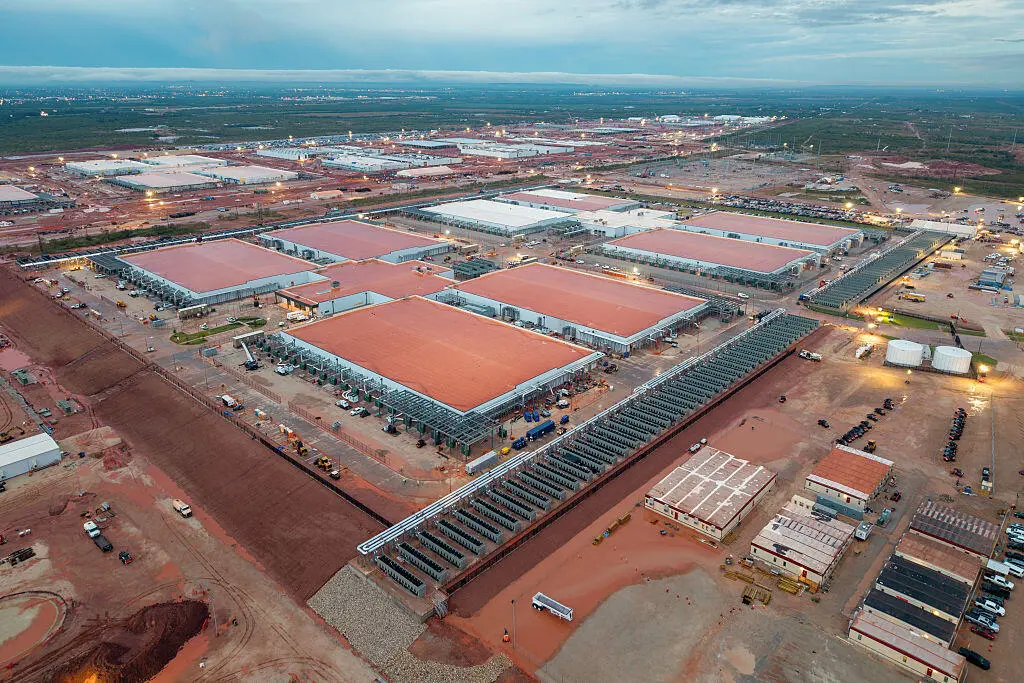
A comprehensive new analysis examining the 60 largest data centers currently under construction by the industry’s "Big Four"—Amazon, Google, Meta, and Microsoft—estimates that these massive computing facilities will produce a cumulative 101.5 million tons of carbon dioxide annually once they are fully operational. To put that staggering figure into perspective, it accounts for approximately 7% of all projected 2025 United States power-sector emissions. It is an environmental footprint roughly equivalent to running 27 traditional coal-fired power plants or injecting an additional 24 million gas-powered vehicles onto America’s highways.
This carbon surge is symptomatic of a broader, systemic reversal across the technology sector. Just half a decade ago, these corporations vied to outdo one another with aggressive, highly publicized timelines to achieve net-zero carbon footprints, transition to 100% renewable energy, and, in some cases, become entirely carbon negative. Today, those ambitious targets are buckling under the immense, uninterrupted electrical load required to train, maintain, and deploy generative AI models at a global scale.
Financial disclosures reveal a sharp upward trajectory in corporate greenhouse gas inventories. Amazon’s enterprise emissions surged by 16% between 2024 and 2025, fueled heavily by data center construction and a 34% spike in electricity purchases. Microsoft reported a 25% increase in its estimated emissions over the exact same period, while Google’s parent company, Alphabet, registered an 18% year-over-year increase in its adjusted carbon metrics.
Beyond the corporate balance sheets, the physical grid is pivoting backward to accommodate the demand. Utilities across the United States are scrambling to source round-the-clock baseload power—electricity that remains reliable regardless of weather conditions—leading to a massive resurgence in fossil fuel investments. Gas-fired energy capacity under development across the nation nearly tripled in recent quarters, with analysts projecting that existing gas-burning infrastructure could expand by up to 50% if current pipeline projects are fully realized.
Rather than signaling a complete abandonment of clean energy, researchers emphasize that green energy additions have simply failed to keep pace with the exponential velocity of AI development. Because large-scale battery storage technology remains bottlenecked and expensive, utilities are turning to readily available fossil fuels to keep data center servers humming 24 hours a day.
Chronology
The collision between the artificial intelligence gold rush and environmental sustainability has unfolded at a breathtaking pace, transforming the tech sector’s public relations landscape in a matter of years.

- 2019–2021 (The Green Pledge Era): Buoyed by corporate confidence and growing public pressure, Amazon, Google, Microsoft, and Meta make sweeping, multi-decade commitments to achieve carbon neutrality or net-zero emissions. Microsoft pledges to be carbon negative by 2030, while Google targets 24/7 carbon-free energy by the same year.
- Late 2022 (The Generative AI Explosion): The public launch of OpenAI’s ChatGPT sparks an unprecedented global race in artificial intelligence. Tech giants abruptly pivot their capital expenditure strategies away from traditional cloud services toward high-density AI infrastructure, setting off a scramble for land, water, and massive amounts of electrical power.
- 2023–2024 (The Infrastructure Bottleneck): Local communities across the United States begin pushing back against data center proposals, citing excessive water consumption, strain on municipal power grids, and disruptive construction noise. High-profile figures, including activist Erin Brockovich, begin organizing affected neighborhoods. Meanwhile, tech companies quietly miss internal emission reduction milestones.
- Early 2025 (The Regulatory Shift and Emission Spikes): Newly released corporate sustainability data reveals double-digit emission increases across Amazon, Microsoft, and Alphabet. Concurrently, a shifting political landscape in Washington rolls back federal climate regulations and clean energy tax credits, actively encouraging fossil fuel production.
- May 2026 (Peak Local Resistance): Grassroots activism reaches a fever pitch. In cities like Albany, New York, residents stage large-scale rallies demanding moratoriums on new AI data centers. A Gallup-style polling consensus shows that a clear majority of Americans oppose having AI factories constructed near their communities.
- Current Outlook: Analysts publish comprehensive assessments warning that the 60 largest data centers under construction will pump over 100 million tons of carbon dioxide into the atmosphere annually, fundamentally threatening national and corporate climate goals.
Supporting Data
The scale of the energy demand driven by modern artificial intelligence is unprecedented in the history of the modern computing industry. Data centers are no longer passive repositories of digital files; they are hyper-intensive industrial factories requiring millions of gallons of cooling water and hundreds of megawatts of continuous electrical power.
The quantitative breakdown of the current data center boom highlights the magnitude of the challenge:
- 101.5 Million Tons: The estimated annual carbon dioxide output of the 60 largest data centers currently being built by Amazon, Google, Meta, and Microsoft.
- 7 Percent: The share of total projected 2025 US power-sector emissions generated by these 60 sites alone.
- 27 vs. 24 Million: The comparative environmental impact of the new data centers—equal to either firing up 27 coal-fired power plants or adding 24 million internal combustion engine vehicles to US roads.
- Double-Digit Surges: Corporate emission increases from 2024 to 2025 included a 16% rise for Amazon, an 18% rise for Alphabet (Google), and a 25% increase for Microsoft.
- Tripling Gas Capacity: The volume of US gas-fired energy projects under development nearly tripled, threatening to expand the nation’s gas-burning infrastructure by up to 50%.
- Fossil Fuel Realignment: Three-quarters of the utility operators serving the top 60 data center sites are actively building or planning new gas-generating capacity, while one-third of operators managing existing coal plants are officially delaying their scheduled retirement dates.
Official Responses
As the tension between technological advancement and environmental stewardship intensifies, responses from corporate leaders, utility executives, and public officials reflect a complex balancing act.
Tech executives have increasingly defended their rising emissions as a temporary, necessary byproduct of a transitional technological revolution. Representatives for Amazon, Google, and Microsoft have repeatedly emphasized that their long-term commitments to net-zero emissions remain unchanged, even as they acknowledge that short-term emissions will inevitably climb.
In public statements and regulatory filings, these companies point to their aggressive investments in advanced clean energy procurement, including nuclear power purchase agreements, geothermal pilots, and emerging carbon-removal technologies. However, tech executives argue that the market for carbon-free electricity is severely constrained. They maintain that until public utilities and federal infrastructure policies can scale up clean baseload generation, they have little choice but to rely on existing grid mixes to power the artificial intelligence economy.
Utilities and energy providers offer a pragmatic, albeit controversial, perspective. Industry associations argue that power companies have a legal and operational obligation to maintain grid reliability for all consumers. Because electricity cannot be easily stored in massive quantities without advanced battery infrastructure, utilities must build generation capacity that can respond instantly to surging demands. Gas turbines and delayed coal retirements are defended as the only reliable stopgap measures capable of preventing widespread blackouts and brownouts as industrial power consumption skyrockets.
Public officials and regulators are increasingly divided. While some state and federal leaders continue to roll back environmental regulations and incentivize fossil fuel production to lower immediate energy costs and secure economic dominance in the AI race, state and local politicians face intense pressure from constituents. Municipalities across the country are enacting zoning restrictions, water-use caps, and temporary moratoriums on data center construction in direct response to voter backlash.

Implications
The unbridled growth of energy-intensive AI infrastructure carries profound, long-lasting implications for environmental policy, economic equity, and the stability of the American electrical grid.
1. The Death of Corporate Climate Targets
The most immediate casualty of the AI boom is the credibility of corporate sustainability pledges. For years, major tech firms used their net-zero targets as marketing tools to appeal to eco-conscious consumers, investors, and employees. The reality that building AI infrastructure directly drives up carbon emissions by double digits exposes a fundamental contradiction in modern corporate capitalism. As profitability pressures mount, the expensive mechanisms companies once used to mask their fossil fuel reliance—such as purchasing high-priced renewable energy credits—may be scaled back, forcing a painful reckoning over what corporate sustainability actually means in practice.
2. Grid Reliability and Consumer Energy Costs
The massive influx of industrial demand from data centers threatens the stability of regional power grids. With utilities extending the lifespans of coal plants and building out vast new gas networks, everyday consumers are facing potential reliability risks. Furthermore, the immense capital cost required to upgrade transmission lines and construct new power plants is frequently passed down to residential and small-business ratepayers through higher monthly utility bills. This dynamic risks creating a socio-economic friction where average citizens subsidize the energy consumption of trillion-dollar artificial intelligence operations.
3. Environmental Justice and Local Backlash
The physical footprint of the AI revolution is not distributed equally. Data centers are frequently sited in rural or lower-income communities where land and water are cheap, yet these regions receive few of the economic benefits of the AI economy while bearing the brunt of the environmental degradation. Noise pollution, strained local water tables, and the local air quality impacts of nearby fossil-fuel power generation have galvanized a powerful grassroots resistance movement.
As figures like Erin Brockovich mobilize affected towns and polling consistently demonstrates deep public opposition to nearby AI factories, Big Tech faces a severe social license-to-operate crisis. If communities continue to reject infrastructure proposals, the geographic expansion of the AI economy could face unprecedented legal and political roadblocks, turning the carbon crunch into a defining battleground of the digital age.
