

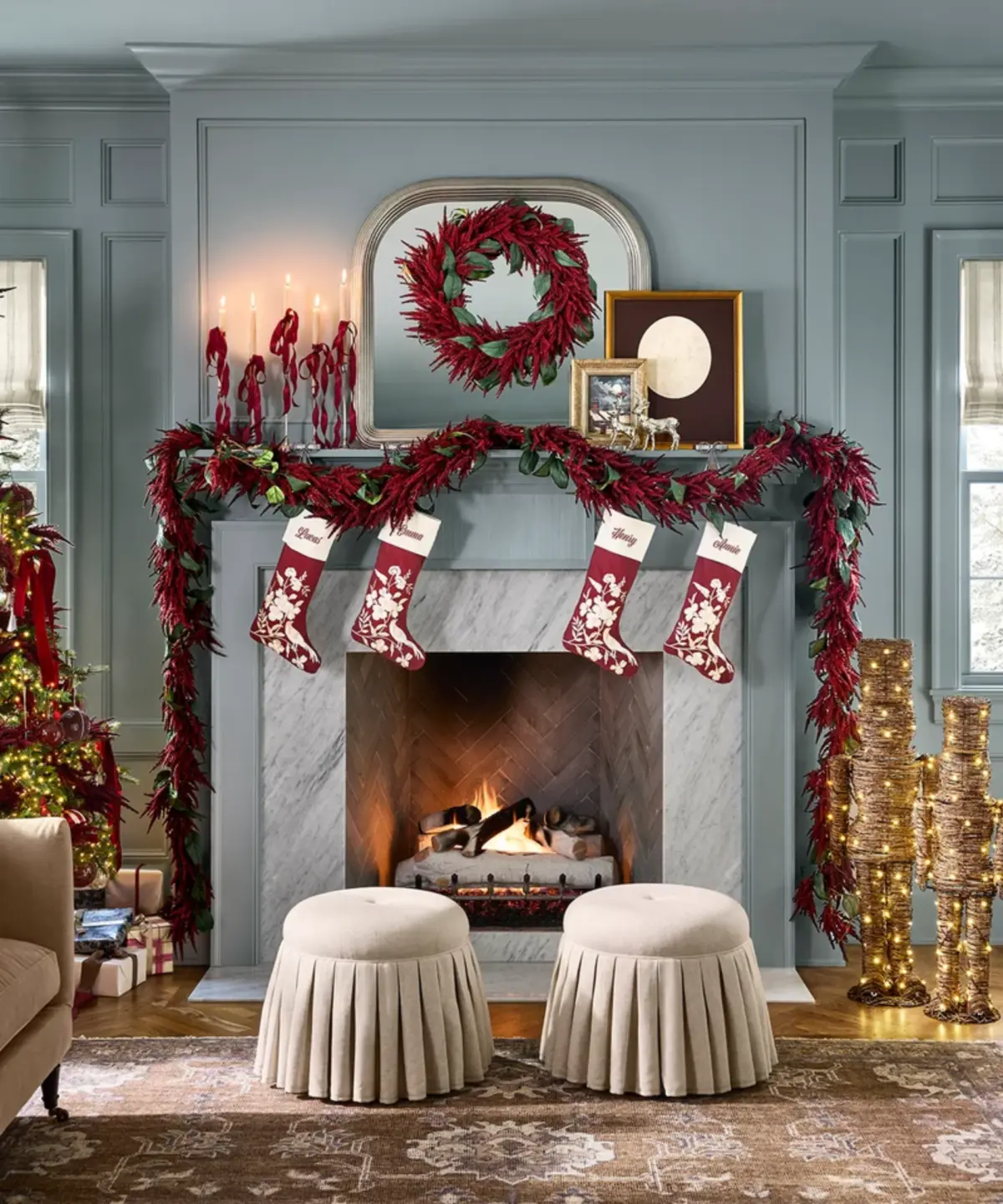
NEW YORK — Every year, the unveiling of designer Shea McGee’s holiday collection serves as an unofficial oracle for the interior design industry. Long before the first autumn leaf falls or the retail market shifts toward winter, McGee & Co.’s seasonal drops act as a reliable barometer for the aesthetic currents that will soon dominate high-end residential spaces.
Last year’s early previews—marked by twisted metals, delicate miniature wreaths, and cascading tassels—proved prophetic. By the time winter arrived, those specific accents had permeated mainstream holiday styling. Now, as McGee’s latest holiday rollout hits the market, interior designers and discerning homeowners are once again looking to her curation to decode the future of Christmas decor.
Main Facts: What Defines the 2025 McGee Holiday Aesthetic?
The core of McGee’s latest collection centers on a sophisticated balance between organic naturalism and timeless, heritage-inspired elegance. Rather than relying on fleeting novelties, the collection emphasizes tactile richness, multi-layered textures, and decor items designed to transition seamlessly from the height of festive celebrations into the quieter months of early spring.
Key components of the 2025 assortment include:
- The Amaranthus Trend: Translating a notoriously difficult-to-maintain natural floral into a polished, fuss-free format.
- Refined Heritage Textures: Leaning heavily into Ralph Lauren-esque tartan stockings and classic mantel vignettes.
- Jewelry-Inspired Ornaments: Utilizing mixed metals and pearl-adorned baubles to catch and refract light.
- Pre-Lit Architectural Greenery: High-end faux Norway spruce trees designed with structural realism to anchor seasonal living spaces.
Chronology: The Evolution of Seasonal Forecasting in Interior Design
The timeline of how holiday collections transition from design board to living room reveals a rigorous industry process that begins months before consumers ever think about winter.
1. Spring and Summer Concepting (March – July)
Long before retail shelves are stocked, interior tastemakers develop holiday lines up to eighteen months in advance. Color palettes, sourcing for sustainable materials, and structural silhouettes—such as the pre-lit Norway spruce models—are finalized during the sweltering heat of mid-summer.
2. The Micro-Trend Wave on Social Media (Late Summer / Early Fall)
Avant-garde stylists begin testing organic elements on platforms like Instagram and Pinterest. Elements such as cascading burgundy amaranthus plumes, popularized by forward-thinking designers like Marco Zamora, gain viral traction. However, the delicate nature of real flora—prone to dropping seeds and requiring constant maintenance—creates a gap in the market.
3. Commercial Adaptation (September)
Designers like Shea McGee bridge the gap between high-fashion editorial styling and consumer practicality. By transforming high-maintenance trends into accessible items—such as the 19-inch faux amaranthus picks—brands allow everyday decorators to replicate editorial-level luxury without the logistical headache.
4. The Winter Debut and Cultural Diffusion (November – December)
As homes are decorated for the holidays, these curated pieces become the backdrop for family gatherings, solidifying the seasonal trends that other commercial brands inevitably begin to emulate the following year.
Supporting Data & Market Analysis: The Shift Toward "Longevity Decor"
Consumer habits surrounding holiday spending have shifted dramatically over the past several cycles. According to recent home decor retail data, buyers are increasingly moving away from disposable, single-season plastics in favor of investment pieces that offer multi-season longevity.
- Durability Over Disposability: High-end pre-lit faux trees and heavy-weight fabric stockings have seen a 30% surge in demand over traditional alternatives, driven by consumers looking to build a cohesive, reusable holiday capsule wardrobe for their homes.
- The Transition Window: Florals and botanical accents that avoid explicitly Christmastick motifs—such as rich red-and-white arrangements that can comfortably remain on display through February or March—are outperforming hyper-specific holiday knick-knacks.
- Textural Layering: The inclusion of mixed metals, velvet ribbons, and pearl finishes points to a broader macroeconomic design trend: "quiet luxury" translated into holiday living, where quality of material supersedes sheer volume of decor.
Official Responses and Industry Commentary
While major commercial lines dictate much of the mass market, industry insiders emphasize that the success of a collection lies in its ability to solve functional problems for the decorator.
"The true art of holiday styling isn’t just about making a space look festive for a single afternoon; it’s about creating an atmosphere that feels effortless, rich, and deeply personal," notes a leading residential interior stylist. "When a designer manages to take a notoriously messy, high-maintenance botanical like amaranthus and engineer it into a clean, slide-in structural pick, they aren’t just selling a product—they’re solving a functional pain point for the host."
Furthermore, interior architects highlight the psychological comfort embedded in traditional motifs. The return of classic tartan prints and heavier, heritage-style woolens speaks to a cultural desire for grounding, tactile elements amidst an increasingly digital world.
Implications: What This Means for the Future of Holiday Hosting
The trickle-down effect of McGee’s design choices carries significant implications for both retail markets and DIY home decorators alike.
1. The Rise of "Low-Effort Luxury"
The modern consumer demands high visual impact with low physical maintenance. By engineering faux botanicals that mimic the organic, cascading chaos of real plants without the debris, manufacturers are setting a new standard for convenience in luxury home goods.
2. Extended Seasonal Styling
By intentionally selecting color palettes and textures that bridge December and the late-winter months (such as pearl-inlaid ornaments, muted tartan patterns, and versatile burgundy tones), designers are encouraging a departure from the frantic post-Christmas teardown. Homes can remain warm, layered, and sophisticated well past the New Year.
3. The Blueprint for Competitors
As the holiday market becomes increasingly saturated, the release of curated lines like McGee & Co.’s serves as the undisputed benchmark. Expect to see budget-friendly iterations of pearl-accented baubles, tartan textiles, and cascading floral picks across major home retailers in the upcoming buying cycles.
Ultimately, thoughtful holiday design has evolved from a superficial display of festive cheer into an extension of year-round interior architecture—proving that with the right foundational pieces, your home can be the best-dressed space in the room long before the first guest arrives.
