

By [Author Name]
Published in partnership with BobVila.com
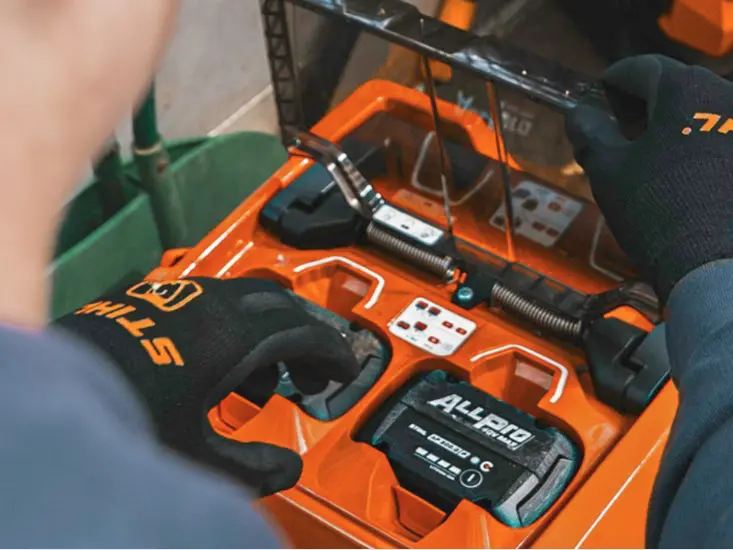
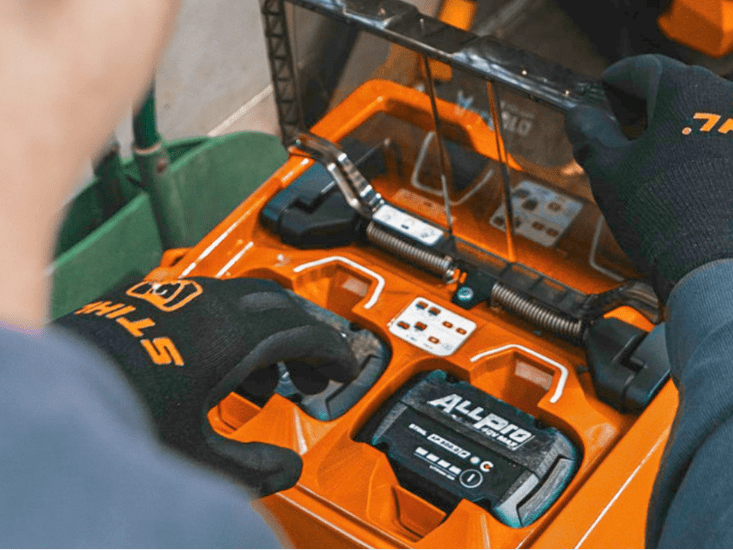
The transition from gas-powered outdoor equipment to high-performance battery systems has reached a critical inflection point. For decades, landscape professionals, agricultural workers, and forestry crews have resisted the shift toward cordless alternatives, citing limitations in runtime, raw torque, and overall durability under punishing conditions. Stihl, a dominant name in gas-powered forestry and lawn care machinery, aims to shatter those industry bottlenecks with its newly unveiled AllPro battery system and the next-generation AP battery platform.
Following an exclusive hands-on media preview—conducted three weeks ahead of the public launch—industry experts and trade professionals have been given a clear look at how the German engineering giant plans to reshape commercial-grade land management. Featuring major technological leaps in cell design, charging speeds, and thermal management, the AllPro system promises to bridge the performance gap between fossil-fuel engines and zero-emission electric tools once and for all.
Main Facts: What is the Stihl AllPro System?
The Stihl AllPro battery system is a heavy-duty, professional-grade ecosystem engineered specifically for landscaping contractors, agricultural operators, forestry workers, and property owners managing large acreage. While the exterior aesthetics of the updated tools and batteries closely mirror previous iterations, the internal engineering represents a massive structural upgrade.
At the core of the AllPro system are newly redesigned AP-series batteries utilizing tabless cell technology. Unlike conventional lithium-ion cells that channel electrical current through a single narrow tab—creating a physical bottleneck that generates excess heat and restricts power flow—tabless cells offer a continuous conductive path across the entire base of the electrode.
This design alteration yields several immediate operational benefits:
- Increased Peak Power Output: Tools can draw higher amperage instantly under heavy loads.
- Enhanced Thermal Efficiency: Lower internal resistance means significantly less heat buildup during sustained heavy-duty tasks.
- Extended Service Life: The flagship AP 300.0 P battery is rated for an impressive 3,000 charge cycles—equivalent to charging the unit once a day, seven days a week, for over eight years—with zero performance drop-off.
- Extreme Weather Durability: The batteries feature an IPX5 water-resistance rating and are engineered to operate reliably in ambient temperatures ranging from -4 degrees Fahrenheit to 122 degrees Fahrenheit.
Chronology of the Launch and Field Testing
The rollout of the AllPro system followed a carefully orchestrated release strategy designed to gather validation from industry insiders before reaching the broader consumer market.
- Early Summer (3 Weeks Pre-Launch): Stihl hosted a select group of trade journalists, reviewers, and landscaping professionals for an immersive media preview. The event offered attendees a deep dive into the engineering philosophy behind the updated AP platform, detailed technical briefings from Stihl’s research and development teams, and rigorous field demonstrations.
- Mid-Summer: Attendees were given uninhibited access to put the new battery lineups and tool configurations through real-world stress tests. This included felling and bucking heavy hardwood logs with the MSA 300 chainsaw, clearing dense damp debris with the BRA 280 backpack blower, and operating the commercial-grade RMA 756 V self-propelled lawn mower.
- Official Public Unveiling: Stihl officially introduced the AllPro system and its accompanying chargers and tools to the commercial market, positioning the platform as a direct replacement for mid-range gas-powered utility equipment.
Supporting Data and Hardware Lineup
The AllPro system’s hardware ecosystem includes several standout additions designed to eliminate downtime and maximize productivity on the job site.
1. Advanced Charging Infrastructure
Downtime is the primary enemy of commercial landscaping profitability. To combat this, Stihl introduced high-speed charging solutions that dramatically reduce turnaround times:
- AL 1602 MO Dual-Port Fast Charger: Capable of pushing the professional-grade AP 300.0 P battery from 0 to 80 percent charge in just 10 minutes, effectively removing battery rotation bottlenecks for multi-battery crews.
- AL 501 High-Speed Single-Port Charger: A robust 12-amp charger featuring automated full-charge shutoff, LED diagnostic indicators, and a high-flow active cooling fan. It replenishes the AP 300.0 P from 0 to 80 percent in 30 minutes (and 100 percent in 50 minutes). For residential-grade AK batteries, the AL 501 cuts charging times down to 35 minutes for an 80 percent charge—a massive leap from the 160-minute wait required by standard entry-level chargers.
2. BRA 280 Backpack Leaf Blower
Designed to meet the high-volume demands of commercial property cleanups, the BRA 280 delivers up to 26 newtons of blow force.
- Weight: 24 pounds (when equipped with two AP 300 batteries).
- Runtime: Sequential dual-battery discharge yields 50 minutes or more of continuous operation. A single battery configured for high-output mode provides roughly 17 minutes of sustained maximum velocity, or up to 30 minutes on variable speeds.
- Features: Includes a handle-mounted digital screen displaying battery status, speed adjustments, service warnings, and energy-saving modes. Stihl’s constant power technology ensures zero performance fade as the battery discharges.
3. MSA 300 18-Inch Chainsaw
Positioned as a direct battery-powered challenger to the popular Stihl MS 271 Farm Boss gas chainsaw, the MSA 300 is built with a rugged magnesium motor housing, a rubberized anti-vibration handle, and captive bar nuts.
- Performance: Packs 3 kWh of cutting power, operating at a blazing 30 meters per second (mps) chain speed (outpacing the Farm Boss’s 25 mps).
- Advantage: Provides instant electric torque without the warm-up or engine-ramping delays inherent to gas engines. It weighs nearly a pound less than its gas counterpart when fully rigged with a bar, chain, and an AP 300.0 P battery.
4. RMA 756 V Cordless Self-Propelled Lawn Mower
A heavy-duty 21-inch commercial walk-behind mower engineered to rival gas-powered mowers.
- Power: Delivers 3,100 watts of mowing and mulching muscle.
- Runtime: Over 2 hours of continuous mowing per charge when paired with dual AP-series batteries.
- Design: Features a flexible 4-in-1 system (mulching, side/rear discharge, and a 21-gallon collection bag) alongside an innovative mono-comfort handle for effortless bag removal.
5. KombiSystem Bundles & Pole Hedge Trimmers
The modular Stihl KombiSystem allows users to leverage a single powerhead across multiple attachments—including line trimmers, edgers, pole pruners, and brushcutters. Crucially, Stihl maintained cross-compatibility: older gas and battery attachments seamlessly interface with the new AllPro powerheads. Meanwhile, the HLA 140 pole hedge trimmer brings a 24-inch double-sided articulating blade with a 145-degree range of motion, allowing operators to trim tall hedges and awkward angles without relying on ladders.
Official Responses and Industry Perspectives
Stihl’s executive and engineering teams emphasized that the development of the AllPro system was driven by listening closely to commercial contractors who wanted emissions reductions without sacrificing muscle.
"We aren’t just building tools that run on batteries; we are engineering power platforms that can survive the brutal, day-in, day-out abuse of professional landscaping and forestry," shared members of the Stihl product development team during the summer media briefing. The adoption of tabless cell technology was the breakthrough we needed to deliver gas-equivalent torque and thermal resilience without strapping heavy, cumbersome packs onto our operators.
Early field testers echoed these sentiments, noting that the combination of near-silent operation and zero exhaust emissions fundamentally changes the working environment. Landscapers working in dense, noise-sensitive residential neighborhoods or enclosed municipal spaces reported significantly reduced resident complaints and improved operator comfort due to the near-total elimination of hand-arm vibration syndrome (HAVS) triggers common in gas-powered two-stroke engines.
Broader Implications for the Outdoor Power Equipment Market
The introduction of the Stihl AllPro system signals a broader, irreversible shift across the landscaping and forestry sectors. For years, battery-powered equipment was largely dismissed by commercial operators as "weekend warrior" gear unsuitable for full-time professional deployment.
The AllPro platform challenges this narrative on multiple fronts:
- Total Cost of Ownership (TCO): While the initial upfront investment—such as a $2,700 commercial lawn mower or high-speed dual-port chargers—commands a premium, businesses stand to save substantially over time on fuel, spark plugs, air filters, oil mixes, and carburetor overhauls. Furthermore, the 3,000-cycle lifespan of the AP 300.0 P battery drastically reduces the frequency of costly replacement cycles.
- Regulatory Pressures: With municipal and state governments across North America and Europe progressively tightening noise ordinances and outright banning small off-road gas engines (GAS), commercial landscapers are forced to adapt. Ecosystems like Stihl’s AllPro provide an immediate compliance path without sacrificing job-site efficiency.
- Ergonomic and Environmental Safety: Lower decibel levels, zero tailpipe emissions, and reduced vibration profiles directly combat operator fatigue and long-term occupational health hazards, potentially easing the ongoing labor shortage in the landscaping sector by making the profession safer and more comfortable.
As these tools roll out nationwide, they serve as a clear indicator that the future of heavy-duty land management is not just electric—it is rapidly outpacing the performance benchmarks set by decades of fossil-fuel dominance.
