

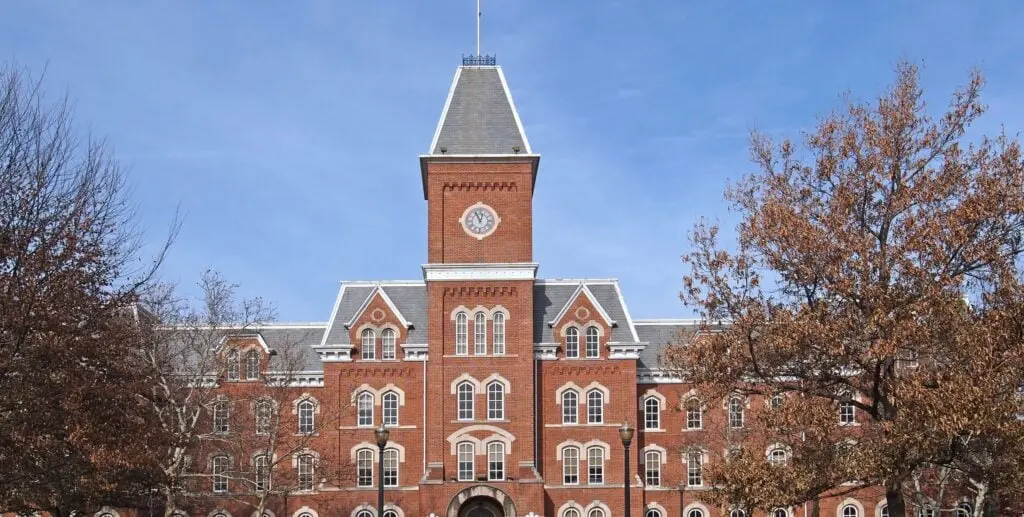
For real estate investors searching for a resilient niche in a volatile market, the answers may be found near the quads, lecture halls, and stadiums of America’s institutions of higher education. Specifically, data analysts and housing economists have identified a compelling trend: inland college towns are quietly emerging as one of the most lucrative and overlooked sectors in modern residential real estate.
While primary coastal metros and high-cost-of-living tech hubs grapple with cooling demand and compressed margins, smaller inland university markets are experiencing a surge. Driven by a combination of climbing national student enrollments, relative housing affordability, and localized economic expansions, these markets offer a unique blueprint for both mom-and-pop landlords and independent investors looking to maximize yield.
Main Facts: The Intersection of Higher Education and Real Estate
Recent housing data compiled by real estate brokerage Redfin highlights a striking dichotomy in the American property landscape. Across the country, home price growth is increasingly concentrated in more affordable, secondary, and tertiary markets—many of which are anchored by large public or private universities.
According to Yingqi Xu, a senior economist at Redfin:
"Many of the college towns with home prices rising the fastest are also among the most affordable places to buy a home right now. That combination is attracting buyers who have been priced out of larger metros, while universities continue to provide a reliable foundation of demand. Meanwhile, many of the most expensive college towns are experiencing price declines as high mortgage rates and elevated home prices make buyers there more cautious."
Unlike traditional industrial or commercial towns that can suffer severe downturns if a single employer leaves, university towns possess a built-in economic stabilizer. They enjoy a perpetual influx of young adults, stable institutional employment, ongoing research funding, and resilient local commerce.
When these structural advantages intersect with inland affordability—where median home prices sit well below the national average—the result is a high-demand, low-barrier-to-entry sector for residential real estate investors.
Chronology of a Trend: How Inland College Markets Gained Momentum
The current boom in inland student housing did not happen overnight. It is the culmination of demographic shifts, post-pandemic enrollment corrections, and macroeconomic pressures that have reshaped the housing market over the last several years.
Fall 2025: Enrollment Rebounds
Following years of enrollment dips and pandemic-era disruptions, total U.S. college enrollment rebounded significantly. Data from real estate consulting firm Capright indicated that total enrollment reached 19.4 million students in the fall of 2025—representing a 1% year-over-year increase and hitting its highest mark since 2018. This steady wave of incoming students instantly pressurized local housing ecosystems.
Early 2026: Pre-Leasing Velocities Surge
By early 2026, real estate analytics firms like RealPage began reporting record-shattering pre-leasing metrics. Unlike previous cycles where students waited until late summer to secure housing, properties situated both on and off campus experienced unprecedented demand months in advance. By January 2026, properties more than a mile from campus had already secured nearly 40% of their beds for the upcoming academic year.
Mid-2026: Double-Digit Appreciation in the Heartland
By mid-2026, MLS data highlighted specific inland strongholds bucking national plateau trends. Cities like Morgantown, West Virginia (home to West Virginia University); Syracuse, New York (Syracuse University); and Tuscaloosa, Alabama (University of Alabama) recorded double-digit home price increases over rolling three-month periods. Meanwhile, markets like State College, Pennsylvania (Penn State) saw properties go under contract in a staggering five days—shattering the national average of nearly seven weeks.
Supporting Data: Numbers Behind the Student Housing Boom
To understand why institutional and independent investors are pivoting toward university-anchored markets, one must look closely at the underlying metrics of supply, demand, and yield.
- Leasing Velocities: According to Capright’s March 2026 student housing update, 52.3% of student beds across tracked campuses were already leased for the 2026–2027 academic year by early spring, a notable jump from 45.6% during the same period the previous year.
- Cap Rates: Capright estimates that national student housing cap rates currently hover between 5.5% and 6.5%. This is roughly 25 to 50 basis points higher than conventional multifamily properties, delivering superior yields for investors willing to navigate academic leasing cycles.
- Affordability Thresholds: Redfin’s mid-2026 market data revealed that several prominent university hubs—such as Dayton, Ohio (Wright State University, University of Dayton) and Mount Pleasant, Michigan (Central Michigan University)—maintain median home prices well under $185,000.
- Economic Catalysts: It is not just students driving these markets. In Syracuse, New York, regional growth has been supercharged by massive high-tech investments, including computer chip manufacturer Micron’s planned $250 billion regional investment through 2035, spurred by surging demand in the artificial intelligence sector.
Official Responses and Industry Insights
Real estate executives and economic analysts tracking the sector emphasize that the dynamics driving student housing require a nuanced operational approach.
Jonathan Rivera, a director at Capright, noted the unique tailwinds supporting the sector during a March industry briefing:
"You’re seeing a lot of population growth, which has helped to grow a lot of universities. Student housing is a subset of housing generally, and it will continue to be in high demand while the amount of housing continues to be constrained."
At the same time, industry leaders point out that standard student accommodation models are evolving. The third annual State of the Student Housing Industry Report published by StarRez highlighted that modern housing operations are increasingly focused on reducing tenant stress and improving residential quality of life.
Jason Day, CEO of StarRez, remarked on the changing pressures facing housing providers:
"Today, student housing teams are being asked to do more than ever: manage buildings at higher occupancy, support increasingly complex student needs, and make smarter financial and operational decisions, often with limited resources. What this year’s research makes clear is that the path forward is not simply about adding more capacity. It is about giving housing teams better visibility, more connected data, and the right technology to operate more proactively, reduce administrative burden, and create a stronger residential experience for every student."
Implications for Investors: Strategies for Mom-and-Pop Landlords
For everyday real estate investors, the rise of inland college towns presents both a clear opportunity and a distinct set of operational challenges.
1. The Power of Renting by the Room
One of the primary financial advantages of single-family student rentals is the ability to lease by the room rather than the entire dwelling. By executing individual leases for each bedroom—often backed by parental guarantees—landlords can generate a gross monthly rent that significantly outpaces traditional single-family or multi-family rental models in the same neighborhood.
2. Regulatory Shifts and the Independent Advantage
Recent policy discussions surrounding corporate real estate ownership—such as legislative proposals aiming to restrict large institutional investors from aggressively acquiring single-family home inventories—tend to impact broad suburban markets. However, in localized student sub-markets, institutional capital often focuses primarily on massive, purpose-built high-rise dormitories or large apartment complexes. This leaves traditional single-family homes and small duplexes near campus wide open for nimble, local "mom-and-pop" investors.
3. Avoiding the "High Demand vs. Good Investment" Trap
Investors must exercise caution when evaluating university towns. High-tier coastal cities like Boston boast prestigious universities and endless student demand, but inflated acquisition costs make traditional leveraged cash-flow investing nearly impossible. Conversely, inland university towns offer a much safer entry point where price-to-rent ratios remain favorable.
Furthermore, investors must look beyond simple enrollment numbers. Evaluating a university’s long-term viability requires examining:
- Academic program strength and regional job placement statistics.
- Strategic partnerships with major corporations (e.g., Carnegie Mellon’s research partnerships with tech giants like Google and Nvidia).
- Local municipal investments in technology, healthcare, and infrastructure.
4. Curation and Tenant Screening
Because standard student housing can sometimes suffer from high turnover, wear-and-tear, and roommate friction, successful independent landlords are shifting toward a curated hospitality model. By offering fully furnished, modern, "home-away-from-home" environments combined with meticulous tenant screening, rigorous lease structures, and proactive management, investors can attract responsible student groups willing to pay a premium for a stable, high-quality living experience.
Conclusion
The narrative that real estate gold is only found in booming coastal mega-regions is being steadily rewritten. In inland America, universities are serving as economic anchors that insulate local property markets against broader national cooling trends. For strategic investors who can balance the unique management requirements of the academic calendar with disciplined property acquisition, inland college towns represent a fertile ground for sustainable cash flow and long-term asset appreciation.
