

COLUMBUS, Ohio — In the sprawling universe of American roadside commerce, few brands command the near-cultish devotion—or the ferocious legal protection—of Buc-ee’s. Known for its immaculate, sprawling restrooms, endless rows of brisket, and colossal convenience stores, the Texas-based juggernaut has long enjoyed an unblemished reputation for corporate expansion. However, its signature buck-toothed beaver mascot, "Bucky," has recently chewed off more than it can chew in the heart of the Midwest.
By taking aim at a modest, family-owned convenience store in the city of Beavercreek, Ohio, Buc-ee’s has inadvertently triggered a massive populist backlash. From grassroots boycotts and municipal resolutions to high-profile comedic takedowns and condemnation from the state’s governor, the Texas chain’s aggressive trademark litigation strategy has metastasized into a full-blown cultural crossfire.
The dispute highlights a growing tension in modern American business: the friction between corporate intellectual property enforcement and the fiercely defended identities of local communities.
Main Facts: David Meets Goliath in Beavercreek
At the center of the controversy is a high-stakes trademark infringement lawsuit filed in federal court by Buc-ee’s Ltd. against Beaver’s Mini Mart.
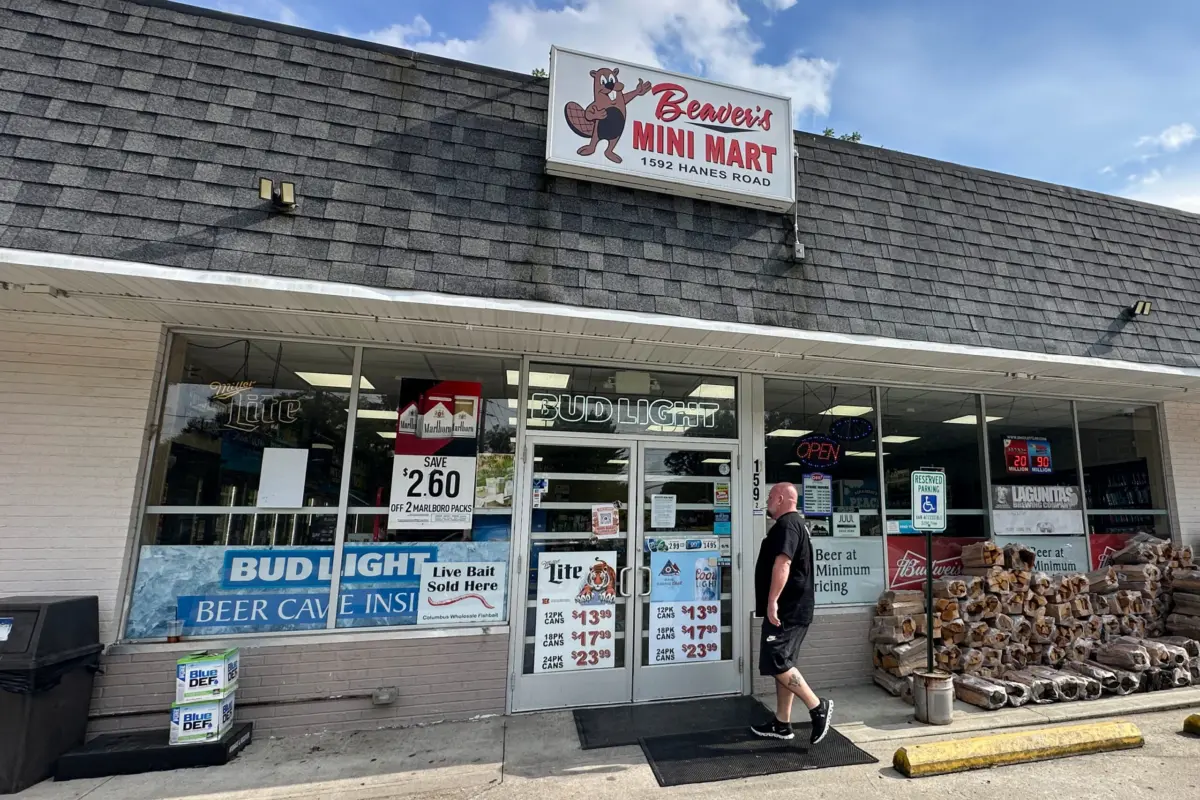
The David-and-Goliath contrast between the two establishments is striking. Beaver’s Mini Mart is a modest, single-location storefront operating out of a long, low-slung building with a shingle roof at a suburban Ohio intersection. Its mascot is a full-bodied, unclothed, smiling beaver waving against a plain white background.
Conversely, the Goliath of the equation is a behemoth of highway retail. Buc-ee’s opened its first Ohio location in February—a staggering 74,000-square-foot oasis off Interstate 70 near Dayton, featuring more than 100 gas pumps, 24 electric vehicle chargers, and 700 parking spaces. A second massive Ohio storefront has already been approved for a 2028 opening.
In late July, Buc-ee’s filed a federal lawsuit claiming that Beaver’s Mini Mart’s logo infringes upon its trademarked intellectual property, arguing that consumers could easily confuse the local mini mart’s beaver with the famous Texas icon. Buc-ee’s logo features a close-up of a beaver’s face with prominent buck teeth and a red ball cap set against a vivid yellow backdrop.
Rather than rolling over, the local community and patrons across the country rallied behind the tiny enterprise. The hashtag #boycottbucees quickly trended across X (formerly Twitter), while outraged consumers staged impromptu protests outside the mini mart, proudly displaying license plates from multiple states.
Chronology of a Conflict: From Storefront to Federal Court
The roots of the current standoff trace back several years, punctuated by corporate expansion and administrative filings:
- 2017: The small business in Beavercreek is incorporated under the name Hanes Road Carryout.
- Late 2024: Buc-ee’s breaks ground on its massive Dayton-area travel center, signaling its aggressive entry into the Ohio market.
- January 2025: The small business officially changes its name to Beaver’s Mini Mart, updating its branding to feature a friendly beaver mascot.
- October 23, 2025: Owner Vic Boparai files a trade name registration with the state of Ohio, which Buc-ee’s maintains was the moment it first became aware of the potential trademark conflict.
- Early 2026: Buc-ee’s opens its first Ohio location, immediately sparking local curiosity alongside pre-emptive legal maneuvers against other regional entities.
- July 2026: After failed attempts to reach Boparai directly, Buc-ee’s files a formal federal trademark infringement lawsuit in Ohio, demanding a jury trial.
- August 10, 2026: The Beavercreek City Council unanimously passes a landmark resolution cementing the beaver as an official part of the city’s history.
Supporting Data and Woodland Casualties
Buc-ee’s aggressive legal posture in Ohio is part of a broader, well-documented pattern of protecting its intellectual property against any business featuring a woodland creature.
Earlier in 2026, as it prepared to launch its inaugural Ohio store, Buc-ee’s targeted a northern Ohio holding company operating Mickey Mart gas stations, claiming its "Mickey the Moose" logo infringed upon the Buc-ee brand. The holding company famously retorted in court filings: "A moose is not a beaver."
Across the United States, similar corporate crackdowns have targeted diverse animated wildlife, including a lip-licking alligator, a smiling moose, and various hat-wearing bears.
However, the Ohio campaign proved to be a bridge too far for the public. The backlash materialized into tangible economic and community support for Beaver’s Mini Mart:
- Crowdfunding: A GoFundMe campaign was launched to shield the mini mart from crippling legal fees—a fate that has forced other small businesses sued by Buc-ee’s into closure. The fund quickly surged past $69,000.
- Culinary Solidarity: The Original Goodie Shop bakery in Upper Arlington received permission to bake signature cookies featuring the mini mart’s logo, donating $1 from every sale to the legal defense fund. Another local establishment, Cake, Hope & Love in Beavercreek, began offering buck-toothed beaver cookies bearing messages to "shop local."
- Local Branding: Area businesses, ranging from a local Lego store to a neighborhood root beer shop, temporarily modified their logos to incorporate beavers as a silent form of protest.
The corporate conflict even caught the attention of late-night television. British comedian John Oliver dedicated a segment of Last Week Tonight to Buc-ee’s litigious history regarding woodland mascots, launching a satirical competing website that sold merchandise featuring a knockoff "Buc-off" logo and a squirrel mascot named Mr. Nutterbutter.
Official Responses and Political Fallout
As public sentiment reached a fever pitch, political figures and civic leaders weighed in on the absurdity of a Texas-sized corporation fighting a local shop over a rodent namesake in a city literally named after the animal.
Ohio Governor Mike DeWine, a Republican who had enthusiastically attended and praised the grand opening of the Dayton-area Buc-ee’s store just months prior, did not mince words when asked about the legal battle.
"It is Beavercreek, for heaven’s sake," DeWine told reporters, flatly describing the federal lawsuit as "absurd."
The local municipal government took even more permanent action. On August 10, the Beavercreek City Council passed a formal resolution declaring the beaver an official and permanent fixture of the city’s bicentennial-plus history. Adding theatrical flair to the civic proceedings, Bucky the Beaver—the beloved mascot of Beavercreek Local Schools—made a special guest appearance at the council meeting prior to the unanimous vote.
For its part, Buc-ee’s has staunchly defended its legal actions as a necessary and responsible defense of its brand equity. In an official statement published on its website, the company maintained that it acted only after exhausting other options:
"We first learned of Beaver’s Mini Mart when its owner, Vic Boparai, filed a trade name registration on Oct. 23. Recognizing a conflict, the company repeatedly attempted to reach Boparai without success, so it was forced to sue."
The company emphasized that trademark law requires proactive enforcement to prevent brand dilution, asserting a fundamental right to protect its valuable intellectual property from confusingly similar market competitors.
Vic Boparai, the owner at the center of the storm, has remained relatively tight-lipped regarding the specific legal merits of the case, but issued a heartfelt expression of gratitude to his patrons:
"We want to say thank you to the community and the entire country for supporting us and our business," Boparai said in a statement. "We are overwhelmed by your support for our business and other small businesses everywhere."
Broader Implications for Corporate Branding and Local Identity
The standoff between Buc-ee’s and Beaver’s Mini Mart transcends a simple courtroom dispute over logos and fonts; it serves as a modern cautionary tale about the pitfalls of heavy-handed corporate expansion.
When national conglomerates enter distinct regional markets, they often collide with deeply entrenched local pride. By targeting a business that bears the literal name of its host municipality—a city where dozens of local establishments proudly incorporate the word "beaver"—Buc-ee’s miscalculated the cultural terrain.
For consumers like 32-year-old Austin Collins, a project manager from nearby Fairborn who visited Beaver’s Mini Mart specifically to protest the lawsuit, the decision felt deeply personal. "I love Buc-ee’s, but I don’t plan on going back until they start making better business decisions," Collins said, calling the litigation against a beaver-themed shop in Beavercreek "a little spiteful."
As the federal lawsuit works its way through the judicial system, the damage to corporate goodwill in the Buckeye State may already be done. Whether Buc-ee’s ultimately secures a legal victory or settles out of court, the episode demonstrates that while corporations can easily pave parking spaces and build massive fueling depots, earning the authentic affection of a local community cannot be bought—and can be lost in a single legal filing.
