

BERLIN — For the past several years, the evolution of artificial intelligence in home security has marched to a predictable, albeit expensive, drumbeat. Major manufacturers have rolled out increasingly sophisticated features—capabilities that once belonged strictly in the realm of science fiction. Today’s smart cameras can instantly distinguish between a stray neighborhood cat and a courier leaving a parcel, or, in more controversial implementations, recognize and catalog human faces by name.
Yet, these advanced conveniences have shared a common, frustrating trait: an ongoing toll-gate of monthly subscription fees.
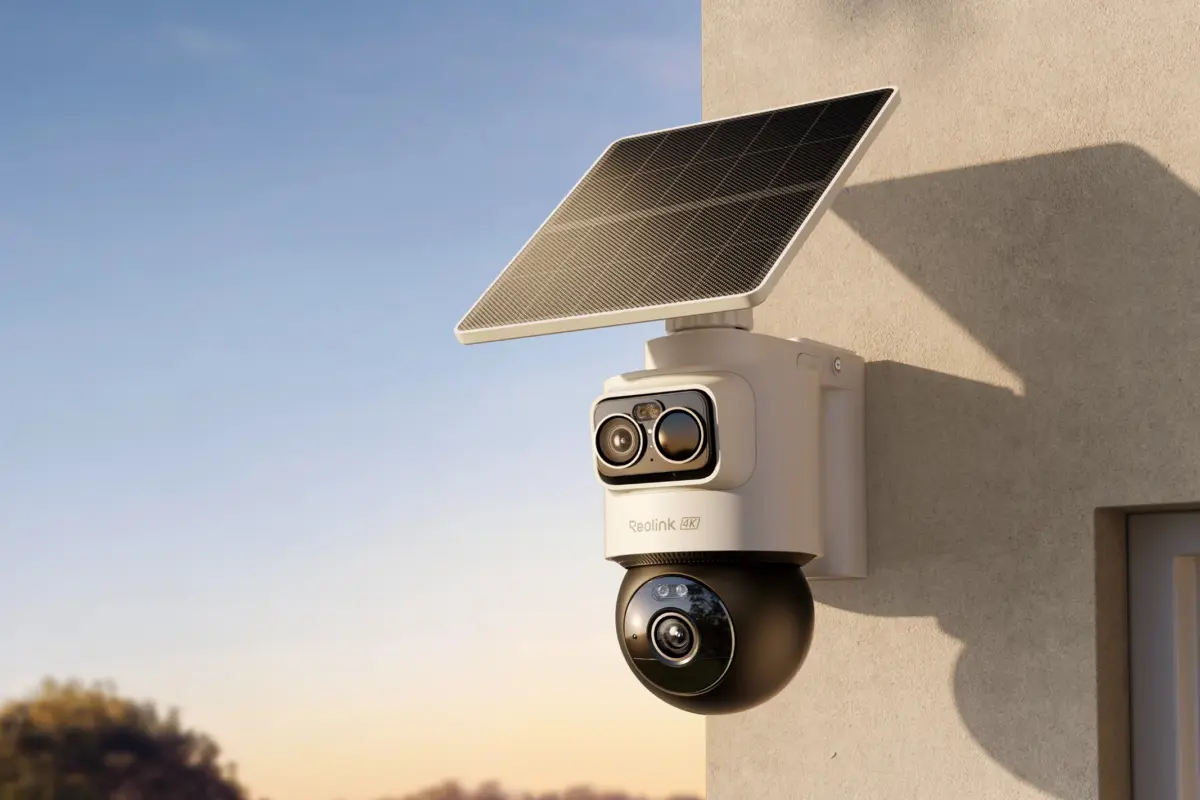
That dynamic may be on the verge of a seismic shift. At the IFA 2026 consumer electronics showcase in Berlin, security camera manufacturer Reolink made an announcement that caught industry analysts and privacy advocates flat-footed. Alongside its usual rollout of high-resolution, dual-lens tracking hardware, the company debuted ReoNeura, a proprietary on-device AI engine. Unlike anything currently dominating the market, ReoNeura introduces "Custom AI Detection"—and it accomplishes this entirely locally, without requiring cloud processing or, crucially, an ongoing monthly fee.
If Reolink delivers on its promises, it could challenge the foundational business model of the modern smart home industry, proving that advanced machine learning no longer needs to live behind a paywall.
Main Facts: What is ReoNeura?
At its core, ReoNeura represents a technological pivot away from cloud-dependent computing toward edge computing—processing data directly on the physical hardware installed around a home.
Traditional home security artificial intelligence is pre-trained by developers to recognize a generalized set of objects: human silhouettes, vehicles, domestic animals, and packages. While useful, these pre-set algorithms are rigid. If a homeowner wants a security camera to monitor a hyper-specific, non-standard condition—such as whether a garden gate is latched, a garage door is left ajar, or a specific piece of valuable artwork has been displaced—standard AI falls short.
Reolink’s ReoNeura engine changes this by empowering users to train the AI themselves directly through the camera interface.
- On-Device Processing: The machine learning algorithms execute locally on the camera’s internal chip rather than being offloaded to remote server farms.
- Custom Object Training: Users can visually prompt or train the camera to recognize unique household scenarios, shifting the focus from generalized threat detection to personalized home management.
- Zero Subscription Cost: Because the computation happens locally, Reolink avoids the massive cloud-hosting overhead that competitors pass on to consumers via monthly fees.
Chronology of Events: The Rise of Edge AI in Security
The journey toward local, customizable home security AI has been gradual, punctuated by privacy concerns, rising subscription costs, and hardware breakthroughs.

- 2021–2023 (The Cloud Era): Major video doorbell and camera manufacturers aggressively scale up AI features. Capabilities like package detection and facial recognition become standard selling points, but companies quickly transition these features behind paywalls to offset cloud server costs (e.g., Ring Protect, Google Nest Aware).
- 2024–2025 (The Privacy Pushback): Consumers and lawmakers increasingly scrutinize cloud-based video storage due to data privacy violations, third-party data sharing, and security breaches. Concurrently, competitors like Arlo introduce rudimentary "Custom Detection" features, though they remain tethered to premium subscription tiers costing $8 or more per month.
- Early 2026 (The Edge Computing Leap): Advances in silicon architecture make low-power, high-efficiency neural processing units (NPUs) small enough and cheap enough to integrate directly into consumer-grade security cameras.
- September 2026 (IFA Berlin): Reolink steps onto the global stage at IFA 2026, officially unveiling the Omvi-Series expansion alongside the ReoNeura AI engine, effectively firing the first major shot against the industry’s subscription-heavy economic model.
Supporting Data: The Economics of Smart Home Surveillance
To understand why Reolink’s announcement is turning heads, one must examine the current financial landscape of the smart home ecosystem.
For the average household, purchasing a security camera is merely the entry fee. According to recent smart home market analyses, over 70% of consumers who buy cloud-dependent security cameras ultimately subscribe to a monthly maintenance plan within their first year of ownership. These subscriptions—ranging from $3 to $15 per camera, per month—add up to hundreds of dollars over the lifespan of a device.
Furthermore, custom AI detection has historically been an ultra-premium tier offering. Prior to Reolink’s IFA announcement, Arlo was virtually the sole provider offering user-trained custom object detection through its Arlo Secure platform. However, that feature requires an active subscription tier starting at roughly $8 monthly.
By contrast, Reolink’s hardware-based approach bypasses cloud server maintenance costs entirely. If a user does not need off-site cloud backup and relies purely on local storage (such as a microSD card or local Network Video Recorder), the total cost of ownership for advanced, custom-trained AI drops to $0 after the initial hardware purchase.
Official Responses and Industry Context
While official technical whitepapers detailing the exact neural network architecture of ReoNeura are still rolling out, industry stakeholders at IFA 2026 have been vocal about the implications of the technology.
Smart home hardware developers have long debated the viability of edge AI. Skeptics point out that processing complex machine learning models on a small camera chip can introduce limitations: local chips have constrained processing power, making them potentially less adaptable or slower to update than massive server-side large language models or computer vision networks.
However, Reolink representatives at the Berlin exhibition emphasized that the company’s new hardware architecture is specifically engineered to handle localized training loops efficiently. By keeping the processing on-device, Reolink also sidesteps the growing consumer anxiety surrounding cloud data privacy.
"When your video feeds and training parameters never leave your property, the attack surface for data breaches shrinks dramatically," noted a security analyst attending the convention. "It addresses the two biggest consumer pain points simultaneously: recurring bills and privacy erosion."

Implications for the Smart Home Market
The introduction of ReoNeura signals far-reaching consequences for both consumers and competing tech giants.
1. The Pressure on Competitors’ Business Models
If Reolink successfully proves that advanced, custom-trained AI can be delivered reliably without a subscription, consumers will begin questioning why other brands continue charging monthly fees for local hardware features. Companies like Ring, Google Nest, and Eufy may face mounting market pressure to either decentralize their AI processing or justify their subscription costs with vastly superior cloud services.
2. A Shift in Use Cases for Home Security
Moving beyond basic intrusion detection, user-trained local AI unlocks practical, everyday utility that transforms security cameras into general home automation monitors. Potential applications highlighted by early testers include:
- Monitoring whether a stove burner or appliance indicator light is left illuminated.
- Checking if pets are occupying restricted furniture or entering specific rooms.
- Verifying delivery statuses not just by package presence, but by specific carrier delivery zones.
- Tracking physical household assets, such as verifying whether bicycles or tools have been removed from a backyard shed.
3. Challenges in Accuracy and Upgrades
Despite the immense promise, challenges remain. Industry experts note that local AI engines are inherently more difficult to update over-the-air compared to cloud algorithms. If a user’s custom-trained model suffers from high false-positive rates, retraining the on-device system could require manual user intervention rather than an automatic, invisible server-side patch.
Looking Ahead
Reolink has indicated that ReoNeura-powered devices will begin rolling out to global markets in the coming months. While exact pricing tiers for the initial hardware lineup are still finalizing, the core philosophy—free, customizable edge AI—has already set a new benchmark for the industry.
As consumers grow increasingly fatigued by subscription fatigue and data privacy concerns, Reolink’s gamble on local, user-directed intelligence may well dictate the next decade of smart home design. For now, homeowners waiting for the technology to mature can start pondering a compelling question: If your security camera could recognize anything you taught it to look for, for free, what would you ask it to watch?
