

By Anthony Capkun
Published: October 1, 2026
Introduction and Main Facts
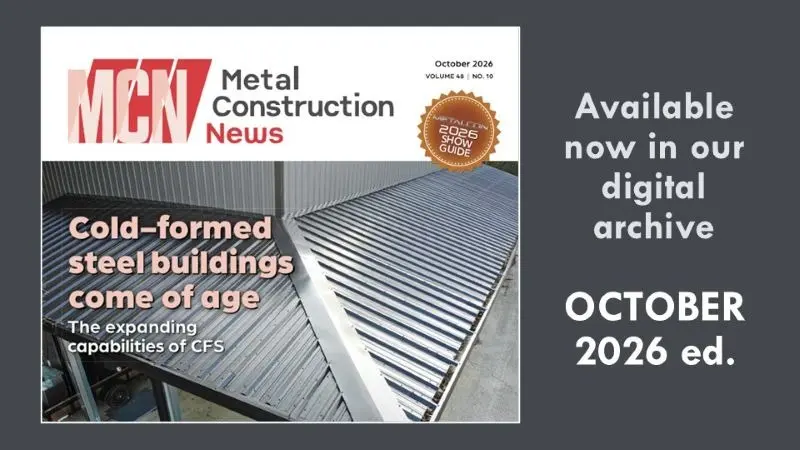
The architectural metal and construction sector stands at a critical technological and operational crossroads. Driven by the demands for greater structural resilience, stricter energy efficiency mandates, and increasingly complex multi-site logistical challenges, industry professionals require cutting-edge insights to stay competitive. Addressing these dynamic industry shifts, Metal Construction News (MCN) officially released its highly anticipated October 2026 edition on October 1, 2026.
Available both in print and through the publication’s comprehensive digital archives, this month’s issue delivers deep-dive journalism, technical analyses, and indispensable industry guides. Headlining the October publication is an exhaustive look at the maturation of cold-formed steel (CFS) engineering, alongside the official, all-inclusive METALCON 2026 Show Guide. Furthermore, the edition tackles urgent, real-world operational headaches facing modern contractors, facility managers, and architects—ranging from the hidden thermal failures of ice damming on massive distribution centers to labor tracking complexities in multisite construction, the evolution of job-site safety equipment, and the critical regulatory standards required for hurricane-resistant louvers.
Chronology of Industry Developments Leading to the October 2026 Release
To understand the weight and relevance of the topics covered in the October 2026 issue of Metal Construction News, one must examine the rapid series of events and technological milestones that have transformed the metal construction landscape over recent years:
- Late 2023 to 2024: The widespread integration of Building Information Modeling (BIM) and advanced computer-aided engineering software begins to unlock new geometric possibilities for cold-formed steel. Prefabrication trends accelerate due to persistent labor shortages across North America.
- Throughout 2025: Extreme weather events along the Atlantic and Gulf coasts intensify scrutiny on building envelopes. Architectural specifications for wind-driven rain and high-velocity hurricane zones (HVHZ) force a rapid pivot toward certified components, particularly AMCA 550-certified louvers.
- Early 2026: As commercial and industrial real estate expands into sprawling logistics hubs, facility operators notice an uptick in chronic winter moisture issues. Industry researchers begin reframing ice damming not merely as a drainage problem, but as a severe thermal envelope failure.
- Mid-2026: Contractors managing multiple job sites simultaneously report growing profit leakage due to outdated time-tracking methods. Concurrently, safety equipment manufacturers launch next-generation PPE that outpaces baseline OSHA regulations, sparking intense debate over job-site standard practices.
- October 1, 2026: Metal Construction News publishes its definitive October 2026 edition, consolidating these pressing industry narratives just ahead of the premier trade event of the year, METALCON 2026.
Supporting Data and Detailed Feature Analysis
The October 2026 edition of MCN features six core pillars of investigative reporting and technical guidance. Below is a detailed breakdown of the data and insights driving each major feature.
1. Cold-Formed Steel Buildings Come of Age
For decades, cold-formed steel (CFS) was primarily viewed as a framing material for interior partitions, residential low-rise structures, or secondary components in heavier structural steel projects. However, the October cover feature documents a profound paradigm shift.
- Engineering Breakthroughs: Modern software packages now allow structural engineers to optimize gauge thicknesses, web depths, and perforation patterns with absolute precision. This eliminates unnecessary weight while maintaining high load-bearing capacities.
- Expanding Geographies: Enhanced corrosion-resistant coatings, superior thermal break designs, and panelized prefabrication methods are allowing CFS systems to penetrate multi-story commercial, educational, and healthcare markets once dominated by hot-rolled steel and concrete.
- Sustainability Metrics: With embodied carbon becoming a primary metric in architectural design, CFS offers high recyclability rates and minimal job-site waste, positioning it as a frontrunner for green-building certifications.
2. The METALCON 2026 Show Guide
As the premier annual event for the metal construction industry, METALCON 2026 takes center stage in this month’s issue. The MCN Show Guide provides attendees with an indispensable roadmap to navigate the massive exhibition floor and educational program.
- Show Floorplan & Exhibitors: Detailed mappings of cutting-edge machinery, roll-forming equipment, coating technologies, and fastener suppliers.
- Workshops & Masterclasses: Hands-on training modules designed for metal fabricators, erectors, and project managers looking to sharpen their technical execution.
- Education Sessions: Industry-led panels covering code compliance, lean manufacturing, and digital transformation in construction workflows.
3. Ice Damming: A Thermal Failure, Not Just a Leak
Maintenance teams managing large-scale metal distribution centers often react to winter roof leaks by clearing snow accumulation or applying chemical de-icers. MCN’s technical feature argues that this approach treats the symptom while ignoring the disease.
- The Root Cause: Large metal distribution centers—often spanning hundreds of thousands of square feet—generate massive internal thermal loads from operational machinery, lighting, and HVAC systems. If the roof’s thermal envelope is compromised or inadequately insulated, heat escapes upward, melting the lower layers of snow.
- The Freezing Cycle: As the melted water runs down toward the colder eaves, it refreezes, forming ice dams that back water up under standing seams and roof penetrations.
- The Financial Toll: Beyond interior damage to stored goods, chronic ice damming leads to accelerated corrosion of metal panels, structural fatigue, and catastrophic insulation degradation. MCN outlines advanced thermal-imaging diagnostic techniques to catch these envelope failures before leaks manifest.
4. Multisite Work and the Labor Tracking Crisis
In an era where general contractors and sub-trades frequently juggle multiple job sites within the same metropolitan area, labor tracking has become a financial minefield.
- Cost Distortion: Traditional paper timesheets or basic punch-in apps fail to capture nuanced travel times, inter-site material transport, and unexpected delays. When hours are misallocated, project managers lose visibility into true job costs.
- Impact on Bidding: Inaccurate historical labor data leads to flawed estimates on future project bids—either underbidding and losing margin or overbidding and losing the contract altogether. The October issue explores automated, GPS-enabled geofencing and mobile workforce management tools designed to restore financial accountability.
5. Choosing the Right Safety Gear in 2026
Safety compliance has traditionally been measured by a simple benchmark: Does this equipment meet OSHA standards? According to MCN’s safety analysis, relying strictly on minimum compliance is no longer enough.
- The Compliance Gap: While OSHA standards set a legal baseline, technological advancements in fall protection, ergonomic load distribution, and breathable, high-visibility textiles have far outpaced regulatory updates.
- Employer Liability & Morale: Leading-edge safety gear reduces worker fatigue, minimizes repetitive strain injuries, and provides superior fail-safe mechanisms during high-altitude metal erection. The October issue guides safety directors on selecting premium gear that prioritizes human ergonomics alongside regulatory mandates.
6. Certified Louvers for Hurricane-Prone Regions
Architects and engineers designing commercial structures along the Atlantic and Gulf coasts face increasingly stringent building codes driven by stronger, more frequent tropical storms.
- AMCA 550 Standard: The article provides an exhaustive overview of the Air Movement and Control Association (AMCA) 550 test standard, which evaluates high-velocity wind-driven rain resistance for louvers.
- Water Penetration Defense: Standard louvers can allow massive volumes of water to bypass blades under hurricane-force winds, overwhelming interior drainage systems and damaging sensitive mechanical equipment. AMCA 550-certified louvers utilize specialized blade geometries designed to shear water from the airstream while maintaining required ventilation airflow, safeguarding coastal facilities against catastrophic interior water damage.
Official Responses and Industry Commentary
The release of the October 2026 edition has drawn widespread praise from industry leaders, engineering associations, and manufacturers who contributed to its pages.
"The maturation of cold-formed steel is not just a win for material scientists; it is a fundamental reconfiguration of how speed-to-market and structural integrity intersect in modern architecture," noted a prominent structural engineering consultant featured in the issue. "By pushing the boundaries of what CFS can achieve, we are offering developers a lighter, faster, and greener alternative without sacrificing performance."
Facility management groups have similarly lauded the publication’s deep dive into thermal envelope failures. A spokesperson for a national logistics real estate portfolio remarked:
"For years, treating ice dams on a million-square-foot warehouse was treated like clearing snow off a driveway. Metal Construction News has correctly reframed this as a building science problem. Until we address interior thermal bridging and insulation continuity at the eaves, we will continue to fight a losing battle against winter weather."
Furthermore, safety advocates have strongly supported MCN’s call to move beyond baseline OSHA compliance.
"OSHA compliance is the floor, not the ceiling," stated an industrial safety coordinator. "When you have ironworkers and metal erectors operating at dizzying heights in variable weather, investing in next-generation, ergonomic safety gear isn’t just an operational expense—it’s an ethical imperative."
Implications for the Metal Construction Industry
The publication of this landmark issue arrives at a pivotal moment, carrying profound implications for architects, contractors, fabricators, and building owners:
- Elevated Design Standards: With detailed guidance on AMCA 550 louvers and advanced CFS engineering, architects can specify envelope systems with greater confidence, ensuring long-term resilience against extreme weather and regulatory shifts.
- Operational Digitization: The exposure of labor tracking flaws in multisite operations will likely accelerate the adoption of automated project management software across mid-sized and enterprise-level contracting firms.
- Proactive Maintenance Culture: By identifying ice damming as a thermal failure rather than a minor leak, facility managers are encouraged to invest in thermal imaging and comprehensive envelope audits, ultimately extending the lifecycle of multimillion-dollar distribution assets.
- Prioritizing Human Capital: The discourse surrounding modern safety gear reinforces a broader industry trend: retaining skilled labor in a tight market requires providing workers with superior comfort, ergonomics, and advanced protection.
As the industry converges for METALCON 2026, the October issue of Metal Construction News serves as both an educational manual and a strategic compass, pointing the way toward a more innovative, resilient, and efficient future.
Industry professionals can access the full October 2026 edition, along with complete back issues, by visiting the official Metal Construction News Digital Edition Archive.
