

Main Facts: The Return of Modified Bitumen and Asphalt Kettles
A profound structural shift is underway in the commercial roofing industry. Driven by persistent, systemic bottlenecks in the global supply chain, roofing contractors across North America are increasingly pivoting away from modern single-ply synthetic membranes and returning to traditional, time-tested low-slope systems: modified bitumen (torch-down) and built-up roofing (BUR) utilizing hot asphalt.
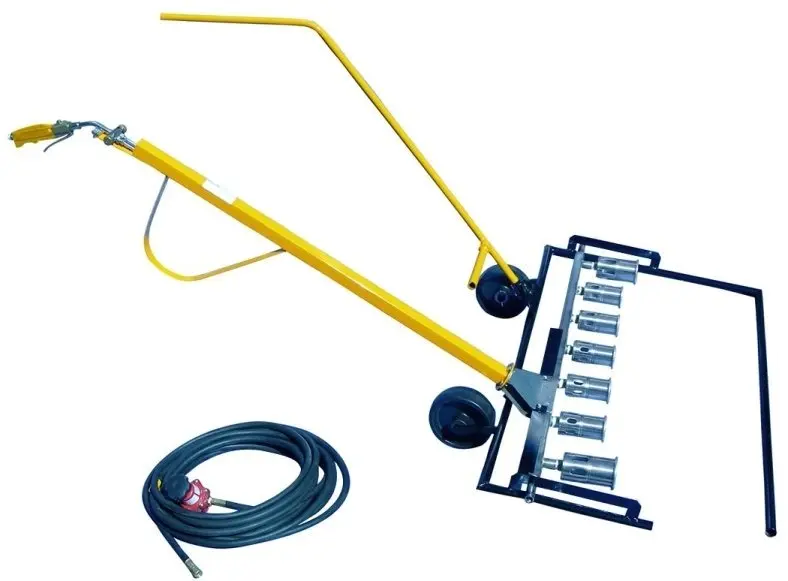
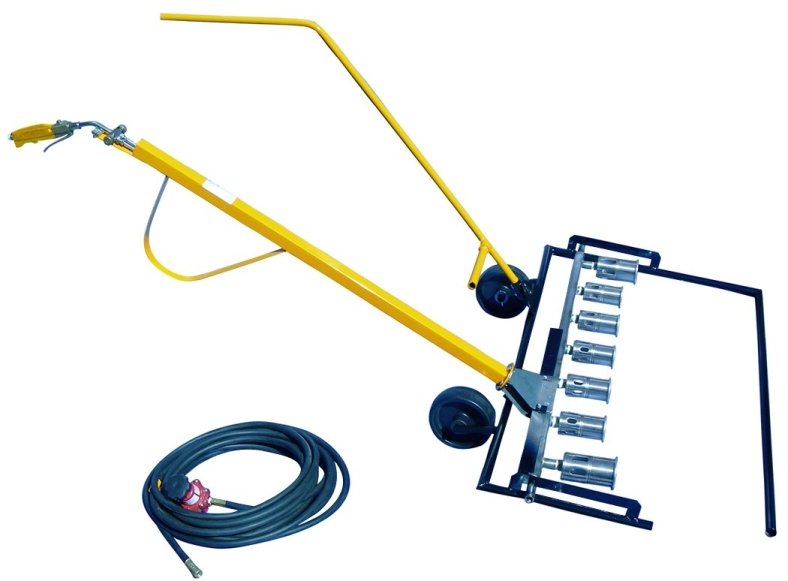
This transition is marked by a dramatic surge in the sales of specialized application equipment. Industry distributors report a sharp rise in purchases of heavy-duty liquid propane (LP) torches, multi-burner flame-application systems such as the Roofmaster "Dragin Wagon," and associated detailing tools. Concurrently, commercial roofing yards are witnessing a logistical resurrection. Asphalt kettles that had sat idle for years, collecting dust as the market favored thermoplastic polyolefin (TPO) and ethylene propylene diene monomer (EPDM) single-ply systems, are being refurbished, serviced, and redeployed to active jobsites.
However, this technological regression presents a critical challenge: a significant portion of the modern roofing workforce has been trained exclusively on single-ply, cold-applied, or induction-welded systems. The return of open flames, highly pressurized liquefied petroleum gas (LPG) tanks, and molten asphalt heated to temperatures exceeding 400°F (204°C) demands an immediate, industry-wide recalibration of jobsite safety protocols, personal protective equipment (PPE) standards, and employee training.
Chronology: From Single-Ply Dominance to Supply Chain-Induced Regression
To understand the sudden revival of modified bitumen and hot asphalt systems, one must trace the compounding supply chain disruptions that began in the early 2020s.
+-----------------------------------------------------------------------------+
|                                  TIMELINE                                   |
+-----------------------------------------------------------------------------+
|                                                                             |
|  2010s: Single-ply membranes (TPO, EPDM) dominate 70%+ of commercial market |
|                                                                             |
|  2020-2021: Pandemic lockdowns & Gulf Coast freezes disrupt chemical plants |
|             - Severe shortages of MDI (key component in polyiso insulation) |
|             - Extreme shortages of single-ply adhesives and fasteners       |
|                                                                             |
|  2021-2022: Lead times for TPO and EPDM spike to 9 to 12+ months            |
|             - Contractors face severe project backlogs and penalty clauses  |
|                                                                             |
|  Late 2022: Contractors pivot back to modified bitumen & BUR                |
|             - Raw asphalt and modified rolls remain highly available        |
|             - Idle kettles are repaired; torch equipment sales surge        |
|                                                                             |
|  2023-Present: The Safety Gap emerges                                       |
|             - Unprecedented numbers of new workers face open-flame hazards  |
|             - Industry demands a rapid refresh of safety protocols         |
|                                                                             |
+-----------------------------------------------------------------------------+
The Era of Single-Ply Dominance (2010s)
Throughout the 2010s, single-ply membranes dominated the commercial roofing sector, capturing over 70% of the low-slope market. Contractors favored TPO and EPDM due to their clean application, rapid installation times, lower labor requirements, and perceived safety advantages over open-flame and hot-mopped applications.
The Chemical and Raw Material Crisis (2020–2021)
The onset of the COVID-19 pandemic, compounded by catastrophic weather events—most notably the February 2021 winter storm in Texas—severely disrupted petrochemical manufacturing plants along the Gulf Coast. These facilities produced critical precursors for roofing materials, including methylene diphenyl diisocyanate (MDI), a foundational component in polyisocyanurate (polyiso) insulation boards, as well as the specialized resins required for single-ply adhesives and membrane formulations.
The Lead-Time Crisis (2021–2022)
By late 2021, lead times for commercial single-ply roofing materials had ballooned from weeks to nine, twelve, or even fifteen months. Contractors faced severe project backlogs, escalating material costs, and contractual penalties for construction delays.
The Pivot to Modified Bitumen and BUR (Late 2022–Present)
Faced with indefinite delays for single-ply materials, architects and roofing contractors began rewriting project specifications to utilize modified bitumen and built-up roofing systems. Because these systems rely primarily on asphalt, fiberglass mats, and polyester reinforcements—materials with more localized, resilient supply chains—manufacturers were able to maintain steady production. To execute these projects, contractors began purchasing new torching equipment, buying specialized multi-burner units like the Dragin Wagon, and pulling long-dormant asphalt kettles out of storage yards to be serviced and put back into service.
Supporting Data: The Physics of Torch-Down Roofing and Associated Hazards
The physical properties and mechanics of applying modified bitumen roofing require precise thermal control. At the heart of this process is the melt-o-matic or torch-applied modified bitumen sheet, typically an SBS (Styrene-Butadiene-Styrene) or APP (Atactic Polypropylene) modified membrane.
The Thermodynamics of a Proper Weld
Achieving a waterproof monolithic bond requires heating the underside of the modified bitumen sheet to its optimal flow temperature—typically between 350°F and 400°F (176°C to 204°C) for SBS, and upwards of 400°F to 450°F (204°C to 232°C) for APP.
- Cold Welds: If the material is under-heated, a "cold weld" occurs. The bitumen does not flow sufficiently to fuse with the substrate or the adjacent lap sheet, leading to delamination, water migration, and premature roof failure.
- Overheating: Conversely, overheating the material degrades the polymer modifiers within the asphalt, compromising the membrane’s UV resistance, elasticity, and long-term durability. It also poses an immediate, catastrophic fire risk to the underlying roof deck, particularly wood-fiber or wood-deck assemblies.
+-----------------------------------------------------------------------------+
|                       THERMAL WELDING WINDOW FOR MOD-BIT                     |
+-----------------------------------------------------------------------------+
|                                                                             |
|   < 350°F (176°C)   :  Cold Weld (Delamination, water migration risk)       |
|   350°F - 450°F     :  OPTIMAL FLOW ZONE (Monolithic, durable bond)         |
|   > 450°F (232°C)   :  Overheating (Polymer degradation, high fire risk)    |
|                                                                             |
+-----------------------------------------------------------------------------+
Equipment Specifications: The Dragin Wagon and Hand Torches
To achieve uniform heat distribution across a standard 39-inch (1-meter) roll of modified bitumen, contractors utilize multi-burner equipment like the 7-burner Dragin Wagon. This apparatus allows a single operator to apply consistent flame coverage across the width of the roll as it is unrolled.
However, manufacturer guidelines emphasize that the Dragin Wagon must never be utilized as a roll dolly or material transport device. It is engineered strictly as a thermodynamic application tool; using it to transport heavy rolls of membrane can warp the burner frame, misalign the gas jets, and create highly dangerous, uneven flame patterns or fuel leaks.
To assist in achieving optimal adhesion and "bleed-out" (the 1/4-inch to 3/8-inch bead of melted asphalt that should squeeze out along the edge of a properly welded seam), contractors must use heavy, specialized steel rollers. Furthermore, for critical end laps where granules can prevent a secure bond, the use of a heated granule embedder tool is highly recommended to press the protective mineral granules down into the hot asphalt matrix before overlapping the next sheet.
Official Responses and Expert Perspectives: Re-establishing Safety Standards
As open-flame applications regain market share, industry safety organizations and product manufacturers are sounding the alarm regarding worker safety and fire prevention.
Expert Insights: Gary Zimmerman on Workforce Readiness
Gary Zimmerman, a prominent technical expert at Roofmaster, highlights the industry’s critical knowledge gap:
"The supply chain has caused a shift back to torch down roofing… Some of your employees may be new to these applications as we are again putting open flame and elevated temperature materials on the roof deck and the kettle area. Always look for labor-saving equipment and take good care of the work force you have. Make sure the entire team knows the appropriate safety measures."
Zimmerman stresses that contractors must implement a rigorous two-pronged safety approach focusing on Personal Safety and Job Safety.
Personal Protective Equipment (PPE) Requirements
According to OSHA standards and industry best practices, workers operating torches or working around asphalt kettles must be outfitted with specialized protective gear designed to resist extreme heat and open flames:
- Kevlar® Sleeves with Leather Forearms: Standard cotton or synthetic clothing offers virtually no protection against accidental contact with a 2,000°F torch flame or molten asphalt splashes. Heavy-duty Kevlar sleeves combined with leather forearm guards are essential to prevent debilitating third-degree burns.
- Face and Eye Protection: Full-face shields paired with ANSI Z87.1-approved safety glasses protect workers from flying sparks, hot bitumen splatter, and intense thermal radiation.
- Respiratory Protection: When heating asphalt in kettles or applying torch-down membranes in areas with limited airflow, dust masks or organic vapor respirators must be provided to mitigate the inhalation of toxic fumes and particulates.
+-----------------------------------------------------------------------------+
|                       MANDATORY PPE FOR OPEN-FLAME WORK                     |
+-----------------------------------------------------------------------------+
|                                                                             |
|   [ ] Flame-Resistant Clothing (No synthetic fibers like polyester/nylon)   |
|   [ ] Kevlar® Sleeves with Leather Forearm Guards                           |
|   [ ] Heavy-Duty, Heat-Resistant Leather Gloves (Gauntlet style)            |
|   [ ] ANSI Z87.1 Safety Glasses AND Full-Face Shield                       |
|   [ ] OSHA-Compliant Fall Protection (Harnesses & fire-resistant lanyards)  |
|   [ ] NIOSH-Approved Respirator (as required by air quality conditions)     |
|                                                                             |
+-----------------------------------------------------------------------------+
Jobsite Safety Protocols and Fire Prevention
The National Roofing Contractors Association (NRCA) and the Midwest Roofing Contractors Association (MRCA) heavily promote the Certified Roofing Torch Applicator (CERTA) program. The program mandates several strict operational rules:
- Written Safety Plans: Every torch-down project must have a comprehensive, site-specific written safety plan. This document must be thoroughly reviewed, understood, and signed by every employee on the jobsite before work commences.
- Fire Extinguisher Proximity: Fully charged, inspected, and properly rated fire extinguishers (minimum 20-pound ABC dry chemical units) must be positioned within a designated, easily accessible travel distance on the roof deck—typically within 30 feet of any active torching.
- The Mandatory Fire Watch: A designated worker, equipped with a working fire extinguisher and an infrared (IR) thermometer, must remain on the roof for a minimum of two to four hours after the last torch has been extinguished. This watch is critical for detecting slow-burning, smoldering embers within walls, expansion joints, or wooden decks that can ignite into full-scale structure fires hours after the crew has departed.
- Thermal Imaging Verification: Crew members must utilize infrared thermometers and thermal imaging cameras to inspect transition walls, parapets, and penetrations. These tools identify hidden thermal anomalies and hot spots that are invisible to the naked eye.
Implications: The Long-Term Outlook for the Roofing Industry
The structural pivot back to modified bitumen and hot asphalt has broad implications that extend far beyond immediate project schedules.
Labor Dynamics and Training Bottlenecks
The commercial roofing industry has been grappling with a chronic labor shortage for over a decade. The sudden demand for skilled torch-applicators and kettle operators has exacerbated this crisis.
Because torching requires a high level of dexterity, physical endurance, and constant situational awareness, the learning curve is steep. Contractors must invest heavily in training and certification programs like CERTA. Failure to do so will inevitably lead to an increase in jobsite accidents, catastrophic property losses, and soaring worker’s compensation claims.
Insurance and Liability Pressures
The insurance sector is reacting swiftly to the resurgence of open-flame roofing. Insurers view torch-applied roofing as a high-risk activity. Consequently, contractors re-entering the torch-down market are facing:
- Significantly higher general liability insurance premiums.
- Strict policy exclusions or mandates requiring certified proof of safety training (such as CERTA certification) for all on-site torch operators.
- Mandated, third-party audited safety protocols for hot-work permits on municipal, educational, and high-occupancy commercial structures.
The Hybrid Future of Commercial Roofing
While supply chains for single-ply membranes are gradually stabilizing, the commercial roofing market is unlikely to completely abandon its newly rediscovered appreciation for multi-ply asphaltic systems.
Architects and building owners have been reminded of the robust, redundant waterproofing capabilities of multi-ply modified bitumen systems, which offer superior puncture resistance and longevity compared to thin single-ply sheets.
As a result, the industry is moving toward a hybrid future. In this new landscape, contractors must maintain dual capabilities: the high-tech, clean-application skills required for single-ply systems, and the rugged, highly specialized thermodynamic expertise demanded by traditional, high-performance open-flame and hot-asphalt systems. The companies that thrive will be those that successfully balance these dual disciplines while maintaining an uncompromising, modern culture of jobsite safety.
