

WASHINGTON — For generations, private real estate investing has operated as an exclusive club reserved for the ultra-wealthy. Whether acquiring physical properties directly or participating as a passive investor in major syndications, joint ventures, and private equity funds, the barrier to entry has traditionally demanded massive liquidity.
Typically, investors are expected to cough up $50,000 to $100,000—or significantly more—just to secure a single position. This figure accounts for hefty down payments, closing costs, upfront capital expenditure reserves, or the rigid investment minimums enforced by fund sponsors.
However, a structural shift is quietly unfolding across the wealth management landscape. A growing contingent of everyday investors is dismantling these traditional high-dollar barriers by leveraging co-investing clubs, lowering individual deal allocations to between $2,500 and $5,000.
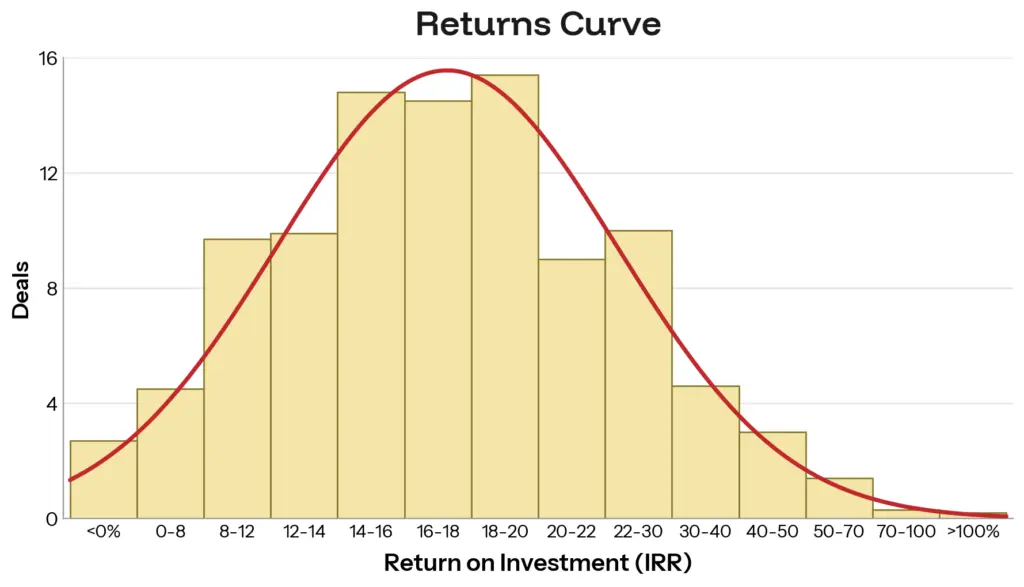
By shrinking the ticket size and multiplying the volume of transactions, these investors are achieving something previously thought impossible in private markets: a true returns bell curve, profound diversification, and a risk-mitigation strategy that mirrors modern portfolio theory in the stock market.
Main Facts: Breaking Down the High-Cost Barrier
The economics of traditional real estate investing heavily penalize lack of capital. When an individual ties up $100,000 in a single multifamily syndication, their financial health is intrinsically linked to the performance of that exact asset. If the property encounters unexpected structural failures, mismanaged debt, or a localized economic downturn, the investor faces severe financial strain and sleepless nights.
By contrast, scaling down individual allocations to the $2,500–$5,000 threshold fundamentally alters an investor’s exposure. Rather than placing all eggs in one or two heavy baskets, participants in private co-investing networks can spread their capital across dozens of individual projects.
- The Core Problem: High minimums ($50k–$100k+) create a structural barrier to entry and an absolute barrier to diversification.
- The Solution: Micro-allocations ($2,500–$5,000) executed via co-investing clubs allow investors to build expansive, multi-layered portfolios.
- The Outcome: Returns naturally organize along a bell curve, where occasional underperformers are comfortably absorbed by outperformers, neutralizing catastrophic portfolio risk.
Chronology of an Evolution: From Active Stress to Passive Averaging
To understand the shift toward micro-syndications, financial analysts point to the chronological maturation of private market investing over the past two decades.
Phase One: The Era of Direct, Active Ownership
Historically, aspiring real estate millionaires focused on direct property acquisition. This required immense hands-on management, massive capital reserves, and localized operational knowledge. Investors experienced hyper-concentration risk, where a single bad tenant, roof replacement, or zoning change could wipe out annual cash flows.
Phase Two: The Rise of Traditional Syndications
As crowdfunding platforms and private equity syndication networks emerged in the 2010s, passive investing gained traction. Investors no longer needed to fix toilets, but they still faced steep minimums. A $50,000 threshold meant most accredited investors could only hold three to five deals at any given time.
Phase Three: The Co-Investing Club and Micro-Allocation Movement
In recent years, collaborative co-investing groups and private syndication clubs have democratized deal access. By pooling capital collectively to meet institutional sponsorship minimums, club members can slice individual allocations into bite-sized pieces. This evolution has transformed private real estate from a high-stakes, lumpy asset class into a fluid, systematic engine for wealth generation.
Supporting Data: Averages, Bell Curves, and Dollar-Cost Averaging
Financial data from private co-investing networks underscores the power of this strategy. Across seasoned co-investing groups, the combined average return of active portfolios routinely hovers around 16.39%. This figure encompasses both realized returns from full-cycle exits and projected returns from active, ongoing projects.
Parallels to the S&P 500
This dynamic mirrors the behavior of major public stock indexes. Even during robust market cycles, roughly 25% to 30% of individual equities within the S&P 500 lose money. During severe bear markets, that figure can surge to 75%. Yet, due to the overarching bell curve of market performance, the S&P 500 maintains a historical average annual return of approximately 10%.

[Returns Bell Curve in Private Real Estate]

       /  <- Outperformers (High IRR / Exceeding Projections)
      /
     /      <- Middle of the Curve (Meeting Expectations)
    /
   /          <- Underperformers (Missed Projections / Deal Stumbles)
  /__________
By applying the mathematical law of averages to private real estate, micro-investors decouple their financial security from the fate of any single property. Out of dozens of passive investments, a handful may underperform or face distressed restructuring—yet overall portfolio health remains robust.
The Mechanics of Dollar-Cost Averaging
Investing $2,500 to $5,000 into a new deal on a monthly basis introduces dollar-cost averaging to real estate. Attempting to deploy $50,000 monthly requires staggering wealth, forcing investors to time the market with large, lump-sum bets.
By maintaining a slow, steady drip of capital allocation, investors eliminate timing risk. Whether the market peaks or dips (such as the market adjustments seen in recent years), monthly deployment ensures long-term exposure and removes emotional decision-making from the equation.
Diversifying Across Every Axis
True portfolio diversification extends far beyond simply owning multiple properties in the same zip code. By utilizing micro-allocations, investors can achieve comprehensive, multi-dimensional diversification across several distinct axes:
- Asset Class: Capital is distributed across multifamily apartment complexes, industrial warehouses, retail spaces, raw land, mobile home parks, single-family residential portfolios, and hospitality assets.
- Geography: Investments span nationwide markets across the United States, with select international exposure (such as Canadian development projects).
- Capital Stack (Equity vs. Debt): While the majority of allocations target private equity syndications, capital is also deployed into secured debt instruments—such as short-term notes backed by real property at conservative loan-to-value (LTV) ratios (e.g., 55% LTV notes yielding 15% fixed interest).
- Duration & Liquidity: Staggering investment timelines prevents capital from returning all at once in a tax-heavy wave. Blending traditional 5-year equity holds with short-term, 12-to-18-month debt notes ensures regular, rolling liquidity.
Implications: Re-Engineering Tax Strategies and Replacing Bonds
The adoption of micro-syndications carries profound implications for personal wealth management, tax planning, and asset allocation.
The "Lazy 1031 Exchange" and Depreciation Benefits
Private real estate syndications frequently generate substantial first-year depreciation write-offs, often ranging between 65% and 80% of the invested capital through cost segregation studies.
For high-income earners, these passive losses offset other investment gains. When a legacy investment goes full-cycle and triggers taxable capital gains, the investor can execute a "lazy 1031 exchange." By deploying fresh capital into new monthly deals within the same calendar year, the incoming depreciation write-offs neutralize the tax liability of the realized gains without requiring a formal, restrictive 1031 exchange intermediary.
Challenging the Traditional Bond Paradigm
For decades, financial advisors have prescribed fixed-income bonds to lower portfolio volatility, generate steady income, and insulate against stock market downturns. However, traditional bonds carry severe blind spots—most notably, acute vulnerability to inflation and interest rate risk.
High-yield real estate debt notes and cash-flowing syndications offer a compelling alternative:
- Income Generation: Syndications frequently distribute 6% to 10% cash-on-cash yields as part of total annualized returns (14%–18%), while private notes can pay double-digit quarterly interest.
- Inflation Hedging: Unlike fixed-income bonds, whose purchasing power gets systematically eroded by inflation, real assets benefit from rising replacement costs and rental adjustments.
- Low Market Correlation: Private real estate maintains a low correlation to public equities, offering genuine diversification that traditional Publicly Traded REITs often fail to provide.
Conclusion: Embracing the Law of Averages
As private markets continue to evolve, the narrative that wealth preservation requires massive upfront capital is steadily losing ground. No investor, regardless of their underwriting acumen, can entirely eliminate macroeconomic risk, localized operational missteps, or unexpected market shifts.
By dispersing capital across diverse asset classes, geographic regions, and varied timelines through micro-allocations, modern investors are redefining wealth management.
Ultimately, the law of averages ensures that while individual real estate deals will inevitably stumble, a well-constructed bell curve of returns will absorb the blows, protect principal, and propel investors toward sustained, above-average financial growth over time.
