

As winter temperatures drop and homeowners look for efficient ways to take the chill off specific rooms without inflating whole-house energy bills, portable and supplemental heating solutions take center stage. To determine which models truly deliver on their promises, product testing experts recently put 13 of the market’s leading electric heaters through rigorous, hands-on evaluations.
Assessing each appliance across five core categories—ease of use, heating performance, portability, noise level, and overall value—testers sought to identify the units that successfully balance heating capacity, user-friendly controls, and quiet operation. From slim ceramic towers to radiant oil-filled radiators and decorative electric fireplaces, the results provide a clear roadmap for consumers navigating a crowded marketplace.
Main Facts: What Our Hands-On Testing Revealed
Electric heaters serve as one of the simplest methods for warming a chilly bedroom, home office, or garage. However, choosing the right model requires looking beyond marketing claims. The 2026 testing cohort included 13 distinct units ranging in price from $30 to $350, covering ceramic, infrared, radiant, and fan-forced technologies.
The standout winner across multiple metrics was the Dreo Solaris H3 Slim Space Heater, which claimed the "Best Overall" title. Earning nearly perfect scores in performance, portability, and noise level, this compact unit proved that powerful heating doesn’t require a bulky footprint.
Key takeaways from the testing process include:

- Performance Varies by Technology: Fan-forced ceramic heaters quickly circulate warm air into localized spaces, while oil-filled radiators provide steady, gradual warmth without drying out the ambient air.
- Safety is Standard, But Features Differ: Tip-over protection, automatic shutoffs, and overheat sensors are widely integrated across modern models, though high-end units incorporate child locks and programmable Eco modes.
- Noise Levels Matter: While fan-forced heaters inevitably produce some operational hum, radiant and oil-filled options operate almost silently, making them ideal for bedrooms and home offices.
Chronology of the Evaluation Process
The journey to crowning the top electric heaters of 2026 involved an intensive, multi-week methodology designed to simulate real-world home environments.
Phase 1: Market Research and Selection
The evaluation began with extensive market research. Experts reviewed top-selling and highly rated electric heaters across major categories, focusing on safety certifications, wattage output, square-footage coverage, and supplementary features like smart-home integration and remote controls. Ultimately, 13 diverse models were selected for physical testing.
Phase 2: Hands-On Laboratory and Real-World Testing
Over an intensive 3-week testing period, reviewers subjected the 13 heaters to seven standardized performance benchmarks:
- Temperature Rise Tests: Testers timed how long each unit took to raise a room’s temperature by 6 degrees Fahrenheit in both small (approx. 100 sq. ft.) and medium (approx. 200 sq. ft.) spaces.
- Humidity Monitoring: Devices were run for three consecutive hours to evaluate whether they significantly stripped moisture from the air.
- Portability and Physical Assessment: Reviewers evaluated weights, built-in handles, cord lengths, and overall maneuverability.
- Acoustic Testing: Noise levels were measured to determine whether a heater’s sound profile offered soothing white noise or a distracting mechanical hum.
- Safety Evaluations: Each heater was physically tipped over to verify that tip-over switches cut power instantly. Built-in thermostats were simultaneously compared against external calibrated thermometers for accuracy.
Phase 3: Scoring and Award Distribution
Following the testing window, data points were compiled into a weighted scoring rubric. The averaged results identified the top-performing appliances overall, as well as category leaders tailored to specific user needs—such as budget-friendly picks, wall-mounted units, and aesthetic fireplace alternatives.
Supporting Data: Top-Rated Electric Heaters of 2026
Based on quantifiable metrics and expert evaluations, several models emerged as clear leaders in their respective classes.
1. Best Overall: Dreo Solaris H3 Slim Space Heater
- Ratings: Ease of Use: 4.5/5 | Performance: 5/5 | Portability: 5/5 | Noise: 5/5 | Value: 4.7/5
- Overview: Weighing under 5 pounds with a narrow 15.8-inch height and 5.9-inch diameter, the Dreo Solaris H3 exceeded expectations by easily warming areas beyond its recommended 200-square-foot coverage. It features four heat settings, a programmable thermostat, a fan-only mode, and a tip-over safety switch. Testers also noted that it preserved indoor humidity levels better than competing ceramic models.
2. Best Bang for the Buck: Dreo Atom 316 Space Heater
- Ratings: Ease of Use: 5/5 | Performance: 4.5/5 | Portability: 5/5 | Noise: 4.5/5 | Value: 5/5
- Overview: Despite its ultra-compact size, the Atom 316 surprised testers with its ability to warm modest spaces efficiently. Its Eco thermostat mode intelligently scales back power once target temperatures are reached to conserve energy. While it lacks smart-home Wi-Fi connectivity, its quiet operation and robust safety features make it an exceptional value.
3. Best Fireplace: Maxhonor Electric Fireplace Heater
- Ratings: Ease of Use: 4.5/5 | Performance: 4/5 | Portability: 4/5 | Noise: 4/5 | Value: 4.5/5
- Overview: Combining aesthetic appeal with practical heating, this unit features multi-colored flame displays (blue, green, red/orange) behind a cool-touch glass panel. Though its 1,500-watt output raised ambient room temperatures slightly slower than utilitarian models, it successfully bridges the gap between home decor and functional climate control.
4. Best Wall-Mounted: Heat Storm Wi-Fi Infrared Heater
- Ratings: Ease of Use: 4/5 | Performance: 5/5 | Portability: 4/5 | Noise: 4.5/5 | Value: 4/5
- Overview: Designed to save floor space, this wall-mounted unit delivers continuous infrared heat to areas up to 150 square feet. Integrated Wi-Fi connectivity allows users to monitor room temperatures and adjust thermostats remotely via smartphone apps, though users should note that mounting hole spacing may require minor wall anchors depending on stud placement.
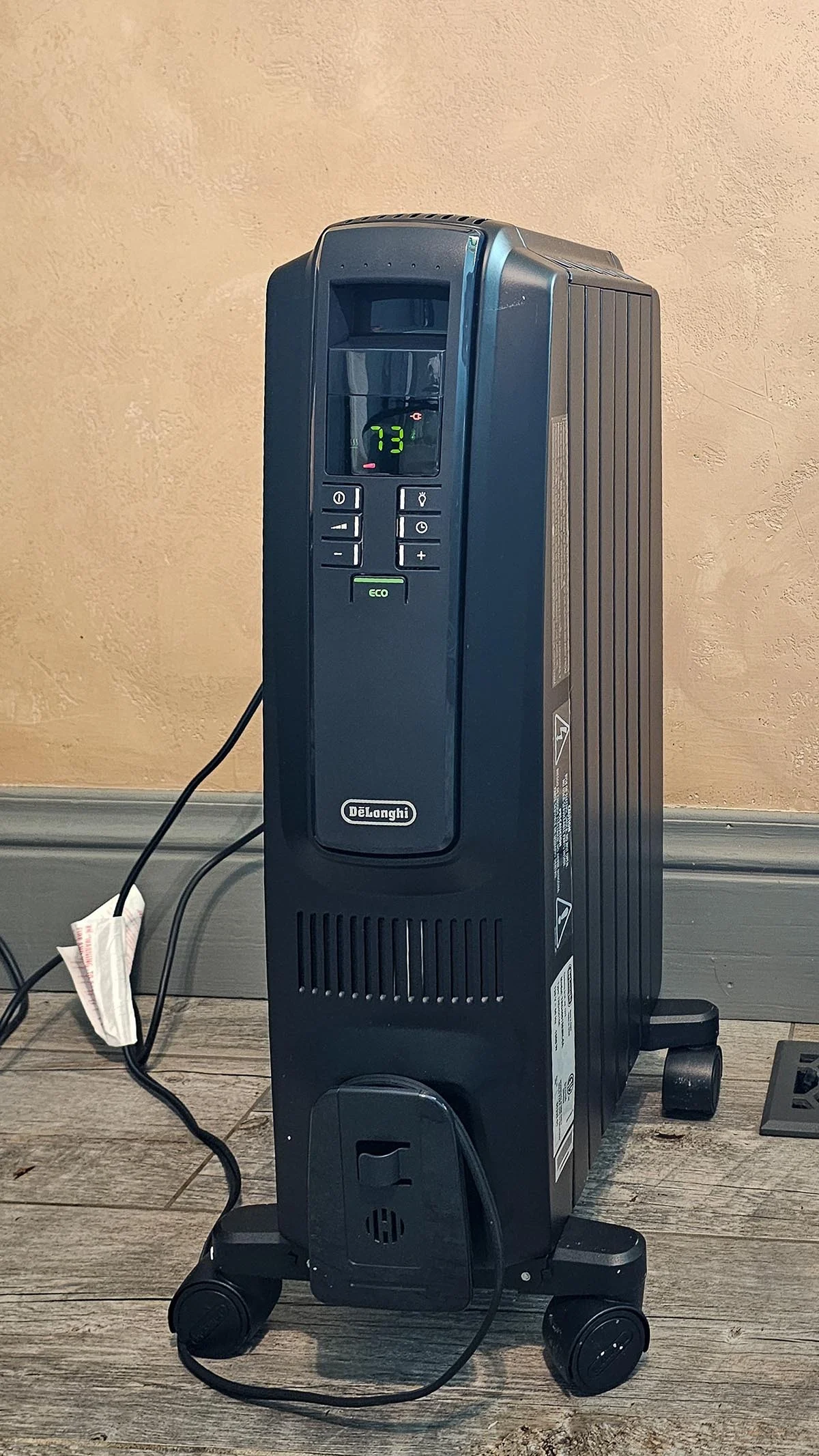
5. Best Radiator: De’Longhi Dragon Digital Full-Room Radiant Heater
- Ratings: Ease of Use: 5/5 | Performance: 4.5/5 | Portability: 4.5/5 | Noise: 5/5 | Value: 4.8/5
- Overview: Weighing roughly 28 pounds, this oil-filled radiator operates in near-total silence—producing only faint thermal clicks as the thermostat cycles. While it takes roughly 10 minutes to reach peak output, it radiates steady warmth without drying out indoor air, making it ideal for overnight use in bedrooms.
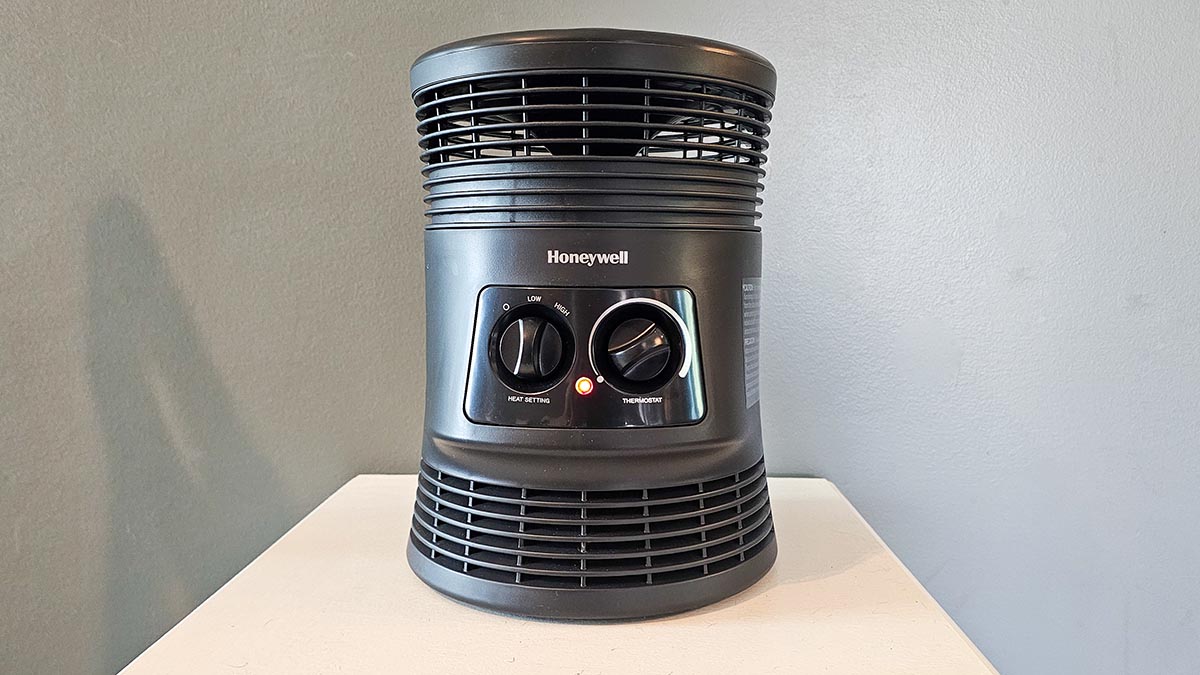
6. Best Halo Heat: Honeywell HHF360 360-Degree Surround Heater
- Ratings: Ease of Use: 5/5 | Performance: 4.3/5 | Portability: 5/5 | Noise: 4.5/5 | Value: 4.5/5
- Overview: Engineered to disburse warmth evenly in all directions without requiring oscillation, this compact personal heater is ideal for placement in the center of a small space or directly beside a desk to keep feet warm.
Official Guidelines: What to Consider When Buying
When selecting an electric heater, industry standards and safety guidelines dictate that consumers evaluate several technical specifications to ensure optimal performance and safety.
- Heater Type: Choose between fan-forced ceramic models for rapid, directional heat; infrared/radiant units for warming objects directly (ideal for garages and patios); oil-filled radiators for silent, sustained room heating; and electric fireplaces or wall panels for decorative space-saving applications.
- Power and Room Size: As a general rule of thumb, every 10 watts of heating output accommodates roughly 1 square foot of space. A standard 1,500-watt heater is typically sufficient for spaces up to 150 square feet.
- Energy Efficiency: Opt for models equipped with programmable thermostats, Eco modes, and integrated timers to avoid unnecessary spikes in monthly electricity bills.
- Safety Certifications: Look for units featuring automated tip-over shutoffs, thermal overheat protection, and cool-touch exteriors. Consumers should also verify UL (Underwriters Laboratories) certification to ensure the product has passed rigorous safety stress tests.
Implications for Homeowners
Investing in a high-quality supplemental electric heater carries meaningful financial and lifestyle implications for households during colder months.
From a cost-efficiency perspective, utilizing a portable heater allows homeowners to keep their central residential thermostats set to lower baseline temperatures while actively warming only the rooms they occupy—such as a home office during the workday or a bedroom in the evening. This targeted zone heating can yield noticeable savings on seasonal utility expenditures.
At the same time, safety vigilance remains paramount. Industry experts stress that portable electric heaters should never be plugged into extension cords due to elevated fire risks, and they should always be positioned at least 3 feet away from combustible materials like curtains, bedding, and upholstered furniture. By adhering to proper placement guidelines and selecting appliances vetted through rigorous hands-on testing, consumers can successfully balance indoor comfort, safety, and energy conservation throughout the winter season.
