

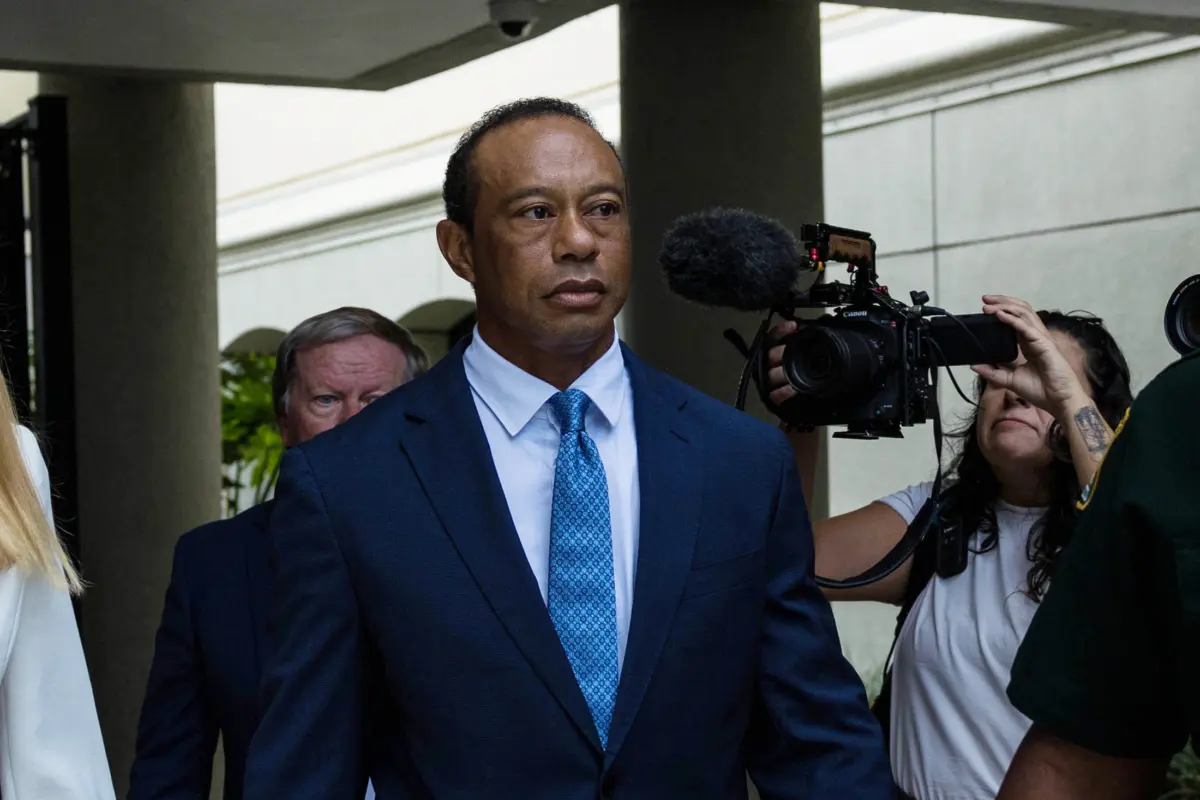
STUART, Fla. — Golf legend Tiger Woods saw his legal troubles take a definitive turn on Wednesday when a Martin County court suspended his driver’s license for five years. The ruling comes as part of a negotiated plea agreement stemming from a high-profile traffic accident that occurred earlier this spring, plunging the 15-time major champion back into a cycle of public scrutiny, health battles, and legal accountability.
The resolution closes a chapter on an incident that shocked the sports world when it unfolded in March, raising immediate concerns over the athlete’s personal well-being, driving habits, and history of vehicle-related incidents. While the legal penalties lean on standard procedural outcomes for refusal and reckless driving, the broader implications touch upon Woods’s illustrious athletic career, his public image, and the ongoing challenges he faces away from the golf course.
Main Facts
Under the terms of the plea agreement finalized in a Martin County, Florida court on Wednesday, Tiger Woods pleaded no contest to charges of reckless driving and refusing to submit to a drug test. In exchange for the plea, prosecutors dropped or reduced other potential charges, resulting in a sentence that includes the five-year revocation of his driving privileges alongside approximately $2,000 in court fines and associated fees.
The legal fallout traces back to a March collision in South Florida where Woods’s SUV was involved in a rollover accident after clipping a trailer being pulled by a pickup truck. According to law enforcement documents, while a preliminary breathalyzer test registered a negative blood-alcohol reading, Woods subsequently refused a lawful urinalysis drug screening. Furthermore, responding officers discovered two Hydrocodone pills inside his pants pocket during the initial stop and subsequent investigation.
Despite the dramatic nature of the rollover crash and the presence of prescription narcotics, no injuries were reported by Woods or the driver of the other vehicle involved. The resolution avoids a protracted trial, allowing the 50-year-old athlete to bypass more severe criminal penalties while accepting substantial administrative and legal sanctions. Representatives for Woods, including his management company, declined to provide immediate comment following the court’s decision.
Chronology of Events
To understand the trajectory that led to Wednesday’s courtroom appearance, it is necessary to examine the sequence of events beginning with the March collision and culminating in the judicial ruling:
- March 2026: Tiger Woods is involved in a single-vehicle rollover crash in Florida. According to the police affidavit, the accident occurs when Woods attempts to overtake a pickup truck hauling a trailer. Distracted momentarily by his cell phone and the vehicle’s radio, Woods fails to notice that the truck ahead has slowed down. He swerves in an attempt to avert a direct collision, but his SUV clips the trailer, veers off the road, and rolls over.
- March 2026 (Immediate Aftermath): Law enforcement and emergency personnel arrive at the scene. Woods submits to a breathalyzer test, which yields a negative result for alcohol. However, he declines to complete a requested urinalysis. Officers search his person and recover two Hydrocodone pills from his pants pocket. Fortunately, neither Woods nor the other motorist sustains physical injuries.
- Late March 2026: In the wake of the accident and the intense media spotlight that follows, Woods issues a public statement via social media. He announces that he will temporarily step away from competitive golf to prioritize his physical and mental health, stating an explicit commitment to "work toward lasting recovery."
- Spring to Summer 2026: Legal counsel for Woods negotiates with Martin County prosecutors regarding the pending charges, culminating in a plea framework that balances the refusal to test and the mechanics of the crash against his cooperation and lack of prior active criminal convictions in this jurisdiction.
- Wednesday, July/August 2026: Woods appears at the Martin County Courthouse in Stuart, Florida. He formally enters a plea of no contest to reckless driving and the refusal to submit to a drug test, sealing the agreement that imposes the five-year driver’s license suspension and roughly $2,000 in fines.
Supporting Data and Historical Context
The legal events in Martin County do not exist in a vacuum; they form part of a complex pattern of physical trauma, vehicular incidents, and medical management that has shadowed the later stages of Woods’s career.
The 2021 Rollover Accident
For millions of fans, the March crash instantly evoked memories of the horrific single-vehicle rollover accident Woods suffered in February 2021 near Los Angeles, California. That high-speed crash left the golfer with severe, complex fractures to his right leg and foot, injuries that threatened not only his ability to play professional golf again but his capacity to walk normally. While Woods mounted a miraculous, albeit intermittent, return to competitive golf following extensive rehabilitation, the 2021 accident permanently altered his physical mobility and amplified concerns regarding his reliance on pain management therapies.
Prescription Medications and Public Scrutiny
The discovery of two Hydrocodone pills in Woods’s possession during the March stop brings renewed attention to the intersections of chronic pain and controlled substances. Hydrocodone is a potent opioid analgesic frequently prescribed for severe orthopedic and post-surgical pain—conditions with which Woods is intimately familiar given his extensive history of back surgeries, knee operations, and leg trauma. While possession of a prescription medication is lawful with a valid doctor’s order, the refusal to submit to chemical testing during a traffic stop automatically triggers severe administrative and legal consequences under Florida law, regardless of whether a valid prescription exists for any substances found.
Athletic Inactivity
Woods’s presence on the PGA Tour has been increasingly sporadic. Prior to his decision to step away in March, his last official appearance in a PGA Tour event occurred in July 2024. The combination of his post-2021 physical limitations, recurring health setbacks, and now this latest five-year driving suspension underscores a prolonged hiatus from elite-level competition.
Official Responses and Public Reaction
The legal outcome and the broader circumstances surrounding Woods have drawn commentary from high-profile political figures, legal experts, and observers of the sports world.
Political Commentary from the White House
In an unexpected intersection of sports, law, and politics, President Donald Trump was asked by reporters to weigh in on the judicial ruling during a media availability. Trump offered a sympathetic view of the outcome, describing the judge’s decision as "very fair."
Reflecting on his personal familiarity with the golf icon, Trump referred to Woods as a "very special guy" and acknowledged the severe, chronic back pain that has plagued the athlete throughout his career. "I’m glad that it was resolved," the president remarked, echoing the sentiment of fans who hoped to see the legal chapter closed without protracted litigation.
Legal and Public Safety Perspectives
Traffic safety advocates and legal analysts have pointed out that the five-year driver’s license suspension is a standard, stringent penalty under Florida statutes for individuals who refuse chemical sobriety or drug tests following a suspected impairment incident. By pleading no contest to reckless driving rather than contesting the charges at trial, Woods avoided the uncertainty of a jury verdict while accepting terms that prioritize administrative resolution over incarceration.
Meanwhile, representatives for the golfer have maintained a tight-lipped stance. Neither Woods’s personal public relations team nor his primary management agency offered substantive statements regarding the specifics of the plea deal or his long-term rehabilitation plans.
Implications for Tiger Woods’s Future
The conclusion of the Martin County court case clarifies Woods’s legal status, but it leaves several open questions regarding his personal life, his public standing, and his future in professional golf.
Logistical and Lifestyle Challenges
A five-year driver’s license suspension presents significant logistical hurdles for any individual, particularly one who resides in South Florida’s sprawling suburban landscape. Woods will undoubtedly rely on a dedicated team of drivers, family members, and assistants to manage his daily transportation needs, travel, and routine errands through the end of the decade.
The Path to Athletic Recovery
When Woods announced in March that he was stepping away from the sport to focus on "lasting recovery," it signaled an acknowledgment that his struggles extended far beyond the golf course. Whether those struggles involve pain management, personal wellness, or mental health, the rigorous demands of professional golf require a degree of physical and psychological equilibrium that has proven elusive in recent years.
With his last PGA Tour appearance dating back to July 2024, and no definitive timeline for a return to competitive play, the golfing world is left to wonder if the 82-time PGA Tour winner has played his final competitive round. While Woods has repeatedly defied conventional wisdom and medical prognoses to mount legendary comebacks—most notably his historic victory at the 2019 Masters—the cumulative weight of physical trauma, advancing age, and personal trials creates an increasingly steep mountain to climb.
As the legal dust settles in Stuart, Florida, the enduring legacy of Tiger Woods remains a study in contrasts: a transcendent athletic genius whose professional triumphs are forever intertwined with human frailty, resilience, and the relentless glare of the global spotlight.
