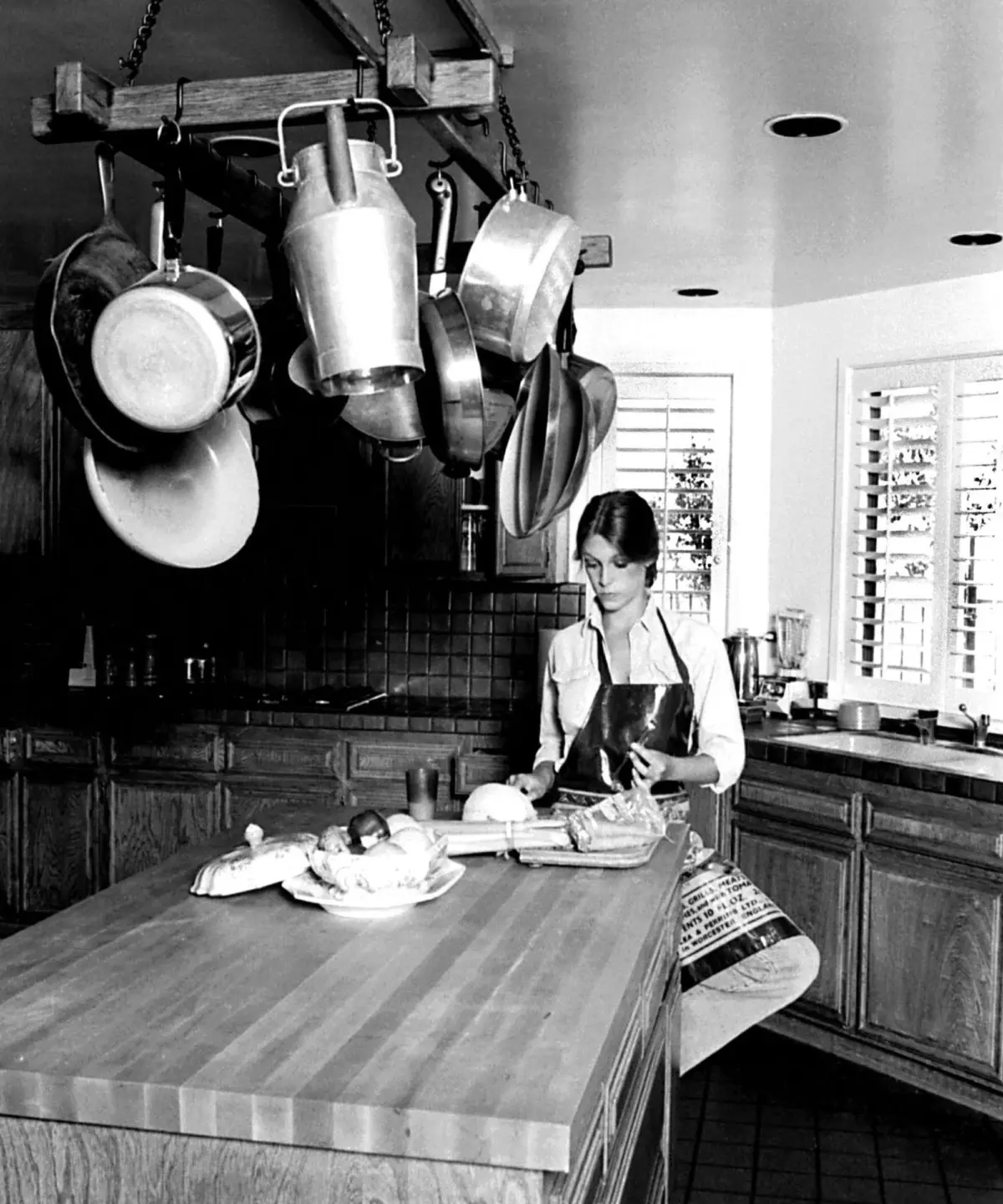
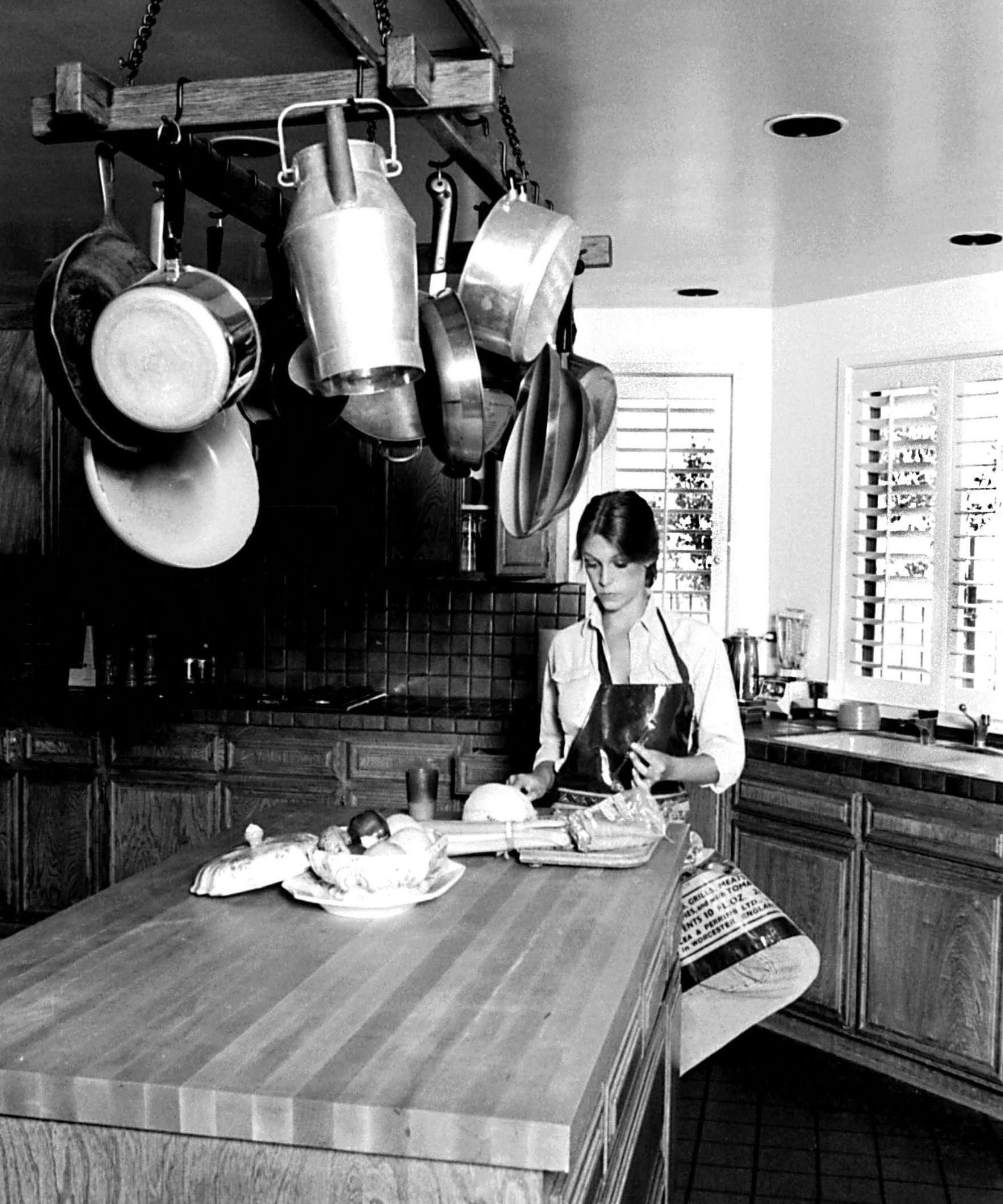
When hunting for a kitchen storage solution that effortlessly marries timeless elegance with rustic charm, design enthusiasts often look to contemporary Pinterest boards or modern architectural digests. However, a masterclass in functional aesthetics exists far further back in the archives. Archival photographs of actress Jamie Lee Curtis in her 1977 Beverly Hills kitchen reveal a brilliant blueprint for space management, visual interest, and warm interior styling that feels just as fresh nearly five decades later.
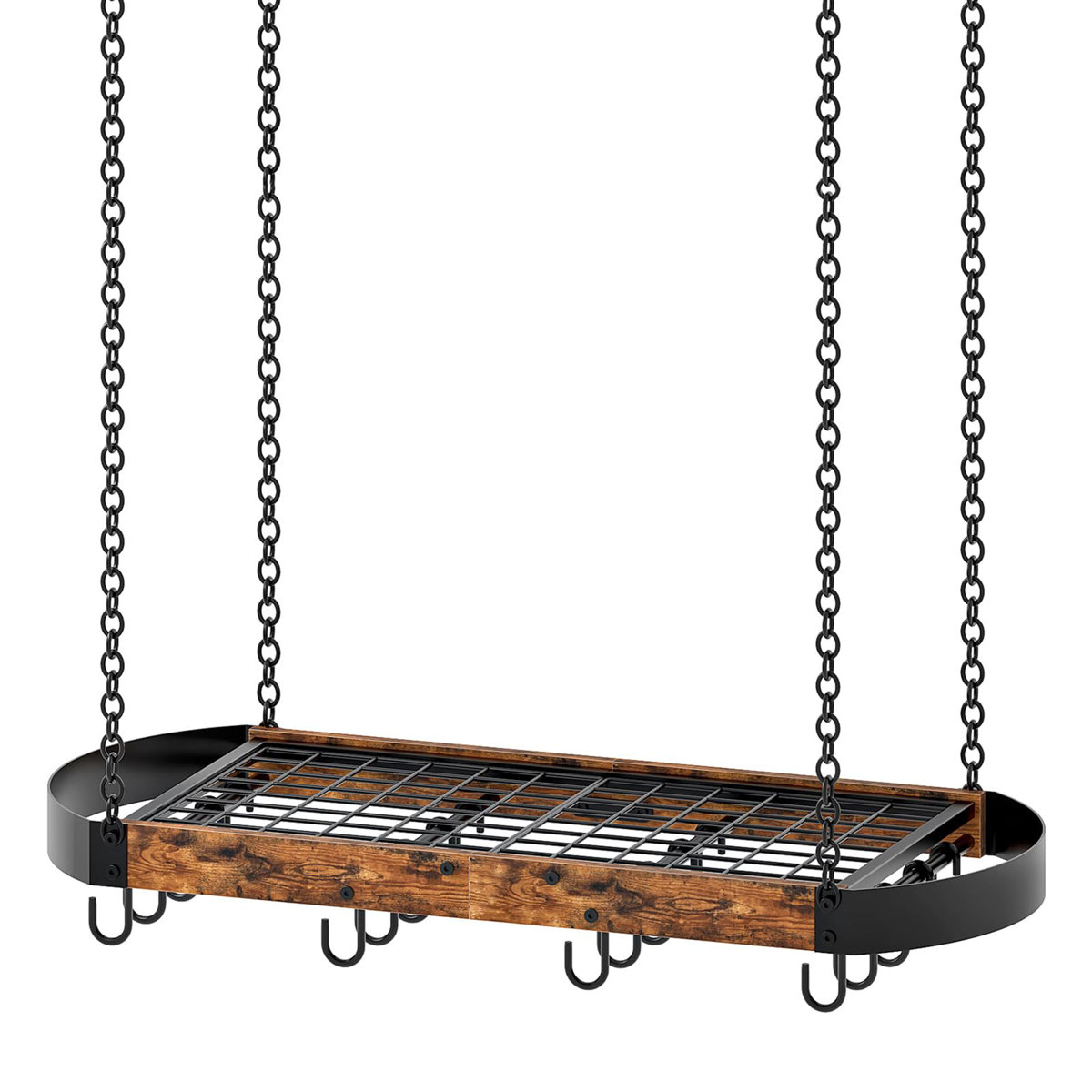
At the center of the space is a striking wooden hanging pot rack suspended over a matching wooden island, positioned dramatically in front of a textured, rustic tiled backsplash. The rack hosts an eclectic mix of antique-style pots, pans, and culinary tools. This setup accomplishes multiple design goals simultaneously: it optimizes vertical space, clears precious kitchen counters of cumbersome clutter, ensures that essential cookware is exceptionally accessible, and introduces a heavy dose of country-chic personality.
Interior design experts have long championed vertical storage as a premier strategy for compact spaces, but Curtis’s decades-old kitchen proves that the approach works just as well as a striking visual centerpiece in larger environments. By marrying functional hardware with warm wood tones and display-worthy cookware, the Oscar-winning actress inadvertently predicted modern interior trends—ranging from the resurgence of copper cookware to the rising popularity of "wood-drenching."
Chronology of the Trend: From 1970s Utility to Modern Revival
To fully understand why Jamie Lee Curtis’s 1977 kitchen continues to captivate designers today, it helps to trace the evolution of the hanging pot rack and vertical storage from practical necessity to high-end interior design staple.
The Pre-Industrial Era: Long before built-in cabinetry and modular kitchen islands became standard in residential architecture, hearth cooking demanded maximum efficiency. Hanging pots from ceiling beams or wall hooks was a matter of survival, keeping heavy iron and copper cookware within arm’s reach of the open fire.
The 1970s Rustic Movement: During the mid-to-late 1970s, interior design shifted away from the slick, futuristic plastics of the 1960s toward organic, earthy aesthetics. Natural wood, handmade tiles, and exposed cookware became hallmarks of the bohemian and country-chic styles adopted by artists and celebrities alike—epitomized by Curtis’s Beverly Hills home.
The 1990s Suburbia Overcorrection: As open-plan suburban kitchens grew larger through the 1980s and 1990s, hanging pot racks transformed into massive, sometimes obtrusive iron structures laden with heavy-duty commercial cookware. Over time, the trend became heavily associated with clunky, dated country-kitchen tropes, leading many homeowners to rip them out in favor of minimalist, hidden-away cabinetry.
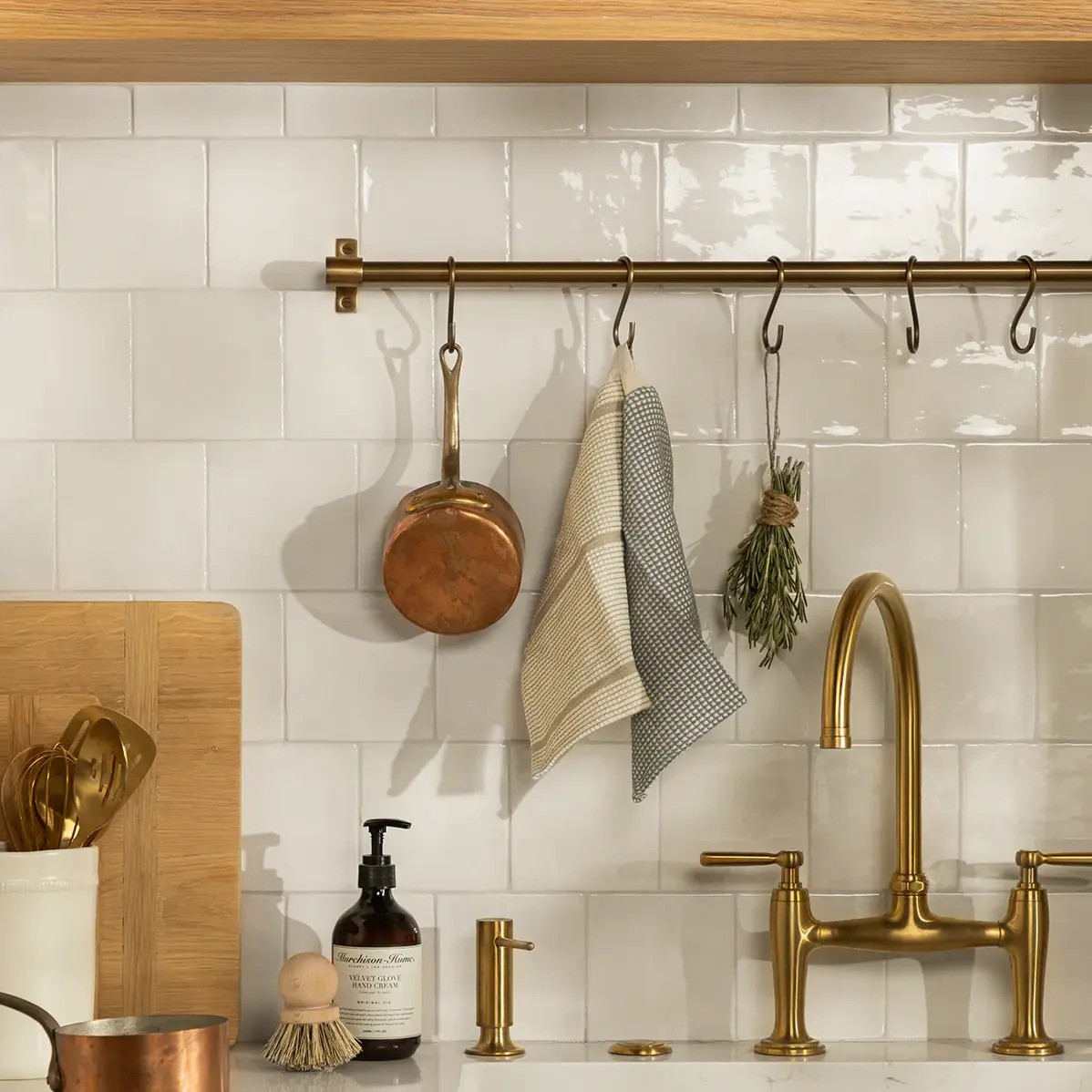
The Modern Revival (2020s–Present): Today, interior design has come full circle. With urban housing footprints shrinking and the cost of living driving a renewed interest in rental-friendly, space-saving solutions, designers are re-evaluating vertical storage. Rather than heavy commercial iron grids, modern iterations favor sleek metal rails, minimalist hooks, and artfully curated displays of copper and brass, bringing back the effortless charm first showcased by Curtis in 1977.
Supporting Data & Design Metrics: Why Vertical Storage Works
The enduring popularity of Jamie Lee Curtis’s 1970s kitchen approach is backed by spatial planning metrics and current interior design data. According to recent home renovation and real estate studies, optimizing vertical space remains one of the most cost-effective ways to increase functional square footage in a kitchen without undertaking structural expansions.
Countertop De-Cluttering: Studies on kitchen ergonomics show that clearing counters of heavy cookware items increases usable prep space by up to 35%, significantly improving cooking efficiency and workflow safety.
The Rise of "Wood-Drenching": Interior trend analyses for interior design point to a massive surge in tactile, monochromatic wood applications. Homeowners are increasingly moving away from clinical white kitchens in favor of layered wood tones—a technique prominently featured in Curtis’s historic kitchen space.
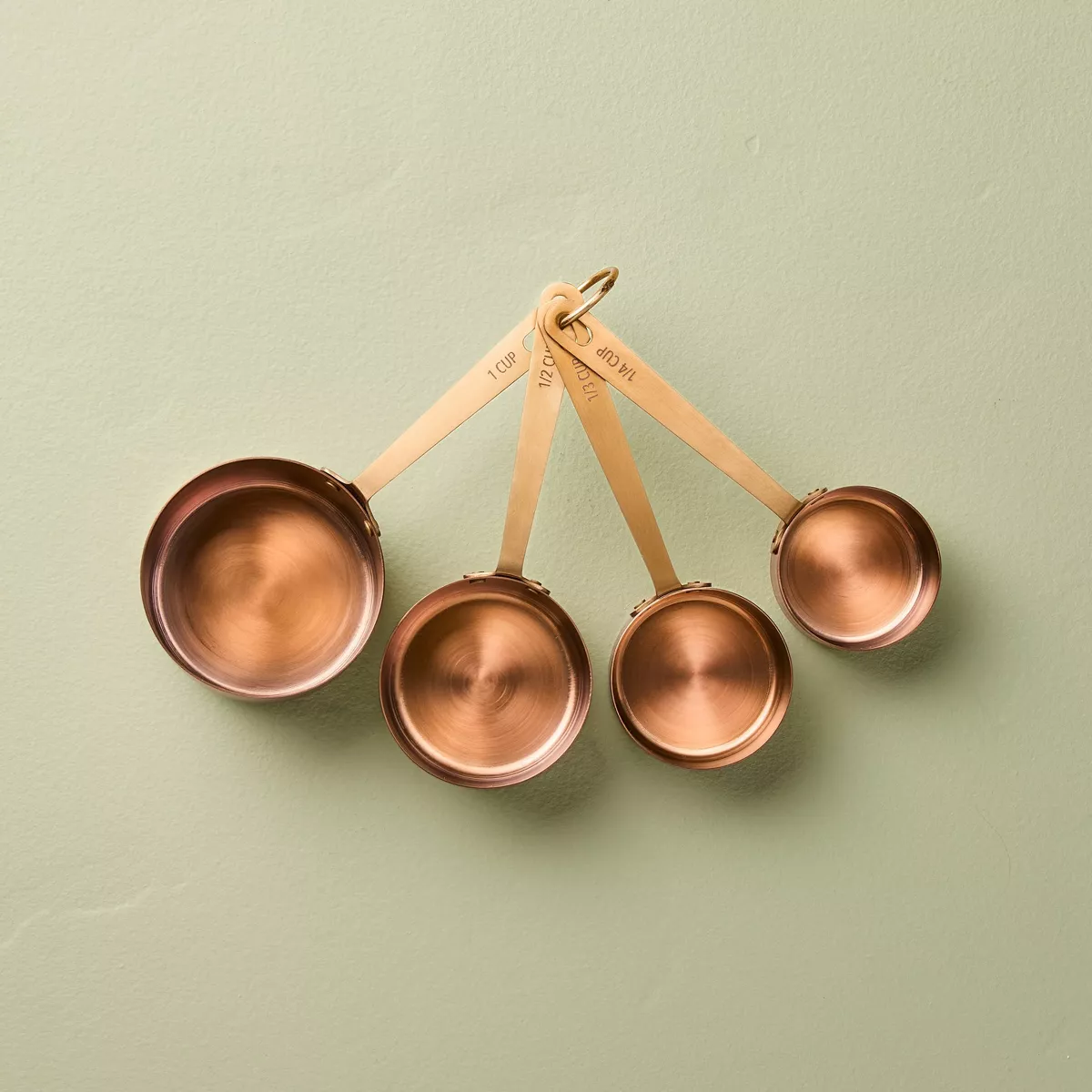
Material Longevity: Copper, brass, and stainless steel hardware have seen a sustained surge in consumer demand. Market data indicates that cookware designed to be seen—rather than hidden behind cabinet doors—has become a top priority for consumers investing in aesthetic kitchenware.
Expert Perspectives and Official Design Insights
To gain a deeper understanding of why vertical storage and natural wood accents remain undefeated after 48 years, top interior designers and product experts weighed in on how to adapt these classic principles for contemporary living spaces.
Molly Woodward-Moor, a prominent design expert and Creative Director, emphasizes the practical magic of utilizing walls and ceilings in modern kitchens:
"In the kitchen, make use of simple storage solutions like magnetic strips for knives and wall-mounted racks or hooks for pots and pans, and tiered shelves to help maximize cabinet space. These smart storage ideas will help keep your space clutter-free."
Woodward-Moor notes that while visible storage can easily slip into looking messy if mismanaged, keeping the displayed items curated—such as matching sets of copper pans or neatly organized utensils—transforms everyday tools into intentional decor.
Adding to the discussion on material cohesion, Tony Collier, Senior Product Manager for Kitchens at Wickes, points out the sophistication behind the wood-heavy palette seen in spaces like Curtis’s Beverly Hills home:
"A high-end look is all about depth and character. Layering different but complementary wood tones and grains is what creates that seamless, expensive feel—and avoids the tackiness of a disjointed design."
Rather than clashing, the interplay between the wooden pot rack, the wooden cabinetry, and the surrounding textural elements anchors the room, proving that natural elements never truly go out of style.
Implications for Modern Homeowners and Renters
The viral fascination with Jamie Lee Curtis’s 1977 kitchen offers several practical takeaways for anyone looking to upgrade their living space today—regardless of whether they own a luxury Beverly Hills estate or a compact urban apartment.
1. Scalability for Small Spaces and Rentals
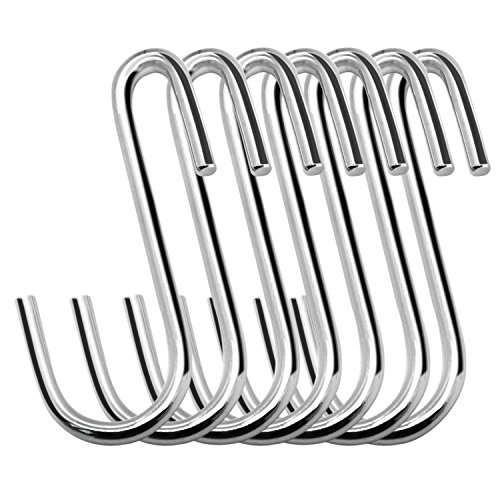
While a large overhead wooden island rack requires high ceilings and solid structural support, the underlying principle of vertical storage is universally adaptable. Renters and apartment dwellers can achieve a similar aesthetic using renter-friendly adhesive hooks, tension rods, or minimalist wall-mounted metal rails. Hanging lightweight pans, mugs, or utensils frees up vital drawer and cabinet space.
2. Shifting from Concealment to Curation
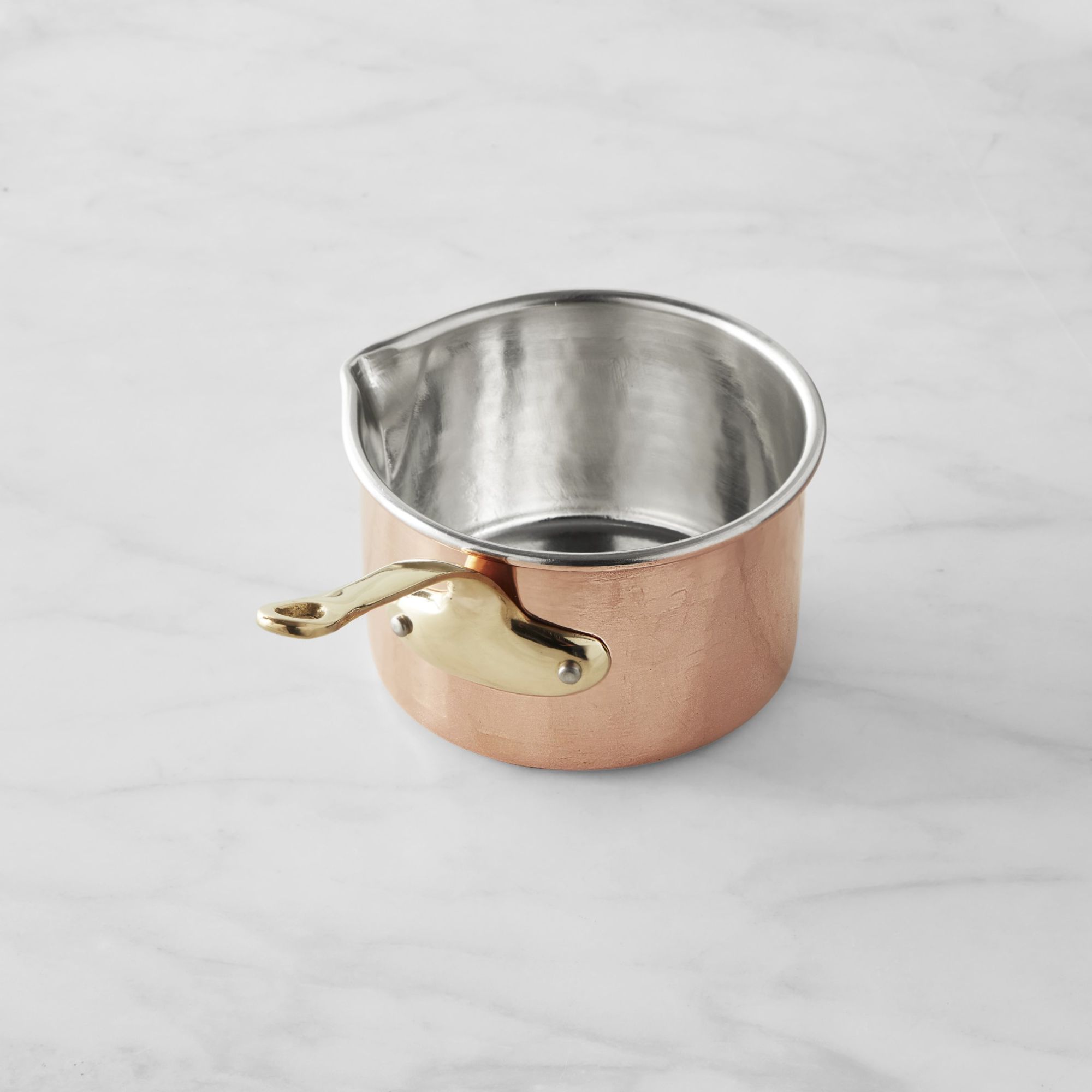
For decades, modern kitchen design preached absolute minimalism: hide everything behind seamless, handleless cabinet doors. Curtis’s kitchen reminds us that functional items can double as art. By displaying pots with attractive finishes—such as hammered copper or polished stainless steel—homeowners can inject personality and warmth into an otherwise sterile culinary zone.
3. Investment in Longevity over Fast Furniture
The fact that a kitchen from 1977 still looks aspirational and chic nearly five decades later underscores the value of investing in enduring materials like solid wood, metal, and classic cookware. Instead of chasing fast-moving, short-lived micro-trends, returning to architectural basics—like utilizing the vertical volume of a room—ensures a home remains stylish and functional for generations.