

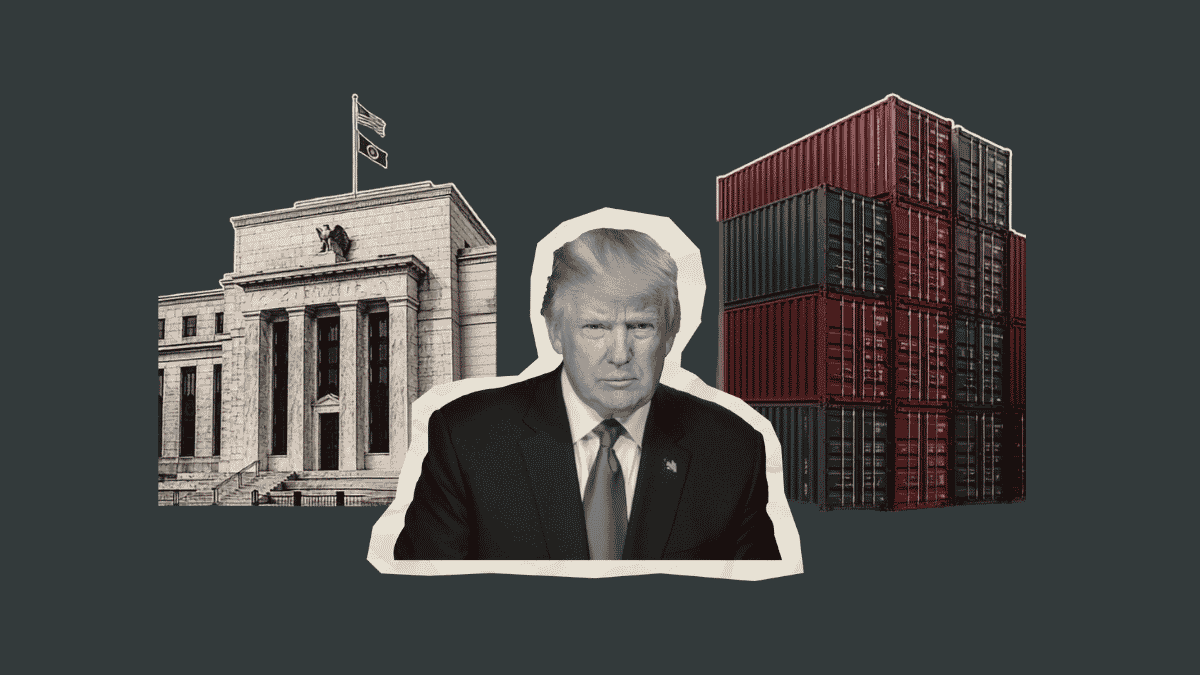
WASHINGTON — President Donald Trump escalated his ongoing crusade against the nation’s central bank on Friday, issuing a demand for immediate interest rate cuts while threatening to unilaterally halt trade with any nation running a trade deficit with the United States.
The extraordinary ultimatum—delivered via social media—marks a dramatic escalation in the executive branch’s campaign to influence monetary policy. It comes against the backdrop of a surprisingly robust labor market, a hawkish shift from Federal Reserve leadership, and escalating global economic shifts marked by rising bond yields and international monetary tightening.
Main Facts
The latest flashpoint in the volatile relationship between the White House and the Federal Reserve materialized Friday morning following the release of the Bureau of Labor Statistics’ August jobs report.
- The Jobs Beat: U.S. employers added 162,000 jobs in August, nearly triple the 56,000 positions economists had projected. The national unemployment rate held steady at 4.1%.
- The Fed Ultimatum: In a post on Truth Social, President Trump demanded that Fed Chair Kevin Warsh and the central bank’s board of governors "get smart" and lower borrowing costs, asserting that the U.S. should command the lowest interest rates in the world.
- The Trade Threat: Tying monetary policy directly to international commerce, Trump declared: "LOWER THE RATE OR I’LL STOP TRADING WITH COUNTRIES WITH WHICH WE HAVE A DEFICIT." He claimed that a recent, costly U.S. Supreme Court decision on tariffs affirmed his absolute right to take such action without congressional approval, adding, "IT’S BETTER THAN TARIFFS!"
- Bond Market Resilience: Despite the blowout employment numbers, the 10-year Treasury yield and residential mortgage rates registered minimal movement, reflecting deep-seated market confusion over how the central bank will navigate competing economic signals.
Chronology of Tensions: Trump vs. The Federal Reserve
The friction between the current administration and the independent central bank has been a defining narrative of economic policy, evolving from institutional friction into open political warfare.
Early 2025: The Opening Salvos
Shortly after taking office for his second term in January 2025, President Trump initiated sustained pressure on then-Fed Chair Jerome Powell to abandon restrictive monetary policies and aggressively lower interest rates.
July – August 2025: Threats of Termination
By mid-summer, the war of words intensified. In July 2025, Trump publicly stated he would "likely" fire Powell. While he later walked back those explicit termination threats, the administration began searching for legal justifications to remove Powell "for cause," eventually seizing upon alleged cost overruns tied to extensive renovations at the Federal Reserve’s headquarters in Washington, D.C.
January 2026: DOJ Subpoenas and Subsequent Retreat
The institutional clash reached a legal precipice in January when the Department of Justice served the Federal Reserve with grand jury subpoenas, dangling the threat of criminal indictments related to Powell’s congressional testimony from the previous summer. However, following widespread criticism from financial markets and institutional economists, the DOJ abruptly dropped the probe as Kevin Warsh prepared to take the helm.
Mid-2025 to Present: Board-Level Battles and Supreme Court Intervention
The administration’s efforts to reshape the central bank extended beyond the chairmanship:
- The Lisa Cook Case: In August 2025, Trump attempted to fire Fed Governor Lisa Cook over historical allegations of mortgage fraud. Cook immediately filed a federal lawsuit. A district judge and subsequent federal appeals court ruled that the administration had failed to establish sufficient cause for her dismissal. In June 2025, a broader Supreme Court ruling curtailed executive authority to remove independent agency board members arbitrarily, demanding strict adherence to due process. The Trump administration ultimately petitioned the Supreme Court to intervene.
- Voluntary Departures: Amid the intense pressure cooker environment, other central bank officials stepped down. Fed Governor Adriana Kugler announced her resignation in August 2025, while Atlanta Fed President Raphael Bostic announced his planned retirement upon the conclusion of his term in February 2026.
Supporting Data and Economic Context
The President’s latest demands collide with a complex global economic landscape characterized by stubbornly persistent inflation, tightening monetary policy abroad, and shifting expectations for domestic interest rates.
The Jackson Hole Shift and Rising Rate Hike Probabilities
The market backdrop shifted dramatically during the annual Jackson Hole Economic Policy Symposium. Fed Chair Kevin Warsh adopted a notably hawkish tone, emphasizing that inflation remains stubbornly above the central bank’s 2% target and arguing that the Fed bore responsibility for 65 months of elevated consumer prices.
According to data compiled by the CME Group’s FedWatch Tool:
- Prior to Warsh’s Jackson Hole address, the implied probability of a 25-basis-point rate hike at the Fed’s upcoming September meeting hovered at a modest 35.4%.
- Following his remarks, those odds spiked to 55.7%.
- By Friday afternoon, following the August jobs report, the implied probability of a September rate hike climbed further to 58.4%.
Global Monetary Tightening
While Trump demands aggressive easing, global central banks are moving in the opposite direction to combat inflation:
- Europe: Economists polled by Reuters indicated that the European Central Bank (ECB) is slated to raise interest rates on September 10 for the second and final time in what analysts describe as the region’s shortest tightening campaign in 15 years. Bond markets reflect this reality, with the German 10-year bund yield climbing to 3.33%—its highest level since 2011.
- Asia: The Bank of Japan has faced mounting internal debate over a September rate hike. Historic moves in the bond market saw the 10-year Japanese government bond yield cross the 3% threshold for the first time since 1996, according to reporting by The New York Times and CNBC.
- North American Trade Friction: Bilateral tensions have also impacted physical trade flows. In late August, following the collapse of trade negotiations, the U.S. levied 50% tariffs on approximately $20 billion worth of Canadian imports. Ottawa promptly announced retaliatory, matching tariffs scheduled to take effect in September.
Official Responses
As of Friday afternoon, the institutional response to the president’s sweeping trade and monetary threats has been measured, though financial markets are digesting the systemic risks.
- The Federal Reserve: Fed Chair Kevin Warsh and the central bank’s board of governors have maintained a strict public silence regarding Trump’s latest social media directives, adhering to the traditional mandate of central bank independence from short-term political pressures.
- The White House: Administration spokespersons defended the president’s post, reiterating assertions that past Supreme Court precedent grants the executive broad latitude over international trade policy and trade deficits, framing the proposed trade embargoes as a legitimate economic lever to compel domestic monetary compliance.
- Congressional Reaction: Lawmakers from both sides of the aisle expressed unease. While congressional allies defended the administration’s broader protectionist agenda, monetary hawks and institutional defenders warned that explicitly conditioning international trade on Federal Reserve interest rate policy threatens the structural credibility of the U.S. dollar and global financial stability.
Implications
If operationalized, President Trump’s dual demands carry profound structural implications for the domestic and global economy:
- Compromised Central Bank Independence: Markets have long relied on the political insulation of the Federal Reserve to manage inflation impartially through economic cycles. Directly tying monetary easing to executive trade threats risks destroying this credibility, potentially driving up long-term bond yields as investors demand a higher risk premium for holding U.S. debt.
- Global Trade Disruption: The U.S. maintains persistent trade deficits with dozens of nations, including key economic partners across the European Union, Asia, and the Americas. A sudden, punitive halt to trade with deficit partners would effectively sever trillions of dollars in global supply chains, triggering immediate inflationary shocks, massive corporate supply shortages, and potential retaliatory measures that could plunge global markets into recession.
- Stagflationary Pressures: Forcing the Federal Reserve to cut interest rates in the face of strong employment growth and sticky inflation could unanchor long-term inflation expectations. Combined with ongoing trade friction, tariffs, and potential trade halts, the U.S. economy could face a resurgence of stagflation—a destructive mix of sluggish growth, high prices, and elevated borrowing costs.
As the September Federal Reserve policy meeting approaches, financial analysts, institutional investors, and global trade partners remain on high alert, watching to see whether the administration’s aggressive rhetoric translates into tangible economic policy interventions.
