

By Joe Bousquin
Published October 9, 2026
Main Facts
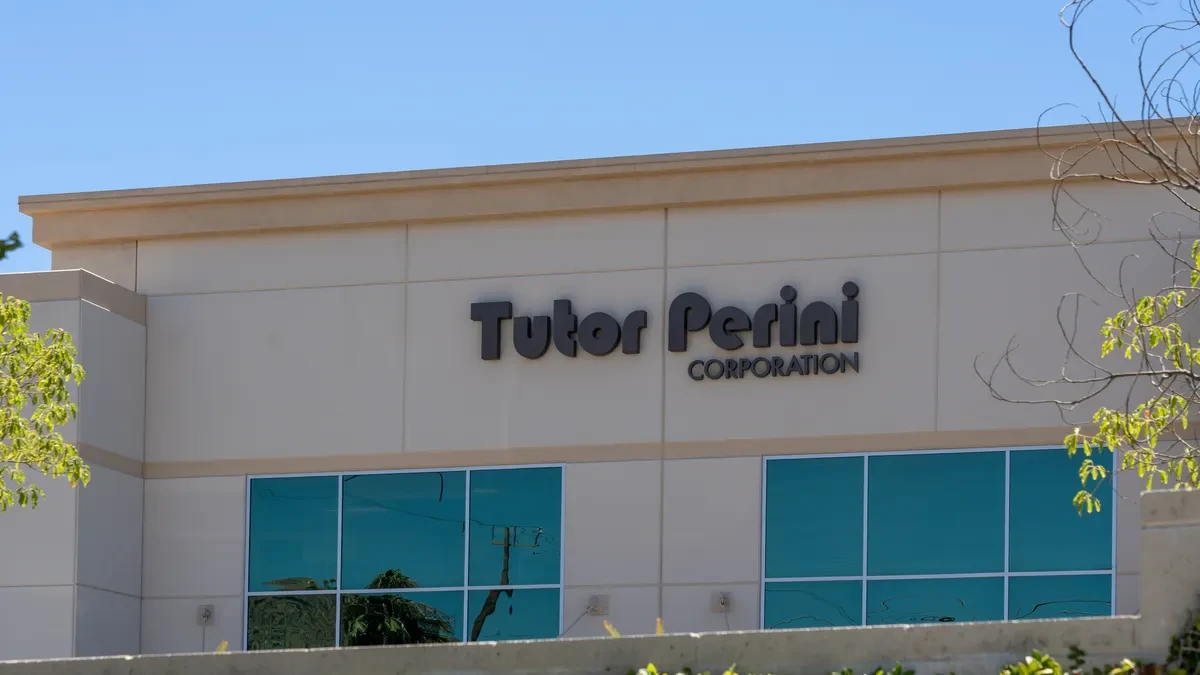
In a decisive move that highlights a broader industry-wide pivot, Tutor Perini Corporation—a renowned Los Angeles-based heavy civil and general contracting giant—has announced that a key subsidiary has secured a major contract for electrical construction work on a massive new data center in Houston, Texas. The project, awarded to Tutor Perini’s specialized electrical construction subsidiary, Fisk, represents a pivotal milestone for the megacontractor as it aggressively diversifies its traditional portfolio.
Historically recognized for its heavy footprint in massive civil infrastructure projects, Tutor Perini’s latest win is concrete evidence of a deliberate strategic shift toward the hyper-growth data center sector. Driven by an unprecedented surge in cloud computing, artificial intelligence (AI), and enterprise digital demands, traditional heavy civil contractors are increasingly looking beyond public sector megaprojects to capture lucrative private-sector tech builds.
According to project announcements, Fisk’s specialized electrical construction scope for the Houston data center is slated to commence before the end of the year. Project stakeholders have targeted a rapid turnaround, with substantial completion anticipated by the first quarter of 2027. This aggressive timeline underscores the immense market pressure to bring mission-critical digital infrastructure online as quickly as possible to meet relentless global demand.
Chronology
To understand the trajectory of Tutor Perini’s modern business model, it is necessary to examine the sequence of events and earnings communications that have culminated in this strategic expansion into the Texas technology market:
- Early 2026: During its initial quarterly earnings calls, Tutor Perini leadership explicitly signaled to investors and industry analysts that the firm was actively exploring high-growth opportunities within the data center construction space. Executives pointed to structural market shifts and shrinking private-sector opportunities in traditional commercial builds as catalysts for exploring alternative high-margin sectors.
- Q1 – Q2 2026: Market reports throughout the first half of the year confirmed that the data center sector was rapidly expanding its share of major contractors’ backlogs. Tutor Perini’s executive team doubled down on this narrative, highlighting data centers as a cornerstone of future corporate revenue diversification during Q2 financial reviews.
- October 9, 2026: Tutor Perini formally announces that its subsidiary, Fisk, has secured the prominent electrical construction contract for the upcoming Houston-area data center project, marking a tangible realization of the company’s stated strategic shift.
- Late 2026 (Upcoming): Fisk is scheduled to mobilize and officially kick off electrical construction operations on the Houston site.
- Q1 2027 (Projected): Project teams anticipate reaching substantial completion on the fast-track electrical scope, allowing the facility to move toward operational readiness.
Supporting Data and Industry Context
The pivot executed by Tutor Perini and its subsidiary Fisk does not occur in a vacuum. It is symptomatic of a sweeping macro-economic transformation across North America’s construction and engineering landscape.
For decades, Los Angeles-headquartered Tutor Perini built its stellar reputation on high-profile, highly complex public civil infrastructure. Among its most defining endeavors are the massive Gateway Tunnel project connecting New York and New Jersey, and California’s ambitious, high-speed rail initiative designed to link Los Angeles and San Francisco. While these monumental megaprojects remain central to the firm’s identity, their multi-year lifecycles, complex bureaucratic approval processes, and inherent public-sector funding risks have driven contractors to seek balanced revenue streams in the private sector.
Enter the data center boom. Fueled by exponential growth in generative AI, machine learning, streaming services, and corporate migration to the cloud, hyperscalers and enterprise tech companies are pouring hundreds of billions of dollars into new physical facilities. These massive structures require extraordinarily complex mechanical, electrical, and plumbing (MEP) infrastructure—areas where specialized subsidiaries like Fisk possess deep, battle-tested expertise.
Furthermore, Tutor Perini is far from alone in making this strategic pivot. Other traditional civil infrastructure heavyweights are racing to capture a slice of the digital pie. For instance, Watsonville, California-based Granite Construction—another legendary civil infrastructure contractor—has similarly underscored its rapidly growing exposure to data center projects during its recent financial disclosures. While Granite’s footprint in the space has frequently centered on foundational site preparation, earthmoving, the construction of access roads, and extensive parking lots, contractors like Tutor Perini and Fisk are capturing the high-value, highly technical electrical and power distribution scopes that represent the true beating heart of any modern data center.
Official Responses and Executive Perspectives
While formal public commentary from corporate executives regarding proprietary client identities for private tech facilities is often constrained by stringent non-disclosure agreements, Tutor Perini’s leadership has been notably transparent about corporate priorities during quarterly financial briefings.

Throughout 2026 earnings calls, executive management repeatedly emphasized that the firm’s long-term enterprise value depends on agility and the willingness to chase where private capital is flowing. By highlighting data centers as a priority sector, leadership communicated to shareholders that the company is fully capable of leveraging its massive operational scale, financial capacity, and technical expertise—traditionally deployed on tunnels, rail systems, and bridges—and channeling those strengths into mission-critical tech infrastructure.
Industry analysts have viewed these executive statements not merely as speculative posturing, but as a necessary adaptation. As public infrastructure budgets face constant political scrutiny and fluctuating federal allocations, securing private sector tech contracts provides a reliable, high-margin hedge. The integration of Fisk’s specialized electrical workforce into the Houston data center project serves as the operational proof-of-concept for the strategies laid out by leadership in earlier earnings reports.
Implications for the Construction Sector
The award of the Houston data center contract to Tutor Perini’s Fisk subsidiary carries profound implications for the broader architecture, engineering, and construction (AEC) industry:
1. Blurring Lines Between Civil and Commercial Contractors
Historically, the construction industry maintained rigid silos between heavy civil contractors (who built roads, bridges, tunnels, and rail systems) and commercial/industrial contractors (who built offices, warehouses, and specialized tech facilities). Tutor Perini’s aggressive push into data centers proves that these traditional boundaries are dissolving. Heavy civil giants possess the bonding capacity, workforce management scale, and project management sophistication required to execute multi-hundred-million-dollar tech campuses, making them formidable competitors to traditional commercial builders.
2. High-Stakes Pressure on MEP and Electrical Subcontractors
Data centers are, fundamentally, massive electrical and thermal management boxes. The scarcity of specialized electrical talent capable of installing complex high-voltage switchgear, backup generator systems, and intricate distribution grids has made electrical subsidiaries like Fisk incredibly valuable assets. The ability to deliver these fast-track projects on schedule—such as Fisk’s target of substantial completion by Q1 2027—will set elite contractors apart from the competition.

3. Supply Chain and Power Grid Realities
As more heavy contractors enter the data center space, the industry must grapple with external systemic constraints, most notably the availability of local electrical grid capacity and long-lead electrical equipment (such as step-down transformers and specialized generators). Projects like the Houston data center require tight synchronization between civil site work, structural erection, and intricate electrical fit-outs. Contractors that can seamlessly coordinate these moving parts will dominate the next decade of digital infrastructure development.
Ultimately, Tutor Perini’s latest contract win is much more than a routine project announcement. It is a defining snapshot of an industry in transition—one where traditional heavy civil titans are successfully reinventing themselves to power the digital age.
