

Published: October 9, 2026
Author: Joe Bousquin
Source: Construction Dive / Enriched Industry Report
Main Facts
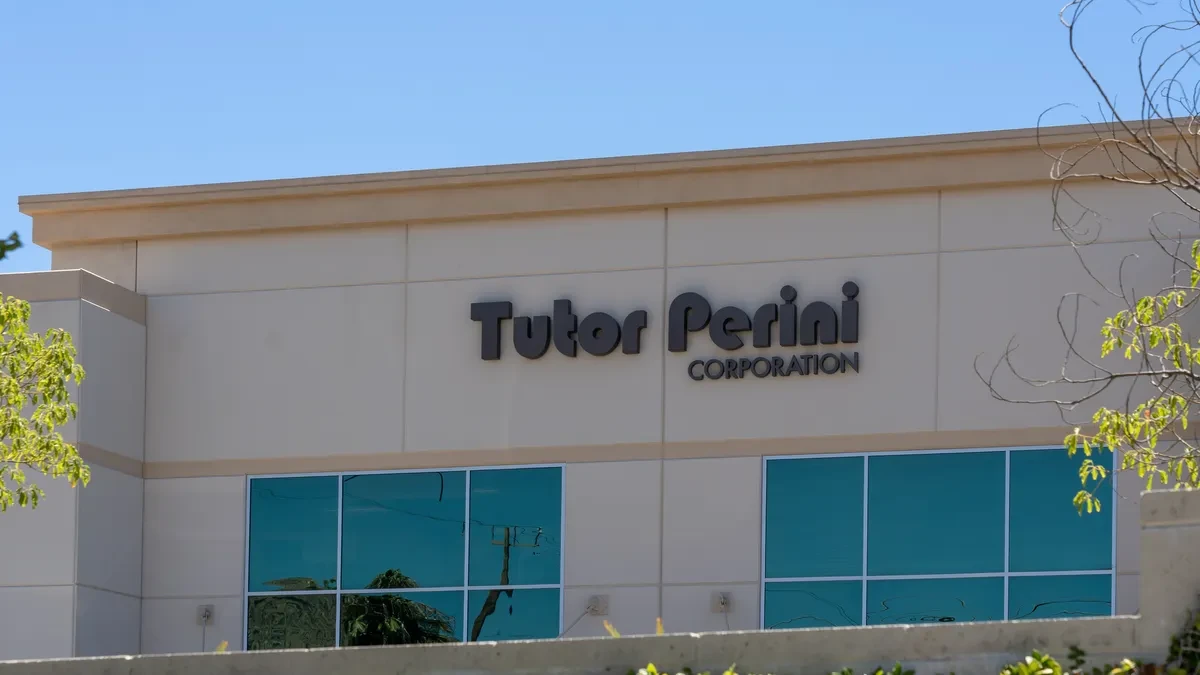
In a landmark development highlighting the shifting priorities of traditional heavy civil contractors, Tutor Perini Corporation has announced that one of its key subsidiaries, Fisk, has secured a major electrical construction contract for a massive new data center project in Houston, Texas. The project represents a critical validation of Tutor Perini’s corporate strategy, which has increasingly emphasized the booming digital infrastructure and data center sectors during earnings calls throughout 2026.
Historically known for massive, high-profile public works and heavy civil infrastructure projects—such as the Gateway tunnel project connecting New York and New Jersey, and California’s ambitious high-speed rail line connecting Los Angeles and San Francisco—Los Angeles-based Tutor Perini is joining a broader industry migration. Major heavy civil and commercial contractors across the United States are aggressively pivoting toward private-sector tech builds to capture high-margin, fast-growing revenue streams driven by the artificial intelligence (AI) boom, cloud computing expansion, and enterprise digital transformation.
According to project timelines released by the companies, Fisk’s specialized electrical construction work on the Houston data center is scheduled to commence later this year. The subsidiary aims to achieve substantial completion by the first quarter of 2027, an aggressive timeline that underscores the high-pressure demand for rapid capacity deployment within the data center development market.
Chronology of a Strategic Shift: From Rails and Tunnels to Digital Cores
To understand the weight of Tutor Perini’s recent contract win in Houston, it is essential to examine the company’s operational timeline over recent fiscal quarters:
- Late 2025 – Early 2026 (Laying the Groundwork): During routine quarterly earnings calls, executives at Tutor Perini began dropping subtle hints about portfolio diversification. While maintaining a stronghold in multi-billion-dollar public civil projects, management signaled that commercial and industrial opportunities—specifically technology-driven facilities—were moving up on their priority list.
- Q1 2026 Earnings Call (The Pivot Revealed): In its first-quarter financial disclosures and investor webcasts, Tutor Perini explicitly outlined its intentions to explore and secure bids within the data center construction space. Executives pointed to the surging market demand, fueled by data-heavy applications and generative AI, which had begun reshaping the backlog portfolios of major national contractors.
- Q2 2026 (Record Revenues and Strategic Alignment): Mid-year earnings reports demonstrated strong financial performance, bolstered by megaprojects. However, leadership reiterated that the company’s long-term growth and margin stability would increasingly rely on capturing private industrial work, setting the stage for specialized subsidiaries like Fisk to target complex electrical infrastructure projects.
- October 9, 2026 (The Houston Contract Announcement): Tutor Perini officially announces that its subsidiary, Fisk, has locked down the Houston data center electrical contract. Work is slated to start immediately, with a hard deadline for substantial completion set for Q1 2027.
Supporting Data and Industry Trends
The decision by Tutor Perini and its peers to chase data center contracts is rooted in profound macroeconomic and technological shifts. The proliferation of hyper-scale data centers has created an unprecedented bottleneck in the construction sector, particularly regarding specialized trades like high-voltage electrical, mechanical, and HVAC systems.
The Data Center Construction Boom
Over the past three years, the demand for data storage and processing has outpaced traditional commercial real estate sectors, such as office spaces and retail. Driven by cloud migration, streaming services, and the explosive adoption of large language models (LLMs) and AI tools, technology giants and real estate investment trusts (REITs) are pouring hundreds of billions of dollars into new data center campuses across North America. Key hubs like Northern Virginia, Dallas-Fort Worth, Phoenix, and Houston have become epicenters of this development gold rush.
A Wider Industry Phenomenon
Tutor Perini is far from the only heavy civil contractor altering its business model to capture this digital wave. For instance, Watsonville, California-based Granite Construction—another heavy civil stalwart traditionally focused on highways, bridges, and site prep—has reported rapidly growing exposure to data center developments. Granite’s expanding footprint in the sector typically involves heavy civil foundational scopes, such as complex earthmoving, site preparation, and the construction of dedicated access roads and expansive parking infrastructure required for massive multi-acre facilities.
The Specialized Trade Challenge
While firms like Granite handle the structural earthworks, subsidiaries like Tutor Perini’s Fisk operate on the mission-critical mechanical and electrical side. Data centers demand absolute reliability, utilizing redundant power grids, massive backup diesel generators, and intricate cooling networks. Securing a contract for electrical installation places Fisk right at the heart of the highest-value component of data center construction, where labor shortages and technical complexity frequently drive up project values.
Official Responses and Executive Perspectives
While specific commentary from individual corporate officers regarding the Houston deal was embedded within broader strategic disclosures, the underlying sentiment across the executive suite has been transparent.

Management has repeatedly emphasized to investors that while public civil megaprojects—such as transit systems, tunnels, and rail networks—provide substantial baseline revenue, they often carry unique bureaucratic hurdles, prolonged litigation risks, and fixed-price margin pressures. In contrast, the private data center market, though fiercely competitive, offers a pathway to healthier profit margins, faster turnaround times, and strategic alignment with some of the world’s most well-capitalized technology enterprises.
Furthermore, the integration of specialized subsidiaries like Fisk allows Tutor Perini to pitch integrated solutions. By combining heavy civil execution capabilities with advanced electrical and mechanical systems integration through its operating units, the corporation can present a unified front to clients demanding single-source accountability for complex, multi-phase technical builds.
Implications for the Construction Industry
The securing of the Houston data center contract by Tutor Perini’s Fisk subsidiary carries several far-reaching implications for the broader architecture, engineering, and construction (AEC) landscape:
1. Convergence of Civil and Commercial Sectors
The traditional boundary separating heavy civil contractors (who build roads, bridges, and dams) from commercial and industrial builders is rapidly dissolving. As public infrastructure funding fluctuates and federal packages face legislative or budgetary friction, diversified megacontractors are proving their agility by applying heavy construction management expertise to private-sector tech assets.
2. Heightened Competition for Specialized Subcontractors
As more general contractors pivot toward digital infrastructure, demand for specialized trade contractors—particularly electrical firms like Fisk, mechanical fabricators, and automation experts—will skyrocket. Subcontractors that possess the engineering depth, workforce capacity, and safety records required to execute mission-critical data center work will wield significant pricing power.

3. Accelerated Project Timelines
With Fisk targeting a swift turnaround—initiating work this year and aiming for substantial completion by the first quarter of 2027—the project highlights the hyper-accelerated nature of tech construction. Unlike public rail or tunnel projects that can span decades, data centers must be operational as quickly as possible to capture market share for tech clients, placing intense pressure on contractors to utilize advanced prefabrication, modular construction, and round-the-clock scheduling.
4. Long-Term Portfolio Resilience for Tutor Perini
For Tutor Perini, this contract acts as a proof-of-concept for its updated corporate roadmap. By successfully capturing a major share of a high-profile digital infrastructure build, the company validates its earnings-call promises to investors. If Fisk and other subsidiaries continue to secure and successfully deliver these high-tech facilities, it could fundamentally re-rate how market analysts view Tutor Perini’s risk profile—transforming it from a pure-play public civil contractor into a diversified, multi-market construction powerhouse primed for the 21st-century digital economy.
