

Main Facts
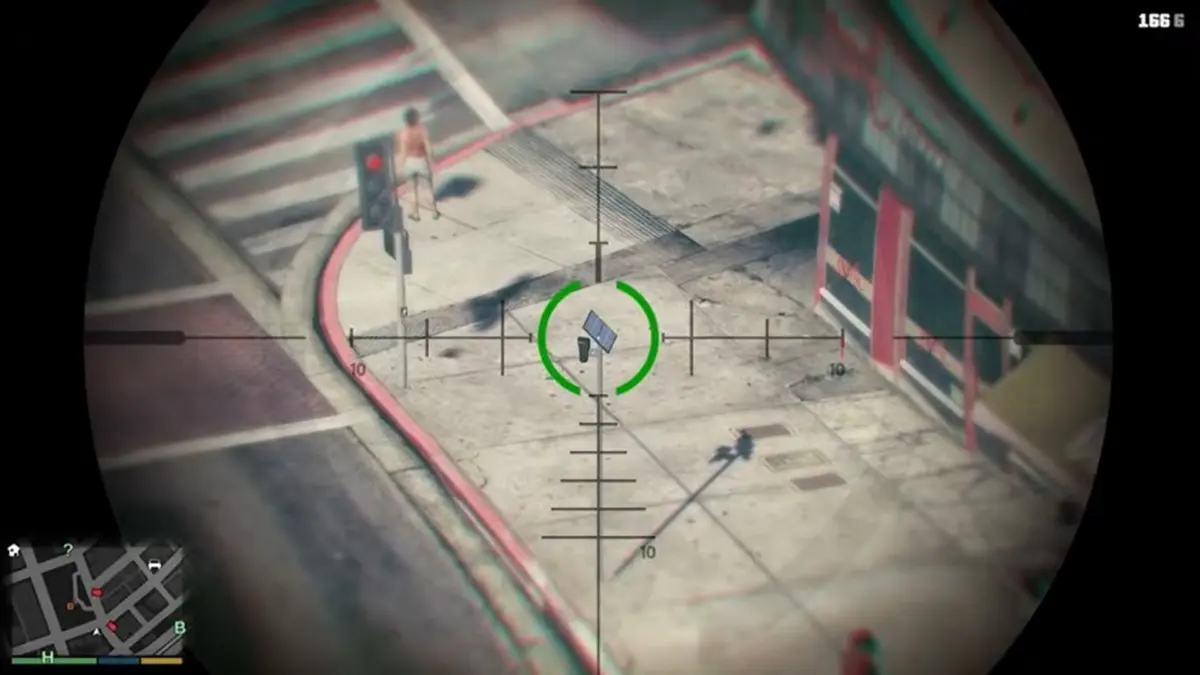
As automated license plate readers (ALPRs) rapidly proliferate across American roadways, a parallel digital uprising has found an unexpected home in the virtual streets of Los Santos. A newly released modification for Grand Theft Auto V—appropriately titled Grand Theft Automated License Plate Reader (GTALPR)—brings the controversial reality of AI-driven mass surveillance directly into the gaming world.
Created by developer Morry Kolman, the mod populates the fictional, Los Angeles-inspired city with 235 custom-built 3D models of Flock Safety cameras. These virtual devices mimic their real-world counterparts by logging player movements, tracking vehicle metadata, and communicating directly with the game’s law enforcement AI. If a player commits an in-game traffic violation or crime, the cameras trigger a police response. True to real-world friction, the mod even incorporates a 1-in-20 chance that a camera will file a false report, initiating an unprovoked police chase.
However, true to the chaotic spirit of the Grand Theft Auto franchise, players are not forced to live under the digital thumb of "Big Brother." Armed with everything from standard firearms to heavy-duty rocket launchers, gamers can obliterate the surveillance hardware. Destroying a camera yields an in-game reward of $600—a figure calculated directly from a teardown conducted by privacy advocacy group Eyes Off Cedar Rapids, which estimated the street value of a real Flock camera’s internal components. The mod also features an integrated speedrun timer, challenging players to optimize their "deflocking" efficiency.
Chronology
The intersection of Flock Safety cameras, public pushback, and virtual protest follows a timeline defined by rapid corporate expansion and escalating civic friction:
- The Real-World Surge: Over recent years, Flock Safety ALPR systems have been installed by municipalities and police departments across thousands of US cities, marketed as essential tools for crime fighting and locating stolen vehicles.
- The Privacy Backlash: As cameras saturated suburban and urban landscapes, public pushback intensified. Critics raised serious concerns regarding racial profiling, data retention practices, AI misreads (which studies suggest may affect over 70% of scanned plates in certain conditions), and warrantless dragnet surveillance.
- The Rise of "Deflocking": Civil disobedience against the cameras evolved from municipal city council battles and contract cancellations into direct action. Activists began covering camera lenses with trash bags or employing physical vandalism to disable the hardware, inspiring online movements like
deflock.org. - Development of GTALPR: Recognizing the cultural zeitgeist surrounding the anti-surveillance movement, developer Morry Kolman conceptualized and built the Grand Theft Automated License Plate Reader mod for Grand Theft Auto V, integrating 3D models of the cameras throughout the map.
- Release and Virality: The mod launched to immediate online attention, bolstered by viral TikTok videos, trailer releases, and gaming community discussions, turning a niche modification into a viral statement on modern privacy.
Supporting Data
The scale of the surveillance apparatus simulated in the GTALPR mod reflects—and in some cases understates—the chilling reality of modern American infrastructure.

- 235 vs. Thousands: The mod peppers Los Santos with 235 Flock cameras. For context, real-world Los Angeles County features more than ten times that number, creating a web of data collection that tracks millions of daily commutes.
- The $600 Bounty: The financial reward for destroying a camera in the game is derived from an actual hardware teardown performed by privacy advocates at Eyes Off Cedar Rapids, pegging the raw material and component cost of a Flock camera unit at roughly $600.
- Error Rates: Real-world studies and privacy audits have highlighted that ALPR systems frequently misread characters on license plates due to lighting, grime, or stylized fonts, occasionally generating false positives that pull innocent drivers into police databases. Kolman baked this exact systemic flaw into the mod, programming a 5% (1-in-20) chance for a camera to fabricate a violation and launch a baseless police pursuit.
Official Responses and Stakeholder Perspectives
The deployment of Flock cameras—and the subsequent real and virtual backlash—has drawn sharp divisions between law enforcement agencies, private tech developers, and privacy advocates.
Flock Safety and Law Enforcement
Proponents of automated license plate readers, including manufacturers like Flock Safety and municipal police departments, maintain that the technology is a vital, force-multiplying asset for public safety. Law enforcement agencies frequently credit ALPR networks with recovering stolen vehicles, amber alert resolutions, and apprehending suspects in violent crimes. Companies like Flock emphasize that their software utilizes objective AI to assist overstretched police departments and argue that data is typically purged after a set retention period unless linked to a specific criminal investigation.
Furthermore, corporate representatives often push back against characterizations of their systems as "mass surveillance," emphasizing that cameras capture public right-of-way data rather than private interior spaces.
Privacy Advocates and Civil Liberties Groups
Conversely, organizations such as the Electronic Frontier Foundation (EFF), the American Civil Liberties Union (ACLU), and grassroots collectives like Eyes Off Cedar Rapids view the expansion of private-public surveillance networks as a profound threat to constitutional rights. Critics argue that aggregating massive databases of citizen movements creates a de facto historical record of where every driver has traveled, visiting places of worship, medical clinics, or political protests.
Privacy advocates have consistently condemned the lack of transparent municipal oversight when local police departments contract with private entities like Flock. They argue that these networks bypass traditional public debate and establish corporate-managed surveillance grids with minimal accountability.

The Gaming Community and Modders
Within the gaming sphere, reactions to the GTALPR mod lean heavily into irony, satire, and catharsis. Grand Theft Auto has long served as a satirical mirror reflecting the absurdities of American consumerism, governance, and urban decay. By framing the removal of surveillance tech as both an achievement-based gameplay loop and a political statement, the mod resonates with players weary of encroaching digital oversight in the physical world. Creator Morry Kolman has framed the project not just as a technical showcase, but as a simulated reality check: if navigating 235 virtual cameras feels suffocating within the confines of a video game, it forces players to confront the growing ubiquity of real-world monitoring.
Implications
The crossover between open-world video game modifications and real-world civil liberties disputes carries broad implications for how society engages with emerging technology.
Gamifying Activism and Awareness
The success and virality of the Grand Theft Automated License Plate Reader mod demonstrate how interactive media can be leveraged to educate and mobilize the public regarding complex policy issues. While physical vandalism of real-world surveillance infrastructure remains illegal and subject to severe criminal penalties, virtual "deflocking" offers a harmless, satirical outlet for public frustration. By gamifying the destruction of ALPR units, the mod transforms dry regulatory debates over data privacy into an engaging, shareable cultural critique.
The Normalization of Perpetual Surveillance
As smart city initiatives and AI-powered monitoring systems become standard fixtures of urban planning, society faces a creeping normalization of perpetual tracking. Technologies originally marketed for specific, high-stakes safety interventions are quietly expanding into all-encompassing monitoring frameworks. The GTALPR mod serves as an uncomfortable reminder that the boundary between science-fiction dystopia and contemporary civic life is rapidly blurring.
Future Horizons for Digital Dissent
As long as local governments continue to partner with private surveillance firms without robust public consent, grassroots pushback will likely continue to manifest in creative ways. Whether through municipal policy challenges, digital activism, or satirical game modifications like Kolman’s, the friction between state surveillance and individual autonomy remains one of the defining social battlegrounds of the modern era. In Los Santos—and across the United States—the camera’s lens is constantly watching, but the desire to break the lens is growing right alongside it.
