

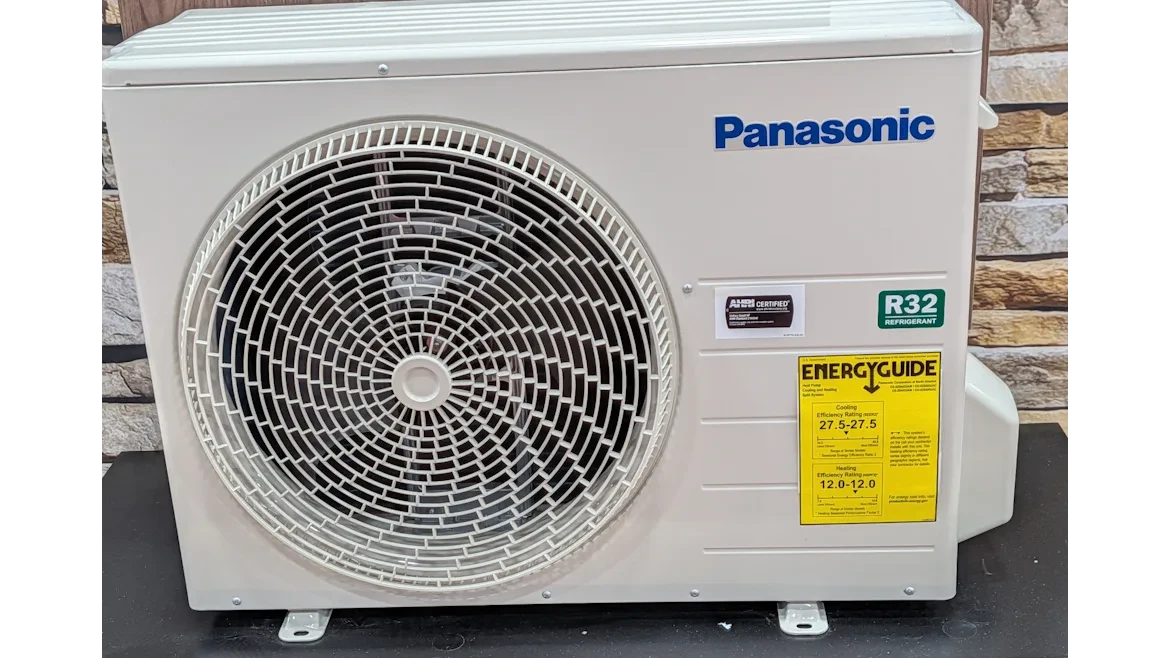
OLYMPIA, Wash. — Amid shifting federal environmental policies and recent modifications to national installation timelines, officials at the Washington State Department of Ecology are doubling down on local mandates. State regulators recently hosted an in-depth informational webinar to remind building owners, property managers, facility operators, and HVAC contractors that Washington’s strict hydrofluorocarbon (HFC) regulations and Refrigerant Management Program (RMP) remain completely unchanged.
The clarification comes in direct response to recent changes made by the U.S. Environmental Protection Agency (EPA) to its federal Technology Transitions (TT) rule. While the federal adjustments have sparked widespread industry questions regarding the continued use and installation of certain high-Global Warming Potential (GWP) refrigerants—such as R-410A—state officials made it clear that Washington’s sovereign environmental laws take precedence.
For commercial and residential property stakeholders in the Pacific Northwest, the message is unequivocal: state compliance standards, equipment restrictions, and rigorous leak-monitoring protocols are fully active, and non-compliance carries significant regulatory risks.
Main Facts: Navigating Washington’s HFC Rule and RMP
The regulatory framework governing HFCs in Washington is divided into two primary thrusts: equipment restrictions governing new installations and a comprehensive lifecycle management program for existing systems.
Laura Kimmel, compliance team lead for the Washington State Department of Ecology’s Refrigerant Management Program, walked webinar attendees through the core tenets of the state’s HFC rule. She emphasized that the state’s statutes target both equipment manufacturing standards and day-to-day operational practices.
New Equipment Restrictions and GWP Caps
Under Washington law, the state imposes strict limits on the global warming potential of refrigerants utilized in newly manufactured or installed systems.
- The 2026 Mandate: Beginning January 1, 2026, Washington instituted a blanket prohibition on refrigerants with a GWP greater than 750 in newly installed residential and non-residential air conditioning equipment. This threshold effectively outlaws the use of traditional high-GWP options, including the widely used R-410A, in all brand-new installations.
- Due Diligence for Buyers: Kimmel strongly advised commercial buyers, property developers, and building operators to verify compliance directly with equipment vendors. Stakeholders are encouraged to secure explicit written verification confirming that any newly purchased HVAC or refrigeration unit complies with state-specific GWP ceilings before taking delivery.
The Refrigerant Management Program (RMP)
Unlike new equipment rules that restrict future builds, the RMP is tailored specifically toward existing air conditioning and commercial refrigeration systems.
- A Focus on Lifespan Integrity: "The goal of the RMP is to reduce refrigerant leakage in currently operating systems throughout their lifespan," Kimmel explained during the briefing. "The program is not about making anyone replace non-leaking systems."
- Thresholds for Participation: Facilities are legally mandated to participate in the RMP if they operate equipment containing 50 pounds or more of refrigerant in a single independent circuit, provided that the refrigerant possesses a GWP of 150 or greater. Facilities operating equipment beneath these specific thresholds are exempt from the program’s registration and reporting mandates.
- Classification Criteria: Regulatory classification for a facility is determined strictly by its largest single piece of equipment, rather than the cumulative, combined refrigerant charge spread across multiple smaller systems on-site.
Chronology of Regulatory Implementation and Compliance Milestones
Understanding the timeline of Washington’s HFC regulations is essential for contractors and facility managers seeking to avoid penalties. The state’s progressive phase-down of high-GWP substances has unfolded over several years, culminating in strict operational mandates that affect every tier of the HVAC supply chain.
- Pre-2024: Washington establishes its foundational climate policies, laying the groundwork for aggressive economy-wide reductions in greenhouse gas emissions, specifically targeting potent HFCs used in cooling and refrigeration.
- January 1, 2026: The implementation date for Washington’s strict GWP restriction (capped at 750) for newly installed residential and non-residential air conditioning equipment, rendering standard R-410A systems non-compliant for new builds.
- Present Day: State officials actively enforce RMP registration, leak inspection cycles, strict repair windows, and mandatory reporting thresholds, while pushing back against federal rollbacks to ensure local emissions goals are met.
Supporting Data: Operational Rules, Leak Windows, and Repair Protocols
For facilities meeting or exceeding the RMP thresholds, compliance involves meticulous record-keeping, routine inspections, and rapid response mechanisms when leaks are detected. Regardless of a facility’s overall size, certain baseline rules apply uniformly across the state.
The 14-Day Repair Rule
When a leak is identified within a regulated system, time is of the essence. Kimmel highlighted one of the most critical absolute rules of the program:
"All leaks must be repaired within 14 days of discovery, and you must keep all records related to discovery and repair for five years."
While the standard window for repair is strictly two weeks, the rule provides limited, highly regulated extensions under specific operational constraints:
- 45-Day Extension: Facilities may apply for an extension of up to 45 days if qualified technicians or specialized replacement parts are unavailable through reasonable commercial efforts.
- 120-Day Extension: In complex industrial process refrigeration settings where repairs necessitate a complete facility shutdown, operators may be granted up to 120 days to execute the necessary fixes.
Verification and System Testing
Once a repair has been physically completed, the process is far from over. Technicians must execute a rigorous verification test alongside a full system leak inspection to ensure the containment failure has been successfully resolved.
Furthermore, the state enforces strict performance caps via annual leak rates. For standard air conditioning systems, leaking more than 8% of the total refrigerant charge within a rolling 12-month period triggers immediate regulatory reporting duties. Facilities are required to calculate these rates continuously, keep precise logs of all refrigerant added or removed, and submit formal leak notifications to the Department of Ecology within 30 days if a threshold is breached.
Automatic Leak Detection (ALD)
Facilities operating massive commercial refrigeration systems are often required to integrate Automatic Leak Detection (ALD) systems. While an approved ALD system can successfully substitute for routine, regularly scheduled physical leak inspections, it does not act as a catch-all waiver.
- ALDs cannot replace the precise inspections required to pinpoint exact leak locations.
- ALDs cannot replace mandatory post-repair verification tests or subsequent follow-up checks.
Official Responses: Washington Refuses to Align with EPA Rollbacks
The most significant takeaway from the Department of Ecology’s webinar centered on the direct collision between federal modifications and state environmental sovereignty.
The Federal Shift vs. State Law
Recently, the EPA revised its federal Technology Transitions rule. Under the updated federal guidance, HVAC contractors and commercial distributors are permitted to continue installing eligible pre-2025 R-410A equipment until existing distributor and manufacturer inventories are completely exhausted. This federal concession was designed to ease supply chain friction and prevent stranded equipment assets.
However, Washington State officials made it explicitly clear that federal leniency does not apply within state boundaries. Leonard Machut, fluorinated gas section manager at the Washington State Department of Ecology, addressed the issue head-on during the webinar’s Q&A session.
"Washington law, in this case, will supersede the recent federal actions to extend that," Machut stated firmly.
Machut provided a vital point of clarification for existing equipment owners, ensuring panic did not spread among property operators who currently rely on functional R-410A systems:
"Also, just to clarify, this is for the installation of new R-410A systems. For everyone who has existing R-410A systems, you can continue to use and operate that equipment, as long as it’s meeting all the other requirements in the law."
When an attendee explicitly asked if the Department of Ecology intended to modify its administrative code to mirror the EPA’s relaxed inventory-exhaustion timeline, Machut’s response was unequivocal:
"The short answer is no. We are not currently planning on making any changes related to the Technology Transitions rule that was recently passed by the EPA."
Implications for Building Owners, Contractors, and the HVAC Industry
The divergence between Washington State mandates and federal environmental guidelines carries profound practical, financial, and operational implications for the regional HVAC ecosystem.
1. Supply Chain and Inventory Misalignment
Distributors and mechanical contractors operating across state lines face a complex regulatory landscape. Equipment that is legally sanctioned for installation in neighboring states under federal inventory exemptions may be entirely illegal to install within Washington borders. Contractors must exercise extreme caution when sourcing inventory, ensuring that any unit destined for a Washington project complies with the state’s post-2026 GWP maximums.
2. Heightened Legal and Financial Exposure
Property owners and facility managers can no longer rely on federal grace periods as a defense against state-level enforcement actions. Failing to register applicable systems, missing annual leak-rate reporting deadlines, or exceeding the strict 14-day repair window without securing a formal extension can result in severe financial penalties and enforcement orders from the Department of Ecology.
As Kimmel noted during the briefing, simply exceeding a leak rate threshold does not automatically constitute a violation—provided it is reported transparently and handled correctly—but failing to submit mandatory paperwork on time guarantees an administrative infraction.
3. Collaboration Over Enforcement
Despite the uncompromising stance on state rules, Department of Ecology representatives repeatedly stressed that their primary objective is partnership and education rather than punitive policing. Throughout the webinar, officials urged property operators, service technicians, and mechanical contractors to proactively reach out with compliance questions before operational issues escalate into regulatory violations.
"We want to be a resource," Kimmel concluded. "We’re here to help."
As Washington continues to pioneer aggressive climate and emissions-reduction policies independently of federal oscillations, stakeholders across the building sector must prioritize local regulatory tracking, open lines of communication with state officials, and strict adherence to lifecycle refrigerant management.
