

By Scott Stein
Editor at Large
Main Facts: A Bold Leap for a Storied Franchise
Nintendo’s venerable Fire Emblem tactical role-playing franchise has undergone numerous stylistic and mechanical evolutions since its international debut alongside Advance Wars in 2003. Yet, throughout its history on systems ranging from the Game Boy Advance to the original Nintendo Switch, the series has largely adhered to a recognizable formula of medieval fantasy drama, political intrigue, and grid-based combat.
With the release of Fire Emblem: Fortune’s Weave, arriving this week as a major exclusive for the Nintendo Switch 2, the franchise is attempting something radically different. Developed by Intelligent Systems and published by Nintendo, Fortune’s Weave breaks away from familiar tropes by introducing a surprisingly dark, futuristic, and genre-blending narrative framework. Blending ancient machinery, laser weaponry, and classic tactical gameplay, the title serves as both a technical showcase for Nintendo’s next-generation hardware and a structural reinvention for the long-running series.
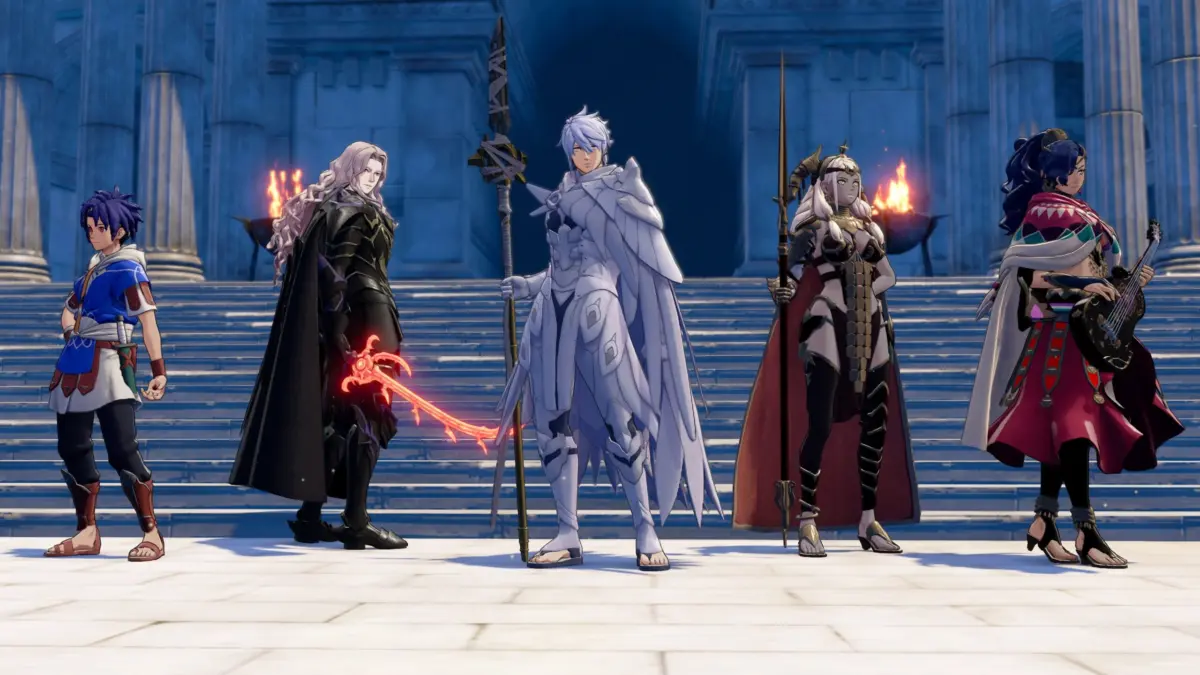
The game centers its sprawling narrative in the region of Dagda and its Rome-inspired capital city, Dagsion. Rather than following a single protagonist through a linear campaign, Fortune’s Weave weaves four parallel storylines focusing on four deeply flawed, distinct characters: a reckless boy, a moody warrior, a bold queen, and a vengeful dancer. Players begin their journey through the perspective of an enigmatic, glowing ambassador named Eshmel—who promptly travels backward in time and transforms into a bird—before anchoring themselves in the intersecting fates of Dagsion’s populace.

While maintaining the series’ signature turn-based tactical combat, Fortune’s Weave expands outward, incorporating gladiator-style arena battles, regional side quests, recruitment mechanics, and deep exploration across an expansive overworld map.
Chronology and Development: The Evolution of Fire Emblem on Modern Hardware
To understand the significance of Fortune’s Weave, one must look at the recent trajectory of the Fire Emblem franchise on Nintendo hardware.
- 2003–2019 (The GBA to 3DS Era): The series built its foundational Western fanbase on portable hardware. Titles like Fire Emblem: The Blazing Blade established the grid-based tactical blueprint, while subsequent 3DS entries like Awakening and Fates mainstreamed the franchise through social mechanics and relationship-building systems.
- 2019 (Fire Emblem: Three Houses): Released on the original Nintendo Switch, Three Houses was a critical and commercial milestone. Its academy-focused structure and extended, branching narrative flow won over legions of new fans, though its school-life simulation elements alienated players looking for pure tactical focus.
- 2023 (Fire Emblem Engage): In stark contrast to Three Houses, Engage pivoted heavily back toward combat mechanics and fan-service celebrations of past protagonists, leaving some narrative-driven players wanting more depth.
- The Present (Nintendo Switch 2 Launch Window): Nintendo positions Fortune’s Weave as a premier software pillar for the Switch 2. Capitalizing on the console’s enhanced processing capabilities, the game renders sprawling battlefields, complex political maps, and seamless transitions between narrative cutscenes and tactical maps without the technical constraints of its predecessor.
Supporting Data and Gameplay Mechanics: Scale, Scope, and Structure
Fortune’s Weave is an immense, sprawling undertaking that dwarfs many of its predecessors in sheer scope. Review metrics and structural breakdowns highlight what players can expect from the
Structural Overview
- Four Intersecting Campaigns: Players can toggle between the four parallel narratives at will, functioning much like reading four intertwined novels simultaneously.
- The Hub & Arena System: Much of the game’s core gameplay loop revolves around waves of gladiatorial combat within Dagsion, punctuated by recruitment opportunities for rogue candidates.
- Exploration and Side Content: Beyond the arenas, players navigate a vast regional map filled with dungeons, hidden items, side quests, and reputation-building encounters.
- Time Commitment: A standard playthrough easily pushes past the 20-hour mark, with some story cutscenes extending for several minutes, positioning the game as a massive fantasy epic.
Technical Performance on Nintendo Switch 2
As a showcase for the Switch 2, Fortune’s Weave leverages the console’s upgraded hardware to deliver dense, high-resolution battle maps loaded with units, fluid animations, and vastly reduced loading times. The system’s growing library of exclusives gains substantial credibility from a title of this scale, proving that Nintendo’s new platform can handle cinematic, high-budget tactical RPGs with ease.

Official Responses and Developer Insights
While Intelligent Systems and Nintendo have largely let the game speak for itself ahead of launch, promotional materials and overview trailers have emphasized the unique narrative structure of Dagda.
In official Nintendo Direct presentations, producers highlighted the decision to move away from the academy tropes of Three Houses and the nostalgic fanservice of Engage. Instead, the creative team aimed to construct a standalone mythology. By setting the game in an entirely distinct corner of the Fire Emblem universe with its own historical timeline, developers ensured that newcomers could dive straight into Fortune’s Weave without requiring encyclopedic knowledge of past franchise lore.
Furthermore, Nintendo addressed concerns regarding the game’s daunting length by introducing quality-of-life features, such as the ability to fast-forward through weeks between major arena battles—though players are left to balance pacing efficiency against narrative immersion.
Implications: What Fortune’s Weave Means for the Future of Tactical RPGs
The release of Fire Emblem: Fortune’s Weave carries significant implications for both Nintendo’s hardware strategy and the tactical RPG genre as a whole.

1. A Benchmark for Switch 2 Exclusives
The Nintendo Switch 2 requires strong, prestige third-party and first-party software to cement its generational transition. By delivering a tactical RPG of novelistic proportions, Nintendo demonstrates that the Switch 2 can host mature, structurally complex, and graphically demanding epics that appeal directly to core gamers.
2. Accessibility Meets Complexity
One of the most enduring challenges for modern tactical RPGs is balancing narrative depth with pacing. Fortune’s Weave tackles this by adopting an omnibus storytelling style. Allowing players to jump between four different perspectives prevents any single narrative arc from feeling overbearing, though the sheer volume of text and cutscenes risks pacing fatigue—as noted by players reaching the 20-hour mark. Its willingness to experiment with futuristic and post-apocalyptic motifs also proves that the Fire Emblem IP is no longer strictly bound to traditional high-fantasy settings.
3. A Definitive Entry for Non-Fans
For players who have historically bounced off the Fire Emblem series due to dense continuity or restrictive gameplay loops, Fortune’s Weave offers an inviting yet challenging entry point. Its self-contained mythology, striking visual identity, and multifaceted character arcs make it a standout recommendation.
Final Verdict
Fire Emblem: Fortune’s Weave is an ambitious, sprawling, and visually arresting tactical epic. While its massive scale and repetitive narrative beats demand patience and significant time investment, its structural innovations and gripping character backstories elevate it above standard genre fare. For veterans and hesitant newcomers alike, it stands proudly as a landmark release for the Nintendo Switch 2—and quite possibly the definitive Fire Emblem experience of the modern era.
