

Published: September 27, 2026
Curated by: HAN Shuang
Photography by: Guowei Liu
Main Facts
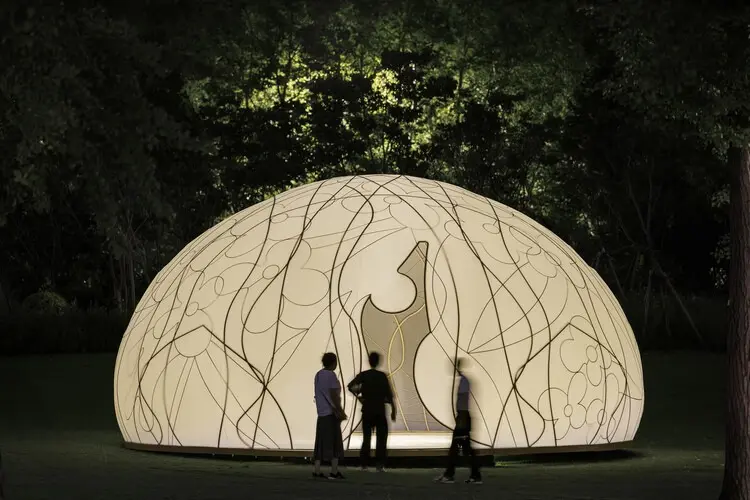
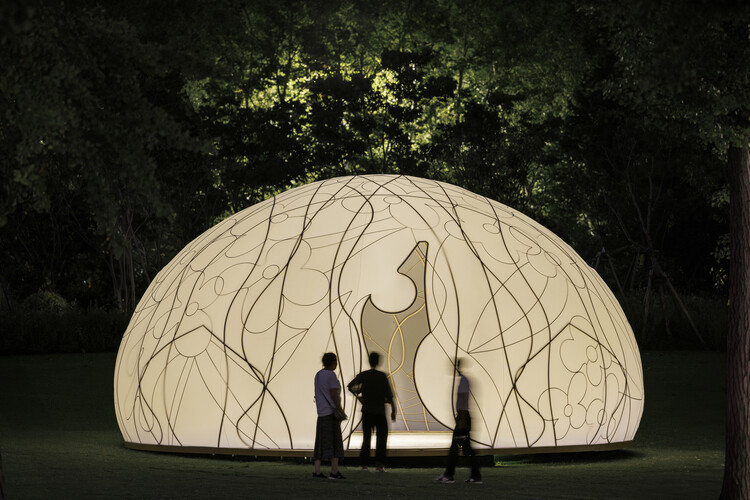
In celebration of the traditional Chinese Mid-Autumn Festival, architectural and design practice HCCH Studio has completed "Osmanthus Moon," a captivating short-term public art installation that bridges contemporary design with intangible cultural heritage. Located in an immersive public setting, the project functions as both a physical pavilion and a luminous projection of cultural memory.

At its core, "Osmanthus Moon" draws inspiration from two distinct yet deeply resonant cultural touchstones: the osmanthus flower—universally recognized as a seasonal signature and olfactory symbol of autumn throughout East Asia—and the expressive, spontaneous action paintings of a folk "Zao Hua" (stove flower) artist. Through careful spatial choreography, material selection, and lighting design, HCCH Studio has crafted a temporary landmark that invites visitors to reflect on the passage of time, folklore, and collective identity during one of the lunar calendar’s most significant celebrations.
Chronology of the Project: From Concept to Celebration
The realization of "Osmanthus Moon" followed a compressed yet rigorous timeline typical of high-profile temporary public art installations.
- Early Conceptualization (Late Spring 2026): HCCH Studio was approached to conceptualize a site-specific installation that could honor the cultural heritage of the Mid-Autumn Festival while engaging modern urban dwellers. The design team, led by principal architects and curators, began researching traditional motifs, settling quickly on the poetic association between the autumn moon and osmanthus blossoms.
- Design Development and Heritage Collaboration (Summer 2026): During this phase, the studio integrated historical folk art traditions into the modern architectural framework. Collaborations were established with folk "Zao Hua" artists to study traditional stove-painting techniques, translating the dynamic, expressive strokes of the craft into spatial and visual narratives.
- Fabrication and On-Site Assembly (Early September 2026): Utilizing lightweight, sustainable materials suited for a temporary structure, the fabrication phase prioritized rapid assembly and minimal environmental impact.
- Unveiling and Festival Launch (September 27, 2026): "Osmanthus Moon" officially opened to the public, coinciding with the peak festivities of the Mid-Autumn Festival. The installation immediately drew crowds of local residents, tourists, and design enthusiasts eager to experience the interplay of light, shadow, and heritage.
Supporting Data and Architectural Specifications
While temporary installations often prioritize visual impact over structural permanence, HCCH Studio’s "Osmanthus Moon" demonstrates sophisticated engineering and thoughtful material curation:
- Project Typology: Public Art Installation / Pavilion / Temporary Architecture
- Design Firm: HCCH Studio
- Curator: HAN Shuang
- Photographer: Guowei Liu
- Primary Cultural Motifs: Traditional Chinese Mid-Autumn Festival, Osmanthus flower patterns, folk "Zao Hua" (stove flower) intangible cultural heritage.
- Structural Approach: Modular, lightweight construction designed for zero-impact site removal following the conclusion of the festival season.
- Visual Media: Supported by an extensive project gallery comprising 22 high-resolution exterior and interior photographs documenting the installation’s appearance across changing daylight and nighttime illumination cycles.
Official Responses and Curatorial Intent
According to the design team at HCCH Studio, "Osmanthus Moon" was conceived not merely as a decorative holiday backdrop, but as a multi-sensory dialogue between contemporary architecture and ancient craftsmanship.

"Osmanthus Moon is a short-term public art installation created to celebrate the traditional Chinese Mid-Autumn Festival," the architects noted in an official statement. "It is a projection, specially as well as metaphorically, of the widely beloved traditional osmanthus pattern—a signature plant and flavor of autumn—and forms a dialogue with the action paintings of a folk ‘Zao Hua’ (stove flower) artist, an intangible cultural heritage tradition."
Curator HAN Shuang emphasized the significance of reviving fading folk arts through modern architectural interventions. By placing the spontaneous, uninhibited brushwork of the "Zao Hua" tradition into direct conversation with the precise geometry of a contemporary installation, HCCH Studio successfully bridged generational divides in artistic expression. The project serves as an active platform for public engagement, prompting viewers to reconsider how intangible cultural heritage can be preserved, reinterpreted, and celebrated in contemporary urban environments.

Implications for Public Architecture and Cultural Preservation
The debut of "Osmanthus Moon" arrives at a time when cities across the globe are increasingly turning to temporary public installations to activate civic spaces and foster community cohesion. HCCH Studio’s work offers several critical implications for the future of urban design and heritage conservation:
1. Revitalizing Intangible Cultural Heritage
Traditional crafts such as "Zao Hua" face the constant threat of obsolescence in modern, fast-paced societies. By embedding these techniques within a high-visibility architectural installation, HCCH Studio demonstrates how contemporary design can act as a vehicle for cultural transmission. The project proves that heritage crafts do not need to remain static museum pieces; instead, they can evolve dynamically when reinterpreted through modern spatial practices.

2. The Power of Ephemeral Architecture
Permanent structures require long-term commitments of resources, capital, and space. In contrast, ephemeral installations like "Osmanthus Moon" offer a nimble alternative for urban activation. They allow designers to test bold, conceptual ideas without permanently altering the urban fabric. This flexibility encourages experimentation, making public art more responsive to seasonal shifts, cultural celebrations, and community-driven events.
3. Multi-Sensory Placemaking
Modern urban planning often prioritizes visual metrics, yet human memory is deeply tied to multi-sensory experiences. By channeling the aromatic and visual metaphors of the osmanthus flower alongside expressive folk painting, HCCH Studio highlights the importance of sensory-rich placemaking. The installation transforms an ordinary public site into a poetic sanctuary, reminding urban dwellers of the emotional and psychological benefits of connecting with nature, tradition, and community.

As "Osmanthus Moon" welcomes visitors throughout the autumn season, it stands as a testament to the enduring power of design to unite past and present, creating spaces where collective memories are honored, reimagined, and shared anew.
