

Main Facts: The Intersection of Politics, Autonomy, and Infrastructure
The landscape of American transportation is currently defined by a volatile mix of high-stakes political rhetoric, rapid technological experimentation, and persistent infrastructure gaps. On a recent episode of Quick Charge, the discourse centered around three major developments shaking up the electric vehicle (EV) and autonomous driving sectors:
- Political Rhetoric vs. Reality: Former President Donald Trump delivered a speech at a Red Rock rally featuring heavy criticism of electric vehicles, characterizing EV drivers through colorful political hyperbole and repeating claims regarding non-existent mandates and artificial gas bans.
- The Autonomy Bottleneck: Tesla’s Full Self-Driving (FSD) software continues to face intense public scrutiny as drivers report persistent traffic violations and police stops, drawing comparisons to competitors like Waymo. Waymo’s CEO recently detailed a comprehensive critique arguing that Tesla’s camera-and-neural-net approach fundamentally struggles to outperform human drivers in complex, edge-case scenarios.
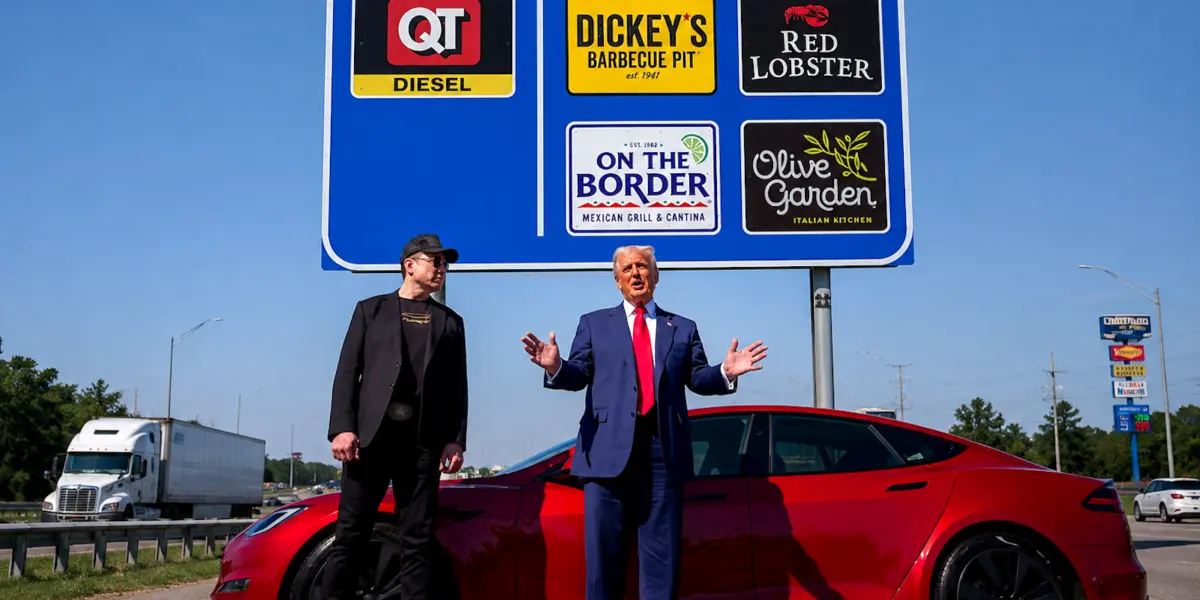
- The Core Infrastructure Crisis: Amidst the political noise and futuristic promises of robotaxis, Trump accidentally highlighted a genuine, foundational problem plaguing the American EV market: the charging infrastructure is largely invisible and inadequate for mainstream adoption.
While political talking points often miss the mark regarding how vehicles are manufactured, sold, and regulated, the American consumer experience at the public charging plug remains a significant barrier to widespread adoption. As the industry races toward an electrified future, bridging the gap between political perception, software limitations, and physical infrastructure has never been more urgent.
Chronology: How the EV and Autonomy Debate Reached This Flashpoint
To understand how political grandstanding, autonomous driving ambitions, and charging infrastructure collided in the current media cycle, it is necessary to trace the timeline of key events leading up to this point:

- The Lobbying Era and EV Investments (2020–2024): Automakers, including Tesla, invested heavily in lobbying federal and state governments to shape emissions standards and EV tax credits. Elon Musk’s companies spent massive sums engaging with lawmakers to navigate regulatory frameworks, even as public messaging surrounding the future of gas-powered vehicles became a polarized cultural lightning rod.
- The Rise of Autonomous Testing (2023–2025): Competitors in the autonomy space bifurcated sharply in their strategies. While Tesla leaned aggressively into consumer-facing "Full Self-Driving" packages leveraging neural networks and standard vehicle camera suites, companies like Waymo focused on geofenced, LiDAR-equipped robotaxi fleets. Public scrutiny mounted over the safety, reliability, and legal liability of both systems.
- The Red Rock Rally Speech (Recent Weeks): During a campaign-style address at Red Rock, Donald Trump took aim at green energy policies. He utilized colorful analogies, claiming EV drivers suffer from a metaphorical "disease," while lambasting government incentives and repeating claims about federal mandates.
- The Waymo Deep Dive (Recent Days): In a lengthy, comprehensive technical breakdown, Waymo’s leadership spent over 40 minutes analyzing why Tesla’s current autonomous architecture faces immense hurdles in matching or exceeding human driving capabilities across unpredictable environments.
- The Quick Charge Breakdown: Automotive and tech commentators examined these intersecting storylines, separating the factual inaccuracies of political speeches from the undeniable truths regarding America’s underperforming public charging network.
Supporting Data: The Reality of U.S. Charging Infrastructure and Autonomous Claims
A closer examination of the data reveals why certain elements of the current debate resonate with consumers, while others amount to political posturing.
1. The "Invisible" Charging Problem
Consumer surveys and automotive analysts consistently point to "range anxiety" and charging friction as the top deterrents for prospective EV buyers.
- Reliability Metrics: Independent studies of public DC fast-charging stations frequently reveal operational reliability rates hovering well below 80% in many regions, meaning drivers regularly encounter broken screens, faulty payment readers, or offline chargers.
- Geographic Disparities: While major highway corridors (such as Tesla’s proprietary Supercharger network) offer robust coverage, secondary highways, rural communities, and multi-family urban housing complexes suffer from a severe deficit of Level 2 and DC fast chargers.
- Visibility and Signage: Unlike traditional gas stations—which feature towering overhead illuminated signs visible from miles away—public EV charging stalls are frequently tucked away in the back corners of commercial parking lots, behind buildings, or poorly lit, rendering them functionally "invisible" to drivers unfamiliar with the location via an app.
2. Autonomy Performance Metrics
The debate between Tesla’s unsupervised FSD goals and competitor systems centers on hardware redundancy and software validation.

- Sensor Suites: Waymo and other traditional autonomous vehicle developers rely on a combination of LiDAR, radar, cameras, and ultra-high-definition mapping. Tesla utilizes an all-camera system backed by deep neural networks.
- Intervention Rates: Regulatory filings and safety reports indicate that geofenced robotaxi fleets require significantly fewer human safety driver interventions per mile in controlled environments compared to consumer vehicles attempting to navigate unmapped, chaotic weather and road conditions using camera-only setups.
- Law Enforcement Interaction: Tesla drivers utilizing FSD continue to document instances where the software misinterprets traffic signals, hesitates inappropriately, or executes maneuvers that prompt traffic stops by local law enforcement, underscoring the gap between Level 2 assistance and true autonomy.
Official Responses and Industry Perspectives
The convergence of political rhetoric, tech rivalry, and infrastructure shortcomings has prompted sharp responses from industry leaders, legal experts, and analysts.
Tesla and Elon Musk’s Stance
Tesla has consistently defended its approach to vehicle autonomy, maintaining that its massive fleet data collection (millions of cars driving billions of miles) provides an insurmountable data advantage over geofenced competitors. Regarding infrastructure, Tesla continues to open its Supercharger network to other automakers via the adoption of the North American Charging Standard (NACS), attempting to solve the very availability issues highlighted by critics. However, company executives have largely avoided direct engagement with political caricatures regarding EV adoption, focusing instead on scaling production and reducing battery costs.
The Competitor Perspective (Waymo)
Waymo’s leadership has taken a more vocal technical stance. In their recent extensive breakdown, executives emphasized that achieving full autonomy requires deep sensor redundancy. They argue that relying solely on vision systems without active depth-sensing hardware like LiDAR introduces catastrophic blind spots during severe weather (heavy snow, blinding rain, or glare), making it mathematically and logically difficult to out-perform a attentive human driver across all edge cases.

Political and Public Policy Reactions
Lawmakers from across the political spectrum hold sharply divergent views on the future of transportation. Proponents of federal EV incentives argue that subsidies are essential for lowering emissions, reducing dependence on foreign oil, and securing domestic manufacturing jobs in the battery supply chain. Conversely, critics argue that the market should dictate technology adoption without government intervention, pointing to consumer price sensitivity, grid capacity constraints, and charging deserts as evidence that the transition is being forced prematurely.
Implications: What This Means for the Future of American Mobility
The intersection of these controversies holds profound implications for the mainstream dream of electric vehicle adoption and autonomous driving in the United States.
1. The Necessity of Infrastructure Overhaul
Trump’s accidental critique of invisible charging highlights a bipartisan concern: if the average American cannot easily find, access, and operate a public EV charger with the same frictionless convenience as a traditional gas pump, mass adoption will stall. Federal investments through initiatives like NEVI (National Electric Vehicle Infrastructure) are beginning to deploy capital, but execution speed, bureaucratic red tape, and maintenance accountability must improve dramatically. Charging stations must become physically prominent, reliable, and universally accessible.

2. The Marketing vs. Reality Gap in Autonomy
As long as consumer-facing autonomy software requires constant driver supervision while being marketed under names like "Full Self-Driving," consumer confusion and regulatory scrutiny will persist. Law enforcement interactions, traffic tickets, and safety incidents risk souring public perception of AI-driven mobility. The industry must navigate a delicate line between aggressive software innovation and rigorous safety validation to maintain consumer trust.
3. Cutting Through the Noise
Ultimately, the transition to electric mobility and autonomous transportation is being slowed not by political slogans or partisan talking points, but by practical, physical bottlenecks. By separating the factual inaccuracies of campaign rhetoric from legitimate grievances regarding charging infrastructure and software reliability, policymakers, automakers, and consumers can better focus on building a more transparent, dependable, and efficient transportation future.
