

By Zachary Phillips | Published August 7, 2026
Editor’s note: This story focuses on mental health and suicide. If you or someone you know is having suicidal thoughts, support is available 24/7. In the United States, you can call or text the Suicide & Crisis Lifeline at 988.
Main Facts
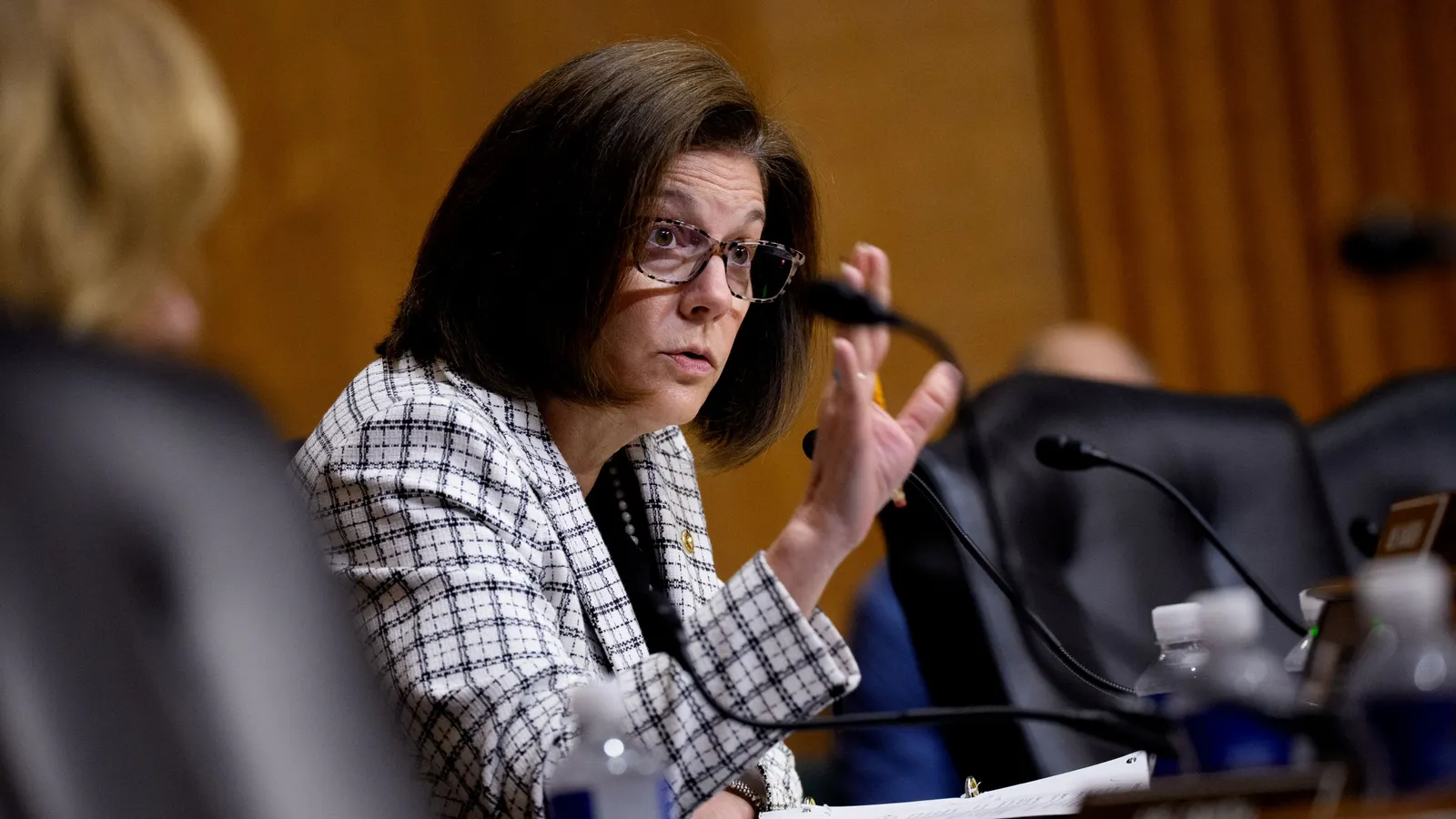
In a decisive legislative push to address a quiet and devastating epidemic within America’s blue-collar workforce, U.S. Senator Catherine Cortez Masto (D-Nev.) has introduced a landmark bill aimed at combating the disproportionately high rate of suicide among construction workers.
The newly proposed legislation authorizes the Department of Health and Human Services (HHS)—specifically through the Centers for Disease Control and Prevention (CDC)—to conduct comprehensive, rigorous research into the occupational, organizational, and individual risk factors driving suicides in the construction sector. Furthermore, the bill mandates the formulation of actionable, evidence-based policy recommendations designed to reduce these tragic deaths and destigmatize mental health conversations on the jobsite.
Should the bill successfully navigate Congress and be enacted into law, federal health agencies will be required to deliver a comprehensive report to lawmakers within three years. This report will outline targeted policy solutions tailored to the unique stressors of the construction industry.
Sen. Cortez Masto’s legislation arrives at a critical juncture. While construction trades drive the physical expansion of American infrastructure—building everything from residential neighborhoods and towering corporate headquarters to highways and community spaces—the people behind the hard hats face severe, systemic mental health burdens that have long gone unaddressed by traditional occupational safety measures.
Chronology: The Evolution of Mental Health Awareness in Construction
For decades, occupational safety and health programs across the United States focused almost exclusively on physical hazards: fall protection, heavy machinery safety, trenching collapses, and personal protective equipment. Mental health was rarely, if ever, considered an OSHA compliance priority or an operational risk.
However, over the last several years, industry leaders, labor unions, and advocates have systematically brought the psychological crisis in construction to the forefront of the national conversation.
- March 2024: Major contractor Bechtel made national headlines by pledging a historic $7 million to the American Foundation for Suicide Prevention (AFSP). At the time, it stood as the largest corporate donation in the nonprofit’s history, establishing a long-term framework to confront mental health struggles directly on jobsites.
- September 2024–2025: The annual Construction Suicide Prevention Week gained unprecedented traction nationwide, serving as a unified platform for contractors, subcontractors, and laborers to pause work, host safety stand-downs, and discuss emotional well-being. The Bechtel-AFSP partnership—subsequently branded as “Hard Hat Courage”—announced during the 2025 campaign that it had successfully reached 165,000 workers, setting an ambitious target to educate half a million workers within six years.
- March 2026: Recognizing the acute localized pressures faced by urban laborers, the Building & Construction Trades Council of Greater New York launched the Building Trades Peer Support Network. The initiative trained 1,000 rank-and-file members across 15 affiliated unions to act as peer counselors, operating under the empowering mantra: "It’s not weak to speak."
- August 7, 2026: Senator Cortez Masto formally introduces federal legislation in Washington, D.C., bridging grassroots industry efforts with federal research capabilities and policy mandates.
- September 14–18, 2026: The upcoming Construction Suicide Prevention Week is slated to mobilize hundreds of thousands of workers, arriving just weeks after the introduction of the new federal bill.
Supporting Data and Research Metrics
The push for federal intervention is backed by alarming public health statistics regarding suicide rates by industry. According to historical data from the CDC, the construction and extraction occupational group consistently ranks among the highest for suicide rates in the United States, often registering numbers significantly higher than the general adult working population.
Under the text of Cortez Masto’s bill, federal researchers are directed to look far beyond baseline numbers to understand the root causes. The CDC’s mandated study will examine a wide array of overlapping variables, including:
- Demographic Information: Analyzing how factors such as age, gender identity, and socioeconomic background intersect with occupational stress.
- Sector-Specific Trades: Investigating whether specific disciplines within construction—such as roofing, heavy highway construction, general carpentry, or electrical work—carry distinct psychological tolls.
- Union Status and Benefits: Evaluating the correlation between union membership, collective bargaining protections, health plan coverage, and overall psychological stability.
- Clinical History: Reviewing the prevalence of historical substance abuse, undiagnosed or untreated mental health disorders, and chronic physical injuries resulting from jobsite accidents.
By synthesizing these data points, public health officials hope to map out the exact pathways that lead construction workers toward crisis, allowing for preventative interventions rather than reactive measures.
Official Responses and Congressional Support
The legislation has quickly drawn a powerful coalition of bipartisan and Democratic cosponsors who recognize the nationwide scope of the crisis. The bill is formally cosponsored by Senators Mark Warner (D-Va.), Jeanne Shaheen (D-N.H.), Ben Ray Luján (D-N.M.), Mark Kelly (D-Ariz.), and John Hickenlooper (D-Colo.).

In her official statement accompanying the bill’s introduction, Senator Cortez Masto emphasized the immense debt society owes to the construction workforce, contrasted sharply against the lack of systemic support they receive.
"From our homes to our offices, our roads to our favorite coffee shops, construction workers are responsible for building America," Cortez Masto said. "But work in this industry presents distinct mental health risks, and we owe it to construction workers to find solutions. This legislation will give us the tools we need to combat the tragically high rate of suicide among construction workers and work to end the stigma around mental health on the jobsite."
Labor organizations and mental health advocates have similarly praised the legislation, viewing it as a vital step toward shifting the culture of an industry historically dominated by a "tough-it-out" mentality. For generations, expressing vulnerability, emotional distress, or chronic pain was treated as a professional liability. Advocates hope that marrying federal data collection with localized peer support will fundamentally alter jobsite culture from the top down and the bottom up.
Implications for the Construction Industry
The passage of Cortez Masto’s bill could trigger profound operational and cultural shifts across the American construction landscape.
1. Regulatory and Policy Shifts
While current Occupational Safety and Health Administration (OSHA) standards focus heavily on physical safety compliance, a federally mandated HHS report on construction suicide risk factors could pave the way for formal regulatory recommendations. While immediate punitive enforcement regarding mental health is unlikely, employers could soon see voluntary or mandated mental health frameworks integrated into standard safety programs, akin to existing protocols for heat stress or fall prevention.
2. Corporate Responsibility and Insurance
Major general contractors and subcontractors may face increasing pressure from investors, project owners, and insurance carriers to demonstrate proactive mental health strategies. Just as an exemplary Experience Modification Rate (EMR) for physical injuries is vital for winning competitive bids, corporate metrics surrounding wellness programs, employee assistance programs (EAPs), and peer support training could become standard criteria in project procurement.

3. Transforming Jobsite Culture
The ultimate success of these initiatives rests on breaking down cultural barriers. Construction sites are traditionally high-stress, fast-paced environments characterized by strict deadlines, physical exhaustion, job insecurity, and fluctuating employment cycles. Chronic musculoskeletal pain—often self-medicated with opioids or alcohol—frequently compounds mental health struggles.
Programs like New York’s peer network and the nationwide "Hard Hat Courage" campaign demonstrate that workers respond best when support comes from peers who understand the realities of the trade. If federal research can successfully identify high-risk subsets—such as independent subcontractors lacking robust health plans or younger workers navigating high-pressure environments—mental health resources can be deployed with surgical precision.
As the industry prepares for Construction Suicide Prevention Week this coming September, the convergence of grassroots advocacy, corporate philanthropy, and federal legislative action signals a turning point. For an industry dedicated to building the physical foundations of modern society, the mission is now expanding to ensure the psychological survival and well-being of the people who build it.
